News

rise International’s Impact in the First Quarter

We’re excited to share the positive impact rise International has made during the first quarter of 2024! This newsletter highlights our achievements across our three core pillars: Entrepreneurship Development, Promoting Social Enterprise, and Enhancing Design & Construction Through Research.

The Full Report Here

1,848 Lives Impacted!

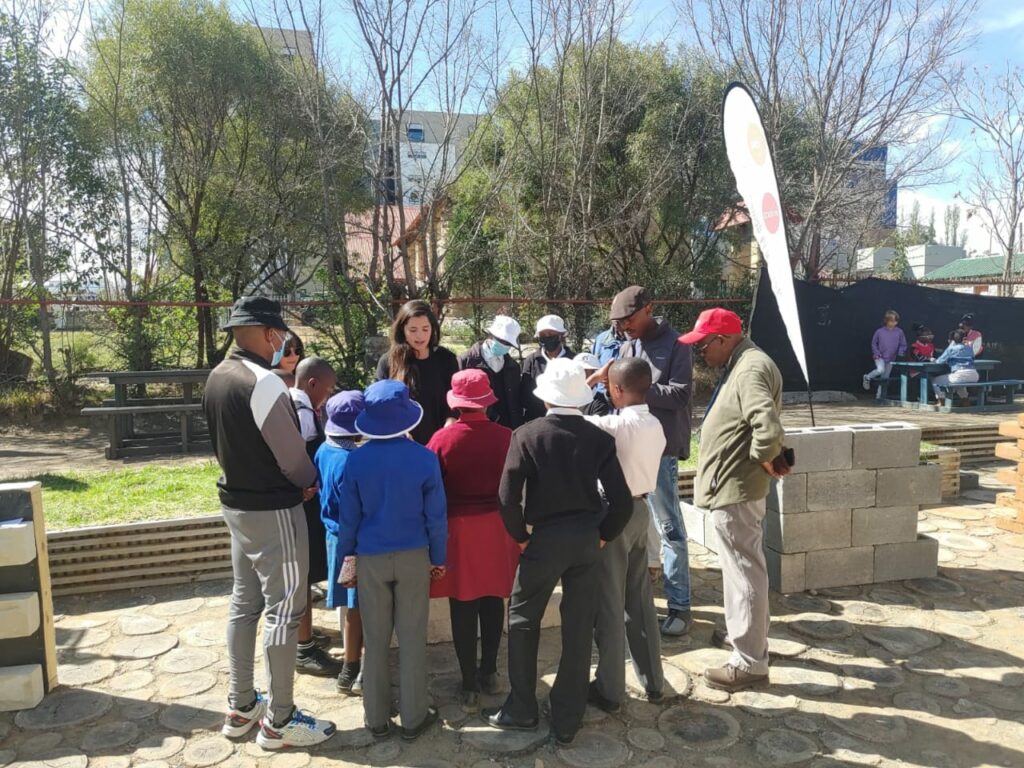
Through our innovative approaches in social enterprise, advocacy, design & construction research, and more, rise International positively impacted the lives of 1,848 people in Q1. This includes projects completed at Seboka Primary School, Lithabaneng Primary School, and The Hub in Morija.

Key Achievements:

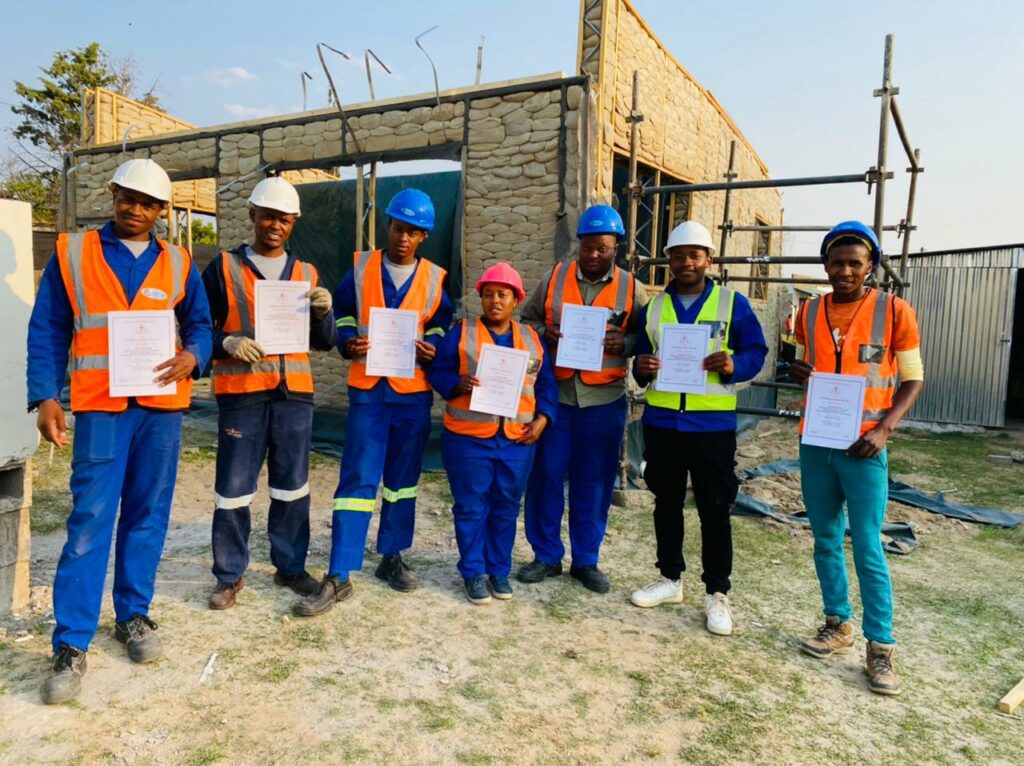
Improved Sanitation and Security: Our “Pioneers” program graduates successfully constructed new toilets at Lithabaneng Primary School and installed burglar bars at Seboka Primary School’s kitchen, enhancing sanitation and security.
Effective Waste Management: At Lithabaneng Primary School, new septic and drainage system construction started thanks to rise International’s efforts in partnership with Action Ireland Trust!
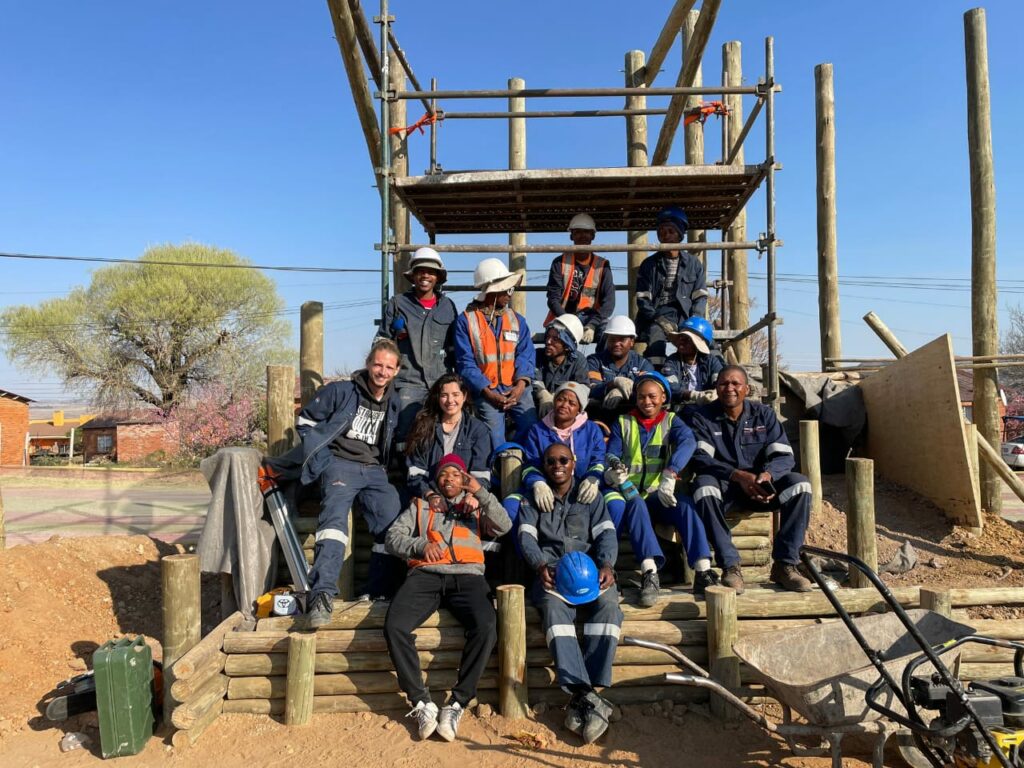
The “Stadium of Life” on course for completion: The 5th cohort of the in loco fellowship program contributed to the design and construction of Africa’s first FSC-certified stadium, the “Stadium of Life.” They successfully constructed the posting rails and part of the spectator seating stands. 
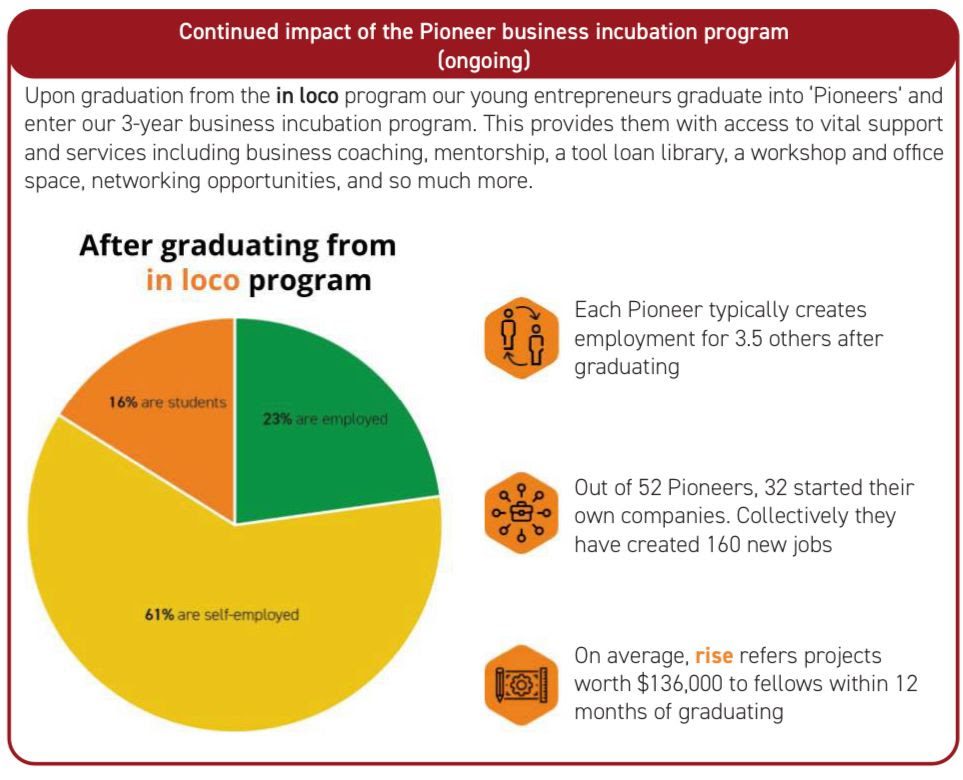
Entrepreneurship on the rise: 32 graduates from the in loco program transitioned to the “Pioneers” program and established their own businesses, creating a total of 16 new jobs in Q1 alone!

in loco Fellowship Graduation:

We celebrated the graduation of the 5th in loco cohort! Muso Molomo, a graduate, shared his experience:

“I’m grateful to rise International for the opportunity to build the first FSC stadium. This program honed my skills, and their support allowed me to lead the stadium’s development.”

Promoting Social Enterprise:

rise International made significant strides in promoting social enterprise on a national and international scale. Collaborations with various organizations provided training and education to hundreds of participants worldwide.

Pioneer Professional Development Session:

We continue to support and provide skills development to the entrepreneurs in Lesotho. In February and March we provided financial and marketing training to nine local fired brick manufactures and five in loco pioneers.

Looking Ahead (Q3&Q4 Priorities):

  • Interlocking Compressed Earth Blocks (ICEBs): We’ll be focusing on promoting the use of ICEBs, a sustainable building material.
  • Hemp Production Advocacy: rise International will advocate for the legalization and production of hemp in Lesotho.
  • Showcasing Sustainable Building Materials: Stay tuned for exciting initiatives showcasing sustainable building materials!

Donate To The Cause

Stay Connected!

We invite you to learn more about our work by visiting our website or subscribing to our YouTube channel for insightful content:

Website rise International 

YouTube rise International.

Thank you for your continued support!

READ MORE
rise News

Circular Innovations for a sustainable future

Human beings have depleted natural resources, cut down trees in forests and led to pollution and global warming. It is high time that we turn to protect our nature and start preserving it. Through one of our pillars, Innovative Building Methodologies, we continue to raise awareness about climate change, global warming, deforestation and loss of biodiversity, rise joins the global community in this mission.

Over the past two years, we have embarked on the journey to expose the global community, mainly Basotho, to the economic opportunities that come with protecting and caring about the environment. The project aimed to empower local researchers, enhance sustainability in construction and address climate change challenges. 

With this project six materials were looked at in depth: 3 indigenous materials being Sandstone, Compressed Earth Blocks, Grass/Straw and 3 repurposed materials being Hemp, Wool, and Packaging Waste.  

rise has embarked on this research journey to address Lesotho’s gaps in knowledge, production and use of sustainable locally sourced construction materials. Both desk research and empirical findings were used to better understand Lesotho’s indigenous, and repurposed building materials and techniques to see how those can form the basis for a sustainable environmentally friendly future. 

A catalog and Materials Spec Comparison Table of the research materials has been created and can be found in the information Library at www.riseint.org. rise continues to advocate for policy change and implementation of some of the materials for the benefit of the environment and the communities to which they belong in creating employment opportunities and economic growth. 

READ MORE
rise News

Join the Club! The rise Together Movement 🌍

Thank you for supporting our entrepreneurship development programs in Lesotho in the past. Thanks to your generosity, we have been able to graduate over 50 fellows from our design, build and entrepreneurship in loco program, 71% of whom have gone on to become Pioneers and created over 183 jobs for others as a result of the skills and business training we have provided them with thanks to your assistance.

JOIN THE RISE TOGETHER MONTHLY DONORS CLUB

Your support has already had an impact on our Pioneers’ Business Incubation Program and others who are following in their footsteps being our in loco program fellows. But the reality is, in order for us to continue touching more lives and spreading the impact to transform more job seekers into job creators, we need your help.  

This year, we invite you to make your valuable support go even further by joining the rise Together Club – a monthly donating program to support our youth skills development and employment generation programs. Your ongoing monthly support will:

  • Contribute towards training more job creators
  • Provide business coaching for more entrepreneurs 
  • Equip entrepreneurs with essential tools and workspace 

You can easily sign up online here to make an impact without ever worrying about writing another cheque! (Unless you want to).

Become a rise Together Club member today and you’ll enjoy:

  • The knowledge that your donation is put to work immediately.
  • Monthly newsletters on the difference your dollars are making.
  • Hassle-free automatic monthly donations from your credit card.
  • The ability to change or suspend your donations at any time.
  • Complete statements provided for tax purposes.
  • The joy of knowing that you’re improving someone’s life.

Sponsor young Basotho through our Pioneer Business Incubation Program by making a $50 donation a month and experience the fulfillment of changing a life.

Alternatively you can also start a fundraising initiative on behalf of rise by simply visiting here where we have numerous fundraising opportunities for you.

READ MORE
rise News

Let’s change more lives together in 2024!!

We are thrilled to announce the release of rise International’s Bi-Annual Evaluation Report, highlighting the impactful work we’ve accomplished over the past two years. This comprehensive report encapsulates our dedication to sustainable development and community empowerment in Lesotho.

Key highlights of our achievements.

  • Thanks to funding from Irish Aid, rise International successfully completed an extensive research on Innovative Sustainable Building methodologies in Lesotho, paving the way for more environmentally friendly and cost-effective construction practices.
  • Through our ‘in loco’ learning-by-doing program, we have positively impacted over 17,600 lives in Lesotho, empowering individuals with practical skills and knowledge to thrive in their communities.
Fig 1 : in loco impact
  • rise International joined forces with the World Bank to address the critical issue of youth unemployment in Lesotho, working towards creating sustainable solutions for economic empowerment and job creation.
  • We are proud to continue our partnership with Action Ireland Trust (AIT) as their implementing partner. The ongoing 5 Hub Schools project, designed to enhance infrastructure and facilities in priority schools identified by the Ministry of Education & Training, has already brought essential amenities like running water toilets, boreholes, school kitchens, rainwater harvesting systems, and food gardens to communities in the densely populated Lithabaneng area in Maseru district.
Fig 2 : Opening of Seboka Primary School Kitchen
  • Our collaboration with local and international universities has enriched our programs with diverse perspectives and expertise, ensuring that our initiatives are at the forefront of innovation and best practices.
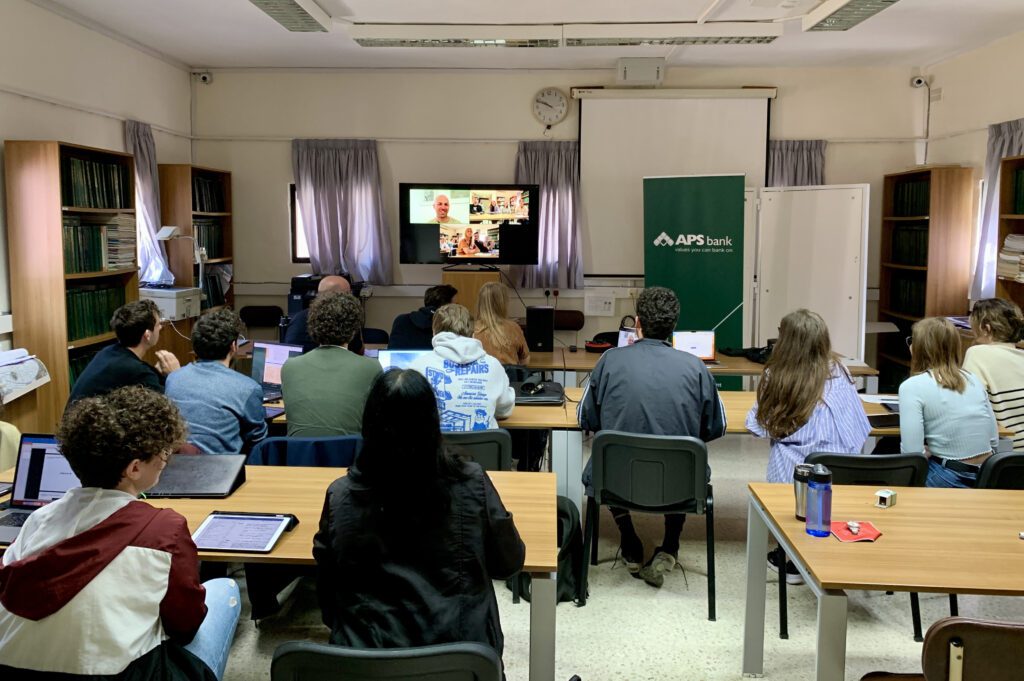
Fig 3: Uni of Malta Participatory Design Workshop Training
  • We extend our heartfelt gratitude to all our donors for their unwavering support. Without your generosity and belief in our mission, none of these achievements would have been possible. Your contributions have transformed lives, empowered communities, and paved the way for a brighter future for Lesotho.

As we celebrate these milestones, we are reminded of the collective impact we can achieve when we come together in solidarity and commitment to positive change. Together, we are shaping a better tomorrow for Lesotho.

Thank you for being a vital part of our journey.
Daniela Gusman
Founder and Executive Director

READ MORE
rise News

Growing in bounds and leaps

rise Hosted Athabasca University Students as part of a knowledge exchange and skills sharing program 

Thanks to a Canadian government-funded program, the Global Exchange Opportunities Program, nine students from Architecture, Heritage Resources Management and Computer Science as well three faculty members from Athabasca University in Canada visited Lesotho for a 2-week visit this month. 

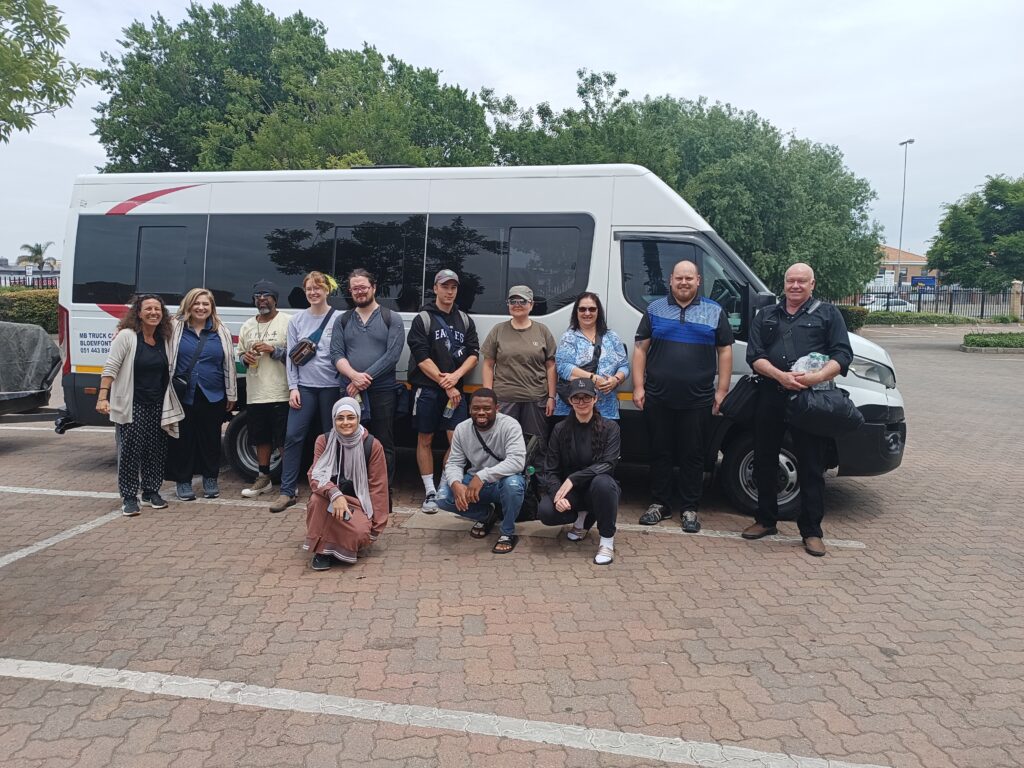
rise Executive Director – Daniela Gusman with Athabasca University students and tutors upon arrival in Lesotho

During this trip in Lesotho, the contingent had the privilege of visiting Morija, Lesotho’s cultural and historical center, where they spent a large part of their time. Along with 10 Architecture Technology students from Limkokwing University of Creative Technology,  the Athabasca students were trained in how to facilitate a participatory design workshop (PDW) for the proposed development of the heritage park in Morija. After gathering all the opinions, needs and wants of various members of the community as well as key stakeholders, the students worked tirelessly to analyze all the information and came up with some potential layouts for the potential development of the Heritage Park, which they then presented to the community and stakeholders for validation.  

Athabasca University students and tutors engaging in a PDW with rise pioneers and Morija community members 

While in Morija, alongside community members and rise’s in loco fellows, the students got their hands dirty as they got to learn about how to construct using rammed earth and how to make earth blocks. 

Construction of rammed earth and earth blocks

An important element of the visit, was for the students to exchange their knowledge and skills in a practical manner, whereby they got to work hand-in-hand with rise’s in loco fellows who are currently building the Stadium of Life, a football stadium for a non-profit called Kick4Life who use sport as a tool for social change. 

The National University of Lesotho also hosted the students for a lecture on The role of Basotho design culture in architecture which was led by Ms Mpinane Qhobela. They also engaged in another lecture session which was hosted by the Limkokwing University of Creative Technology on the History of Architecture in Lesotho given by Ms Boikokobetso Mohlomi which can be seen Limkokwing University Lecture Part 1 Limkonkwing University Lecture part 2

As part of the study and exploring Lesotho, the group also visited the national monument and mountain called Thaba Bosiu, the rural horseriding community of Semonkong, the University town of Roma and the capital of Maseru at the National University of Lesotho learning about the Mountain Kingdom’s heritage, architecture and tech challenges and opportunities.

Additionally, the Heritage and Computer Science students got to collaborate with students and tutors from Botho University, the Innovation Hub at the National University of Lesotho as well as the Morija Museum & Archives, the Seriti Sa Makhoarane Heritage & Tourism Project, The Hub in Morija and the Morija Arts Centre. 

rise Executive Director, Daniela Gusman with the staff of Botho University Lesotho and some of the Athabasca University tutors and students after a lecture.

Lastly the students had an opportunity to interact with Basotho artists, musicians, dancers, participate in a drumming circle as well as visiting some of Lesotho’s successful social enterprises including Pheha Plastic and Noma Pads where they joined a session  learning about the establishment’s operations and a hands on experiment of using the machinery machines to make plastic recycled products and reusable sanitary pads!

This visit was part of a 2-year program funded by Global Exchange Opportunities which will also include another group of up to 15 students coming to Lesotho in 2024. 

For anyone interested in visiting Lesotho on an educational trip contact us at info@riseint.org or sign up for updates about our International Workshops which you can learn more about here 

READ MORE
rise News

Discovering Lesotho’s Beauty: My Experience with rise international

By Vasiliki Zacharia

I am Vasiliki, an architect engineer from Greece. During my master’s program in International cooperation in Sustainable and Emergency architecture in Barcelona, my passion for travel and engaging with people from diverse backgrounds led me to Lesotho for a three-month internship with rise international.

After this transformative journey and returning to the comfort of my home, it’s time to share the key aspects of it. Although every experience has its ups and downs, I’ve chosen to focus on the bright side and the new lens through which I now view life.

Working with rise international as an architect in Lesotho was a profoundly enriching and eye-opening experience. It provided me with a unique opportunity to apply my skills and knowledge to address real-world challenges and make a meaningful impact in a community that I grew to deeply appreciate. riseinternational’s mission to support sustainable development and improve the living conditions in Lesotho resonated with me from the very beginning. As an architect, I was part of a dedicated team working on projects that ranged from building infrastructure to community development. Our work aimed not only to create physical structures but also to empower the local community with the tools and resources needed for long-term growth.

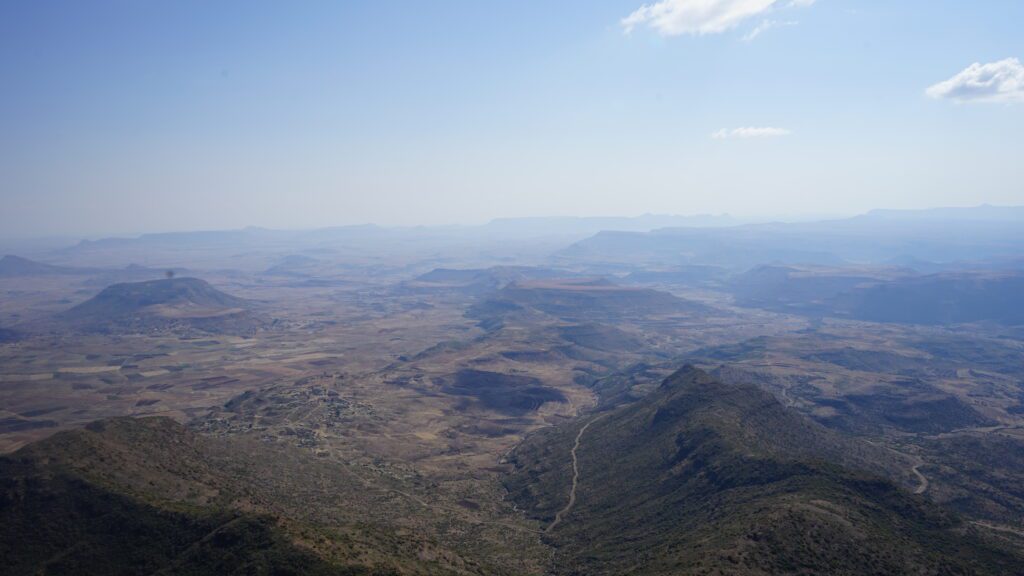
Lesotho is a captivating country. Beyond the picturesque landscapes, the breathtaking waterfalls, and the endless mountains, there’s something extraordinary that words cannot fully capture. It’s the ideal place to regain your relationship with nature, to breathe and walk around the most beautiful scenery. It’s an experience you must live to truly understand.

Someone once told me that life’s experiences depend on how we perceive them. Every encounter and every moment shared with others provides us with a unique perspective, a new pair of glasses through which to view the world. If these perspectives resonate with us, we can wear them from time to time, gaining new insights along the way.

“The real voyage of discovery consists not in seeking new landscapes, but in having new eyes” 

Marcel Proust.

To me, the real value of this experience lies in the  people. I had the privilege to collaborate with. Despite our cultural differences and distinct backgrounds, they made me feel like I had discovered my rightful place. The Basotho people lead their lives in a simple, authentic manner, a way that I may have, in many respects, forgotten.

They are warm and have a natural gift for hospitality. They eagerly engage with newcomers, welcoming them into their homes and offering food and drink. In their company, I felt an instant connection to their community. They made an effort to familiarize me with their traditions and way of life but also to learn about my perspective of life and my culture.

Basotho people possess a sense of philotimo, a Greek term, which captures the essence of integrity, honour, and respect, shapes social interactions, fosters strong connections within communities, and underpins the sense of pride and identity. It’s a concept that is difficult to fully capture in words but is deeply understood and appreciated by those who embody it in their actions and relationships. 

This experience has not only enriched my professional skills but also left a lasting impact on my perspective as an architect, reminding me of the profound impact we can have on communities in need. In Lesotho, I learned that it’s not just about discovering new landscapes; it’s about gaining new perspectives and insights by embracing the world through fresh eyes. 

Khotso Pula Nala (Peace, Rain, Prosperity)

READ MORE
rise News

“The time I spent with LNFOD gave me the opportunity to see a different way to do business”

Emma Biraghi

Don’t tell me how educated you are, tell me how much you have traveled”.

This sentence from prophet Muhammad has always inspired me, even if I’m not particularly attached to religion, this specific one touches my soul since I heard about it, probably more than ten years ago. My parents instilled the love for travel in me since I was a child and as soon, I was “old” enough to travel by myself I immediately took the opportunity.

I am Emma Biraghi, a 20-years-old Italian woman and unlike all other people that had an experience with rise, I’m not an architecture student. I’m an Italian student of international politics and law and I wanted to do a voluntary experience during summer. The problem was that no organization gave me the possibility to go so far from home at such a young age; however, rise trusted me and, thanks to the fact that I knew the architect Luca Astorri, I managed to do this incredible experience.

When I booked the flight tickets I was scared out of my wits, I understood that I was about to actually go to Lesotho and the dream was becoming true. It was not only my first time in Africa, but also my first trip without my family nor my friends: I would have been completely alone. Fortunately, Daniela and Luca greeted me with open arms and the reality was not that scary. 

I stayed in Maseru for two weeks, but those days were sufficient to make me fall in love with Lesotho: definitely one of the most amazing places I’ve ever been.

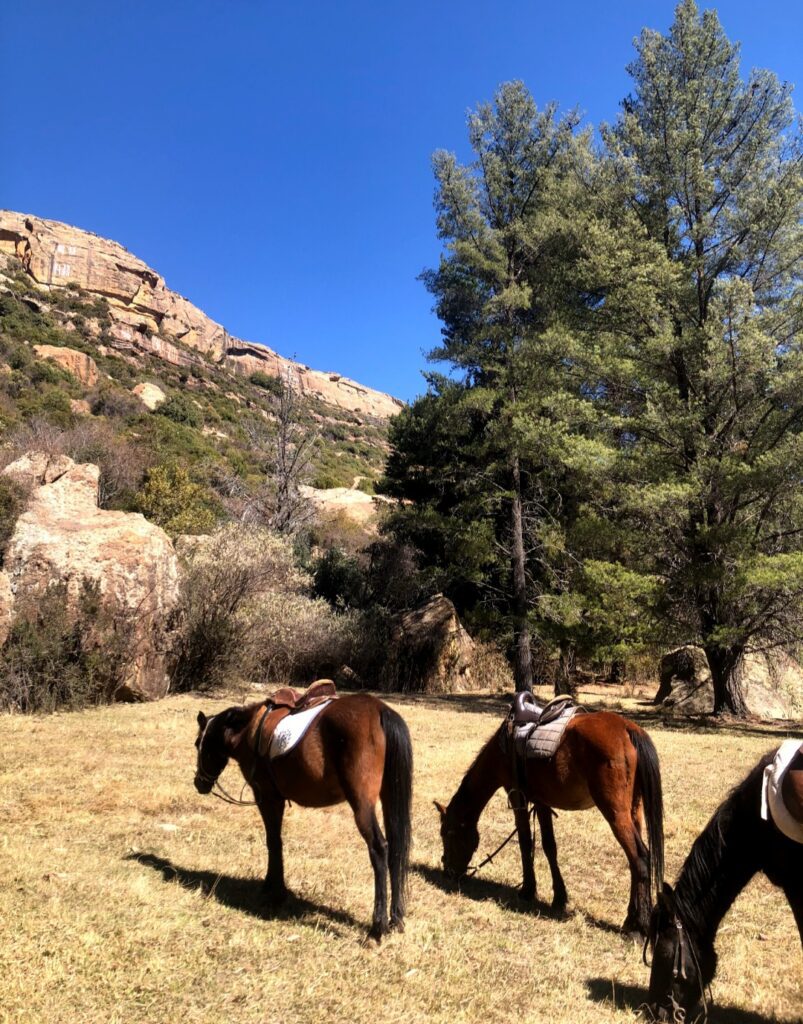
I left the hot Italian summer for winter, which probably is the thing I liked less about Lesotho; however, it gave me the opportunity to see some spectacular views from mountains and go horse-riding to see dinosaur footprints!

Apart from the beautifulness of the place itself, my voluntary experience was great too. Since I am not an architecture student, I worked with a partner of rise: Lesotho National Federation of Organisations of the Disabled (LNFOD) , an umbrella body that advocates for the human rights of persons with disabilities by representing their needs to government, private sector, and the entire community.

The time I spent with LNFOD gave me the opportunity to see a different way to do business: we’re used to imagining business meetings as a group of serious people with suit and tie, but in Lesotho things are different. I participated in a meeting for a microcredit project for women with disabilities in business and the most amazing thing to see was that everybody had the traditional clothes of the Sesotho culture, and they were singing the traditional songs, playing instruments and dancing during break time. This way of doing business shows a strong attachment with the tradition and the community that we lack in Western culture, especially in Milan, where I’m from. 

The Basotho society are more traditional, they have such a strong and powerful connection with their community, they have great faith in the world, and they express that by contributing to the growth of their society; for a city dweller like me was incredible to have a contact with a sense of belonging that I never experienced in such a strong way.

Another thing that was unbelievable was the strong contact with nature: Maseru, the capital of Lesotho, is a small city where cows and sheep cross the road with the people! There are many huge parks and in 10 minutes by car from the center it is possible to reach the mountains and the spectacular views that they offer. I strongly believe that the closeness to nature is one of the main reasons why Sesotho people always smile and are so kind, just imagine that they say “Hello! How are you?” to every person they meet in the street.


Leaving Lesotho, I was surely a bit heartbroken, but I’m grateful to have discovered their social connection, which I hope I’ll keep with me now that I’m in Italy. Going on the opposite side of the globe totally shifted my way of looking at the world and opened my mind to visit many more places where I can discover a new perspective, as it happened in Maseru with rise International family.

READ MORE