rise News

rise’s work on Water, Sanitation & Hygiene (WASH)

rise‘s work on Water, Sanitation & Hygiene (WASH)

“Growing up in a clean and safe environment is every child’s right. Access to clean water, basic toilets, and good hygiene practices not only keeps children thriving, but also gives them a healthier start in life.” – Unicef

Lack of sanitation can be a barrier to individual prosperity and sustainable development. When children, especially girls, cannot access private and decent sanitation facilities in their schools and learning environments, the right to education is threatened. Poor sanitation puts children at risk of childhood diseases and malnutrition that can impact their overall development, learning and, later in life, economic opportunities. According to UNICEF, as of 2015, nearly one in ten children in Lesotho dies before reaching their fifth birthday. Too many of these deaths are due to the effects of unclean water and inadequate sanitation and hygiene, which increases a child’s vulnerability to disease and infection. Most of Lesotho’s ten districts report a high percentage of households using unprotected water sources, and about 20% still need access to improved sanitation facilities. That is why we have partnered with various organizations and entities to address this urgent challenge. 

What rise has achieved so far…
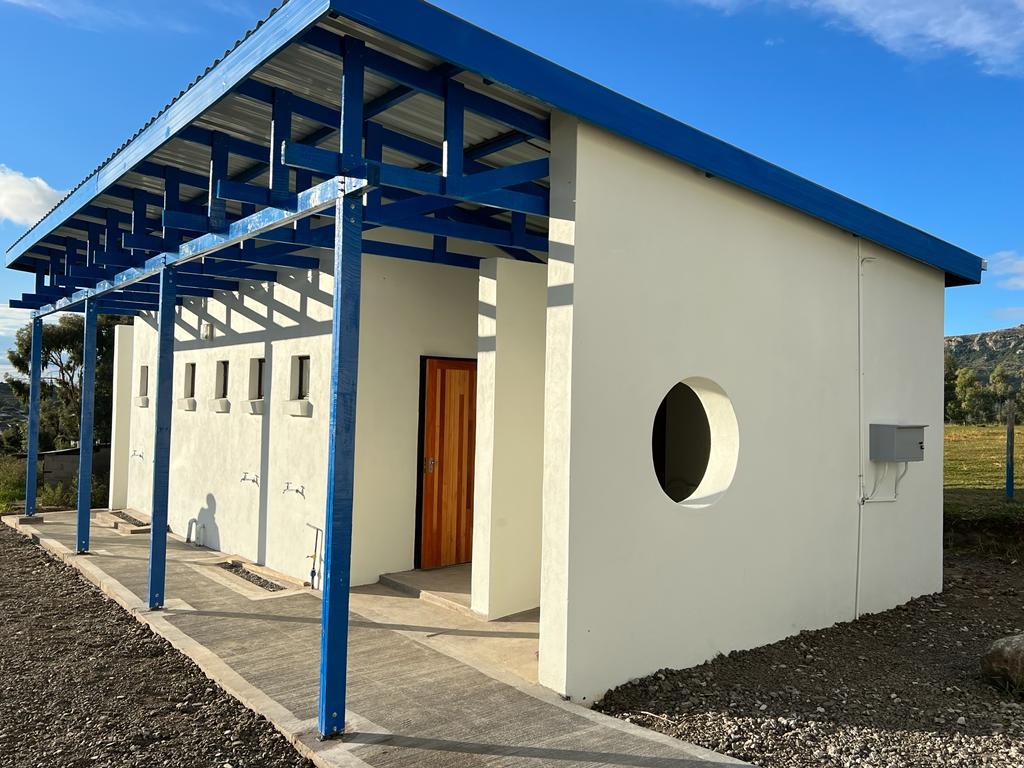
Toilets for a Primary School in Lithabaneng village

Watch video of the launch

Ever since the existence of Seboka Primary School, over 600 learners yearly have endured poor sanitation due to a lack of healthy sanitation facilities and no running water anywhere on the school site. We are so proud of our in loco pioneers xyz collaborative for building new toilets for the learners and staff and Mokhethea Civils and Contactors for constructing the percolation system, as part of our 5 Hub Schools project thanks to the support of a not for profit organization called Action Ireland Trust (AIT) in collaboration with the Ministry of Education and Training of Lesotho.
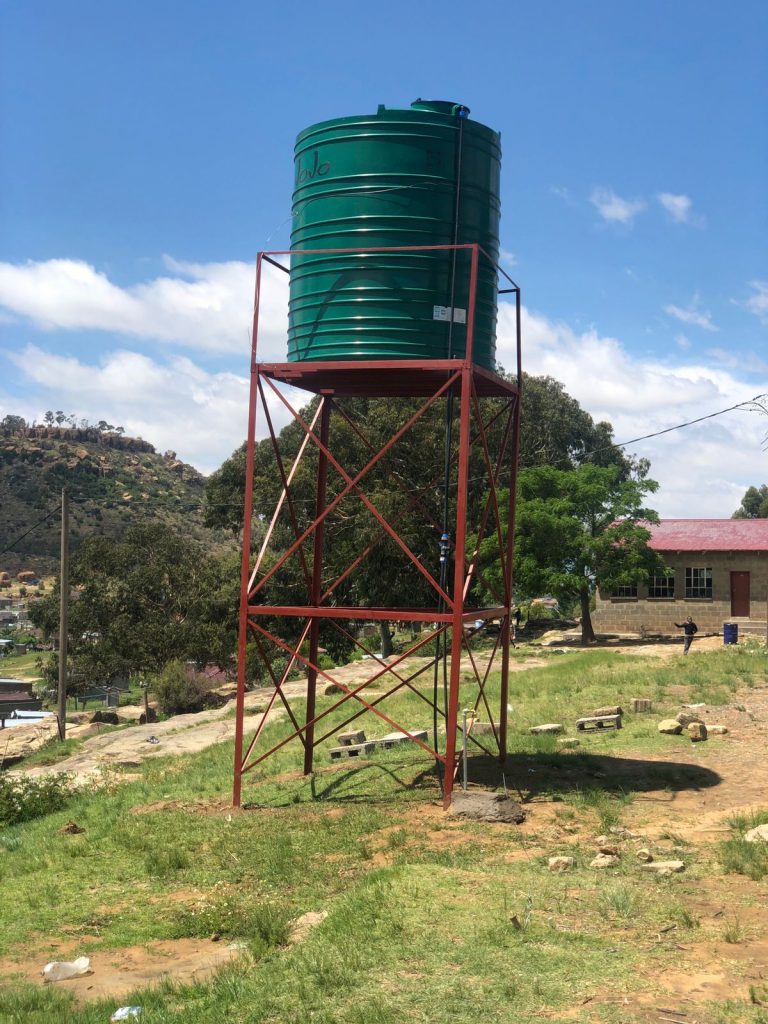
Boreholes and rainwater harvesting for 5 Hub schools

Our in loco Pioneers PRO Construction successfully constructed rainwater harvesting systems in 2 schools with the help of sponsorship from the British High Commission in Lesotho and AIT. The boreholes, together with the rainwater harvesting systems now provide a regular flow of clean running water to the schools, facilitating general good hygiene and frequent handwashing amongst learners and the schools’ community – an essential healthy habit in these Covid-19 ridden times. This access to running water also makes food preparation in the schools much easier, provides much needed water in the food gardens constructed by Green Yards, another in loco Pioneer company while promoting food security and food hygiene, and further supplies constant water circulation in the newly built toilets. 

Why food gardens? You may ask. School lunch is the only meal that many of the learners in these schools get each day and therefore being able to grow their own nutritious food is vital for the learners’ feeding program and overall health & nutrition hence the construction of these food gardens. The schools are also able to sell excess produce to raise funds towards their operational costs.

No more outdoor cooking for another school in Lithabaneng village

The food preparation of over 600 learners was done in the outdoor area of Leqele Primary School. It is so amazing to have our in loco Pioneers Presto Construction Company build a new kitchen for this school also with clean water supply. It is integral that food be prepared, handled and served where there is access to running water.

Hand Wash stations for towns, hospitals, schools and villages in Lesotho during 1st wave of Covid-19

Watch more on this project

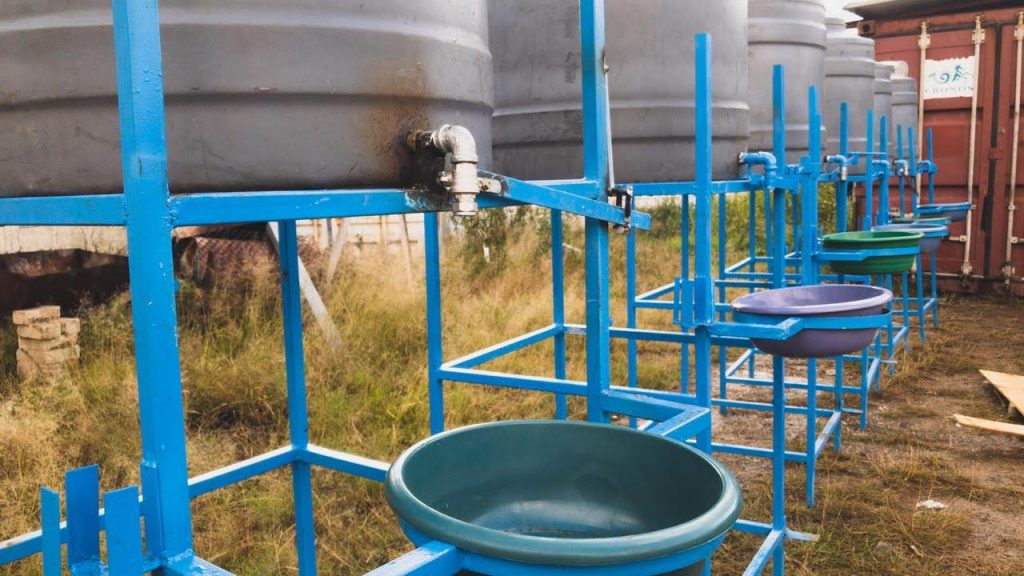
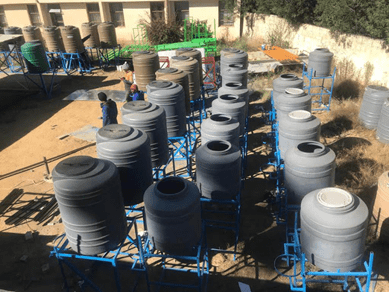
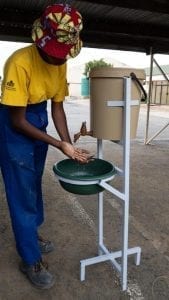
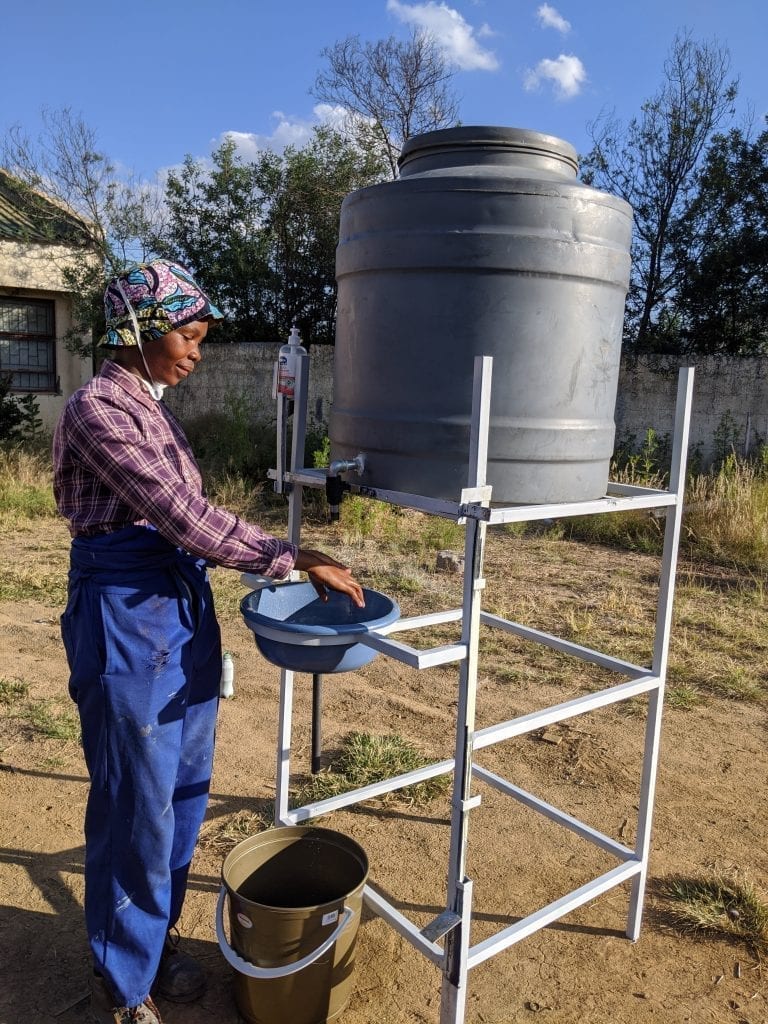
To curb the spread of the Coronavirus, we built handwash stations in all 5 schools in the Lithabaneng area which promoted hygiene and the safe handling of food. On the same mission, xyz collaborative built 105 more hand wash stations which were installed in all 10 districts of Lesotho in various health clinics, hospitals, child care facilities as well as busy town areas in partnership with UNDP, UNICEF and the Ministry of Health.. We built 10 more for a semi-rural community called Motimposo to lessen the number of communities that did not have access to running water and were thus at the highest risk of contracting the virus.

Safely managed water, sanitation, and hygiene (WASH) services are an essential part of preventing and protecting human health especially during infectious disease outbreaks, including the current Covid-19 pandemic. Our mission is to ensure that young people exist in environments that allow them to develop so they can one day join the fight against poverty in Lesotho and the Subsaharan African region at large.

We call on you to help make a difference with us! 

READ MORE
News

rise’s work on Universal Design 


rise’s work on Universal Design 

We often say that we are inclusive of all communities, or that we are restructuring society to be understanding and empathic of all, especially the marginalized. But to which extent? The lack of inclusivity in urban planning does not only separate us by weaknesses and strengths, but it deprives us of some of the joys of the environment like urban spaces, access to green spaces and even essential services like public transport.

It is pivotal for professionals in the built environment to prioritize the promotion and protection of the rights of people with disabilities particularly in urban design. With the hope that a potential exists for the improvement of buildings and thus facility access for people with disabilities in Lesotho, rise embarked on a project that would shed light on the existing issue of “lack of inclusivity in the urban design of Lesotho”. According to a study by the Lesotho National Federation of Organizations of the Disabled (LNFOD), people with disabilities are constantly faced with the challenge of not having equal access to facilities like banks and hotels and to services like public transportation as the built environment does not cater for wheelchair access and other limited mobility needs. 

The aims of this project were to facilitate an interface which promotes that everyone gains equal access to services and facilities; to educate the general community on the need for inclusivity in urban design; to increase awareness within the built environment sector on the need for inclusivity in design and construction and to engage policy makers in the discussion on inclusivity in the urban planning of Lesotho. Empathy is key here, the feeling of belonging rather than feeling excluded. Inclusivity of design is achievable. The goal of inclusive design is to offer the same access for all users, whether with special needs, disabilities or neither of these.

……Empathy is key here


What rise has achieved on universal design so far…  


A panel discussion with policy makers 

Made possible by the British High Commission

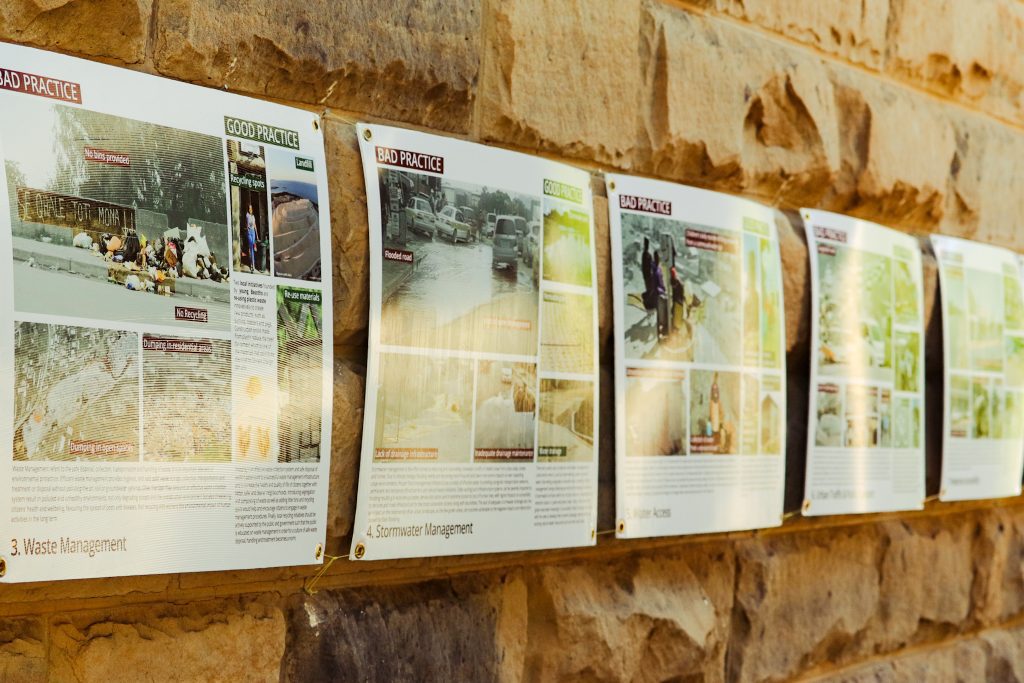
rise hosted a photo exhibit and panel discussion on inclusive design where policy makers engaged in a discussion around the need for reforms on Building Codes for inclusive design in both private and public sectors. A voting poll was set up for the general public to vote on the matters that mean the most to them regarding the infrastructure and accessibility of Maseru city. 

Key stakeholders working in the built environment made pledges on how they are going to commit to improving the existing situation of lack of inclusivity in the urban planning of Lesotho. WATCH VIDEO OF PANEL DISCUSSION

A webinar to create awareness on Inclusive design in Lesotho & internationally

WATCH VIDEO OF WEBINAR

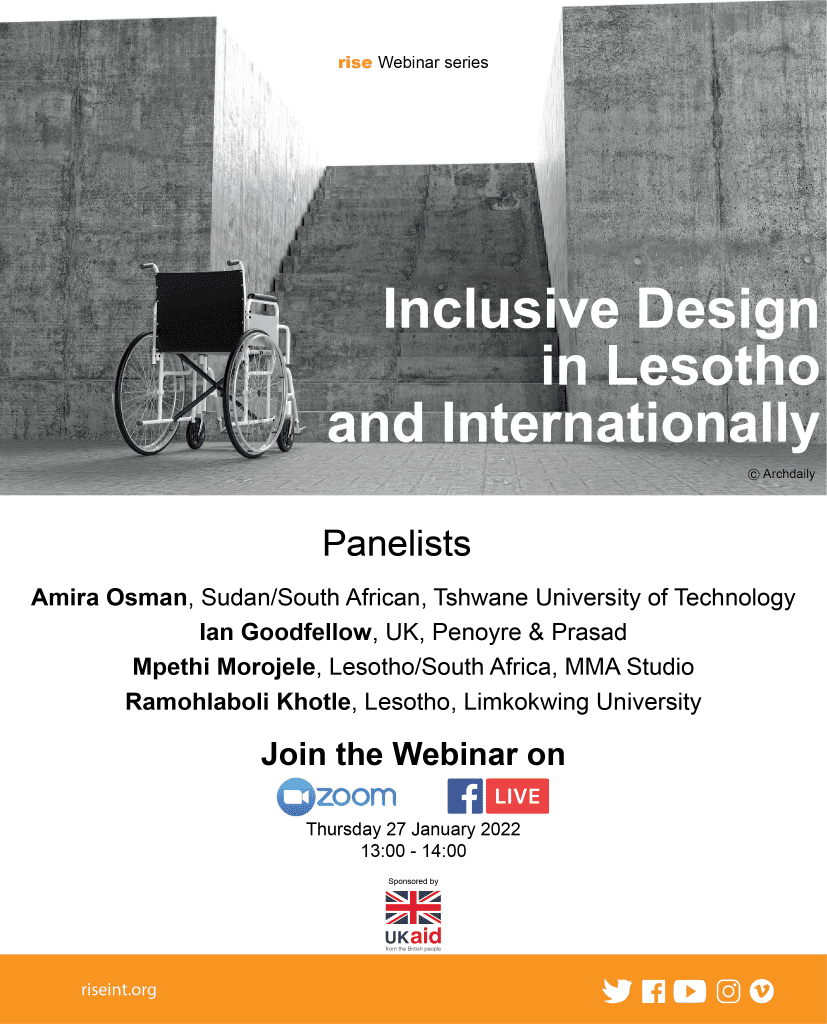
After the panel discussion rise hosted a webinar on Inclusive design in Lesotho and internationally where professionals engaged, educated and spoke on the need for universal design globally and locally.

Radio shows to create awareness on the need for universal design


rise hosted 4 radio shows in partnership with SkyAlpha, aimed at increasing awareness of the need for inclusivity in the urban planning of Lesotho.

An inclusive building for people living with disabilities


Through in locorise built an all inclusive design building for the Lesotho National Federation of Organizations of the Disabled, allowing them to finally employ people with physical disabilities.


A panel discussion with key stakeholders for action planning


Universal Design for Maseru City Roundtable was hosted on March 2nd 2022 by the Ministry of Local Government and Chieftainship, facilitated by rise and funded by the British High Commission in Lesotho with a focal thematic area around Universal Design including :

1. Regulatory & Legislative Building Codes for Inclusive Design 

2. Design & Planning Practices 

3. Action planning and Next Steps needed 

Our work on Universal Design does not end here, watch out for more on our social media platforms, engage with us on this topic and lend your hand wherever you can because if you want to go fast you go alone. But if you want to go far you go together. Let’s go together!


READ MORE
Information Library

Do you know about Thatch?

Author: Lulu Yang

Introduction

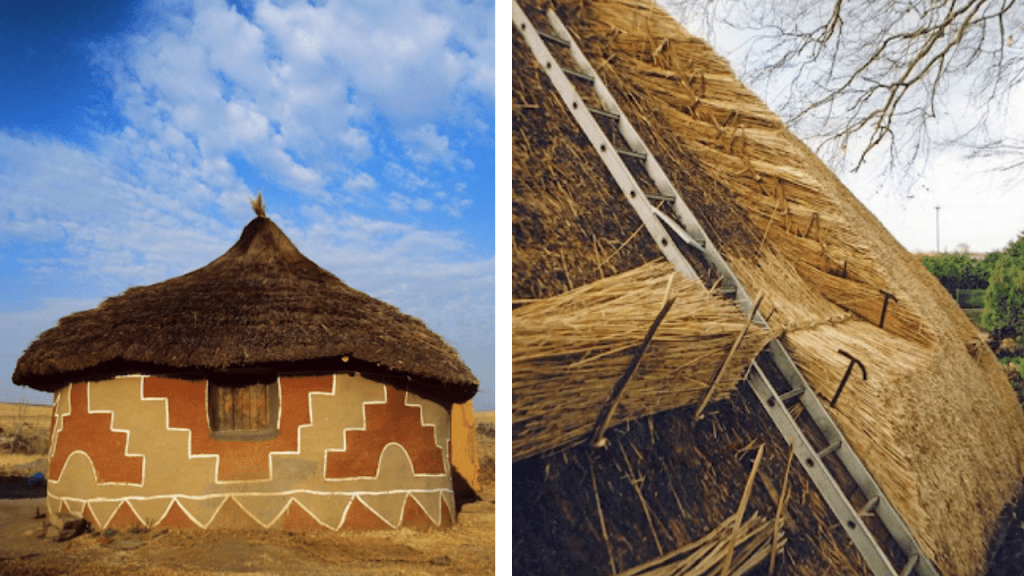
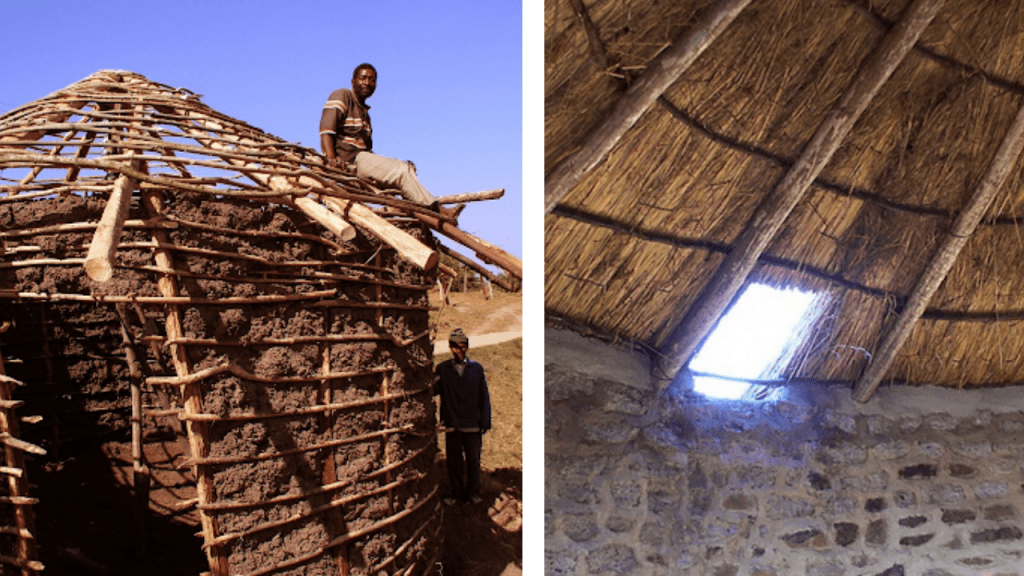
Thatch is a common roofing material in many traditional Lesotho houses. Used as a building material, thatch is functional, economic, biodegradable, renewable, locally available, and requires minimal to zero artificial energy input in production.  Its sustainable properties and characteristics provide massive potential for expanded building material usage.

Properties

Although it is barely recognized by construction experts, thatch is the one of the most commonly used roof covers in the world, particularly in the past. It is easily available, almost any vegetable material, from the bark of trees to finely-tapering water reeds, can be used.  Amongst many, grasses, reeds and palms are the most common.

Source: Basotho hut and thatching  images from Pinterest.
  • Materiality

Thatch can come from 3 different sources: 

  1. naturally occurring indigenous vegetation
  2. as a byproduct of food or cash-crop agriculture
  3. through the cultivation of a plant grown specifically for thatching

Water reed is most durable, but cereal straw (mainly wheat, but also rye, barley and rice) is more widely available. The less artificial fertilizer is used, the better it is.

  • Performance properties

Traditional types of thatch have short durability and performance, but in certain regions (North West Europe, Southern Africa, Japan) skilled workmanship produces good quality functional roofing, with life expectancies between 25 and 70 years.

The main drawback is combustibility, but this is significantly reduced through good quality workmanship,common-sense precautions and fireproofing. Thatch is also susceptible to biological decay and weathering.

  • Fireproofing

Thatched roof fire protection is important. There are three kinds of materials that can be used to fireproof thatch: thatch batts, aluminum barrier foil, and fire retardant spray.

Thatch batts are fire-resistant slabs installed to the underside of a thatched roof to provide both fire resistance and thermal/acoustic insulation. Used alone, they slow down the progress of a fire in order to give occupants more time to get out. Used in conjunction with aluminum barrier foil, they provide total fireproof protection.

Aluminum barrier foil acts as a reflective insulator against excessive heat. It is essentially heavy gauge aluminum foil that conducts neither heat nor electricity. It is applied to a thatched roof in the same way felt is applied to a conventional roof.

Lastly is fire retardant spray. This spray, when applied to the exterior, provides both fire protection and an additional layer of water resistance. Fire Retardant spray is non-toxic, biodegradable, and can last for as long as ten years. It can also be used on the interior of the structure to protect the underside of the roof.

Thatch material properties and characteristics

PropertiesDescription
Special propertiesExcellent thermal and sound insulation
Economical aspectsLow cost
StabilityGood, depends on material and workmanship
Skills requiredSpecial training and experience
Equipment requiredLocally made thatching tools
Resistance to rainMedium to good
Resistance to insectsLow
Climatic suitabilityAll zones where the material is available
SustainabilityHighly sustainable, low environmental impact
  • Techniques (roof)

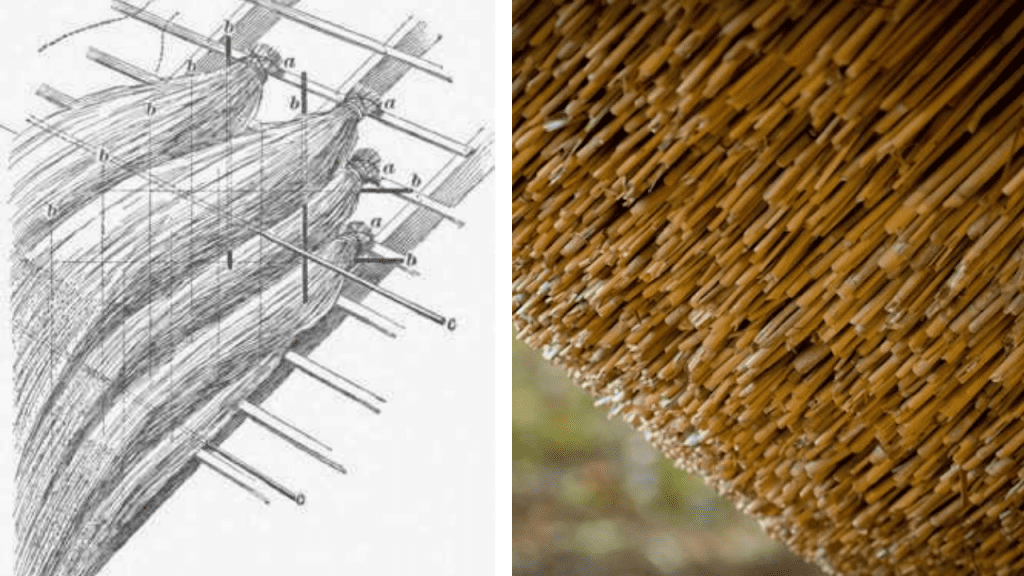
• Almost any shape of the roof with a minimum pitch of 45° can be thatched. Thatch will mould itself to any curve except a convex-shaped roof.

• Pole timbers and split battens may be used, and simple configurations work best, which means valleys and other changes of roof pitch are not recommended.

• The structure should be capable of supporting up to 40 kg/m2, which is the weight of the heaviest material – reed.

• A tilting board, 35 mm thicker than subsequent battens, fixed along all the eaves and barges at eave level, is essential to force the first course into tension, making the rest of the thatch more tightly compacted.

Source: thatching  images source from Pinterest.
  • Accessibility & cost: 

Depending on the location, thatch can be collected from natural crops, or can be harvested.  The source of the material has a direct impact on the quality of the material and labor cost, hence, it needs to be carefully analyzed.

Source: Basotho hut  images from Pinterest.

Applications

The usage of thatch can be expanded beyond just the traditional roof.  Think of thatch as a material that can be utilized and transformed into different forms and functions, its sustainable properties can have expanded influences.

Recent studies and projects have pioneered this school of thought.  Some examples are:

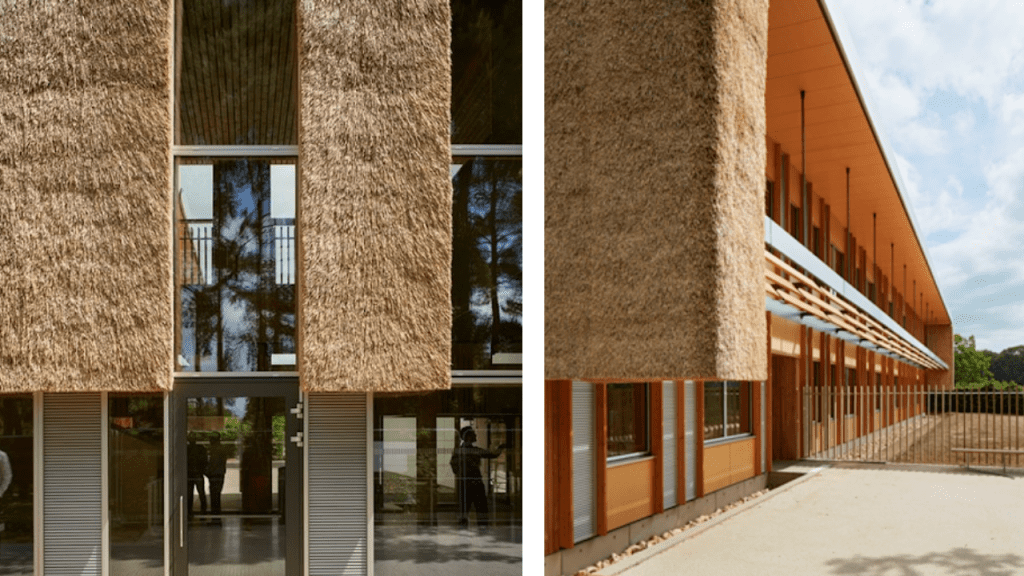
  • Thatch used as a cladding system
    • Case study: University of East Anglia Enterprise Center

In this project, thatch is used as a rain screen cladding panel. The material is developed from local straw for external facade cassettes applied by local thatchers. Varieties include Foster Special, Maris Huntsman, and Yeoman Wheat. 

Source: Gilbert, D. (2015, July 6). Architype completes thatch-clad enterprise center [Photo]. Architect’s Journal.

Other examples are:

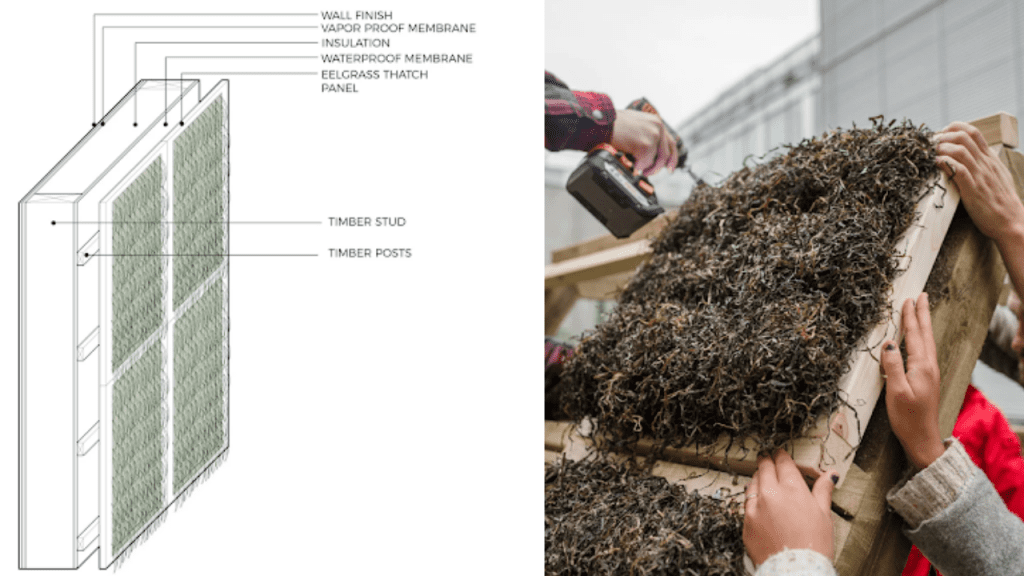
  • Modern seaweed thatch panels
Source: Larsen, K. (2020, May 4). kathryn larsen turns seaweed into prefab thatch panels for the building industry [Photo]. Designboom. 

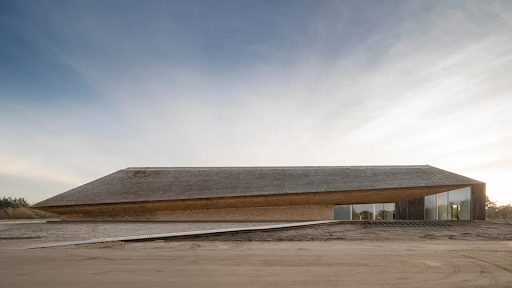
New Addition for Wadden Sea visitor center in Denmark

Source: Mairs, J. (2017). Dorte Mandrup adds thatched wing to Wadden Sea visitor centre in Denmark. Dezeen.
  • Thatch used as roof
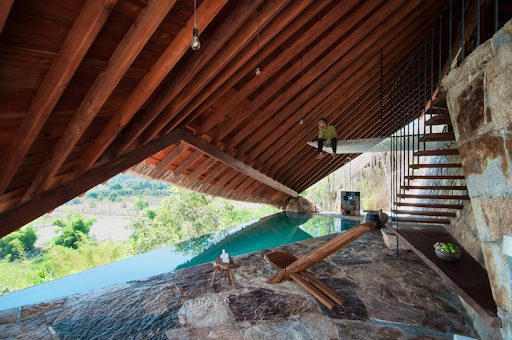
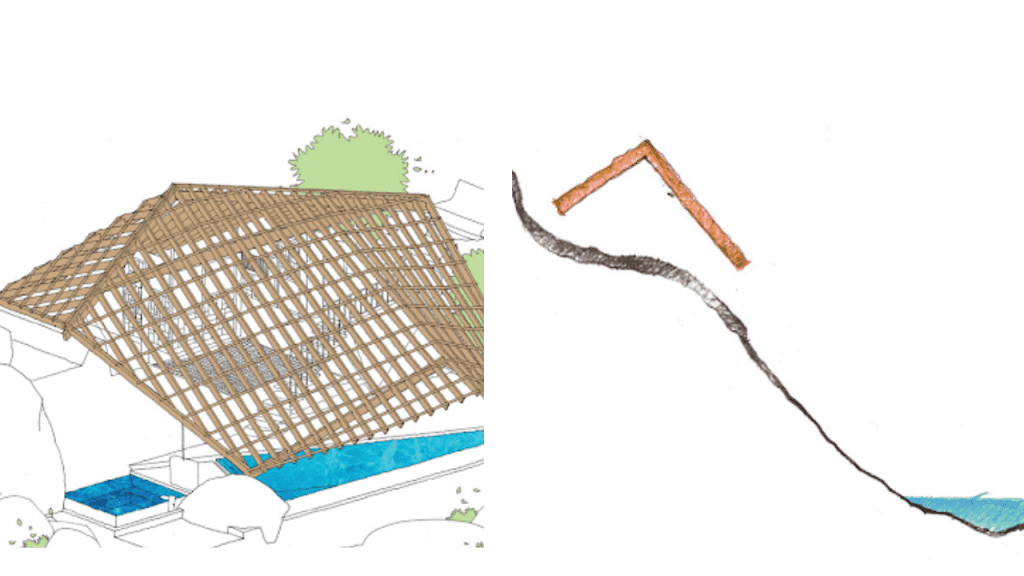
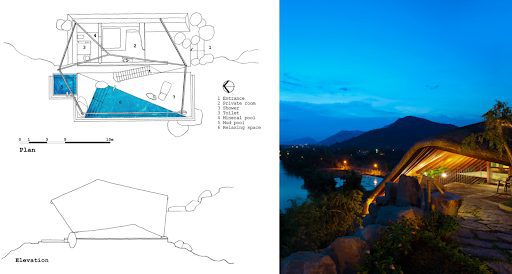
    • Case study: The tent by a21 studio shades guests from Vietnamese heat

Although thatch is used in a traditional function as a roof, this project is one of the representations of the reimagination of utilizing thatch to create contemporary architecture.

“Commissioned by a hot spring and mineral resort, Vietnamese practice a21studio has completed a small spa perched upon the incline of a hill near Nha Trang city. Oriented to face an adjacent river, ‘the tent’ offers a place for relaxation, isolated from the site’s other, more physical activities.”

Source: A.S.T.U.D.I.O. (2014, June). The tent by a21studio shades guests from vietnamese heat [Photo]. Designboom.
  • Thatch as part of a material
    • Case study: Paks Moabi’s house in Lesotho

Thatch as a material that can also be used as a part or mixture to create other materials.  This case study illustrates the possibility of using thatch as insulation.

Deep-rooted in the Lesotho context, Paks as a “barefoot architect” is building an energy-efficient house by utilizing all available indigenous materials. Thatch is one of the main insulation materials that has been applied in the project.  Not only is it readily available and economic, it also provides sound isolation properties. Moreover, the naturistic aesthetic matches perfectly with the surrounding environment.

Summary

Readily available, high sound insulation, water, and UV proof made thatch a desirable economically sustainable material.  The potential of using thatch beyond roofing is endless. With more creativity, testing, and practicing, thatch can be one of the gems for architects and designers to innovate and create.

Author of article: Lulu Yang

References

Durable thatch with stiff-stem grasses. Appropriate building materials: Examples of roof materials: Durable thatch with stiff-stem grasses. (n.d.). http://www.nzdl.org/cgi-bin/library?e=d-00000-00—off-0hdl–00-0—-0-10-0—0—0direct-10—4——-0-0l–11-en-50—20-home—00-0-1-00-0-0-11-1-0utfZz-8-00&a=d&c=hdl&cl=CL1.1&d=HASH70c81f6386a2600bdfdd3f.9.9. 

Architype. (2017). ​​The enterprise Centre, University of East Anglia. RIBA. https://www.architecture.com/awards-and-competitions-landing-page/awards/riba-regional-awards/riba-east-award-winners/2017/the-enterprise-centre-university-of-east-anglia. 

Pearson, A. (2015, September). Case study – the Enterprise centre – cibse journal – September 2015. Digital development. http://portfolio.cpl.co.uk/CIBSE/201509/uea-passivhaus/. 

Stevens, P. (2015, February 5). The tent By A21studio Shades guests From vietnamese heat. designboom. https://www.designboom.com/architecture/a21studio-the-tent-nha-trang-city-vietnam-07-27-2014/. 

Ir arquitectura build thermally-efficient casa aa in buenos aires. designboom. (2017, April 18). https://www.designboom.com/architecture/ir-arquitectura-casa-aa-argentina-04-18-2017/. Pope, R. (n.d.). Thatched Roof Fire Protection – A Guide to Fire Prevention. Roofthatchers. Retrieved December 8, 2021, from http://www.roofthatchers.co.uk/thatched-roof-fire-protection.html.

READ MORE
News

rise answers the SDGs call

Lesotho’s Sustainable Development Goals (SDG) index rank is at 135 out of 165, with little progress made in SDGs 1 (No Poverty) and 2 (Zero Hunger) as they relate to the ultimate goal of Lesotho’s National Strategic Development Plan (NSDP) II; “to create private sector-led jobs and eradicate extreme poverty,” according to the Lesotho National Voluntary Review of 2019. The goal of the NSDP is to transform Lesotho from a consumer-based to a producer-based economy. This goal links greatly to part of rise’s goal of transforming Basotho youth from job-seekers to job-creators.

rise International is a non-profit social enterprise organization that is registered in Lesotho and the USA and has been spearheading projects that bring about change and innovation to the built environment since 2016. This is being achieved through the in loco fellowship program where graduates in architecture, design and construction are recruited and provided with business training skills and connected with mentors, clients, and possible funding sources, while at the same time taken through an intense 10-month hands-on learning by doing process in building infrastructures that are much needed for vulnerable community development.

Goal 1: Creating resilience against poverty

rise plays a huge role in the realization of the SDGs, such as creating resilience against poverty. On average, since inception the in loco alumni’s monthly income has increased by 44%. 19% of Fellows in the program got full-time employment, while 74% started their own businesses in order to sustain their livelihoods and to create employment for others. On average, 1 Pioneer employs 5 other people in the construction industry.

Goal 4: Quality education and the Learning by Doing methodology

The Learning by Doing methodology, which rise has been using since the organization’s inception, has allowed the fellows to interact with their environment in order to adapt and learn. The methodology gives hands-on experience by allowing the fellows to get immediate feedback by learning from their mistakes, thereby shortening the learning span. 

Goal 5 and Goal 8: Relationships inspiring social, economic and gender equality

The organization recruits fellows from all socio-economic and educational backgrounds and from different trades, treating all equally, and providing a space for all to develop and understand the importance of an integrated education and construction system. rise addresses the problem of gender discrimination in the built environment by promoting inclusive decision making, with both genders equally represented in both labor and planning, and rotating the leadership roles of fellows in the in loco fellowship program.

Goal 6: Water and sanitation in the fight against Covid-19

Portable running water is a vital resource now more than ever in the midst of the global pandemic and in the bid to address the Covid-19 situation in Lesotho, rise has built more than 150 mobile hand wash stations for hospitals, health centers, busy taxi areas, schools and vulnerable communities in Lesotho. This brief documentary shows how this has helped address the pandemic while also creating jobs in the country.

Goal 7: Affordable and Clean energy as health-saving technology

The number of people who die every year from cooking smoke inhalation is currently at 4 million, so rise partnered with African Clean Energy (ACE), a company that produces environmentally friendly stoves that burn materials much more efficiently with a lot less smoke, to design and construct mobile shops for the distribution of the stoves to remote villages in Lesotho.

Goal 9: Innovation and Infrastructure for eradication of unemployment

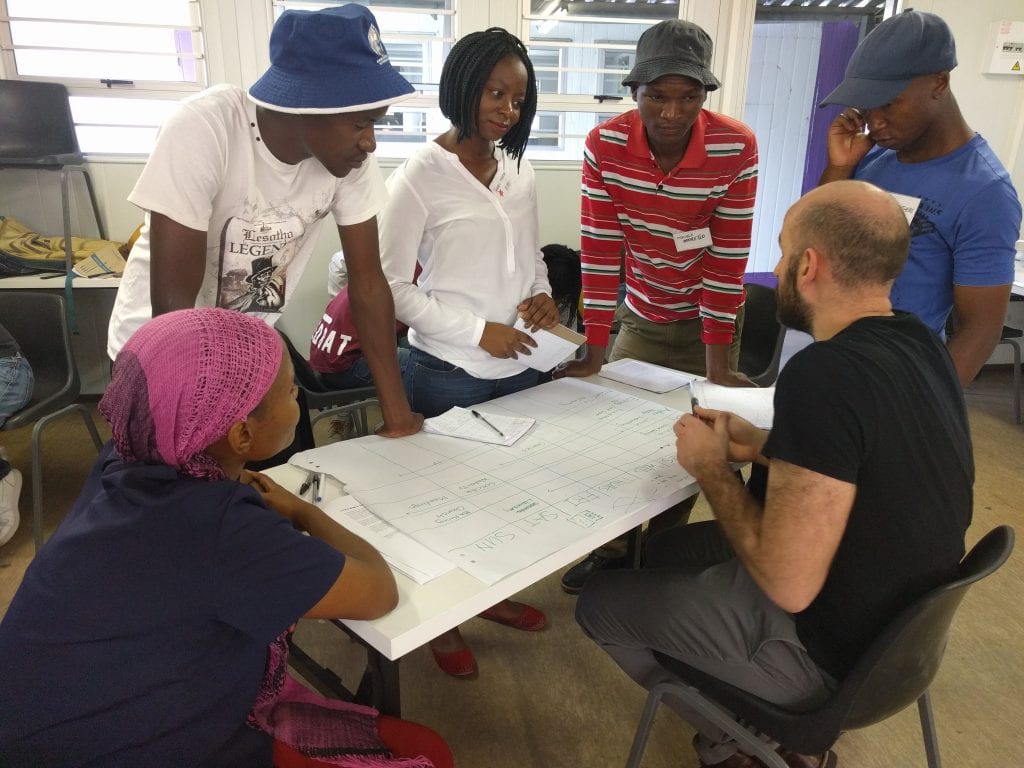
rise promotes innovative and creative designs in every infrastructure it builds to promote sustainability and resilience by incorporating recycled materials into the projects. rise also equips graduates in the built environment with entrepreneurship skills as a measure of eradicating unemployment and contributing to the economic development of the country. Twenty businesses have been created thus far by the rise in loco fellowship alumni in the 3 years since its inception, who in turn continue to hire other youth in their businesses. rise collaborates with the public to jointly implement community-driven development through Participatory Design Workshops. These workshops are carried out in order to share the importance of inclusive design with the partner organizations, stakeholders and community members.

The Learning by Doing methodology, which rise has been using since the organization’s inception, has allowed the fellows to interact with their environment in order to adapt and learn. The methodology gives hands-on experience by allowing the fellows to get immediate feedback by learning from their mistakes, thereby shortening the learning span. 

In light of the most recent accessible data and patterns, practically all nations will find it hard to reach the SDG goals by 2030. The need has never been more urgent for developing countries to ensure effective programs are put in place to meet the SDGs so that no one is left behind. 

The world needs more consistent implementation from leadership, long-term economical practices, strong institutions, education, innovation, partnerships, and services that are sustainable for development.

READ MORE
News

Young entrepreneurs rise to the Covid-19 challenge in Lesotho

Since the beginning of this year, countries around the world have been facing unbearable health and social emergencies due to the global Covid-19 pandemic. In the most vulnerable countries, millions of people do not have access to critical life-saving supplies and basic primary health facilities for hand sanitation. The Water and Sanitation policy of 2007 states that “all Basotho are entitled to have access to a sustainable supply of potable water and to the provision of basic sanitation services at an affordable cost.”

Standing by the policy rise was commissioned by the United Nations Development Programme to make 65 hand wash stations for the Ministry of Health and Maseru City Council to combat the COVID-19 pandemic in Lesotho.  The United Nations Development Programme (UNDP) had learnt about the excellent work that had been done by our in loco alumni in making and distributing hand-wash stations earlier in the year when an NGO called Sepheo had commissioned rise to make and install 10 emergency hand-wash stations in the Motimposo communities in Maseru, Lesotho.

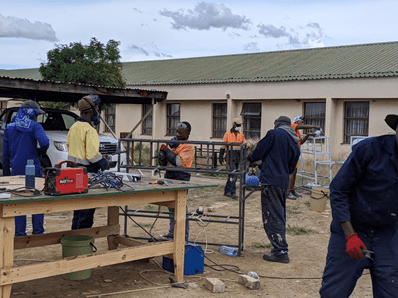
Ten in loco alumni who started their own company called xyz collaborative constructed and distributed 65 hand wash stations. Fifteen for Maseru City Council for both taxi and bus stop areas and 50 for the Ministry of Health which would be installed in clinics and hospitals all over the country.

in loco alumni who have formed a company called xyz collaborative making the hand-wash structures

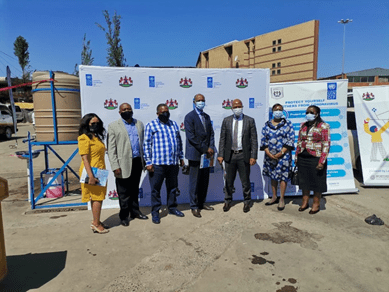
This project was completed in just 5 months and the UNDP hosted a hand over ceremony in Maseru, Lesotho to recognise and appreciate the work of rise, and to introduce the use of these hand wash stations to the community.

UNDP and rise team at handover ceremony

Subsequently, UNICEF Lesotho commissioned rise to build another 40 hand wash stations for health clinics and facilities in all 10 districts of Lesotho to some of the most remote and hard to reach areas of the Mountain Kingdom.

READ MORE
News

Happy National Mentoring Day!

The landscape of business today is constantly changing and increasing in complexity. Innovation is critical to success, and a combination of skills is the key. Having a mentor to help manoeuvre through the business landscape; someone who has more experience, who guides a less experienced person by building trust and modelling and inspiring positive behaviours. A mentor essentially helps their mentee be accountable for their vision, their goals and plans. An exceptional mentor can help a fledgling entrepreneur think through effective strategies, crunch numbers and create realistic business plans. However, mentorship is not only beneficial to the mentee but also to the mentor. The time spent pushing another person towards being the best possible version of themselves develops one’s leadership and management skills.

The need for mentorship in Lesotho

Lesotho is a low- income, land locked country in Africa where the rate of poverty stands at almost 50%. This calls for an urgent need for the youth to venture into entrepreneurship in order to survive. Yet most start-ups in Lesotho fail due to lack of access to business support services. There are no formal leadership development programs and there is an existing generational gap between experienced and less experienced people in workforces. Therefore, there is a need to ensure that professionals are equipped and future- ready. Krynauw Nel, an architect in South Africa, who virtually mentors a young entrepreneur in Lesotho, when asked about the potential impact of mentorship on Lesotho’s economy stated “the biggest issue for a small enclave like Lesotho is exposure to wider practices. We forget that not everyone has access to the same exposure we have even in South Africa if not to the world at large.  Widening the horizons for locals and increasing their networks can make a massive impact. I find a total hunger for that. When that exposure is supported by a compassionate mentor, it can make a huge difference to at least one individual.” Tshepang Thabane, Krynauw’s mentee and graduate from in loco 2018 cohort  also stated that “Lesotho needs to invest heavily in mentorship programs and platforms in order to tackle the high unemployment rate as they help turn lofty goals into tangible goals.”

In this day and age where the 4th industrial revolution has almost taken over, mentorship programs have proven to be game changers and what’s more, they can be done remotely. This is all the more important as we navigate through a global pandemic. 

rise mentorship program

In 2018, we launched a ground breaking fellowship program, a practical ‘learning by doing’ live design, build and entrepreneurship training program called in loco. The fellows receive business and entrepreneurial training as well as an introduction to professional networks, access to market and employment opportunities. in loco fellows practice the principles of entrepreneurship and social impact while receiving hands-on training in community designed infrastructure projects. At the end of each cohort the fellows are given the opportunity to select a mentor from everyone they would have interacted with during the fellowship, we then facilitate a mentor-mentee relationship benefiting both parties.

Celebrate National Mentoring Day with us

We are working on designing and building Lesotho’s first Enterprise Hub for start- ups in the country’s capital of Maseru as part of our rise in the city 2020 campaign. This Hub is a key component to building Lesotho’s entrepreneurship ecosystem to fight against poverty in the country. The wheels of our campaign are the creation and facilitation of a mentorship program that will award start-up architects in Lesotho the platform to be mentored by successful international architects who continue to sign up to our campaign. Watch this brief 2 minute video that explains how it works and help spread the word!

READ MORE
Information Library

Why do we need an Enterprise Hub in Lesotho?

An Enterprise Hub in the entrepreneurial sense is a kind of greenhouse for start-up enterprises. In this protected incubation environment, entrepreneurs with innovative business ideas can be consulted and trained. Incubation Hubs are contact points for entrepreneurial learning, thinking and connecting people where they share, network and mutually benefit from one another.


The importance of having an Enterprise Hub in Lesotho is immense; a place of this nature would be able to open up multiple doors for entrepreneurs and is currently an essential missing piece in the entrepreneurial ecosystem. With the unemployment rate in Lesotho as high as 30% amongst youth, there is a dire need for young people to go into business in order to make a living for themselves and their families. The rate of poverty in Lesotho stands at almost 50% , which calls for an urgent need for Basotho youth to be motivated, skilled and well equipped to create platforms for employment and thus fueling the country’s economy.


The Hub will represent an environment in which aspiring entrepreneurs can prosper in the entrepreneurship learning space. They will gain access to essential business development services from business and financial planning to legal and human resource spets. They will get to share their knowledge through peer to peer interaction, while at the same time having much needed space in terms of offices, meeting rooms and workshops to experiment their ideas and create prototypes of their forthcoming products and services before taking them to market. The Hub will also offer access to market and act as a referral centre linking startups to clients and potential investors, thus being a centre of business excellence acting as a benchmark for other businesses in the country. The existence of this Hub will inspire innovations that could change the livelihoods of a significant number of people living in Lesotho.


An Enterprise Hub therefore signifies a ray of hope for multiple entrepreneurs in Lesotho who have great ideas and new businesses, but lack the platform and tools needed in order to make these ideas and enterprises flourish. The Hub will also be a place of inspiration for the Basotho nation at large; a place where some of the wildest dreams are born and attained, a place to birth some of the most successful businesswomen and men to ever come out of the Mountain Kingdom.
To make all this happen we need to raise $100,000 by December 30, 2020. Learn how you can help here
You can read more about the plans for the Enterprise Hub here

READ MORE
News

Design Competition

There’s something about a change of season that inspires change, particularly spring which is the season we have just started in Lesotho. It births so much freshness, it stimulates new beginnings everywhere.

So in light of new beginnings, we are inviting young Basotho creatives to design a new logo for our organization.

This is a competition – so drink up all your creative juices and design a logo that will blow our minds. Think sun rays / hope / change / new beginnings, think “rise”.

To enter

Send your full name, your social media handles, contact details and your originally designed logo to competition@riseint.org

Competition closes on 15 October 2020. Winner will be contacted within 15 days of closing date.

Best of luck!


Prize

The winner gets a 4-week internship with rise.

READ MORE
News

rise alumni kick off their careers with high-profile EU co-funded project

Here at rise we focus on economic development through job creation, skills development and entrepreneurship, specifically in the built environment. Linking aspiring local entrepreneurs with essential resources needed in order for their enterprises to flourish.

We are 100% self-funding – every dollar donated goes directly to our social entrepreneurship programs. 

We recruit young university graduates from the built sector and train them through our in loco design & build entrepreneurship fellowship program.  After this, we act as a conduit for them to gain access to market, which they would otherwise be unable to reach as young graduates, with no backing and no proven work experience. We fully support and mentor them through the projects they take on and also support them with a tool loan service. 

The partnership with African Clean Energy is exactly the type of project that our alumni need after the in loco fellowship, to help them kick-start their careers and put all the skills they have learnt to the test. With so much uncertainty in the world and a looming economic crisis, the time feels better than ever for them to take on such a challenging role . 

When you consider that the deaths from COVID-19 are currently over 570,000 worldwide, the figures from Household Air Pollution (HAP) are 7 times higher…. EVERY year!  The figure is also higher than the worldwide deaths from AIDS, Malaria and Tuberculosis combined!  Most of these deaths are women and are directly caused by the poverty in which around 2.6 billion people globally live. 

People who do not have access to modern clean energy are restricted to using open fire cookstoves which emit high levels of smoke, exposing users to HAP. Without access to electricity these households must resort to buying costly paraffin and candles for lighting, which as well as being costly, are also a major fire hazard. 

As well as the health risks, there is a huge environmental impact from the amount of wood that is cut from an already badly deforested country with serious soil erosion problems. Additionally, there is a negative economic impact on women & girls who spend hours collecting wood each day, reducing their ability to work or go to school. Those who are not able to collect firewood have to pay for wood or coal which are much more expensive than other solutions.  

Thankfully African Clean Energy (ACE), an international social enterprise, has developed an integral energy solution for off-grid communities in low income countries. The ACE One cook stove uses a combination of thermal and electric generation to provide a clean, smokeless cooking experience for its users. The solar-powered electricity it generates can also be used for LED lighting and phone charging, avoiding the need to purchase candles or pay to charge devices and providing the rural population with digital tools to improve their quality of life.

In a project co-funded by the European Union called the “Lesotho Rural Energy Hubs Programme”, ACE is developing a network of 25 hubs for the distribution of renewable energy products across all 10 districts of Lesotho. Through these hubs, ACE will distribute its renewable energy products, foremost the ACE One cook stove, and provide on-site customer and maintenance services as well as an after sales market for additional renewable energy goods. 

The bid to design and build 19 ACE hubs was a big challenge for our alumni. ACE is backed by the EU so there was a lot of due diligence that needed to be done.  In spite of all the challenges, we were excited that several groups of our alumni from 2018 and 2019 in loco fellowship cohorts put their design skills to the test and won the tender.  It goes to show that their design skills, accountability and attention to detail is up to the highest standards! 

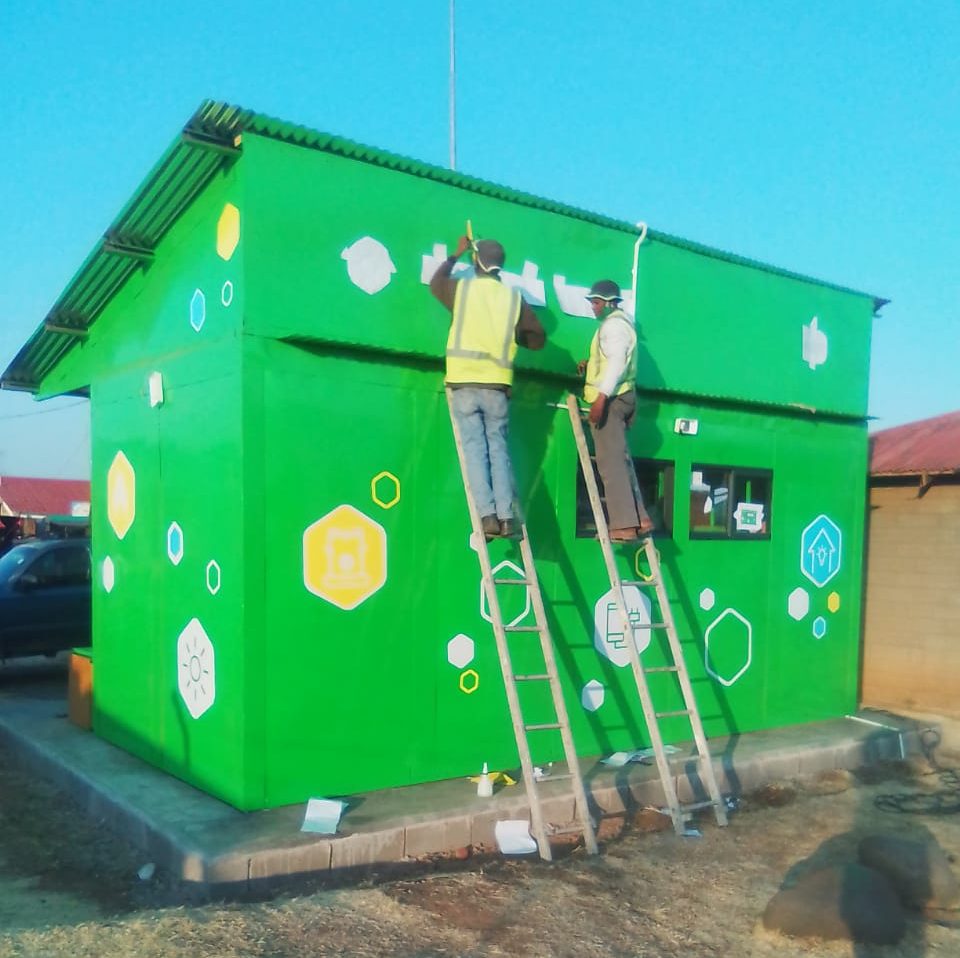
The innovative design solution is able to be completely flat packed, so that it can easily be disassembled and transported around ANY part the country. We are also proud that every single part of the build has been assembled locally in Lesotho, from the steel structure shell to the wooden interior and even the solar power for some of the hubs will be installed by the skills building organisation for young local talent from the Bethel Centre in Lesotho

The hubs will not only put clean energy and solar power in the heart of the hardest to reach communities but will enable community members to run them as rural social enterprises. 

The first hub was installed last week as rise alumni rolled up their sleeves putting the technical skills they learnt in the fellowship to the test.  From steel fabrication to window and electrical installation, assembly and carpentry they are doing it all!  As well as working together to practise the softer skills of project management, problem-solving and working within a strict timeline to bring the project in on time!

The sky is the limit for these young entrepreneurs and we can’t wait to see what they achieve next. 

READ MORE
Community member using Hand Wash StationNews

in loco Alumni tackle deadly pandemic head on!

To date the deadly pandemic known as Covid-19 has spread across all 54 African countries except for two – Lesotho and Comoros! With no cure for the virus, the best prevention is isolation and good hygiene practices.  With a staggering one billion people around the world living in slum like conditions, the question would be how can African nations, especially a country on the lower end of the economic scale such as Lesotho, equip their people with adequate hand sanitation solutions to help fight the spread of Covid-19.

Single Hand Wash Station Prototype

To fill the void, a group of our very own in loco alumni, who have formed a company called xyz collaborative, have been working tirelessly to produce emergency hand-wash stations amidst the 21 day lockdown in Lesotho. Most members of vulnerable communities are without running water and as such are at risk of contracting the virus by coming into contact with contaminated surfaces.

in loco alumni 2019 cohort formed xyz collaborative company working on thir first project

The first batch of hand wash stations was commissioned by an NGO called Sepheo who wanted to support the Motimposo communities in which they operate. Just before lockdown started on 29th March, 10 hand wash stations were made and distributed at strategic locations, by shops, which are maintaining the stations on an ongoing basis. 

Double Hand Wash Station in use by community members
Double Hand Wash Station in use by community members in Motimposo

We are so proud of what our in loco alumni who are managing to work in a very challenging environment; with limited resources since nothing can be imported from South Africa because of the lockdown and within tight deadlines given the imminent pandemic reaching Lesotho.  Moreover the procurement of the necessary materials is a logistical nightmare since hardware stores are closed due to the lockdown.

And transport, is also proving challenging as there are very few taxis and cars on the road and the taxi/ bus fares have sky rocketed, especially since one cannot share a car with so many people anymore.

Single Hands Free Hand Wash Station being developed

The struggles the in loco alumni have to face daily to make these mobile hand-wash stations for communities is a true testament to their determination, resilience and commitment to help their fellow citizens.

We are battling on and making more hand wash stations, constantly improving on the design by making them hands-free thanks to the finanical support from Action Ireland Trust. The next batch of hand wash stations are being sponsored by UNDP for the Ministry of Health with 50 stations being installed at Health Clinics and hospiatls as well as for Maseru City Council who will receive 15 hand wash stations which will be installed in bus stations and other busy areas around Maseru.

Hands Free Hand Wash Station 220L
Hands Free Hand Wash Sation

We will continue to make as many hand wash stations as we can before the funding and resources run out. It is vitally important we give these vulnerable communities the lifeline they need.

If you would like to donate? https://riseint.org/donate/
For more information contact info@riseint.org or go to https://riseint.org

READ MORE