We are thrilled to announce the release of rise International’s Bi-Annual Evaluation Report, highlighting the impactful work we’ve accomplished over the past two years. This comprehensive report encapsulates our dedication to sustainable development and community empowerment in Lesotho.
Key highlights of our achievements.
Thanks to funding from Irish Aid, rise International successfully completed an extensive research on Innovative Sustainable Building methodologies in Lesotho, paving the way for more environmentally friendly and cost-effective construction practices.
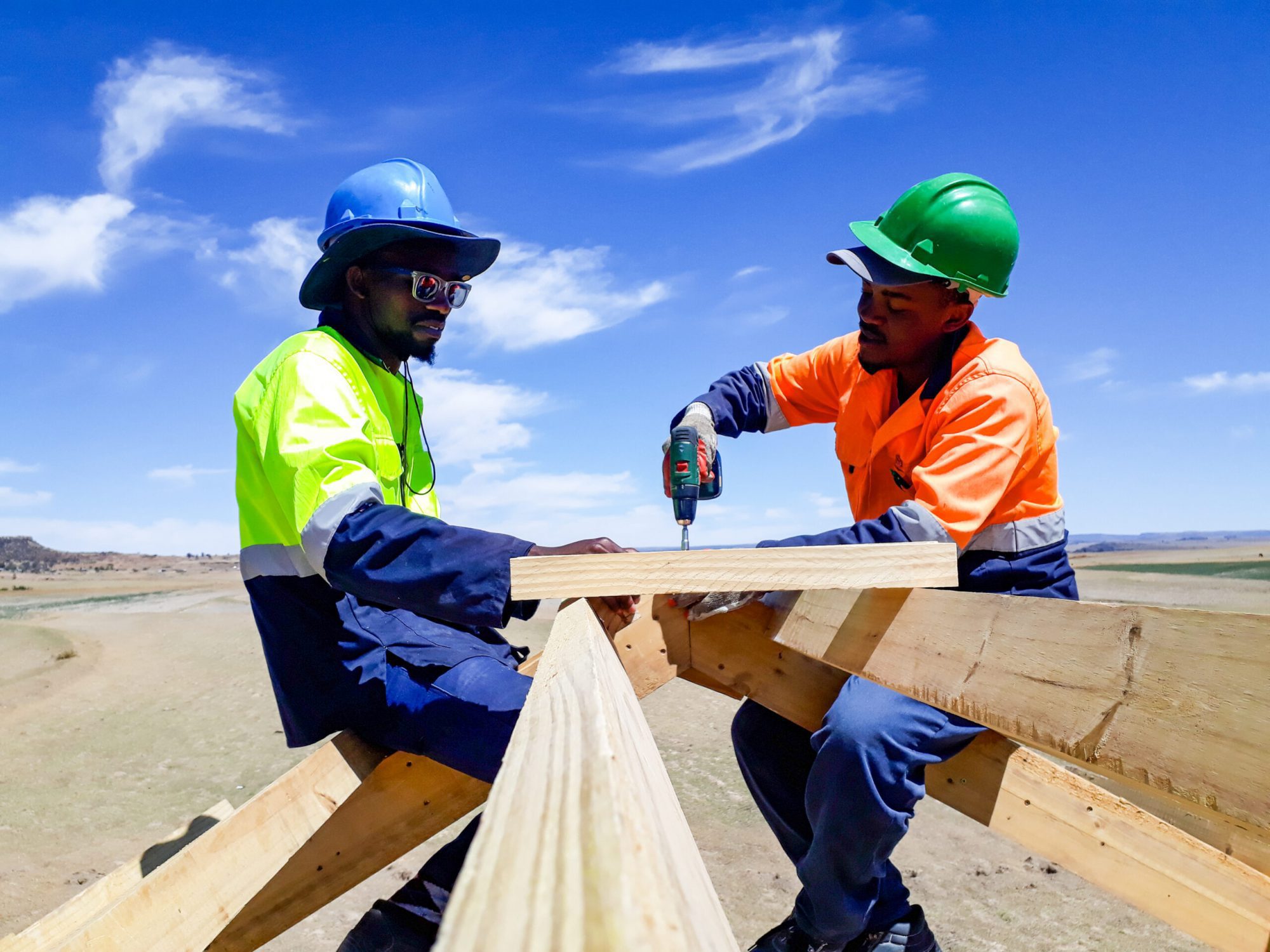
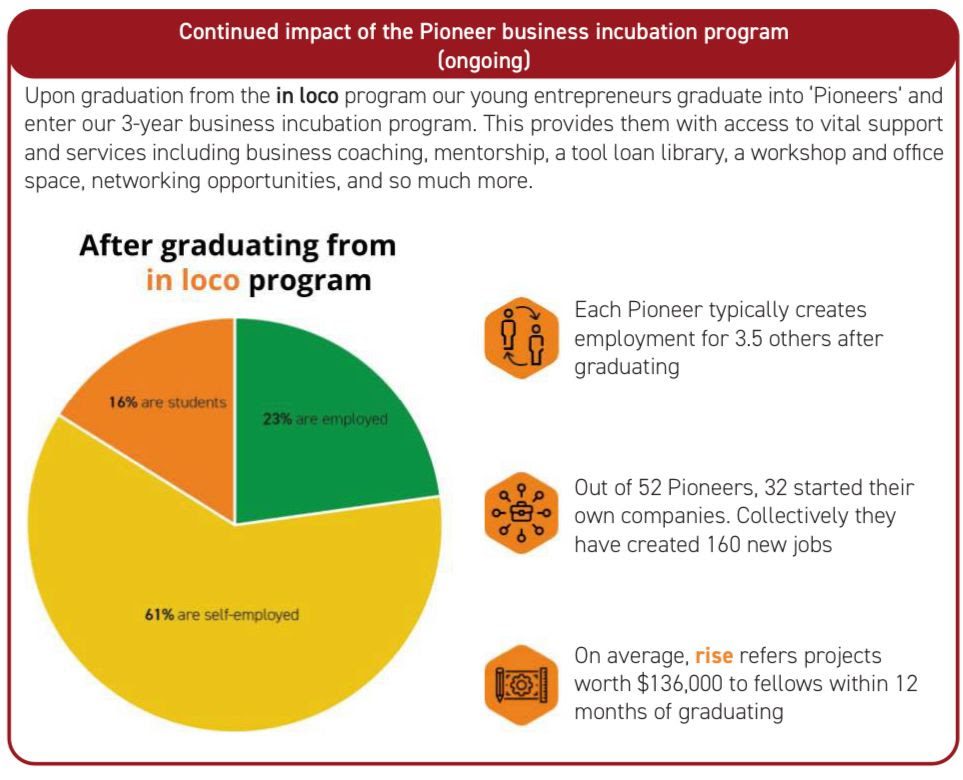
Through our ‘in loco’ learning-by-doing program, we have positively impacted over 17,600 lives in Lesotho, empowering individuals with practical skills and knowledge to thrive in their communities.
Fig 1 : in loco impact
rise International joined forces with the World Bank to address the critical issue of youth unemployment in Lesotho, working towards creating sustainable solutions for economic empowerment and job creation.
We are proud to continue our partnership with Action Ireland Trust (AIT) as their implementing partner. The ongoing 5 Hub Schools project, designed to enhance infrastructure and facilities in priority schools identified by the Ministry of Education & Training, has already brought essential amenities like running water toilets, boreholes, school kitchens, rainwater harvesting systems, and food gardens to communities in the densely populated Lithabaneng area in Maseru district.
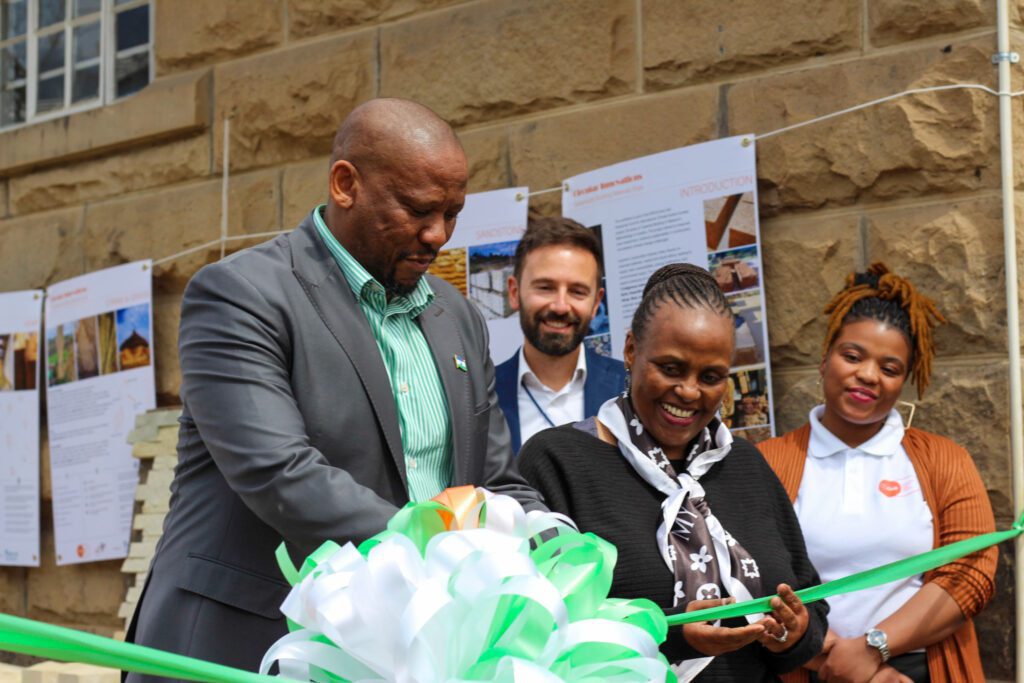
Fig 2 : Opening of Seboka Primary School Kitchen
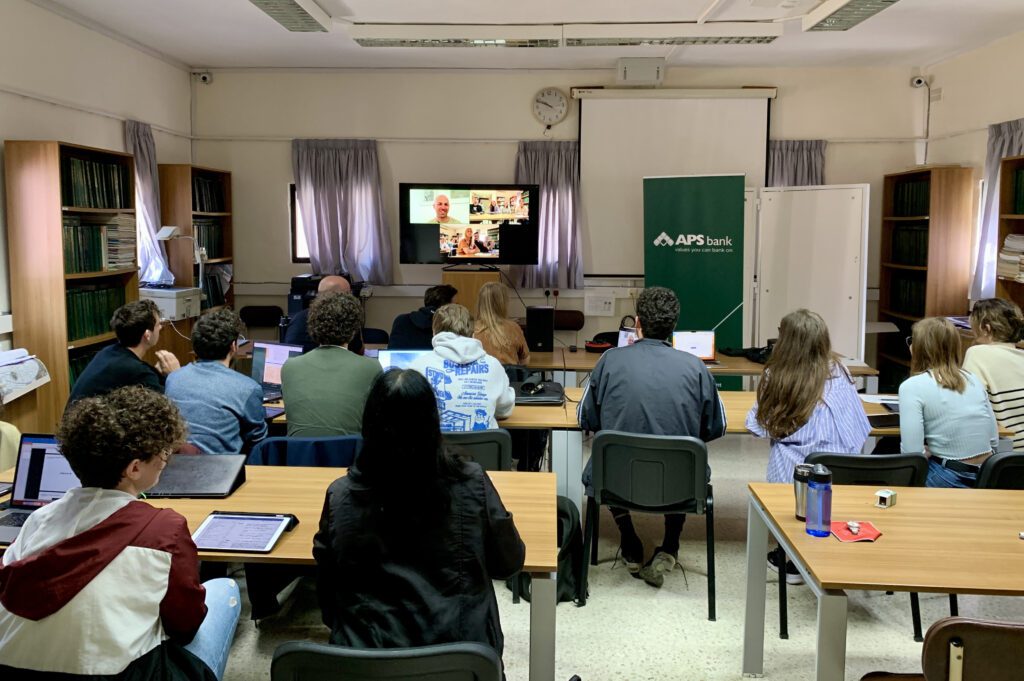
Our collaboration with local and international universities has enriched our programs with diverse perspectives and expertise, ensuring that our initiatives are at the forefront of innovation and best practices.
Fig 3: Uni of Malta Participatory Design Workshop Training
We extend our heartfelt gratitude to all our donors for their unwavering support. Without your generosity and belief in our mission, none of these achievements would have been possible. Your contributions have transformed lives, empowered communities, and paved the way for a brighter future for Lesotho.
As we celebrate these milestones, we are reminded of the collective impact we can achieve when we come together in solidarity and commitment to positive change. Together, we are shaping a better tomorrow for Lesotho.
rise Hosted Athabasca University Students as part of a knowledge exchange and skills sharing program
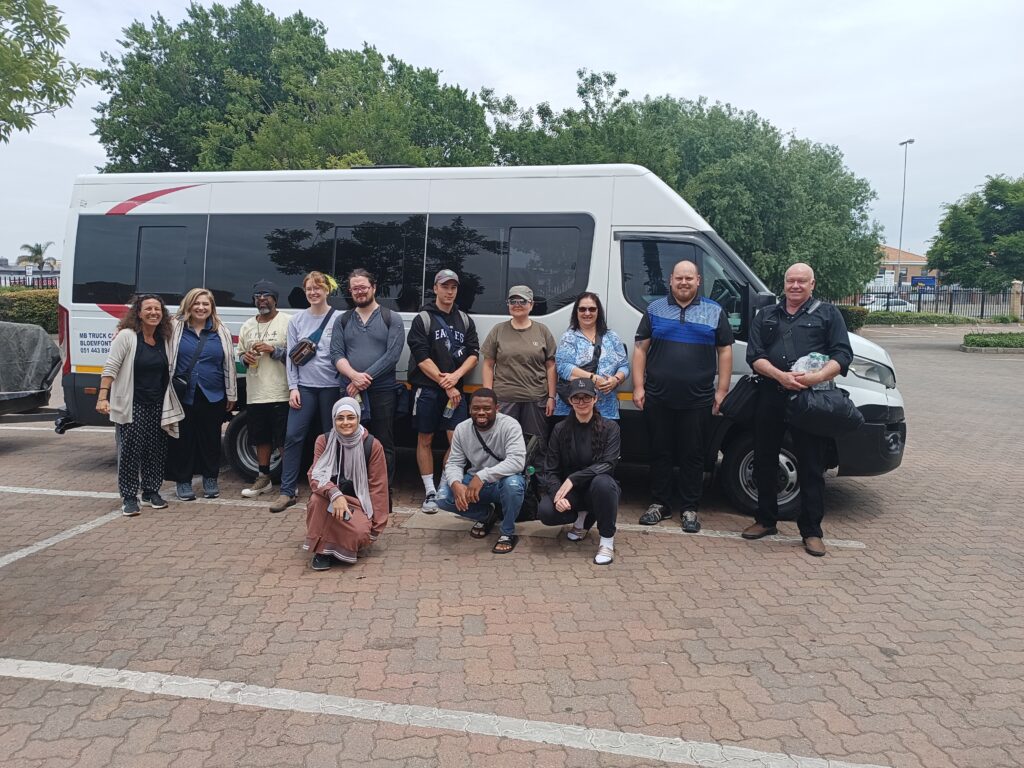
Thanks to a Canadian government-funded program, the Global Exchange Opportunities Program, nine students from Architecture, Heritage Resources Management and Computer Science as well three faculty members from Athabasca University in Canada visited Lesotho for a 2-week visit this month.
rise Executive Director – Daniela Gusman with Athabasca University students and tutors upon arrival in Lesotho
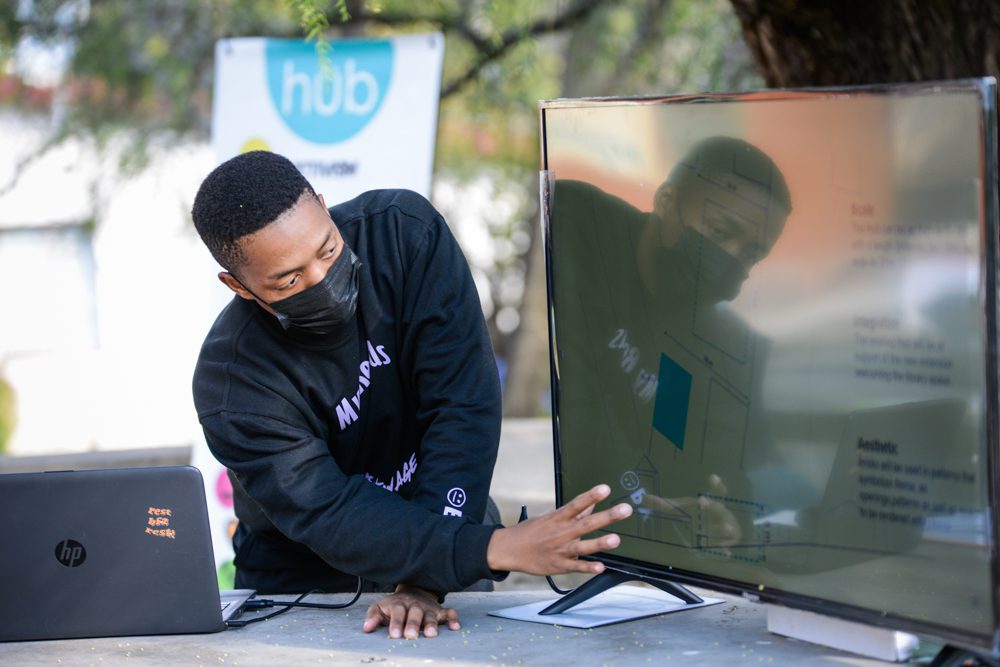
During this trip in Lesotho, the contingent had the privilege of visiting Morija, Lesotho’s cultural and historical center, where they spent a large part of their time. Along with 10 Architecture Technology students from Limkokwing University of Creative Technology, the Athabasca students were trained in how to facilitate a participatory design workshop (PDW) for the proposed development of the heritage park in Morija. After gathering all the opinions, needs and wants of various members of the community as well as key stakeholders, the students worked tirelessly to analyze all the information and came up with some potential layouts for the potential development of the Heritage Park, which they then presented to the community and stakeholders for validation.
Athabasca University students and tutors engaging in a PDW with rise pioneers and Morija community members
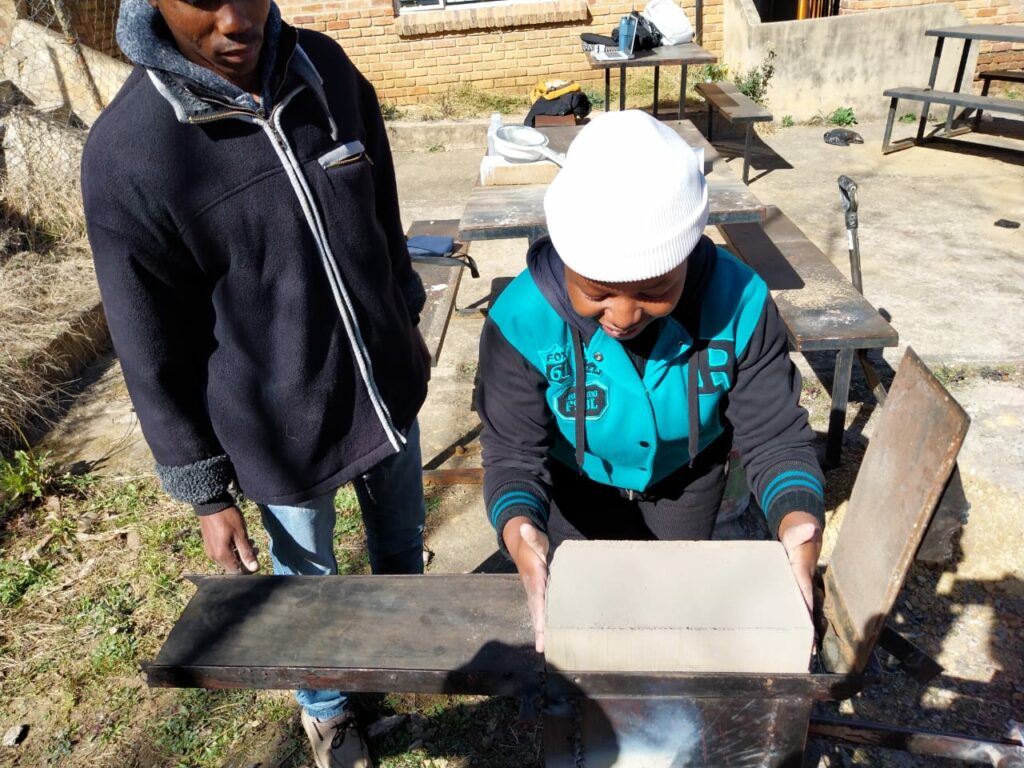
While in Morija, alongside community members and rise’s in loco fellows, the students got their hands dirty as they got to learn about how to construct using rammed earth and how to make earth blocks.
Construction of rammed earth and earth blocks
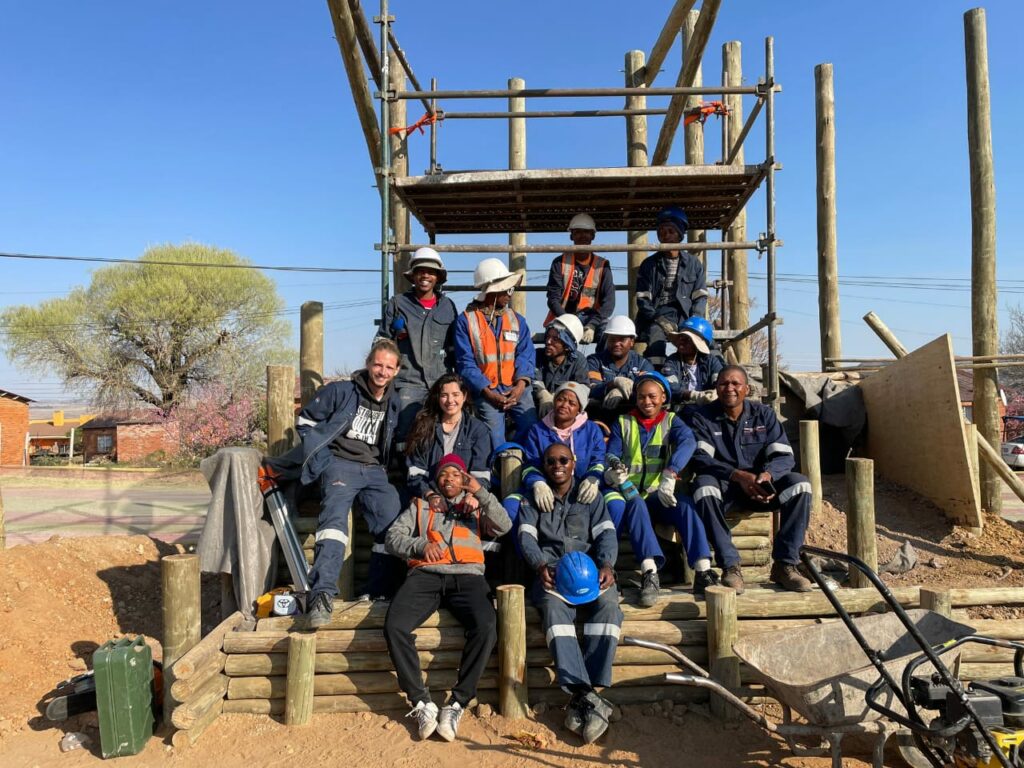
An important element of the visit, was for the students to exchange their knowledge and skills in a practical manner, whereby they got to work hand-in-hand with rise’s in loco fellows who are currently building the Stadium of Life, a football stadium for a non-profit called Kick4Life who use sport as a tool for social change.
The National University of Lesotho also hosted the students for a lecture on The role of Basotho design culture in architecture which was led by Ms Mpinane Qhobela. They also engaged in another lecture session which was hosted by the Limkokwing University of Creative Technology on the History of Architecture in Lesotho given by Ms Boikokobetso Mohlomi which can be seen Limkokwing University Lecture Part 1Limkonkwing University Lecture part 2
As part of the study and exploring Lesotho, the group also visited the national monument and mountain called Thaba Bosiu, the rural horseriding community of Semonkong, the University town of Roma and the capital of Maseru at the National University of Lesotho learning about the Mountain Kingdom’s heritage, architecture and tech challenges and opportunities.
rise Executive Director, Daniela Gusman with the staff of Botho University Lesotho and some of the Athabasca University tutors and students after a lecture.
Lastly the students had an opportunity to interact with Basotho artists, musicians, dancers, participate in a drumming circle as well as visiting some of Lesotho’s successful social enterprises including Pheha Plastic and Noma Pads where they joined a session learning about the establishment’s operations and a hands on experiment of using the machinery machines to make plastic recycled products and reusable sanitary pads!
This visit was part of a 2-year program funded by Global Exchange Opportunities which will also include another group of up to 15 students coming to Lesotho in 2024.
For anyone interested in visiting Lesotho on an educational trip contact us at info@riseint.org or sign up for updates about our International Workshops which you can learn more about here
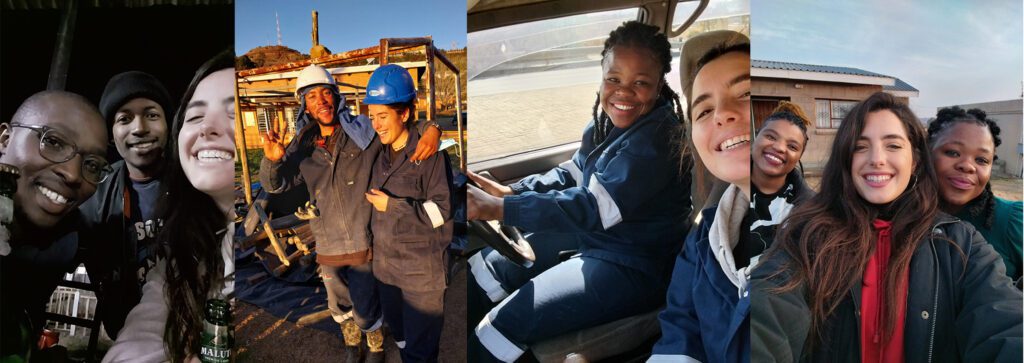
I am Vasiliki, an architect engineer from Greece. During my master’s program in International cooperation in Sustainable and Emergency architecture in Barcelona, my passion for travel and engaging with people from diverse backgrounds led me to Lesotho for a three-month internship with rise international.
After this transformative journey and returning to the comfort of my home, it’s time to share the key aspects of it. Although every experience has its ups and downs, I’ve chosen to focus on the bright side and the new lens through which I now view life.
Working with rise international as an architect in Lesotho was a profoundly enriching and eye-opening experience. It provided me with a unique opportunity to apply my skills and knowledge to address real-world challenges and make a meaningful impact in a community that I grew to deeply appreciate. riseinternational’s mission to support sustainable development and improve the living conditions in Lesotho resonated with me from the very beginning. As an architect, I was part of a dedicated team working on projects that ranged from building infrastructure to community development. Our work aimed not only to create physical structures but also to empower the local community with the tools and resources needed for long-term growth.
Lesotho is a captivating country. Beyond the picturesque landscapes, the breathtaking waterfalls, and the endless mountains, there’s something extraordinary that words cannot fully capture. It’s the ideal place to regain your relationship with nature, to breathe and walk around the most beautiful scenery. It’s an experience you must live to truly understand.
Someone once told me that life’s experiences depend on how we perceive them. Every encounter and every moment shared with others provides us with a unique perspective, a new pair of glasses through which to view the world. If these perspectives resonate with us, we can wear them from time to time, gaining new insights along the way.
“The real voyage of discovery consists not in seeking new landscapes, but in having new eyes”
Marcel Proust.
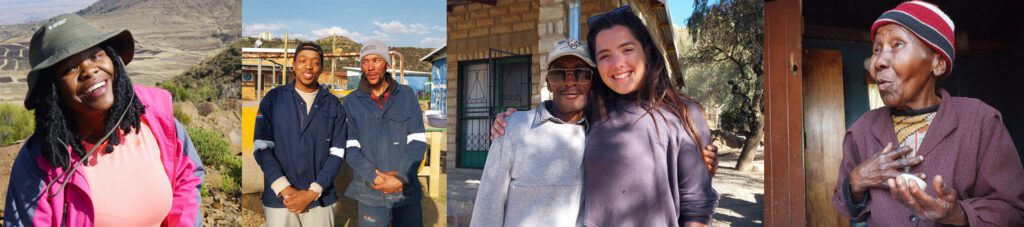
To me, the real value of this experience lies in the people. I had the privilege to collaborate with. Despite our cultural differences and distinct backgrounds, they made me feel like I had discovered my rightful place. The Basotho people lead their lives in a simple, authentic manner, a way that I may have, in many respects, forgotten.
They are warm and have a natural gift for hospitality. They eagerly engage with newcomers, welcoming them into their homes and offering food and drink. In their company, I felt an instant connection to their community. They made an effort to familiarize me with their traditions and way of life but also to learn about my perspective of life and my culture.
Basotho people possess a sense of philotimo, a Greek term, which captures the essence of integrity, honour, and respect, shapes social interactions, fosters strong connections within communities, and underpins the sense of pride and identity. It’s a concept that is difficult to fully capture in words but is deeply understood and appreciated by those who embody it in their actions and relationships.
This experience has not only enriched my professional skills but also left a lasting impact on my perspective as an architect, reminding me of the profound impact we can have on communities in need. In Lesotho, I learned that it’s not just about discovering new landscapes; it’s about gaining new perspectives and insights by embracing the world through fresh eyes.
“Don’t tell me how educated you are, tell me how much you have traveled”.
This sentence from prophet Muhammad has always inspired me, even if I’m not particularly attached to religion, this specific one touches my soul since I heard about it, probably more than ten years ago. My parents instilled the love for travel in me since I was a child and as soon, I was “old” enough to travel by myself I immediately took the opportunity.
I am Emma Biraghi, a 20-years-old Italian woman and unlike all other people that had an experience with rise, I’m not an architecture student. I’m an Italian student of international politics and law and I wanted to do a voluntary experience during summer. The problem was that no organization gave me the possibility to go so far from home at such a young age; however, rise trusted me and, thanks to the fact that I knew the architect Luca Astorri, I managed to do this incredible experience.
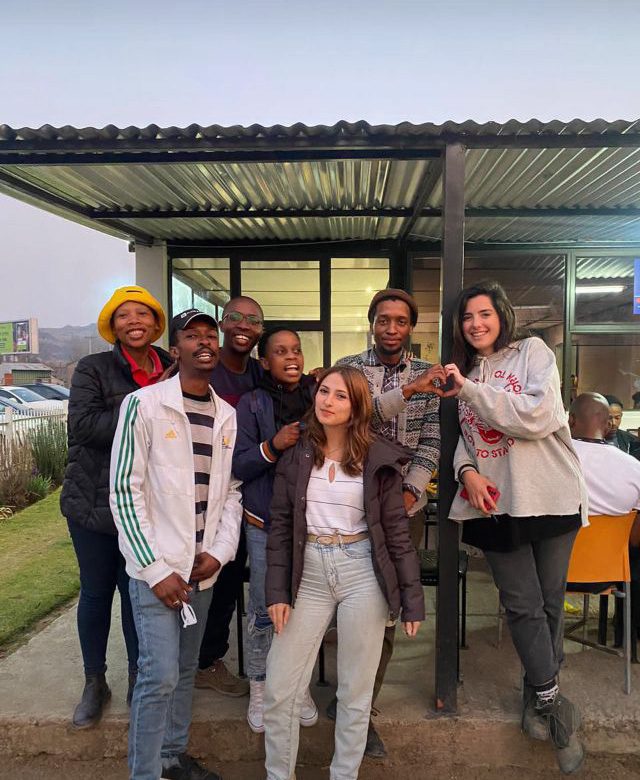
When I booked the flight tickets I was scared out of my wits, I understood that I was about to actually go to Lesotho and the dream was becoming true. It was not only my first time in Africa, but also my first trip without my family nor my friends: I would have been completely alone. Fortunately, Daniela and Luca greeted me with open arms and the reality was not that scary.
I stayed in Maseru for two weeks, but those days were sufficient to make me fall in love with Lesotho: definitely one of the most amazing places I’ve ever been.
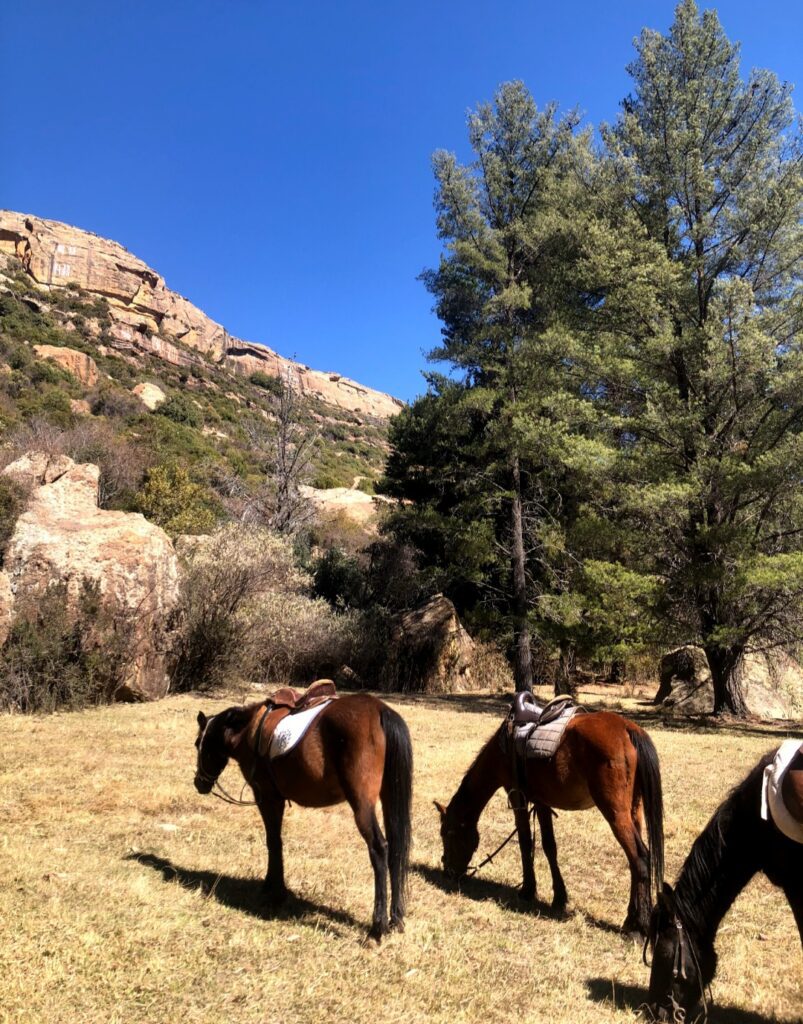
I left the hot Italian summer for winter, which probably is the thing I liked less about Lesotho; however, it gave me the opportunity to see some spectacular views from mountains and go horse-riding to see dinosaur footprints!
Apart from the beautifulness of the place itself, my voluntary experience was great too. Since I am not an architecture student, I worked with a partner of rise: Lesotho National Federation of Organisations of the Disabled (LNFOD) , an umbrella body that advocates for the human rights of persons with disabilities by representing their needs to government, private sector, and the entire community.
The time I spent with LNFOD gave me the opportunity to see a different way to do business: we’re used to imagining business meetings as a group of serious people with suit and tie, but in Lesotho things are different. I participated in a meeting for a microcredit project for women with disabilities in business and the most amazing thing to see was that everybody had the traditional clothes of the Sesotho culture, and they were singing the traditional songs, playing instruments and dancing during break time. This way of doing business shows a strong attachment with the tradition and the community that we lack in Western culture, especially in Milan, where I’m from.
The Basotho society are more traditional, they have such a strong and powerful connection with their community, they have great faith in the world, and they express that by contributing to the growth of their society; for a city dweller like me was incredible to have a contact with a sense of belonging that I never experienced in such a strong way.
Another thing that was unbelievable was the strong contact with nature: Maseru, the capital of Lesotho, is a small city where cows and sheep cross the road with the people! There are many huge parks and in 10 minutes by car from the center it is possible to reach the mountains and the spectacular views that they offer. I strongly believe that the closeness to nature is one of the main reasons why Sesotho people always smile and are so kind, just imagine that they say “Hello! How are you?” to every person they meet in the street.
Leaving Lesotho, I was surely a bit heartbroken, but I’m grateful to have discovered their social connection, which I hope I’ll keep with me now that I’m in Italy. Going on the opposite side of the globe totally shifted my way of looking at the world and opened my mind to visit many more places where I can discover a new perspective, as it happened in Maseru with rise International family.
It is incredible how time flies when you’re having fun! As we look back at the month of September, rise International held various advocacy events with key stakeholders from the private and public sector as well as civil society.
Official launch of the Circular Innovations Expo
Started out with a roundtable discussion with relevant stakeholders in the policy-making of the built environment from government ministries, City Councils, academia, the European Commission, and Habitat for Humanity hosted by the British High Commission in Maseru. The aim here was to present our key findings from research done on indigenous and alternative low-carbon building materials and initiate a dialogue on how to develop an ecosystem towards developing these sustainable, thermally efficient locally sourced building materials.
Fig1 – Collage of the round table discussions with relevant stakeholders led by rise team and the founder – Daniela Gusman
The second event was a knowledge exchange workshop between Lesotho and Irish Town Planners on how learning from good urban planning practices in Ireland can be implemented and disseminated in Lesotho at the district level. The different Ministries that enforce planning regulations and building codes, benefited from the experiences that were shared from Ireland setting them on a pathway to success in reducing Lesotho’s dependence on South African Building Codes and to increase compliance in the country.
Fig 2-3: Attendees of the stakeholders’ conference during a presentation
These engagements were paving the way for the Circular Innovations Conference and Expo which was officially launched by the Principal Secretary of the Ministry of Local Government, Chieftainship, Home Affairs and Police, Mr. Moshe Mosaase. The Conference and Expo were the culmination of 11 months of research and formed the last of three phases of our Research and Innovation program on locally sourced and eco-friendly building materials. The aim of the expo was to raise awareness of the production and use of low-carbon locally sourcedindigenous and repurposed building materials. This was done by showcasing alternative building materials for sustainable building in Lesotho to promote economical and environmentally friendly methodologies within the context of Lesotho’s unique cultural and environmental landscape.
Fig 4-5 Principal Secretary Moshe Mosaase addressing the conference attendees. rise Design and Construction coordinator – Thato Nkikana addressing attendees and some of the key stakeholders in attendance.
The exhibition consisted of a series of installations of sustainable, low-carbon indigenous, and alternative building materials with good thermal qualities. These materials can build houses that are warmer in winter and cooler in summer, reducing the need to burn expensive fossil fuels such as paraffin and charcoal, which helps reduce heating and cooling costs, while at the same time helping the environment by reducing carbon emissions.
Fig 6: Repurposed cans wall, attendees of the expo launch, and adobe bricks
Watch this space….. on next steps where we shall be publishing our findings, reporting on the progress from the pledges made at the Conference and surveys completed by the general public at the Expo on which building materials they are most interested in.
If you are interested in learning more about this initiative please write to us on events@riseint.org
August is a thrilling month that brings excitement and lots of activities through our international workshop which is led by the in loco Director Luca Astorri. We have three young passionate architects and an international law student who came all the way from Greece, Belgium, and Italy to Lesotho, and joined our in loco fellows to learn how to build timber stadium stands.
We are grateful for the participation of Luca De Vos and Marta Gobbo who came to Lesotho as part of their Masters in Architecture at Politecnico di Milan, Vasiliki Zacharia a graduate of Architecture in International Cooperation, Sustainable and Emergency Architecture at Universitat International de Catalunya, Spain and Emma Biraghi, an undergraduate in Politics and Law from the University of Milan, Italy who is being hosted by Lesotho National Federation of Organisations of the Disabled.
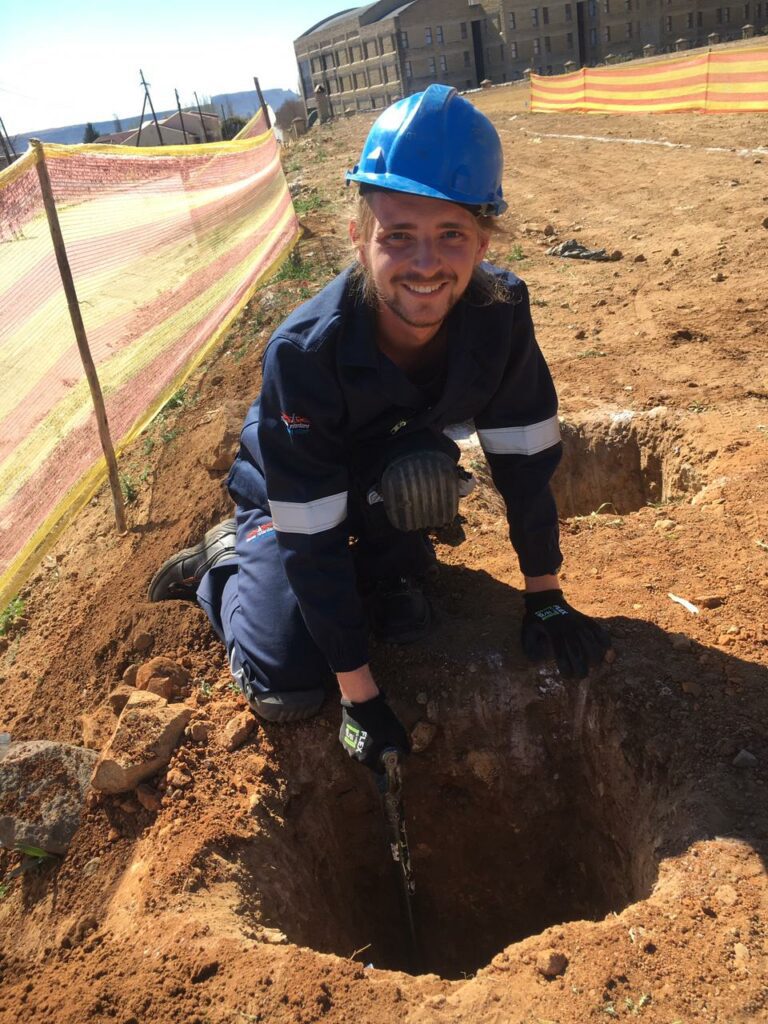
International Student Luca de Vos on-site
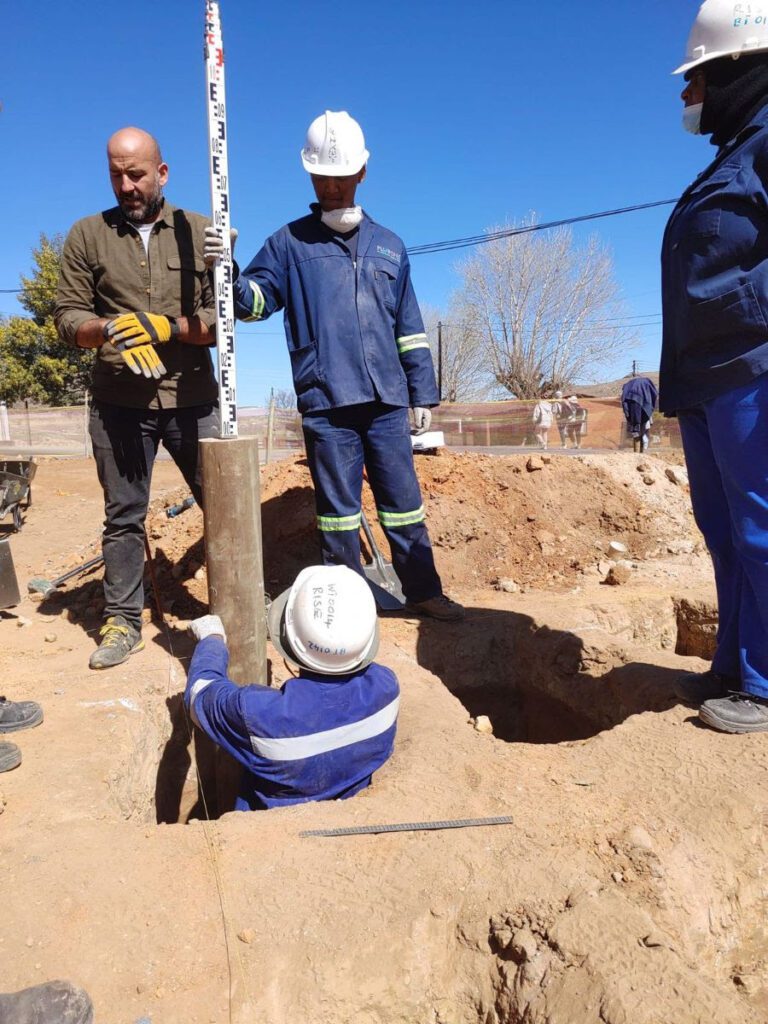
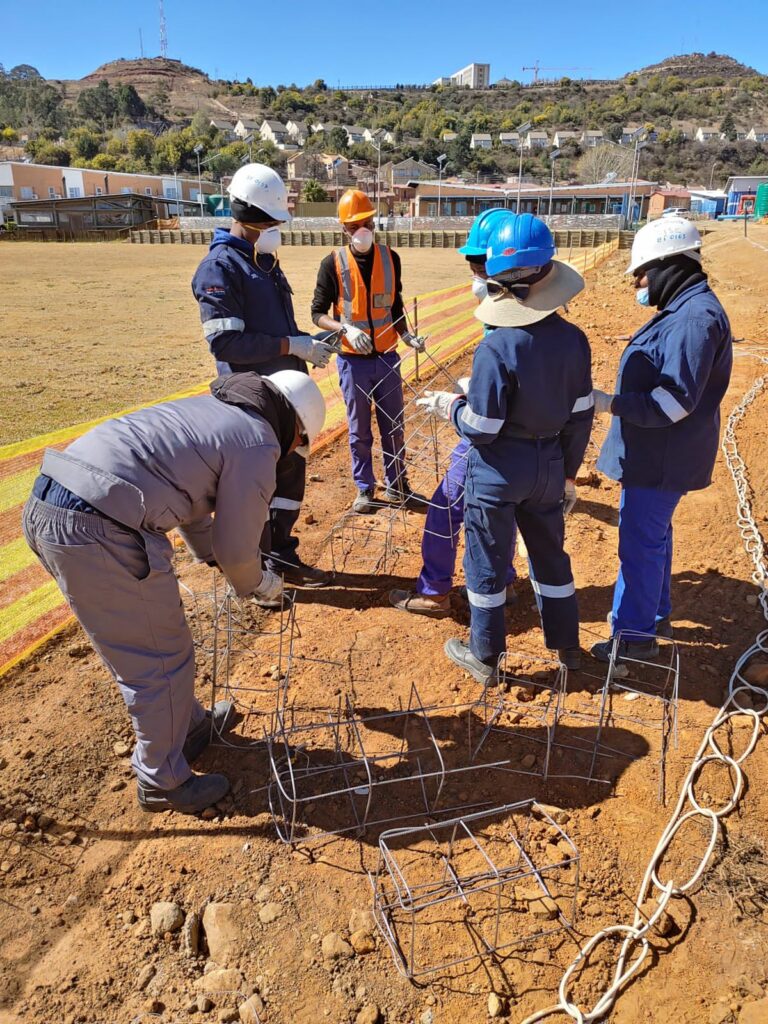
The international students team is also joined by other amazing local participants who are working together in the design and construction of Kick4Life’s Stadium of Life. The construction of the stadium is done using sustainable building materials and indigenous plants in order to create a unique eco-stadium purpose built for social change.
During the two-week international workshop the participants share skills and improve their architctural and construction knowledge while bringing this amazing project to life.
In the end, the idea is that both the local participants and the international students would have gathered enough hands-on experience.
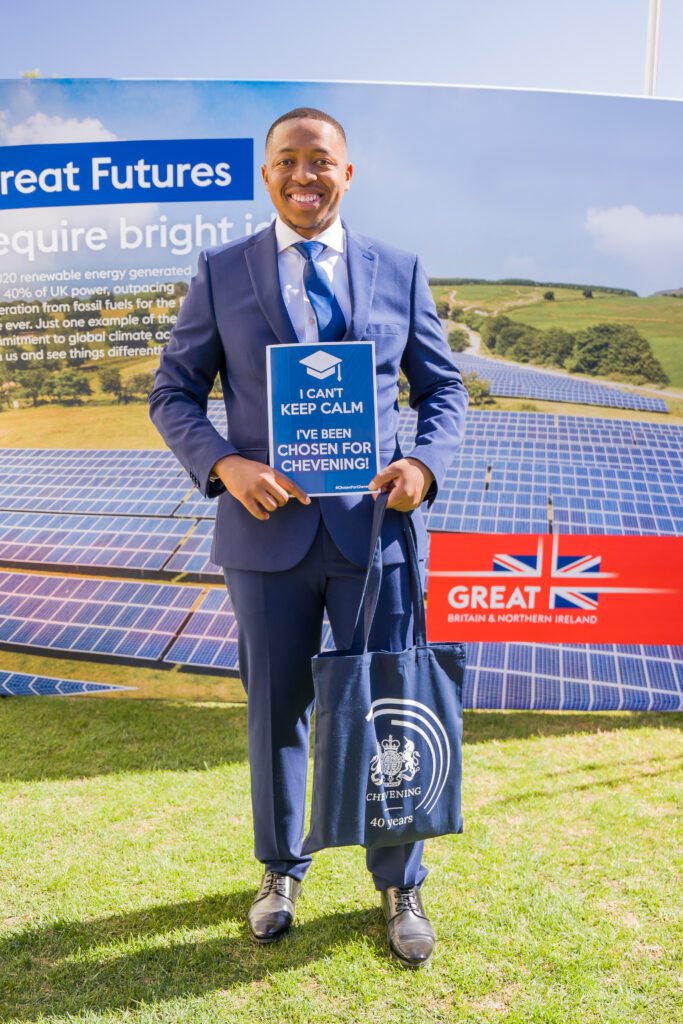
rise International is happy to see one of its long-serving team members, Retsepile Rammoko making his way to the United Kingdom where he will pursue a Master’s in Design For Change at the University of Edinburgh in Scotland.
Retsepile is already a University of Pretoria graduate holding both a BSc Architecture Degree and a Hons Degree in Architecture. Prior to his studies, he shadowed at K.T.M Architects and received a basic background in Architecture as a career.
He is also an in loco 2019 Pioneer and became part of the rise team as a Design and Media assistant following his in loco program at rise. The multitalented architect also took up the role of a site architect at the ongoing Kick4Life Stadium of Life construction while also being a digital media content creator. This multidisciplinary creative hopes to open a creatively diverse architectural studio.
He is amongst the six recipients of the Chevening Scholarships which is the UK government’s international scholarships programme. It is funded by the foreign, Commonwealth, and Development Offices and partner organizations offering awards to study in the UK for one year on a fully funded master’s degree course.
🚀We are thrilled to announce the successful launch of the Research and Innovation program in March 2022! Our mission is to revolutionize sustainable construction materials and significantly reduce environmentally damaging carbon emissions, particularly from concrete and cement. Thanks to the generous support of a capacity-building and knowledge exchange grant funded by Irish Aid, in partnership with Action Ireland Trust, our research division has expanded to explore the use of innovative building materials.
🏗️ Phase I: Pioneering Sustainable Materials In the first phase, we embarked on a groundbreaking journey by selecting six materials, three traditional and locally sourced, and three recycled or repurposed materials. Our objectives were ambitious:
Identifying the sources and availability of these materials
Determining their cost and accessibility
Evaluating the environmental impact of extraction or reuse
Exploring local knowledge and building techniques
Assessing material durability in relation to modern counterparts and local climate conditions.
💡 Phase II: Circular Economy & Domestic Building Materials Workshop The second phase saw the remarkable Circular Economy & Domestic Building Materials Workshop that began on 2nd June 2023 at Limkokwing University of Creative Technology’s Entrepreneurship Acceleration Platform (LEAP) in Maseru. Here, 20 entrepreneurs from various backgrounds and disciplines delved into a 7-session workshop led by industry experts. Together, they explored a wide range of indigenous materials and experimented with alternative construction approaches.
🏠 Introducing Sustainable Materials Participants enthusiastically engaged with locally-sourced and natural materials, such as sandstone, compressed earth block, and thatch. Additionally, they explored the potential of recycled materials, including hemp, wool, and packaging waste. The workshop’s ultimate goal is to create job opportunities through local production of sustainable building materials while reducing the use of environmentally harmful construction products.
🌿 Empowering Entrepreneurs for a Greener Future One participant, Morongoe, who specializes in producing recycled plastic bricks, expressed her joy and appreciation for being part of this transformative program. She believes the knowledge and skills gained will elevate her business as a young entrepreneur. Moreover, this initiative aims to empower entrepreneurs in vulnerable local communities, with a special focus on supporting women entrepreneurs, to establish circular economy businesses.
🏢 Phase III: Paving the Path to Eco-Friendly Building Practices As we look forward to the third and final phase starting in August, our objectives are set high:
Enhancing capacity among Lesotho’s policy-makers
Establishing regulatory professional bodies in the built environment
Compiling building codes for energy-efficient practices.
🌟 Promoting Green Building Practices in Lesotho This project holds immense promise for transforming the built environment in Lesotho! Our research findings will be shared with policy-makers, private sector practitioners, and relevant government ministries. By supporting policy makers in reviewing and revising outdated construction regulations and standards, we aim to foster energy-efficient building practices and contribute to sustainable development in the region.
📢 Stay Tuned for More Updates! We are excited about the strides being made to promote sustainable building practices in Lesotho. Stay tuned for more thrilling updates on this groundbreaking initiative that has far-reaching implications for the future of eco-friendly construction worldwide! Together, let’s build a greener, more sustainable planet for generations to come. 🌱
We are excited and proud to introduce ourin loco fellows for 2023
Meet our in loco 2023 fellowship team. This year we are happy to announce that we have reached another milestone. These fellows are the cream of the crop that was picked out of the largest pool of hopefuls, as we had the largest number of applications this year.
Sipho Thoane – Sipho is an exceptional young man with an unwavering determination to succeed in all areas of his life. His thirst for knowledge surpasses architecture and construction, and he embraces failure as a stepping stone towards his goals. Through the fellowship program, Sipho aspires to expand his expertise in coordination and supply chain management within the construction industry, making the most out of collaboration with people from different backgrounds and professions to achieve extraordinary outcomes. Sipho’s pleasant demeanour, kindness, and warm-hearted nature make him a delightful presence in any setting, further enhancing his remarkable character.
Sello Mohami – Affectionately known as Macala, Sello is a dedicated individual who pursued studies in Construction Management. With a deep passion for the construction industry, Macala aspires to acquire a comprehensive skillset that encompasses all aspects of construction, including plumbing and electrical works from the fellowship program. His enthusiasm extends beyond technical expertise, as he also strives to develop strong leadership skills. Macala is driven by genuine care for people and possesses a remarkable ability to understand and fulfil client needs. In addition to his professional pursuits, Macala showcases his talents on the football field as a player for Kick4Life, demonstrating his well-rounded nature and commitment to both personal and team excellence.
Rethabile Chaka – Rethabile, a talented graduate in Architectural Technology, brings a unique blend of skills to architecture in the fellowship program. With a passion for the built industry, Rethabile aspired to infuse the art of architecture with photography and video production, in order to offer a fresh perspective and creative flair to his projects. His curiosity and willingness to learn the skills and creativity in architecture and photography position him to create visually captivating designs. Beyond his technical abilities, Rethabile’s charming personality allows him to connect effortlessly with individuals from diverse backgrounds.
Muso Molomo – A graduate in Plumbing and Sheet Metal Work, Muso has set his sights on becoming an entrepreneur while expanding his knowledge in various construction fields through the fellowship program. Muso looks forward to acquiring the skills necessary to prepare and present comprehensive reports through his participation in the fellowship program. Though initially a bit shy, Muso’s genuine nature becomes evident as he gradually opens up, taking the time to truly build meaningful connections with people.
Lintle Mofolo – With diplomas in both Civil Engineering and Architecture, Lintle has shown dedication to expanding her knowledge and skillset. Despite her fear of venturing into new territories, she remains determined to explore new frontiers by absorbing all she can in the fellowship program. Lintle’s inquisitive nature and love of learning are evident in her appetite for knowledge, whether it be through reading, watching educational videos or engaging in insightful conversations. Lintle has a passion for growth and a determination to embrace new challenges.
Lintle Ramathatele – Lintle, a Water and Environment Engineering graduate, seeks to gain entrepreneurial skills, enhance public speaking abilities, and learn fieldwork in construction, networking, communication, and collaboration through the fellowship program. Although an introvert, Lintle is known for her exceptional kindness, unwavering dedication, and passion for making a positive impact. Lintle finds solace in reading and researching environmental issues, striving to create a better world for future generations.
Moipone Sekola – Moipone, affectionately known as Ponyda, is a talented graduate in Civil Engineering. Ponyda is excited to participate in our fellowship program to bridge the gap between her academic knowledge and practical experience. Beyond her engineering pursuits, Ponyda enjoys playing tennis and finding joy in comedy videos. With a grounded demeanor and natural leadership abilities, she thrives at the forefront and is highly proactive in her approach.
Liteboho Korea – A dedicated individual who studied Construction Management. With a clear vision for his future, Liteboho is eager to acquire the knowledge and skills necessary to successfully run his businesses and embark on new ventures. Through the fellowship program, he aims to establish construction and entrepreneurial networks, fostering collaboration and growth. Liteboho’s strong work ethic, versatility, and adaptability allow him to thrive in any environment. He excels in teamwork, communicates effectively, and possesses a decisive leadership style.
Makhabane Khoanyane – Makhabane, a graduate in Occupational Health and Safety, eagerly joins the fellowship program to further his aspirations and dreams to become a risk manager and establish his own consultancy in health and safety. Beyond his professional pursuits, Makhabane’s proactive nature, quick wit, and intelligence shine through. He finds joy in exploring the art scene at Cafe What, expressing his creativity through music composition, and venturing into the world of filmmaking.
We are very excited to have received support from Irish Aid through our partnership with Action Ireland Trust to spearhead revolutionary indigenous building materials research, that is aimed at capacitating built environment experts, entities, and regulatory bodies to shift towards more environmentally sustainable building methodologies.
Over the course of 2023, we are going to research Indigenous building materials such as sandstone, thatch, and compressed earth blocks as well as repurposed materials such as wool, hemp, and packaging waste materials.
We hope to develop solutions on how Lesotho can reduce its dependency on foreign imports, which currently stands at 70% for building materials. This will not only help the economy by creating jobs but will also help the environment by decreasing the amount of high-carbon building materials used and the high levels of fossil fuels consumed to keep these thermally inefficient buildings warm in winter. The project aims to document building materials in a catalog that will act as a reference document for everyone in the built environment on material specifications, carbon emissions and so much more.
Other phases of the project include:– Training of entrepreneurs in the Circular Economy (Teaser for activities to watch out for April Newsletter)
-Training of policymakers in the built environment
Celebrating 5 years of operation in Lesotho:
In November 2022, we celebrated 5 years of being operational in Lesotho and being fully led by a Mosotho woman as Country Director, which means that the Lesotho team is now 100% Basotho – an important milestone to have reached, which was part of the plan since we opened in Lesotho. We want to practice what we preach and increase the number of African entrepreneurs working in Africa instead of foreign entrepreneurs. Daniela Gusman, the Founder & Executive Director, has transitioned into an advisory role.
Partnering with Habitat for Humanity toward building environmentally sustainable affordable housing prototype:
At the end of 2022, rise signed an MoU with Habitat for Humanity Lesotho to collaboratively build an affordable housing prototype using sandbag methodology or adobe bricks, to help us move towards more environmentally sustainable affordable materials while simultaneously building comfortable and thermally efficient housing for the poor.
– Wrapping up the 4th in loco fellowship cohort:
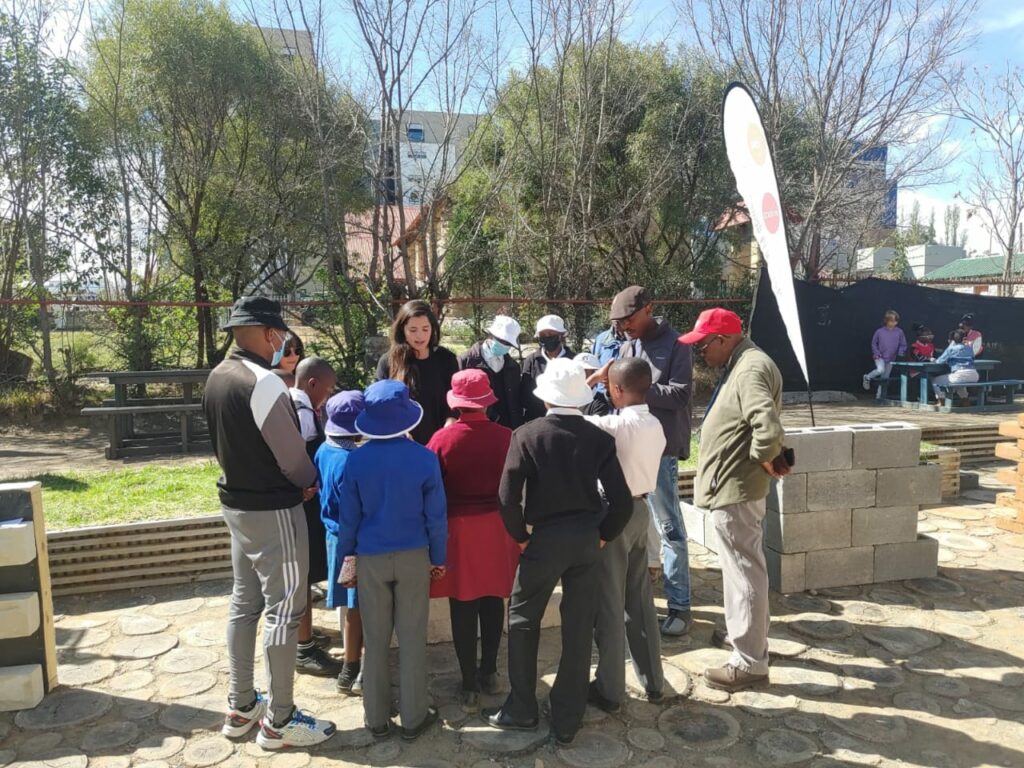
The 4th in loco cohort is currently wrapping up a school kitchen, at Seboka Primary School in the Lithabaneng Area. This area has been identified, by the Ministry of Education, as one of 5 schools in critical condition in the areas of sanitation, food security, and clean water access. The kitchen is being constructed using the innovative and environmentally friendly sandbag method.
Thank you to donors Action Ireland Trust
The opening ceremony is planned for 5th April 2023.
Be part of international construction, engineering, and architecture students from the USA, Europe, and Asia who will participate in the in loco program alongside 10 young graduates in the built industry, benefit from an international design and build experience, and allow yourself to develop design skills suitable for working in challenging environments, and conditions of scarcity of resources.
This year’s workshop will take place from the 14th to the 25th of August 2023.
Join our monthly webinars, where on Thursday 30th March, Elisa Engel, the Founder of Citizen Architects, who also lectures at various universities, will be talking about Ethics and Values in Architecture.
Join our radio shows at Bokamoso FM 97.4, every Tuesday, at 2:05 pm where you can learn more about opportunities in entrepreneurship, the built environment, rise’s projects, and programs.