Lesotho,
una terra con grande sorriso rinchiusa in dei confini troppo stretti per poter
sprigionare la sua forte energia.
Questa è la frase con cui descriverei il Lesotho e la mia personale esperienza in questo meraviglioso paese. Sono un architetto, vivo in Italia, è stata la mia prima volta in Africa.
La scelta di partecipare al programma in loco è venuta molto spontaneamente grazie a un caro amico architetto per cui ormi l’Africa è la sua seconda casa. Non ho fatto domande prima di partire, non sapevo a cosa sarei andata incontro, mi sono fidata di lui e della gioia con cui parla di questo paese. Mi è bastato per comprare il biglietto aereo.
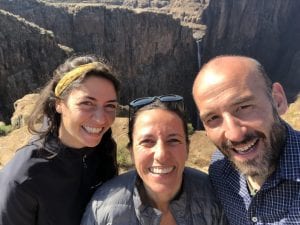
Clarissa Orsini con fondatrice di rise, Daniela Gusman ed il direttore di programmi Luca Astorri
Una volta arrivata sono stata accolta a braccia aperte da un mondo per me completamente sconosciuto. Non è stato facile avere il coraggio di lasciarsi andare a questo grande e profondo abbraccio. Superato il primo momento di stordimento, le emozioni mi hanno sopraffatto, tutto era impregnato di gioia e sofferenza, tutto succedeva contemporaneamente, non sapevo come comportarmi.
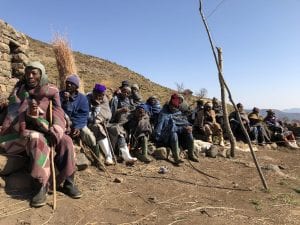
La communità di Ha Sekantsi
E’ necessario liberarsi di molti schemi e
preconcetti mentali per entrare in sintonia con questo paese e dare un
contributo tangibile. Non è stato semplice all’inizio ma i ragazzi della fellowship
sono stati meravigliosi nell’aiutarmi in questo processo. Stando in contatto con loro ho capito che non
è importante da dove arrivi o come sei abituato a fare le cose, c’è sempre
qualcosa di nuovo da imparare e c’è sempre un modo diverso per insegnare agli
altri, non esiste un approccio giusto o uno sbagliato.
La cosa più importante è essere aperti alle sfide e non avere paura, è l’unico linguaggio universale, ed è stato per me il modo per comunicare con loro e sentirmi parte di qualcosa di molto più grande. Sembra un pensiero semplice e per me lo e stato ma solo grazie alle persone che ho incontrato e che mi hanno sempre trasmesso amore e comprensione. Le prime settimane sono state proprio all’insegna di questo: insegnare ed imparare.
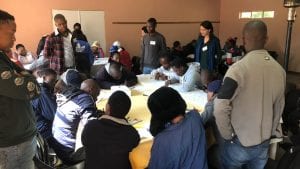
Laboratorio partecipativo di progettazione con il gruppo IDAL
Io, da architetto, ho insegnato a loro quello
che avevano bisogno di sapere in quel momento, li abbiamo seguiti passo per passo
per trasmettergli nozioni e procedimenti importanti nel mondo del lavoro. Loro,
da esseri umani meravigliosi, mi hanno insegnato la praticità della vita, la
capacità di sorridere sempre, o quasi, nonostante le condizioni circostanti non
siano delle migliori.
I ragazzi che stanno partecipando al programma in loco hanno una grande fiducia nel mondo e vogliono renderlo migliore per se stessi, per le loro famiglie e per il loro paese. Quando parlano, non lo fanno mai al singolare, il discorso comprende sempre anche i loro cari e la loro comunità, nella quale mi hanno accolto e di cui mi hanno fatto sentire parte.
I ragazzi della fellowship 2019 con Clarissa
Sono tornata in Italia con una grande gioia
che mi accompagna ogni giorno. Nelle giornate complicate, ripensare al mio mese
in Lesotho riordina le priorità e rende qualunque fatica molto più sopportabile.
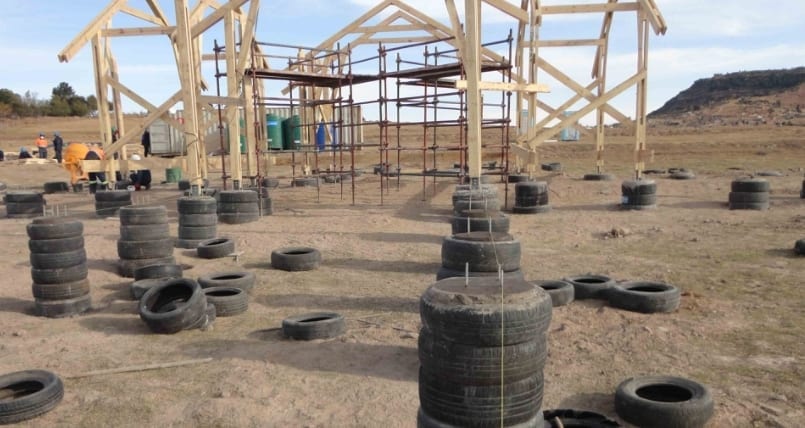
Fondazioni per il progetto IDAL
È un paese che mi ha regalato anche incredibili
paesaggi ed esperienze nella natura ma senza le persone che lo abitano non
sarebbe stato lo stesso. Sono partita da lì con la certezza che sarei tornata e
vorrei che succedesse presto. La lezione più importante che credo di aver
imparato è che le emozioni ogni tanto e bene lasciarle da parte e portare
solamente se stessi imparando a essere pratici, pragmatici, fare quello che serve
dove e quando serve, senza troppe domande, dando solo la propria completa
disponibilità.
Lesotho, a land with a big smile enclosed in too narrow borders to release its strong energy. For me this is the sentence that best describes my experience in this beautiful country. I’m an architect, I’m from Italy and it was my first time in Africa.
The choice to fly to Lesotho and be part of the in loco fellowship came very spontaneously thanks to a dear architect friend, Luca Astorri, for whom Africa is his second home. I didn’t ask questions, I didn’t know what to expect, I trusted him and the joy on his face while speaking about it. It was enough for me to buy the ticket.
Clarissa Orsini with rise’s Founder, Daniela Gusman and Program Director, Luca Astorri
Once arrived, I was welcomed with open arms by a world completely unknown to me. It was not easy at all to have the courage to let myself free to fall in this great and profound embrace. After the first moment of dizziness the emotions overwhelmed me, everything was impregnated of joy and suffering in the same moment, I didn’t know how to behave.
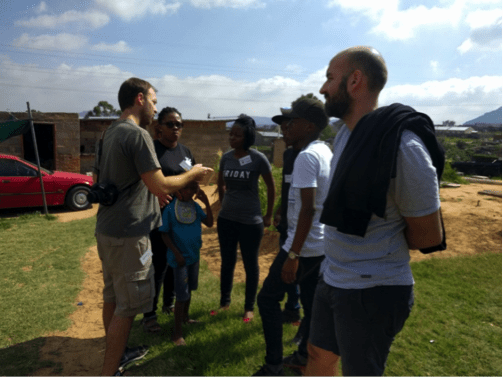
Ha Sekantsi, Community Meeting
It is necessary to get rid of many mental patterns and preconceptions in
order to be in tune with this country and make a tangible contribution. It
wasn’t easy at first but the guys from the fellowship were wonderful in helping
me with this process. Being in contact with them I realized that it is not
important where you come from and how you are used to doing things, there is
always something new to learn and there is always a different way to teach
others, there is no right or wrong approach. The only thing that matters is that you have
to be open to challenges and not be scared, this is the only universal language
and for me it was the only language to communicate with them and feel part of
something much bigger then myself. It seems simple and for me it was, but only
thanks to the people I met who have always transmitted love and understanding
towards me. The first few weeks were just about this: teaching and learning.
As an architect I taught them what they needed to know at that time, we followed them step-by-step to convey the important notions and procedures to the world of work. As wonderful human beings they taught me the practicality of life, the ability to always (almost) smile, despite the surrounding conditions.
They are participating in this
fellowship because they have great faith in the world and they want to make it
better with their contribution for themselves, their families and their
country. When they speak about something, they never do so in the singular
form, the speech always includes their loved ones and their community in which
they welcomed me and they made me feel part of it and I will never stop to
thank them for all of this.
in loco fellows 2019 and Clarissa
I feel really grateful to all this.I came back to Italy with a great joy that accompanies me every day. Even in difficult times, thinking back to Lesotho reorders priorities and makes fatigue much more bearable. It is a country that has also given me incredible landscape memories but without the people who live there it would not be the same.
Foundations at IDAL Centre
I left from there with the certainty that I would come back and I would
like to come back soon to be really useful for whatever is needed. One of the
most important lessons I have learned is that, every now and then it is good to
leave the emotions aside and bring yourself into the capacity of being practical,
pragmatic, doing what is needed where and when it is needed without asking too
many questions, and making yourself completely available.
For too long a time, I believed that success in the construction industry in the tiny Kingdom of Lesotho had been reserved for prominent professionals who have grown with stature in the country. That employment didn’t include all but those individuals for whom the society has great reverence. To an extent, there is truth to that; experience definitely sets precedence in a sense of surety, especially when we consider the amount of knowledge one should have when creating something as complex as a house. Even so, this is only a part of a large whole.
I got introduced to rise
through one of the lecture series they run at my school. What caught my
attention about these series, along with the film debate sessions, was the
creation of an interactive space for people of predominately students and
recent graduates of different disciplines within the built environment. This
habitat was a rare yet an exciting setting to be part of, and a much needed one
at that.
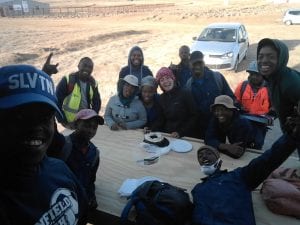
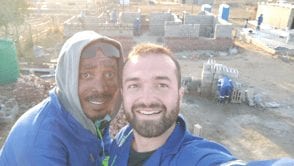
Kole taking a selfie with some of the other in loco fellows
My interest in the organization of rise grew amicably with each interaction, whether it be social
media, or community donation drives. Then finally, I came upon an advertisement
of a job application for the next cohort. I was religiously following the
cohort progression of the GLC Centre by then, and I did not want to miss out on
the amazing opportunity to become part of their pilot program, in loco. Without
hesitation, I took a leap of faith, and after a couple of, what seemed all too
long, weeks, I became part of the 2019 cohort fellowship.
Kole sitting on scaffolding with Retsepile – another Architecture fellow
In this venture I have learnt so many skills and trades that I had not thought I would have known in such a short space of time. The profound opportunity to amass a network of skillsets from young and eager individuals has truly been a mind changing experience. By going against the norm where people assume that in order to create a well built structure you have to be very experienced, but that’s not really the case because we are young graduates with not much experience, but we are erecting an iconic building in the country. I have been able to consistently challenge myself while harnessing plenty of techniques including carpentry, social media marketing, as well as my architectural designing craft.
Kole learning by doing
The cohort has taught me that with the removal of a miniature mindset persona of having the experienced gain all the power, it invites a conversation that indulges with not just the freshly eager to work graduates, but also that these creative minds can also learn to create opportunities for themselves and others as well. Entrepreneurship is vital in our communities, and rise has helped me to learn how to harness that power to invoke a positive shift in a life of more than many.
My believes grown from rise can be combined in three words: challenge, change, cohesion.
This time last year it was just an idea. Today, that experience inspired an ambition and a change in my career.
Was it already…? This time, a year
ago?
I still remember various thoughts popping
up during my last day in Lesotho; “Why am I going back? Can’t I stay for
longer? How can I have more of this?”
I am sure, we all have been in the same
waters; the feeling of being satisfied and not wanting to be pinched back out
of the dream.
… And you’re probably wondering, what am I talking
about? Why? What? How?
Here it goes…
This time last year, I had just arrived in Lesotho, a landlocked kingdom surrounded by South Africa. It happened after I was invited by my professor and put into contact with Daniela Gusman, a Maltese citizen and co-founder of RISE International. This opportunity of living, working and learning, whilst being part of a well-needed community construction project came right after completing my studies here in malta with a Masters in Structural Engineering, and, well, I couldn’t refuse it.
Exploring the Kingdom of Lesotho’s mountains
WHY? – Why did I choose to go?
Working directly with the benefitting community, RISE International incubates ideas and manages projects with sustainable niches that can provide jobs for the vulnerable locals and hence starts to rotate the wheel from the life of poverty. Through funds and various helping hands, Daniela offers the locals essential resources, such as business skills, mentorship and start-up funding, which otherwise would be impossible to reach the community. This system, that RISE holds, intends to reduce poverty by helping a community stand on its feet. In fact, the project that I had the opportunity to be part of, involved the infrastructure of a new orphanage for God’s Love Centre in a suburb village of Lesotho.
God’s Love Centre Residence for Adolescent Orphans under construction
GLC has seen a large number of children
benefitting from its service and thus as numbers kept on growing, a sustainable
project by RISE was just like a silver lining; one which not only provided a
roof and shelter, but also job opportunities and learning systems to always
improve the capacity building of the users. The invitation by RISE for
international students in architecture was indeed the idea to connect similar professionals
and train each other through the in loco program – training by doing. This
gives one the best performance stage to learn by sharing various aspects of our
career, both hands-on and through the connections made throughout the project.
More over, I had to meet the team behind the project, the workers themselves
who are actually newly graduates like myself from Lesotho. This project will
serve as a spring board experience for their future professional career.
Adrian with GLC youth helping to convert a container into their computer lab
WHAT? – What have I experienced? Mornings in mid July started with slow crackling sounds of our joints after the frosty, chilly nights which got better as we put our hands to work. I still smile at the flashbacks of us opening the frozen steel container and every piece of material that was left outside powdered with white frost. This was totally neutralised throughout the day as the sun starts shining and so the locals start moving, all sharing a joke, a smile or an experience with a “stranger”. It is not easy for an African citizen to showcase his knowledge in front of a white European.The smiles definitely help to break the ice and after that I really appreciated each and every moment when fellows approached me and taught me something new, “Not like that… try this – we do it this way!”
Madane Bataung, an in loco fellow with Adrian Cassar
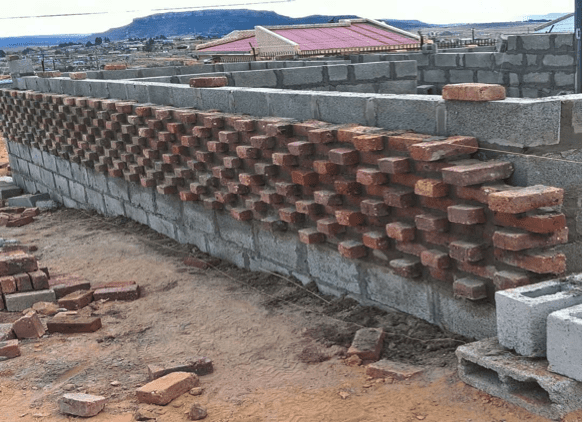
The two weeks on the construction site led me to achieve new skills which I had never ever experienced. It opened my views on new techniques practiced in other countries. Part of the construction involved also vernacular building skills using mud bricks. This was a highlight of the experience. After years of research and learning on such skills, finally I had the opportunity of practicing them and also learning the manufacturing process when we visited a mud brick factory. Two professional architects Luca Astorri from Milan and Pedro Clarke from Portugal mentored the whole process of design and construction. This was a great asset not only for the success of the project but also the growth of each fellow member and thus myself. “Persist in doing something great and not just good!” was a statement regularly shouted out by Luca. And indeed it makes a lot of sense. Being slightly egoistal, it not only makes sense because the product ends up being more of a value but to you yourself, the artist behind the job, will feel much more satisfied when something is done great and not just good! I remember a simple but very impactful example, the brick laying technique. Everyone assumed that the bricks will be put in a stretcher bond pattern as is normally done, until we were challenged by the architects to be different and create something great, not for the sake of being different but for the empowerment that that decision can roll on. Indeed the final design was great – more work but worth the effort, more time but worth the display, more expense but worth the interest!
Local mud brick making company
Working in a team of 15 fellows, sharing responsibility between the team, and managing the site work on a daily basis was an invaluable experience both to my career and personality. After this opportunity I was now just dreaming for a shift in my career.
GLC Commemorative Plaque
HOW? – How did it help my career?
I never wrote down all the positive
outcomes from this experience, but I am sure it will be a long list. However, being
flexible and leaving room for discussion and hence improvements is definitely a
lesson to cherish and perform in my career. When working in different cultures,
one cannot impose his knowledge and usual settings. This in return, leaves
space for creativity and interesting new outcomes. Imagine what you can achieve
after you listen, digest and discuss, rather than just imposing what you
thought is right.
The interest in such projects and in
Humanitarian Architecture has been developing in me throughout the last couple
of years. Through my dissertation research in my final year of studying, I
brushed over the subject of shelters, deploying tents and covers for when
emergency aid is most needed. This topic of research is what led my Professor
to invite me to the Lesotho project. I believe that I found another profound
reason for architecture. Necessities within communities give a project a sense
of responsibility but also great opportunities for creativity, functionality
and success.
Thinking about it … it never stopped, I was
never actually finished. After coming back to our little island of Malta, I had
to actually force myself into other activities. But! This never stopped me from
dreaming, and thinking about what’s next.
Why/What/How is next?
Recently I was accepted by Universitat
Internacional de Catalunya to study for a unique Master program in the field of
International Cooperation with the main focus on Sustainable Emergency
Architecture. This jolt is what I am aiming to be the key to my next couple of
experiences in my career; being able to share my knowledge with vulnerable
communities. The course cultivates the topics of international cooperation on
humanitarian aid actions, including not only developing countries but also
migration, natural disasters and city resilience.
Throughout 2019, a group of 12 adoloscents have moved from the old GLC orphanage to this new building taking a sigh of fresh breath as they train themselves in becoming independent beings before they leave the orphanage at the age of 18. The old building, became too hectic, due to the high increase in orphans, and thus the idea of RISE International was to utilise the second building for the older children and create a place where the users themselves can be the owners. Through sustainable, income generating activities on the same site, such as the IT facility housed in a shipping container and the vegetable garden on the back gives the users not only responsibility in maintaining the place but also satisfaction and holistic growth.
in loco fellows and international students
Converted Container
Computer Lab and Grocery Store: Income Generating Activities for GLC
GLC Residential Centre for Vulnerable Adolescent Youth
My womanhood and age in a male dominated industry has always been a sharp piercing thorn in my side, for unlike most of my male counterparts who had pre-exposure to the built environment in their upbringing, for me it was the dawn of a new world.
In June I was scanning my Facebook newsfeed and I saw a poster about the fellowship. What struck me as odd was the call for recent graduates for too many times the prominence is on experience. After carefully nit-picking the poster, I decided to take a shot in the dark with marginal hope it would lead to a call for an interview on a random Wednesday afternoon.
Fast-forward a few weeks later, I’m accepted into the fellowship and I make a conscious decision for a radical mind-set shift. With this new conviction, I was and still am, open to learning new things, asking questions and never shying away from research. This rejuvenated outlook gave way for acquisition of immense knowledge in carpentry, researching, concrete mixing and social media marketing.
Moreover, it has translated into an understanding that the built environment is a boys’ club thus if I can’t beat them, I have to join them. And in amalgamation with them, what has shone through is the need to speak up and be assertive as a woman and school them and us (women in construction) into a culture that accepts and celebrates each other’s differences, promotes collaborative effort and championing for each other. In this regard, no gender will fall victim to having an inferiority complex.
The most phenomenal thing that rise has done is to provide a platform to learn, hone current skills and without fail, advocate for a teachable spirit which due to constant exposure to captains of industry is a must-have. Befittingly, this spirit is what enables one to learn from fellow fellows as we are a team that stems from diverse professions. And due to this, I am no longer just a water and environmental engineering graduate, but one with carpentry, social media marketing, communication, negotiation skills and so much more.
Here is some fascinating reading from Dr Sean Maliehe (PhD), a postdoctoral research fellow in the Human Economy Programme, Centre for Advancement of Scholarship, University of Pretoria.
Dr Maliehe works on the economic history of Lesotho and on the development of mobile money in southern Africa (Lesotho and South Africa).
He gave a fascinating lecture in Maseru on Entrepreneurship in Lesotho, only his third time presenting the subject in his native country.
Click on links below for each paper:
Potential Colonial Commerce
An obscured narrative in the political economy of colonial commerce in Lesotho 1870 – 1966
“You must be the change you want to see in the world,” Gandhi once said. As a graduate you think that you could never make a difference in the world, but you can. It all starts with your thoughts. They soon become words, which become your actions, which become your habits, which become your character, which become your destiny.
We are constantly making decisions that shape the rest of our lives. Each choice we make can forever affect our future, our impact on society, and the way others perceive us. That’s why it is so important to develop our characters. Even a simple notion can spark a lifetime ideal – positive or negative. When we help out our communities, we are influencing ourselves in a positive way that often follows us throughout our adult lives. Each tiny thought, word, action, and habit, changes your future.
I’m Lebohang Mosiuoa (Figas). The biggest decision that I have ever made was in 2012, when I had to choose whether to study Architecture or a Bachelor of Science. Since I was a little child, I had a passion for architecture, but I was good in sciences and maths in high school. While at primary and high school I spent most of my time on drawing buildings. I had to drop my environmental health science studies and join Limkokwing University of Creative Technology to follow a dream that I have had since I was a child and that dream was to study architecture. My career started in 2016, when I volunteered to join Habitat Youth Build with Habitat for Humanity Lesotho to construct a two-room house for homeless orphanage children at Mafeteng. Later that year, I was among the Limkokwing University Students who were competing to remodel and renovate Lhda Katse Lodge in which our team won.
in loco Fellowship
Learning is a never-ending journey of discovery that can only be enjoyed when it is put into practice. It should never be confined to books and rooms, but instead it should be shared with the world. I’m proud to be an in loco 2018 fellow. When I first heard about the program, I thought it was all about helping an orphanage by building a better place for them. Since it’s in my heart to help vulnerable people, I decided to leave whatever I was doing and join the in loco eight-month fellowship.
Experience at in loco
When it comes to your career, you need to put in the work and practically engage in it as you learn, because it sets the foundation for you to be a champion and the best at your craft. As someone who is practicing architecture, I never knew about participatory design before I joined in loco. In the first week of the fellowship we had a participatory design workshop, which involved the fellows, God’s Love Centre staff and the children. The important things that I learned about it is that, it forces designers to look at things from another’s point of view, it is very important to respect other people’s opinions. It helps designers gather several other facts about certain design situations they may not have been aware of. Because of in loco we now know how to approach design better.
It’s a dream of everyone who practices architecture to work with international architects. Our culture and style of approaching things differ. We learn lot of things from our international architects Pedro and Luca. Because of them, we now know about participatory design, which we never knew about before they arrived. Our local style as people who are practicing architecture in Lesotho, is only to hear what the client wants and never encourage them to take part in the design process. Also they challenged us to came up with a unique brick pattern (see below) that will give the orphanage buildings their own unique shape.
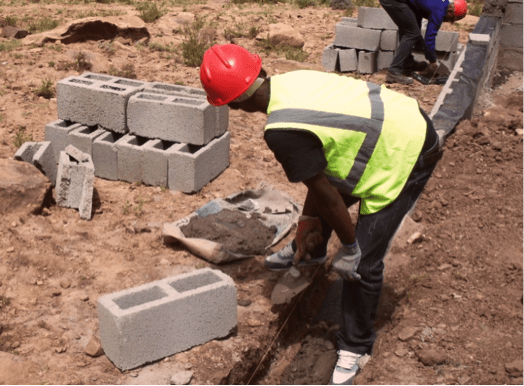
Nothing beats the power of learning by doing, because it creates knowledge and skills foundation that is rooted in your interest and experience of the subject matter. At in loco we practice what we preach, gaining the skills that we never had before. In my life I never thought I would lay a brick, fix the reinforcement and mix the mortar. We do everything by ourselves, but with the help of professionals. I’m proud to say, I can now build a house on my own, because in loco gave us a chance to unveil our hidden skills that I never knew I had before.
Afrisam cement gave us training about the good use of cement, like the quality needed when mixing mortar for plastering, bricklaying and also for concrete. Also I got an opportunity to attend the paint training with Thetsane Paint Centre. I really learned a lot from that training since in my company we are also specializing with epoxy products, but we didn’t know where they are sold in our country. We as Basotho people we use paint for the sake of painting, but we didn’t know the steps to follow when painting walls, ceilings and everything that needs to be painted.
The most important thing that we learnt at in loco is the business training. Even though we are in architecture and built environment fellowship, we are also taught to be successful entrepreneurs. These happen in many ways, like being able to listen to successful business people who come to give us testimonies on how they tackle business and how they started. The important thing that I learned from all of them is that you have to have passion in what you do and also you must have skills. You really don’t need capital to start a business, but as little as you have you can start a business.
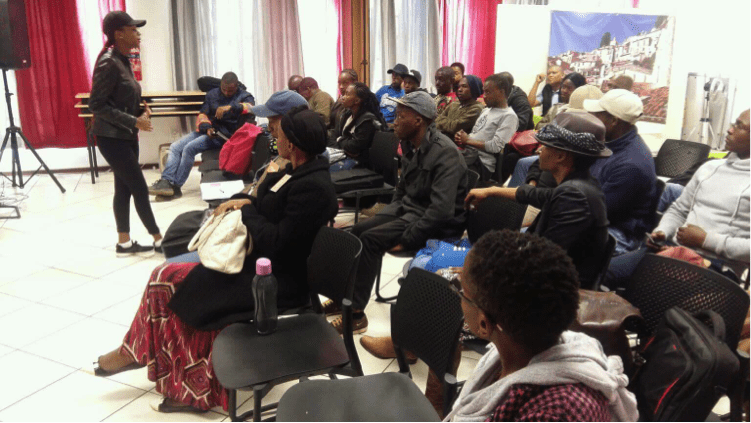
Lastly, we learn more about entrepreneurship through the lecture series that are held every month by rise, where successful entrepreneurs and architects share their experiences and business skills to the students and inspire, graduates, lectures and the public. Also the film screenings that are held every month, whereby we have interesting discussions after watching the selected video. It also forms part of our learning as we share and discuss the problems and the solutions that face our community.
In the fellowship we all have roles that I think are going to help in our future. At the moment, I’m a logistics and plant manager. I make sure the tools on site are well protected, safe and clean. For me it’s quite a challenging role because, we as people are not the same, some are irresponsible and some are not cooperative. This kind of work requires a person to keep their eyes open all the time, because some materials might disappear and you never know where to find them. We now have our first two international students from India and Malta from the faculty of Architecture and Structural Engineering, who I believe we are going to learn a lot from them.
After the fellowship
Since I’m from a country of people who believe that, constructing a house is only for people who have money. I’m going to encourage the people to use locally available materials, like building with clay bricks. Lesotho is one of the coldest countries during winter and many people especially living in the urban areas spend a lot of money to warm their house. I’m going to introduce the cheap method of keeping the building warm in winter and cool in summer that I learned from the fellowship.
Adventure and Passion; the two words that come to mind when Mamanti Phothane Makara is mentioned (by the way that is my name). They tell me I am “generally” friendly and I have a charismatic smile and I believe them 🙂
I am very passionate about architectural design and interior life in general, but when I need to relax I like to tour and bike; I just love the feeling of the pumping adrenaline. In the biking language I am a “biker chick” well, let me not go much into the details of what that means, but for sure I am a biker.
On the side of my professional passion; Architecture, I am a proud member of the in loco program. I am learning a lot here and becoming better each day. Through the business trainings in the program, I am becoming a better entrepreneurial thinker; which is helping me in my existing businesses.
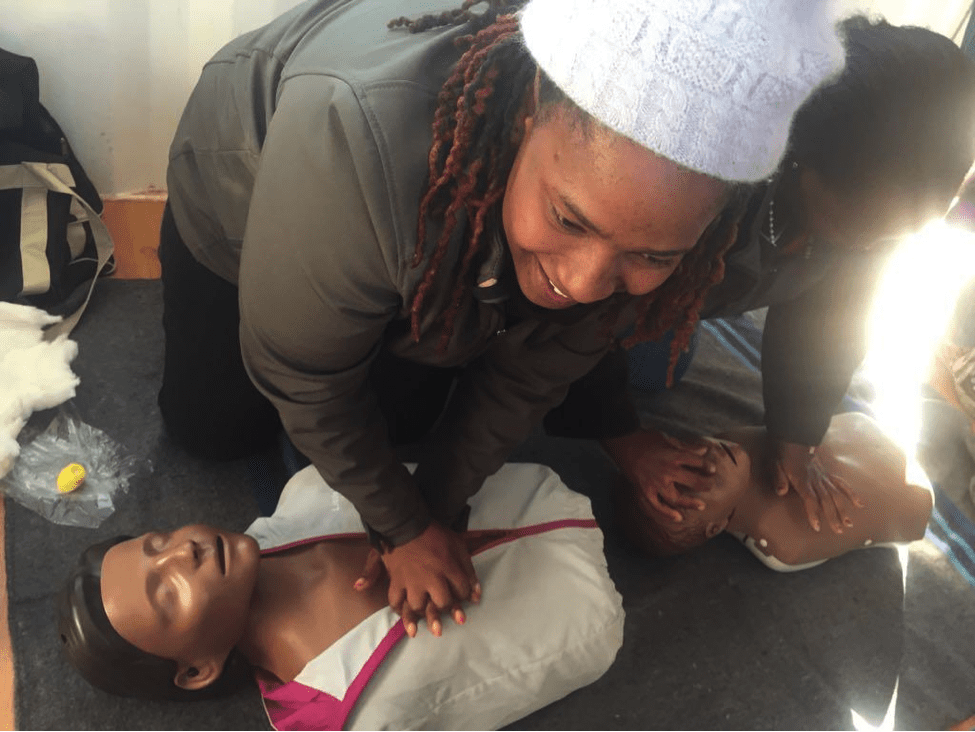
As I mentioned, I am learning a lot! I am grateful that I had the opportunity to be part of the First Aid Trainees who are supposed to always be ready on site in case of an emergency. It was not only fun; it was eye opening to the kind of person I am when it comes to dealing with emergencies and the importance of avoiding them.
Another learning opportunity I got was training by Afrisam, a cement manufacturer. We learned how to mix mortar and how to lay bricks. When we were told we are going to lay the bricks ourselves I must admit I was a little scared but the training made me realise that it is not so hard. The certificates we received after the training was the cherry on top; it made me feel like a professional in bricklaying.
Who would have thought that one day I, an Interior Architect, would be given a chance to be dealing with the procurement of such a prominent project but yes, in loco made me step out of my comfort zone completely. I am thinking outside of the box now as far as my career in the built environment is concerned. I am just a week into the role of a buyer for the project and I am looking forward to the next few weeks in this role.
Building confidence came in the package for me as well because one of the unexpected days I had to present to the representatives of World Bank and since that day forward the sky is limitless. I could pinch myself a thousand times; like, me presenting to such high profile people, wow! Not knowing that I will later discover that it was not going to be the last. The great connections we are making at in loco are amazing.
We are also expecting international students from the built environment to visit us in Lesotho and it is really exciting and we fellows are looking forward to meeting them. I am already thinking of places to take them if we get the chance. They will definitely bike with me at least once.
On top of all that, the most wonderful thing is to give back to the community. Having been given the chance to improve people’s lives and value to their wellbeing. Working closely with the orphanage only opened my eyes to the other side of the world and has helped me to value every opportunity that comes my way, and it really helped me to appreciate life as it is.
That is how much experience in the fellowship has been so far; full of learning, fun, out-of-the-comfort-zone experiences and a lot of self-discovery.