News

Building Sustainably: rise Empowers Local Masons with ICEB Training

As part of the ongoing “Build Smart, Build Local” initiative, rise International recently hosted a capacity-building workshop at Durahm Link, Maseru, aimed at equipping local masons with sustainable construction methodologies. The workshop provided hands-on training in various brick production techniques, including conventional concrete, fire burning, and extracted rock approaches. However, the primary focus was on Interlocking Compressed Earth Blocks (ICEB), an eco-friendly, cost-effective, and durable construction innovation gaining traction in the industry.

Enhancing Business Acumen in Construction

Opening the workshop, Business Trainer ‘Maneo Seekane engaged attendees in an interactive discussion on the fundamental principles of running a construction business. She emphasized key areas such as cost and price determination, necessary equipment, and production capabilities that businesses can benchmark. This session encouraged knowledge-sharing, with masons exchanging insights on their current practices, challenges, and innovative solutions.

Proprietor Kefuoe Lefera described the workshop as invaluable, stating, “These sessions are essential for sharing experiences among local entrepreneurs, building confidence in business, and fostering networking opportunities.” She highlighted ICEB’s affordability, noting that “one does not need significant capital to start production.”

Technical Insights into ICEB Production

Rise’s Construction and Projects Manager, Thato Nkikana, led the theoretical component of the workshop, detailing the composition and production of ICEBs. She stressed the importance of selecting the right materials—particularly ensuring a proper ratio of rough sand, subsoil, and mineral content. “We need at least 50% sand and 30% to 40% clay to achieve the ideal composition,” Nkikana explained, adding that sand testing can be conducted using simple household tools.

For ‘Masefabatho Sula, a representative from the Ministry of Gender Equality, Youth, and Social Development, this was her second time attending a rise ICEB workshop. She noted its instrumental role in introducing different brick-making methods. “This machinery is evidently more user-friendly and cost-effective. These workshops are crucial for knowledge-sharing and business growth,” she remarked.

Hands-On Demonstration and Practical Training

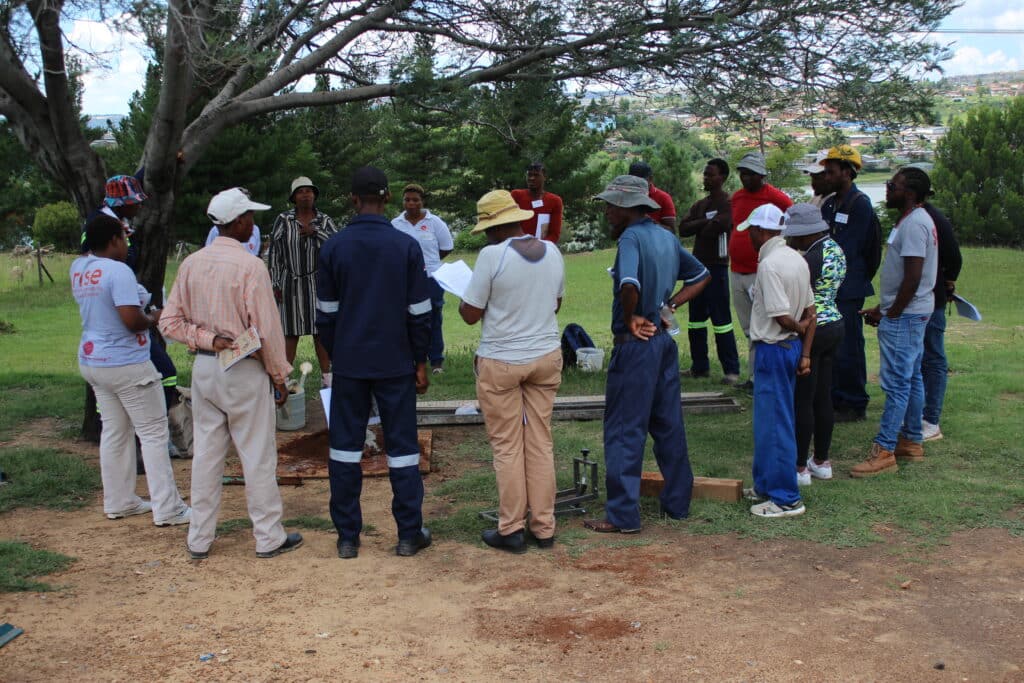
The workshop transitioned into a live demonstration led by rise International’s Construction Supervisor, Ramarou Tsoho, and Construction Coordinator, Tumelo Sethunsa. Both experts guided participants through the mixing process and operational techniques of ICEB machinery. Tsoho demonstrated how to produce full and half blocks, emphasizing the importance of adhering to a guidebook for beginners while allowing for micro-adjustments as experience grows. “Following the correct process ensures consistency and quality in production,” he advised.

Attendees were given the opportunity to operate the machinery, providing them with firsthand experience. Local businessman Makhetha Khoabane acknowledged the significance of ICEB technology in expanding his brick-making business. Similarly, Phoofolo Khoabane expressed enthusiasm about acquiring ICEB machinery, citing its lower production costs compared to conventional methods. “Owning this equipment would allow me to scale my enterprise efficiently,” he stated.
Rise International’s Commitment to Sustainable Development

Rise International continues to champion sustainable development through its various projects aligned with the Sustainable Development Goals (SDGs). Notable initiatives include the Stadium of Life and the 5 Hub Schools project, both of which incorporate eco-friendly materials such as timber, sandbags, and ICEBs. One of the organization’s significant achievements is the construction of the Motimposo Primary School Kitchen Pavilion using ICEBs—a fully operational facility that has greatly improved meal preparation for students.

Through initiatives like the ICEB workshop, rise International remains dedicated to fostering entrepreneurship, promoting innovative building technologies, and empowering local communities in Lesotho. As the adoption of sustainable construction practices grows, such training programs are essential in driving economic and social development across the region.

READ MORE
News

January 2025 Highlights

We hope that 2025 has started well for you.  As we step into the 2nd month of 2025, we are filled with optimism and enthusiasm for the journey ahead. We are delighted to share updates on our ongoing projects and the incredible progress being made thanks to your continued support.

Progress in Mokhotlong with SolidarMed Lesotho

Our partnership with SolidarMed Lesotho is off to a strong start. The design phase of the new youth center and health and community facility in the highlands of Mokhotlong District is underway and is expected to be completed by Mid March.   This innovative shipping container conversion into a youth centre which is being executed by our 2019 Pioneer, Bokang Tjakotja who founded BEEK Projects,  is a testament to the power of sustainable design and our pioneers’ dedication to creating meaningful solutions for underserved communities. We look forward to sharing more updates as this transformative project progresses.

Empowering Pioneers Through Collaboration

January marked another milestone for our Pioneer Business Incubation Program. We continue to guide and equip our Pioneers with collaborative skills through clusters designed to enhance collaboration and skill-building dynamic workshops focused on project management, equipping our pioneers with essential tools to lead impactful initiatives. The Mokhotlong project continues to showcase the strength of this program by providing social enterprise opportunities for our Pioneers to thrive. 

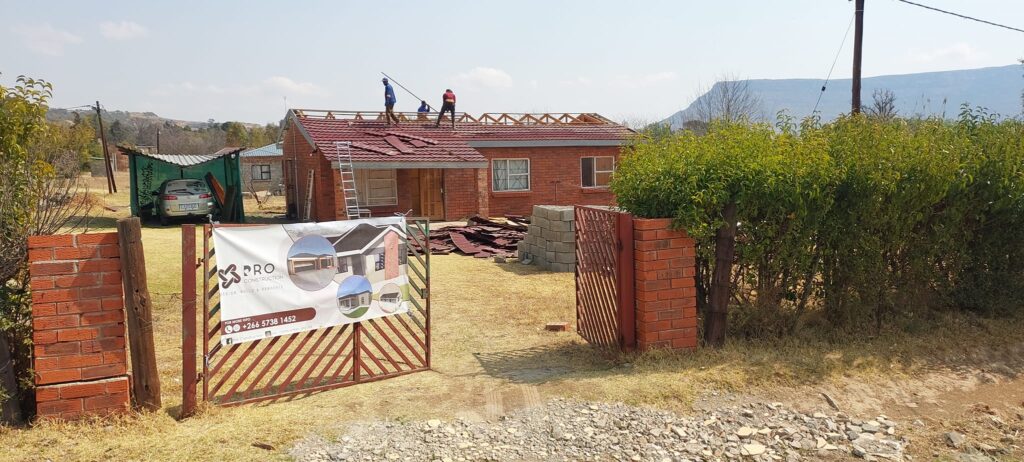
We also see other Pioneers benefiting from the clusters with a recent infrastructure project where our 2019 Pioneer Seabata Motanya who founded XYZ Collaborative and Peter Makhetha who founded PRO Construction were working side by side paving sidewalks in Lesotho’s capital city, Maseru. 

Upcoming Initiatives for 2025

rise will be coordinating a collaborative research project between Nottingham Trent University (NTU), Lerotholi Polytechnic (LP), and the National University of Lesotho (NUL). The project focuses on analyzing building materials for affordable housing, with NUL Economics students assessing costs, LP Architecture students examining social impact, and NTU students evaluating environmental sustainability.

Six interdisciplinary student groups will conduct a comparative assessment of locally available materials, culminating in a final online presentation of their findings. This initiative fosters international collaboration and aims to inform sustainable and cost-effective housing solutions in Lesotho.

This year, we are excited to expand our efforts in promoting sustainable building practices and entrepreneurship. Key initiatives include:

  • Continued research and advocacy for hempcrete construction in Lesotho, with a focus on affordable and eco-friendly housing solutions.
  • Completion of the Stadium of Life project, with the next phase set to focus on the conclusion of Biodiversity Stand.

How can we ensure that every young person, regardless of background, has an equal chance to succeed? Whether it’s through mentorship, referrals,   or simply spreading the word about the work we do with our in loco fellowship and Pioneer Business Incubation Program — every action counts.

We are incredibly grateful for your support, and we have no doubt that together, we can make an even greater impact this year. Let’s keep pushing forward. Let’s keep believing in the power of entrepreneurship, innovation and collaboration. Let’s make 2025 a year of action, hope, and change.

Thank You for Your Support

READ MORE
News

Empowering Communities Through Innovation: rise International partners with SolidarMed Lesotho’s Youth Center Project

rise International is proud to announce an impactful new partnership with SolidarMed Lesotho, marking the beginning of a transformative project in Mokhotlong District. The initiative focuses on the design and construction of a youth center and health and community facility in the highlands, aimed at providing much-needed support and opportunities for young people in the region.

The project, currently in its construction phase, is expected to be completed by early-March 2025. It is a remarkable example of sustainable architecture, as it involves the innovative conversion of shipping containers into a fully functional and dynamic youth center. This approach not only reduces construction costs and environmental impact but also ensures durability and adaptability to the community’s needs.

At the heart of this initiative is Bokang Tjakotja, a graduate of rise International’s in loco fellowship program and a 2019 Pioneer. Bokang, through his company BEEK Projects, is leading the execution of this project, showcasing the strength of rise International’s incubation program in empowering young professionals to drive social change. His work highlights the potential of sustainable construction methodologies to create lasting solutions for underserved communities.

The youth center and health and community facility will serve as a safe and engaging space for young people, offering various programs and resources to support their personal and professional growth. It will also provide essential health services and act as a hub for community-driven initiatives.

This collaboration between rise International and SolidarMed Lesotho is a testament to the power of partnerships in addressing social challenges through innovative and sustainable solutions. As the project progresses, we look forward to sharing more updates and witnessing the positive impact it will have on the Mokhotlong community.

READ MORE
News

Closing off an impactful year!

This year, rise International has made significant strides across our three core pillars: Entrepreneurship Ecosystem Development, Promoting Social Enterprise, and Innovative Building Methodologies. 

Let’s take a moment to celebrate the highlights from Q2&Q3 and share our vision for the future.

Read Quarterly report here

Enhancing School Infrastructure Through the 5 Hub Schools Program

Thanks to the support of Action Ireland Trust and in collaboration with the Ministry of Education and Training, we completed several impactful projects, including the construction of  new flushing toilet blocks for Lithabaneng Primary School. We also distributed 39 pressure cookers to five schools, streamlining their daily operations and improving overall efficiency.

Sod turning Events at Makoanyane and Leqele Primary Schools
We recently marked the beginning of two exciting new projects at Makoanyane and Leqele Primary Schools where new ablution blocks will be built for the 1500 learners who currently have to use very unhygienic and inadequate pit latrines with no running water.

The schools toilets currently

Our work with Action Ireland Trust enabled significant support for local schools, while our partnership with the British High Commission laid the groundwork for future collaborations aimed at fostering entrepreneurship and green growth in Lesotho.

Innovative Building Methodologies

Breaking New Ground with Sustainable Construction – Countdown to conclusion of Stadium of Life

The Kick4Life Stadium of Life project in Maseru is a testament to the potential of sustainable building. Using FSC-certified timber, we have completed the West seating stand and we are about to complete the  South stand. The stadium fencing is now 95% complete, and we’re gearing up for the next milestone—the completion of the Biodiversity Stand.

Collaborating with SolidarMed in Lesotho

We recently began an exciting partnership with SolidarMed Lesotho, an international non-profit that improves health care for 1.5 million people in Lesotho, Moçambique, Tanzania, Zambia and Zimbabwe, through infrastructure development and quality health services. In this partnership we are to design and construct a new youth centre in a health and community facility in the highlands of the Mokhotlong District. This project aligns with our mission to create sustainable and impactful solutions for underserved communities.

Potential Collaboration with Skate World Better

We’re thrilled to have also welcomed the Founder of Skate World Better, Martin and his associates, all the way from the Czech Republic, to Maseru, Lesotho!  They are a non-profit organization building skateparks around Africa on a mission to support kids and young adults through skateboarding.This visit marked the beginning of a potential collaboration with rise International to explore how skateboarding can drive youth development and inspire change in our communities.

Click Here to Get Involved

Looking Ahead

As we plan for 2025, we’re excited to expand our initiatives and deepen our impact. From launching new community projects to advancing sustainable building practices, our mission to create lasting change remains steadfast.

READ MORE
Case Studies

African Clean Energy – Addressing limited access to clean cooking energy solutions in Africa.

DATE 04/12/2024 

BY MINAH LEKAU- Monitoring Evaluation & Research Coordinator

BACKGROUND:

African Clean Energy (ACE) is an international social enterprise dedicated to providing off-grid communities in developing countries with access to clean and affordable energy cooking solutions. Through the manufacturing and distribution of the ACE 1 hybrid energy system, ACE offers users a cost-effective product that provides both clean thermal energy for cooking and essential electricity for device charging and lighting.

THE PROBLEM:

The project set out to address limited access to clean cooking energy solutions in remote and underserved communities where geographic isolation and infrastructure make it difficult for communities to obtain while also eradicating poverty levels due to limited job opportunities by providing local employment opportunities that empower communities economically and socially

THE SOLUTION

ACE commissioned rise to design and install 4 self-sufficient mobile shops in Nazareth, Motsekuoa, Mapoteng, and  Mphaki. Each mobile unit has a full photovoltaic (PV) solar system, batteries, fridges, printers, and other essential tools, enabling them to function independently. These mobile shops brought efficient, smoke-free cooking technologies directly to off-grid households, expanding access to life-changing solutions designed for these communities, improving health, reducing fuel usage, and fostering environmental sustainability.

THE METHODOLOGY 

With support from EU funds, the rise team, in collaboration with our 2018 and 2019 Pioneers (Pioneers are graduates from rise‘s 10-month Design, Build, and Entrepreneurship in loco Fellowship program. Upon completing the fellowship, these graduates enter a three-year business incubation program, which offers business coaching, mentorship, access to power tools and machinery, workspace, networking opportunities, and project referrals)  designed and constructed four mobile shops.

THE IMPACT:

Since the handover of these mobile energy hubs in 2019 to date  several key accomplishments have been realized:

  • Strong Relationships with Village Leaders:
    ACE has successfully established a strong rapport with local village leaders, significantly improving their Know Your Customer (KYC) process. These relationships have facilitated smoother operations and increased trust in ACE’s products and services.
  • Enhanced Marketing and Customer Base Expansion:
    The mobile energy hubs have served as effective marketing tools, helping ACE increase its customer base. By offering more direct access to remote rural areas, ACE has been able to onboard new customers, further expanding its reach and impact.
  • Improved Service Delivery:
    The hubs have played a crucial role in maintaining a consistent and reliable fuel distribution network for ACE’s hybrid energy systems. Additionally, the mobile energy hubs have enabled ACE to respond to customer maintenance requests more efficiently and quickly.
  •  After-Sales Support:
    These hubs, among the oldest in ACE’s network, have proven invaluable for providing after-sales support. They serve as a critical point of contact for a large portion of ACE’s customer base, offering essential repair services and guidance on the use of renewable energy technologies.
  • Educational Opportunities:
    The hubs have created spaces where locals can educate themselves about renewable energy solutions and the benefits of transitioning to more sustainable energy sources. This shift in mindset is crucial for promoting the long-term adoption of clean energy technologies.
  • Local Employment and Women Empowerment:
    Since the completion of the mobile shops, ACE has consistently hired three field agents and a watchman for each hub at any given time, specifically from the local area.

TESTIMONIALS

Rethabile Mafura- Director of ACE 

“This initiative has successfully expanded ACE’s reach into rural, underserved communities, improving service delivery and creating economic opportunities, particularly for women. By providing energy access and education, ACE is dedicated to scaling its impact and driving social and environmental change in these regions.”

READ MORE
rise News

Lesotho exhibits at Triennale Milan, Italy for the first time

More exposure internationally for the Mountain Kingdom as Lesotho is awarded a pavilion at the prestigious Triennale Museum in Milan, Italy, one of the world’s leading cultural institutions. This year Triennale Milano takes up and continues the important reflections that emerged from the last edition; Broken Nature, ensuring critical continuity with its proactive approach. The exhibition is conceived as a space for open, wide-ranging debates and exchanges of views, where different experiences, cultures, and perspectives can converge. The title of this 23rd International Exhibition is “Unknown Unknowns”, it offers itself to visitors as a rediscovery of mysteries.

Did you know that we only know a paltry 5% of the universe? Lesotho, a landlocked country in South Africa, is part of that 95% of the world still unknown to many. The research for the pavilion was conducted by Giada Zuan, on behalf of rise and the Milan-based architecture AOUMM, under the leadership of Luca Astorri, rise‘s lead architect and co-Founder of AUOMM. The research found that the Kingdom of the Sky through water forms an essential element of the country’s identity. “Lesotho Water Realms: a visual research on geopolitics, society, and rituals” offers the visitors three-dimensional scales between landscape, human proximity, and spirituality, through an assemblage of visual fragments.

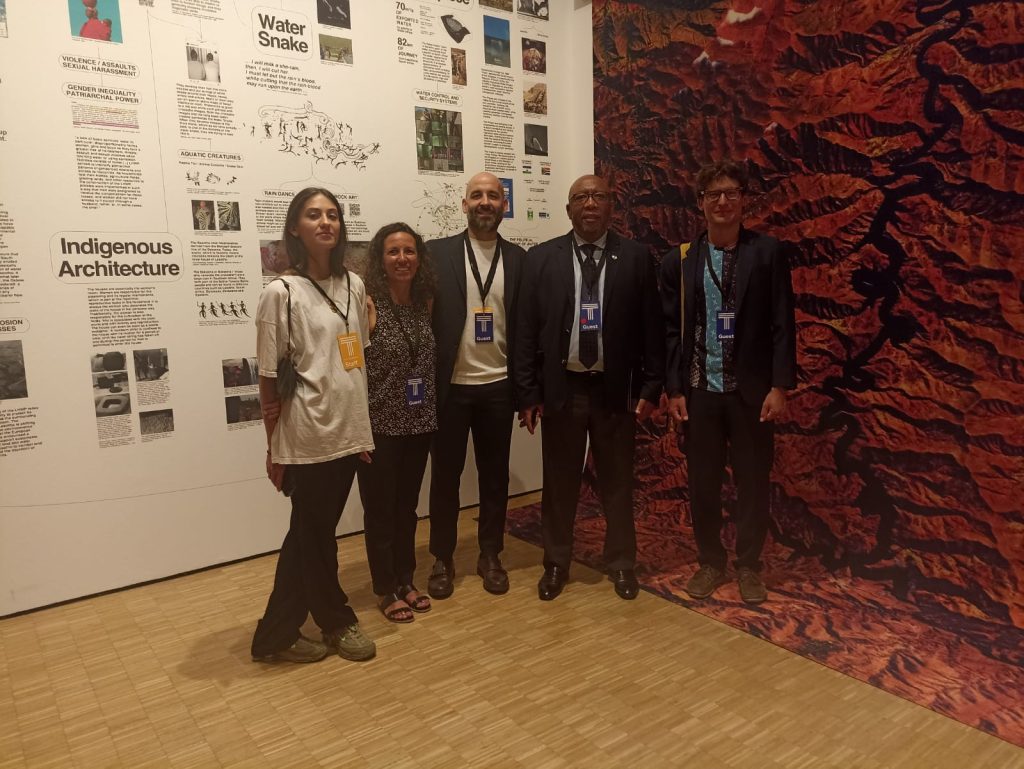
The Lesotho Pavillion was visited by His Excellency Ambassador of Lesotho in Italy Thesele John Maseribane along with the Founder of rise, CEO of AOUMM, and Lead Researcher Giada Zuan (Pictured). 

Watch this short clip of the pavilion

Credits:

Lead researcher: Giada Zuan

Curators: Luca Astorri and Matteo Poli, , AOUMM, Daniela Gusman, rise

Team: Retsepile Rammoko, Valentina Riverso, Pedro Clarke; A+ Architecture , James Melson

READ MORE
Case Studies

An inclusive office for the Lesotho National Federation of Organizations of the Disabled

Background

The Lesotho National Federation of Organizations of the Disabled (LNFOD) is an umbrella body of organizations dealing with disability in Lesotho. LNFOD advocates for, promotes, and defends the rights of people with disabilities and their families through provision of training, material and emotional support, and by representing their needs to government, development partners and the wider community. 

The Problem

The building in which LNFOD used as their office was not accessible and inclusive of people living with disabilities. There were no ramps, sliding doors, or rails in the toilets. There were no pavements on the outside of the building making it difficult for people who use wheelchairs to access the building. There were also no guiding blocks to assist blind people and signage for general guidance and warnings. The building had poor ventilation and lacked thermal insulation. In essence, the office did not allow for the organization to employ people with disabilities nor fully carry out services for people with disabilities because of  lack of accessibility.

The Solution

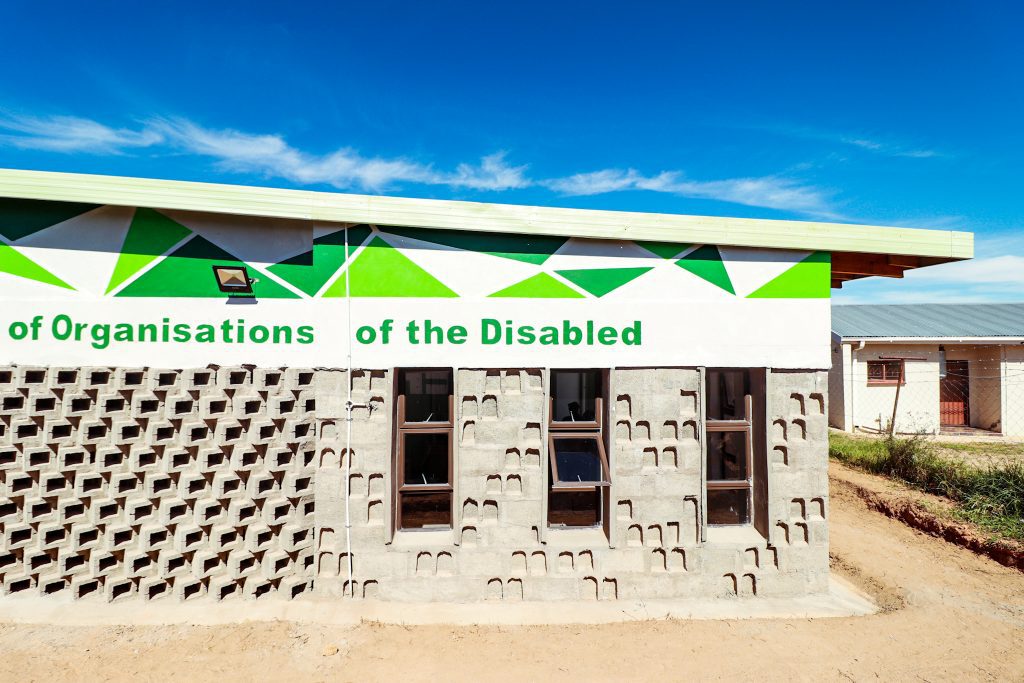
rise built a new all inclusive office in Naleli, Maseru the capital city of Lesotho. This building is the first one of its kind in the country catering completely for people with different disabilities. It has a ramp for easy access for people with physical disabilities, the doors are wide to allow  wheelchair access, there are rails in the bathroom, the walls are made of textured tiles for guidance for people with blindness or eye sight impairment. The building has insulation in the ceiling as well as a cavity wall for insulation which makes it warm in winter and cool in summer. It is also designed such that there is a separate entrance for the boardroom and toilets allowing LNFOD to rent out the boardroom to external entities as an income generating source because social enterprise is the heart of rise.

Methodology

With the support of funds from Sedlak GmbH and Brotfür die Welt, the rise in loco cohort of 2020 designed and constructed this building. in loco is rise’s learning by doing program where 

Young Basotho graduates from the design, architecture and built environment fields come together as a fellowship and learn practical skills. This way, graduates gained practical skills while the LNFOD community gained an inclusive office space.

Challenges

The site available for the building was very small, as was the budget for this project. Moreover this building was constructed during the Covid-19 pandemic, movement restrictions due to the pandemic restricted a lot of activities and decreased morale on site. People on site had to work with each other but still maintain Covid-19 protocol which was new and uncomfortable. Construction materials prices kept increasing due to high transport costs and restricted movements which further challenged an already budget-restricted project. Hardware stores would often run out of stock, which challenged progress on site. The International partners were not able to visit the project.

The Impact

LNFOD is a national umbrella body of organizations of persons with disabilities and therefore works for an estimated 56 000 people in Lesotho according to census (2016). LNFOD now employs more than 10 people with different disabilities and can provide even more services because of their fully inclusive new headquarters office building.

Testimonials

Nkhasi Sefuthi – Director of LNFOD

We now have accessible toilets and ramps that make the office accessible for all people with disabilities including those using wheelchairs. We are now able to conduct our work efficiently even without the disturbances we used to have in our previous working space.

SEDLAK GmbH and Diakonie/Brot für die Welt – Sponsors of the project

We are proud to have supported the first accessible and inclusive office building in Lesotho. The construction of the LNFOD offices in Naleli is a milestone for disability organizations in Lesotho and will hopefully serve as a role model for other accessible buildings throughout the country.” 

READ MORE
rise News

rise’s work on Water, Sanitation & Hygiene (WASH)

rise‘s work on Water, Sanitation & Hygiene (WASH)

“Growing up in a clean and safe environment is every child’s right. Access to clean water, basic toilets, and good hygiene practices not only keeps children thriving, but also gives them a healthier start in life.” – Unicef

Lack of sanitation can be a barrier to individual prosperity and sustainable development. When children, especially girls, cannot access private and decent sanitation facilities in their schools and learning environments, the right to education is threatened. Poor sanitation puts children at risk of childhood diseases and malnutrition that can impact their overall development, learning and, later in life, economic opportunities. According to UNICEF, as of 2015, nearly one in ten children in Lesotho dies before reaching their fifth birthday. Too many of these deaths are due to the effects of unclean water and inadequate sanitation and hygiene, which increases a child’s vulnerability to disease and infection. Most of Lesotho’s ten districts report a high percentage of households using unprotected water sources, and about 20% still need access to improved sanitation facilities. That is why we have partnered with various organizations and entities to address this urgent challenge. 

What rise has achieved so far…

Toilets for a Primary School in Lithabaneng village

Watch video of the launch

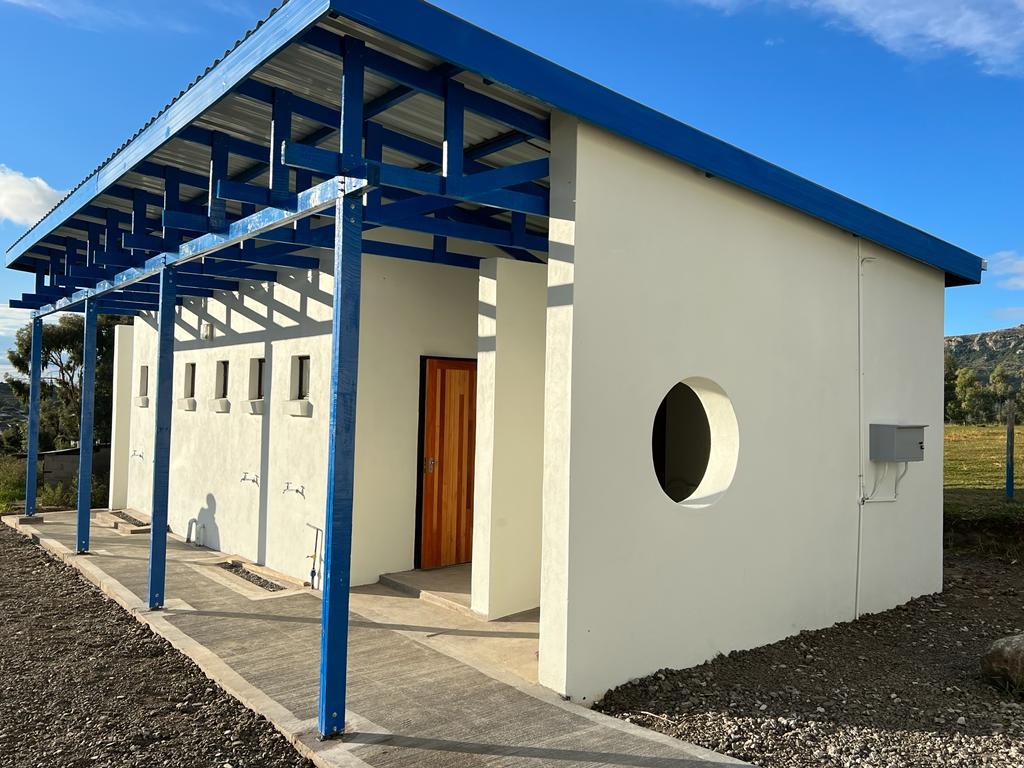
Ever since the existence of Seboka Primary School, over 600 learners yearly have endured poor sanitation due to a lack of healthy sanitation facilities and no running water anywhere on the school site. We are so proud of our in loco pioneers xyz collaborative for building new toilets for the learners and staff and Mokhethea Civils and Contactors for constructing the percolation system, as part of our 5 Hub Schools project thanks to the support of a not for profit organization called Action Ireland Trust (AIT) in collaboration with the Ministry of Education and Training of Lesotho.

Boreholes and rainwater harvesting for 5 Hub schools

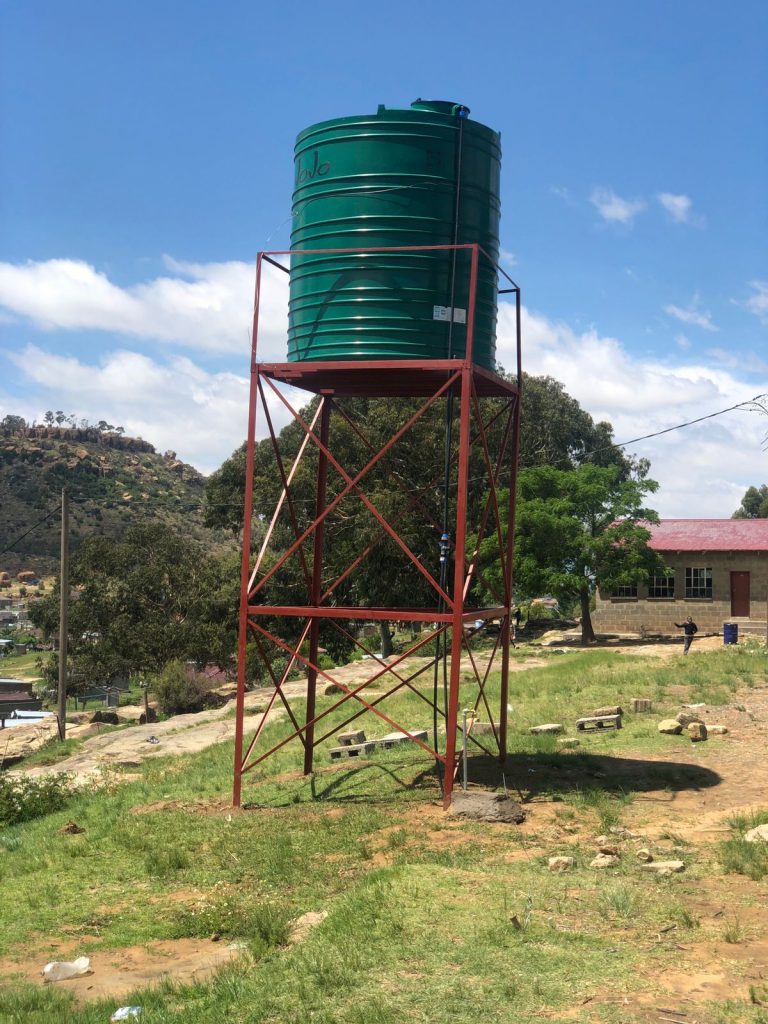
Our in loco Pioneers PRO Construction successfully constructed rainwater harvesting systems in 2 schools with the help of sponsorship from the British High Commission in Lesotho and AIT. The boreholes, together with the rainwater harvesting systems now provide a regular flow of clean running water to the schools, facilitating general good hygiene and frequent handwashing amongst learners and the schools’ community – an essential healthy habit in these Covid-19 ridden times. This access to running water also makes food preparation in the schools much easier, provides much needed water in the food gardens constructed by Green Yards, another in loco Pioneer company while promoting food security and food hygiene, and further supplies constant water circulation in the newly built toilets. 

Why food gardens? You may ask. School lunch is the only meal that many of the learners in these schools get each day and therefore being able to grow their own nutritious food is vital for the learners’ feeding program and overall health & nutrition hence the construction of these food gardens. The schools are also able to sell excess produce to raise funds towards their operational costs.

No more outdoor cooking for another school in Lithabaneng village

The food preparation of over 600 learners was done in the outdoor area of Leqele Primary School. It is so amazing to have our in loco Pioneers Presto Construction Company build a new kitchen for this school also with clean water supply. It is integral that food be prepared, handled and served where there is access to running water.

Hand Wash stations for towns, hospitals, schools and villages in Lesotho during 1st wave of Covid-19

Watch more on this project

To curb the spread of the Coronavirus, we built handwash stations in all 5 schools in the Lithabaneng area which promoted hygiene and the safe handling of food. On the same mission, xyz collaborative built 105 more hand wash stations which were installed in all 10 districts of Lesotho in various health clinics, hospitals, child care facilities as well as busy town areas in partnership with UNDP, UNICEF and the Ministry of Health.. We built 10 more for a semi-rural community called Motimposo to lessen the number of communities that did not have access to running water and were thus at the highest risk of contracting the virus.

Safely managed water, sanitation, and hygiene (WASH) services are an essential part of preventing and protecting human health especially during infectious disease outbreaks, including the current Covid-19 pandemic. Our mission is to ensure that young people exist in environments that allow them to develop so they can one day join the fight against poverty in Lesotho and the Subsaharan African region at large.

We call on you to help make a difference with us! 

READ MORE
News

rise’s work on Universal Design 


rise’s work on Universal Design 

We often say that we are inclusive of all communities, or that we are restructuring society to be understanding and empathic of all, especially the marginalized. But to which extent? The lack of inclusivity in urban planning does not only separate us by weaknesses and strengths, but it deprives us of some of the joys of the environment like urban spaces, access to green spaces and even essential services like public transport.

It is pivotal for professionals in the built environment to prioritize the promotion and protection of the rights of people with disabilities particularly in urban design. With the hope that a potential exists for the improvement of buildings and thus facility access for people with disabilities in Lesotho, rise embarked on a project that would shed light on the existing issue of “lack of inclusivity in the urban design of Lesotho”. According to a study by the Lesotho National Federation of Organizations of the Disabled (LNFOD), people with disabilities are constantly faced with the challenge of not having equal access to facilities like banks and hotels and to services like public transportation as the built environment does not cater for wheelchair access and other limited mobility needs. 

The aims of this project were to facilitate an interface which promotes that everyone gains equal access to services and facilities; to educate the general community on the need for inclusivity in urban design; to increase awareness within the built environment sector on the need for inclusivity in design and construction and to engage policy makers in the discussion on inclusivity in the urban planning of Lesotho. Empathy is key here, the feeling of belonging rather than feeling excluded. Inclusivity of design is achievable. The goal of inclusive design is to offer the same access for all users, whether with special needs, disabilities or neither of these.

……Empathy is key here


What rise has achieved on universal design so far…  


A panel discussion with policy makers 

Made possible by the British High Commission

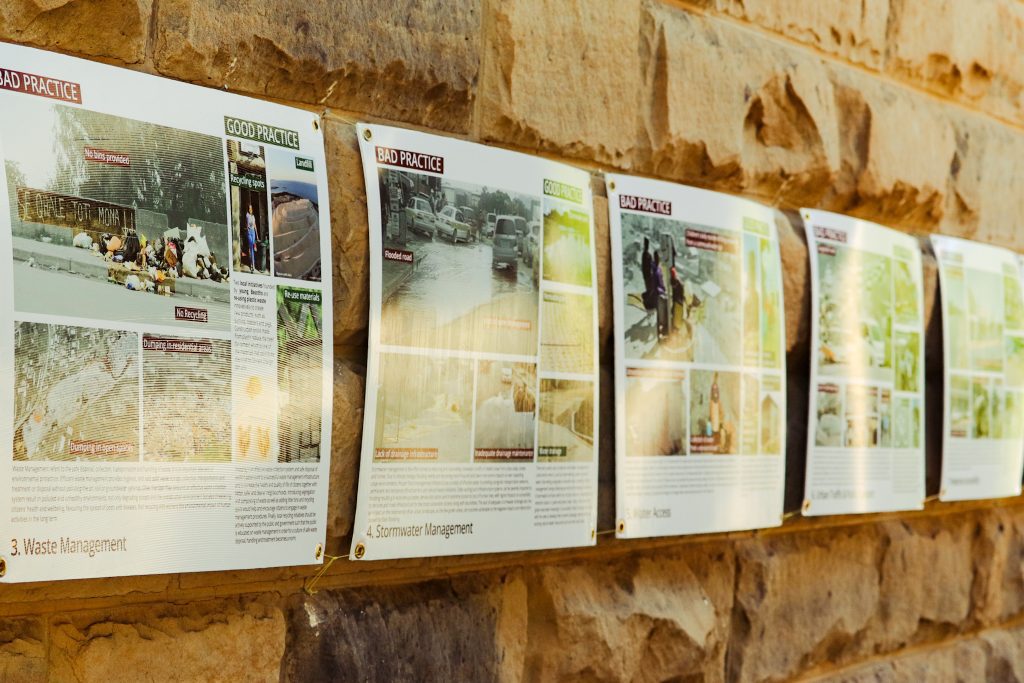
rise hosted a photo exhibit and panel discussion on inclusive design where policy makers engaged in a discussion around the need for reforms on Building Codes for inclusive design in both private and public sectors. A voting poll was set up for the general public to vote on the matters that mean the most to them regarding the infrastructure and accessibility of Maseru city. 

Key stakeholders working in the built environment made pledges on how they are going to commit to improving the existing situation of lack of inclusivity in the urban planning of Lesotho. WATCH VIDEO OF PANEL DISCUSSION

A webinar to create awareness on Inclusive design in Lesotho & internationally

WATCH VIDEO OF WEBINAR

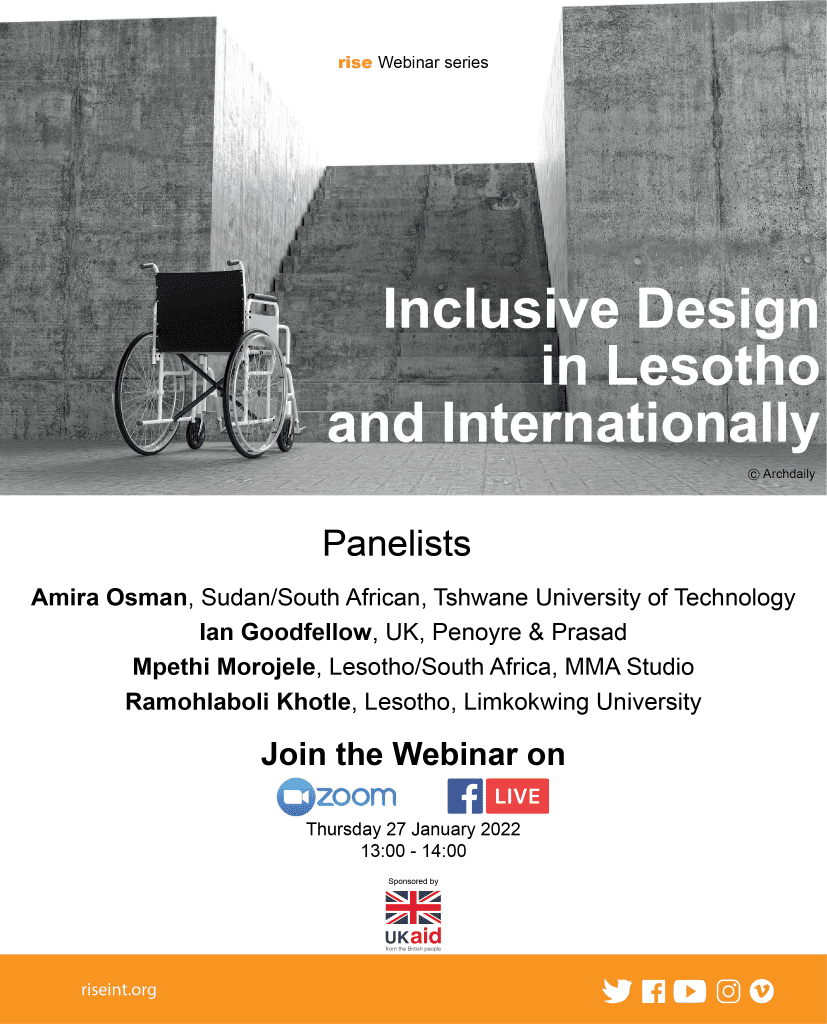
After the panel discussion rise hosted a webinar on Inclusive design in Lesotho and internationally where professionals engaged, educated and spoke on the need for universal design globally and locally.

Radio shows to create awareness on the need for universal design


rise hosted 4 radio shows in partnership with SkyAlpha, aimed at increasing awareness of the need for inclusivity in the urban planning of Lesotho.

An inclusive building for people living with disabilities


Through in locorise built an all inclusive design building for the Lesotho National Federation of Organizations of the Disabled, allowing them to finally employ people with physical disabilities.


A panel discussion with key stakeholders for action planning


Universal Design for Maseru City Roundtable was hosted on March 2nd 2022 by the Ministry of Local Government and Chieftainship, facilitated by rise and funded by the British High Commission in Lesotho with a focal thematic area around Universal Design including :

1. Regulatory & Legislative Building Codes for Inclusive Design 

2. Design & Planning Practices 

3. Action planning and Next Steps needed 

Our work on Universal Design does not end here, watch out for more on our social media platforms, engage with us on this topic and lend your hand wherever you can because if you want to go fast you go alone. But if you want to go far you go together. Let’s go together!


READ MORE
2020

IN LOCO FELLOWS 2020 BLOG SERIES #3: Intergalactic love

Intergalactic means movement between spaces. Buildings occupy space, from their foundations upwards. Therefore in this blog, intergalactic is compared to construction because of the fuming passion I have for the built environment and intergalactic.

My passion for the built environment grew after several setbacks from the University of Free State, where I was enrolled in the faculty of natural sciences, however I dropped out from the University and I enrolled for a National Diploma: Building at the Central University of Technology, Free State (CUT) where I graduated in record time. The faculty of Engineering has always been best for me…HAHA.

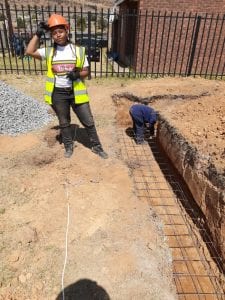
Malingaka working on construction site

Upon completion of my diploma, I was awarded a MerSETA women in engineering bursary. This encouraged me to further my BTech in Construction Management which I also completed in record time. A fiery love for construction grew deeper, so much so, that I established my own construction company named Khal Construction Engineers the same year I enrolled for my BTech, with a view of creating a better industry that would lessen surplus costs, delays, accidents on construction site, and upsurge job creation. My first project in construction was plastering and floor pouring a residential building.

The business did not go so well. Our marketing was poor, we could not get customers as we were unknown in the industry, project hunting became all-consuming  but there were still no doors opening for the smart, enthusiastic ‘Malingaka. But I don’t accept defeat; it’s just not in my DNA. Therefore I enrolled for a Masters at the University of Johannesburg while job hunting and tender hunting. Being the go getter that I am, I completed my Masters within a year. The same year in December my company got its first client!  Sufficient grace, right?

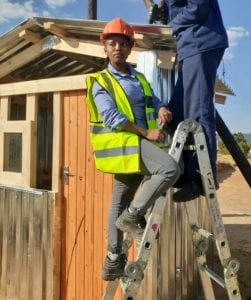
Malingaka building a guard house

That first client was a stepping-stone to many. Currently I have over two years’ experience in the industry and already embarking on the journey to bag my PhD in Construction Management. Though my business is facing challenges such as lack of construction equipment to commence a project, rise has a solution to my challenge since fellows and alumni are able to borrow construction equipment from rise.

My first encounter with rise international was when I navigated through the internet for job vacancies. I believe it was through www.selibeng.com that I saw the opportunity for the in loco fellowship. rise’s mission and vision caught my attention, I was amazed. With much enthusiasm I applied for the fellowship and got in. I must say I am super grateful for this platform; it has been nothing but a place of growth in the built environment, industry and entrepreneurship.

Work on Construction Site
Malingaka and other in loco fellows working on LNFOD site

“Don’t let an opportunity pass you by, grab it and make the most of it.” I’ve been doing the most, learning by doing, learning from my other fellows, grabbing every skill and networking. rise has taught me that “Letso’ele le beta poho”, (Together we can overcome). Team work is the utmost, sharing innovative ideas amongst the fellows, problem solving and building each other through business partnerships. At rise, I have learned the importance of marketing, effective communication, negotiation skills and working in groups with other fellows. Amongst the activities we’ve done with rise, I enjoyed the Participatory Design Workshop and team building the most; what an experience!

‘Malingaka Maoeng

I am excited to learn more from my fellows, to experience getting our hands dirty on the 2020 project. I have been getting along well with other fellows; it has really been fun working with each and every one of them. It is as if we’re one big happy family.

I AM ‘Malingaka Maoeng

READ MORE