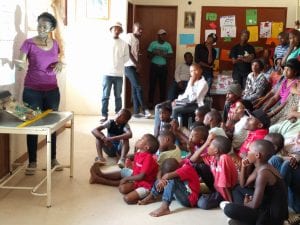
An Enterprise Hub in the entrepreneurial sense is a kind of greenhouse for start-up enterprises. In this protected incubation environment, entrepreneurs with innovative business ideas can be consulted and trained. Incubation Hubs are contact points for entrepreneurial learning, thinking and connecting people where they share, network and mutually benefit from one another.
The importance of having an Enterprise Hub in Lesotho is immense; a place of this nature would be able to open up multiple doors for entrepreneurs and is currently an essential missing piece in the entrepreneurial ecosystem. With the unemployment rate in Lesotho as high as 30% amongst youth, there is a dire need for young people to go into business in order to make a living for themselves and their families. The rate of poverty in Lesotho stands at almost 50% , which calls for an urgent need for Basotho youth to be motivated, skilled and well equipped to create platforms for employment and thus fueling the country’s economy.
The Hub will represent an environment in which aspiring entrepreneurs can prosper in the entrepreneurship learning space. They will gain access to essential business development services from business and financial planning to legal and human resource spets. They will get to share their knowledge through peer to peer interaction, while at the same time having much needed space in terms of offices, meeting rooms and workshops to experiment their ideas and create prototypes of their forthcoming products and services before taking them to market. The Hub will also offer access to market and act as a referral centre linking startups to clients and potential investors, thus being a centre of business excellence acting as a benchmark for other businesses in the country. The existence of this Hub will inspire innovations that could change the livelihoods of a significant number of people living in Lesotho.
An Enterprise Hub therefore signifies a ray of hope for multiple entrepreneurs in Lesotho who have great ideas and new businesses, but lack the platform and tools needed in order to make these ideas and enterprises flourish. The Hub will also be a place of inspiration for the Basotho nation at large; a place where some of the wildest dreams are born and attained, a place to birth some of the most successful businesswomen and men to ever come out of the Mountain Kingdom. To make all this happen we need to raise $100,000 by December 30, 2020. Learn how you can help here You can read more about the plans for the Enterprise Hub here
As a civil engineering final year student my greatest disconcertment was becoming one of the rising unemployment statistics in Lesotho, inexperienced in a country where you need to have experience to find a job, and need a job to get experience, which is pretty much a catch-22 situation. I first learned about rise’s in loco fellowship program through Lerotholi Polytechnic 2019 open day expo where there was also a call for fellowship applicants, without any hesitation I submitted my application and I got admitted into the program. Fearful of being an inexperienced graduate faded away, as the program presented recent graduates with opportunity to work on a project from inception to completion.
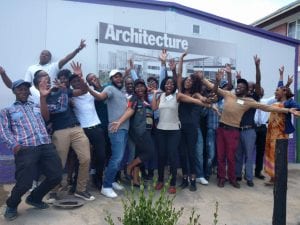
Some of the in loco fellows 2019 cohort
Being a fellow in the in loco program gave me a chance to build my capacity which is an essential prerequisite to both personal and career growth, being equipped with abilities to perform in a complex environment. I was privileged enough to work with wonderful individuals from different disciplines and crafts, when working in this kind of environment I developed not only the technical skills but also the soft skills of which the importance is often undervalued and far less training is provided for them but are rather useful personal attributes. I have developed strong work ethics and leadership skills, which will play a key role for me as a young and aspiring entrepreneur.
Selebalo Tseko in loco fellow & author of this blog
Five months into the program have
been both interesting and intense as we had to work on the design, manage the
construction and also be the labour on site; however the burden of
responsibilities was not to torture but to shape me into a capable leader. We
have had “HaHa” and sad moments on site but we all knew the importance of
working collaboratively as a team to achieve the common goal which is to finish
the project on time.
The greatest thing for me about rise will forever be the social impact it has on the communities and the entrepreneurship program aimed at shifting job seeking mindset to job creating mindset.
Selebalo (right) with two other fellows Mojalefa (left) and Retsepile (centre)
Five months into the program have
been both interesting and intense as we had to work on the design, manage the
construction and also be the labour on site; however the burden of
responsibilities was not to torture but to shape me into a capable leader. We
have had “HaHa” and sad moments on site but we all knew the importance of
working collaboratively as a team to achieve the common goal which is to finish
the project on time.
The greatest thing for me about rise will forever be the social impact it has on the communities and the entrepreneurship program aimed at shifting job seeking mindset to job creating mindset.
Some time after I completed my diploma in construction management in search for job opportunities, valuable skills and experience in the design and build industry, i come across one of my ex-classmates who introduced me to the impact of the in loco fellowship program. I never let the opportunity pass me by, I applied for the fellowship and was called for an interview. Guess what, today I am enrolled amongst the in loco fellows at rise International (Relationships Inspiring Social Enterprise).
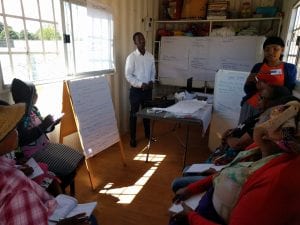
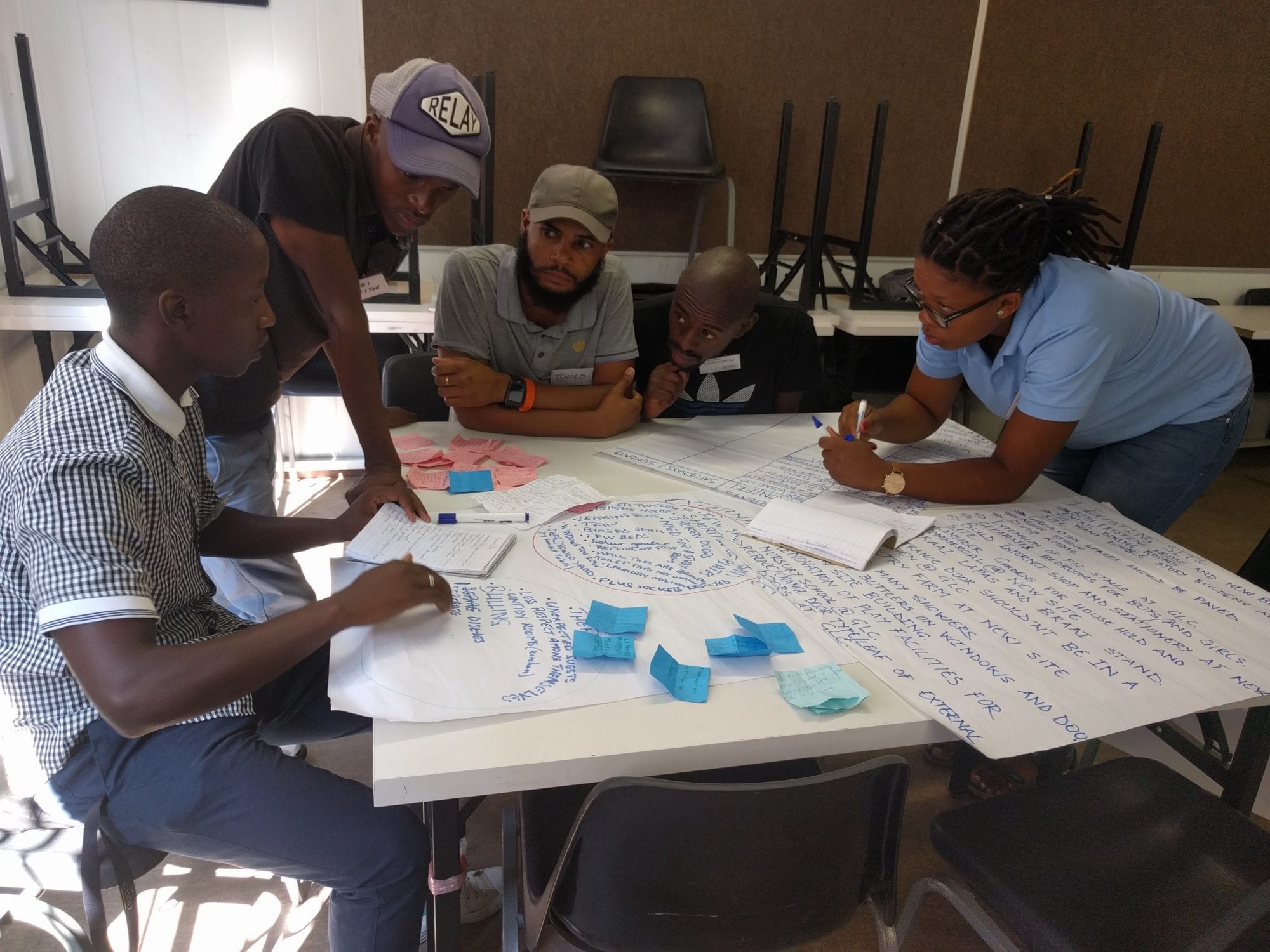
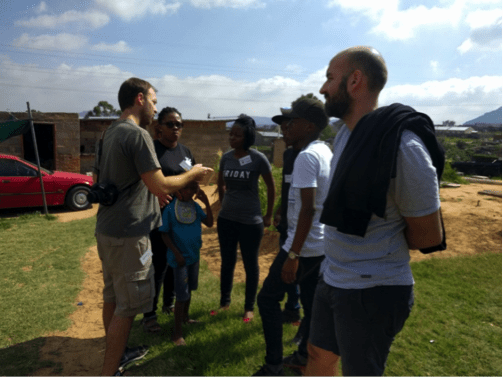
We are currently working on the project of IDAL (Intellectual Disability & Autism Lesotho) Centre. The first thing we did for the project was to conduct a Participatory Design Workshop, the aim being to understand the clients and their needs and thereof come up with solutions to their problems with the in loco materials and talent.
The first week of the program I had to work on the tendering process where i did the costing of the project by preparing the bill of Quantities. It was an enjoyable time for me to enhance the skills and knowledge I had prior to school by using the necessary tools introduced to us by the rise team which were the bills of quantities templates, schedule of works and the rise database. Such tools are necessary in managing time, cost and effort.
Two weeks later it was my time to get to experience the role of being the site manager. Very challenging moments to execute the project, giving tasks to the other fellows and the application of the managerial skills and knowledge I got at school, conducting site meetings, preparing site reports, schedule of works and many others.
The fellowship has changed me from being a job seeker to an entrepreneur through the business sessions we are getting, fire is burning inside me to bring tremendous changes into people’s lives. I gained a lot of both soft and technical skills in the managerial system by collaborating with the fellows and the rise team who I regard are my mentors.
Towards the end of August 2017, that is when I heard about in loco. I didn’t even have to think twice about applying for it but there was a challenge for me, one of the main requirements was that the participants should have “construction related” experience. I almost gave up but the fact that the project was about improving the lives of the underprivileged kept me motivated to pursue the application process.
I remember Pedro Clarke, one of the in loco architects and rise team, asking me why I applied for the program seeing that I am the only person in the interviews without a construction related background. I knew I needed make rise understand why I needed to be part of the team regardless of my inexperience in the field.
My passion for community involvement towards development, improving the less fortunate communities have always been my driving force. Not forgetting the most important motivator to me; my personal experience.
I had an opportunity to be provided a better life and education by a similar facility “SOS Children’s Village Maseru”. That is where the love and motivation to help others came from. Not only did SOS contribute so much towards my development over thirteen years; they also encouraged me to do the same for other vulnerable people around me. I guess the love and care that I got from SOS as a child is beyond measure and the nurturing that I received helped me grow to become an independent young adult. This is basically what I would love to see happening to God’s Love Centre (GLC) youth.
The program started in February 2018 with a Participatory Design Workshop (PDW). I was clueless about building and designing, but that did not matter because the experience was easy to follow and very interesting. It was exactly what I had done in school – community assessment. This is where we interacted with the kids and they were amazing. They were full of energy and excitement as they were given the opportunity to be the decision makers of how their buildings should look like.
Not only did we involve the GLC community; we also involved the community surrounding GLC. Our first visit to GLC was really emotional, seeing the real NEED that in loco will be providing solutions to. We knew we needed to work hard from day one, as fellows to fulfil the mission, and guess what, we are on the 10th month of the project running and things are looking pretty good.
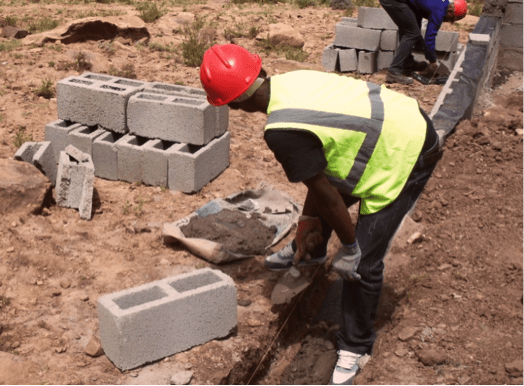
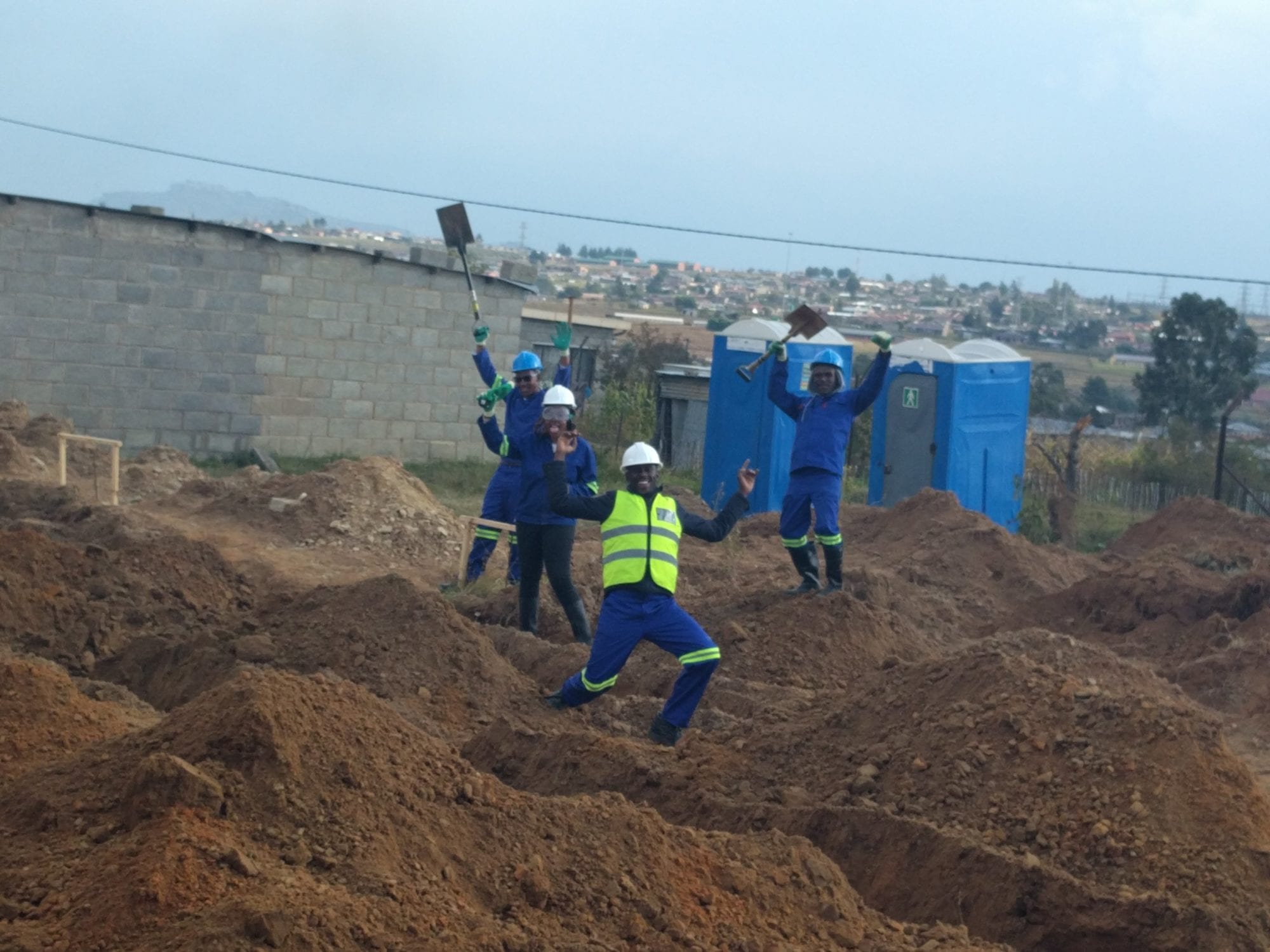
I have been keen to learn from day one. I remember some of the fellows asking me if I ever imagined digging trenches, placing reinforcement and being a labourer on site. Honestly, I had never thought along those lines. However, it has been fun; especially with such a supportive team. Now seeing the building almost done just makes me so proud because I was part of team that started it.
In as much as I have learned so much in the construction side of things; as you can guess from my educational background, my role in the fellowship was not exactly construction related. I have been the link between the project and the GLC community and I have been highly involved in the capacity building of GLC. One of the things I did which I am so proud of is the Business Trainings for the youth of GLC.
We have established six business groups and two of them are about to be launched; an Internet café and Tuck-shop. The other business groups are already running and being improved upon with the help of professional mentors who we identified for them. For example, the Pre-school was already running at GLC, they want to join it together with a day-care facility and their mentor is helping the group to improve it.
Now that we are coming to the end of the fellowship, it is going to be sad to part ways. Relationships were established both with GLC and the fellows; however this is not going to be a goodbye rather a see-you-soon moment. I am going to miss GLC and the kids especially the sessions we had, but we have just started the program “I AM WHO?” that will go beyond January and that will grant me the opportunity to spend time with them. As for the fellows and the rest of the team, we will meet along the business lane because we are definitely going to need one another.
The fellowship has been fun, informative, and full of networking opportunities and definitely there has been great career improvement for me.
“You must be the change you want to see in the world,” Gandhi once said. As a graduate you think that you could never make a difference in the world, but you can. It all starts with your thoughts. They soon become words, which become your actions, which become your habits, which become your character, which become your destiny.
We are constantly making decisions that shape the rest of our lives. Each choice we make can forever affect our future, our impact on society, and the way others perceive us. That’s why it is so important to develop our characters. Even a simple notion can spark a lifetime ideal – positive or negative. When we help out our communities, we are influencing ourselves in a positive way that often follows us throughout our adult lives. Each tiny thought, word, action, and habit, changes your future.
I’m Lebohang Mosiuoa (Figas). The biggest decision that I have ever made was in 2012, when I had to choose whether to study Architecture or a Bachelor of Science. Since I was a little child, I had a passion for architecture, but I was good in sciences and maths in high school. While at primary and high school I spent most of my time on drawing buildings. I had to drop my environmental health science studies and join Limkokwing University of Creative Technology to follow a dream that I have had since I was a child and that dream was to study architecture. My career started in 2016, when I volunteered to join Habitat Youth Build with Habitat for Humanity Lesotho to construct a two-room house for homeless orphanage children at Mafeteng. Later that year, I was among the Limkokwing University Students who were competing to remodel and renovate Lhda Katse Lodge in which our team won.
in loco Fellowship
Learning is a never-ending journey of discovery that can only be enjoyed when it is put into practice. It should never be confined to books and rooms, but instead it should be shared with the world. I’m proud to be an in loco 2018 fellow. When I first heard about the program, I thought it was all about helping an orphanage by building a better place for them. Since it’s in my heart to help vulnerable people, I decided to leave whatever I was doing and join the in loco eight-month fellowship.
Experience at in loco
When it comes to your career, you need to put in the work and practically engage in it as you learn, because it sets the foundation for you to be a champion and the best at your craft. As someone who is practicing architecture, I never knew about participatory design before I joined in loco. In the first week of the fellowship we had a participatory design workshop, which involved the fellows, God’s Love Centre staff and the children. The important things that I learned about it is that, it forces designers to look at things from another’s point of view, it is very important to respect other people’s opinions. It helps designers gather several other facts about certain design situations they may not have been aware of. Because of in loco we now know how to approach design better.
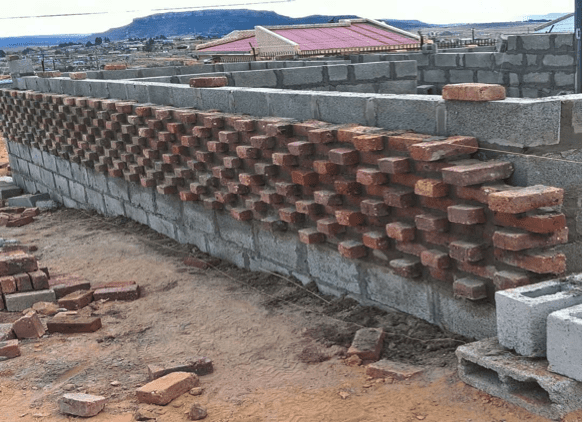
It’s a dream of everyone who practices architecture to work with international architects. Our culture and style of approaching things differ. We learn lot of things from our international architects Pedro and Luca. Because of them, we now know about participatory design, which we never knew about before they arrived. Our local style as people who are practicing architecture in Lesotho, is only to hear what the client wants and never encourage them to take part in the design process. Also they challenged us to came up with a unique brick pattern (see below) that will give the orphanage buildings their own unique shape.
Nothing beats the power of learning by doing, because it creates knowledge and skills foundation that is rooted in your interest and experience of the subject matter. At in loco we practice what we preach, gaining the skills that we never had before. In my life I never thought I would lay a brick, fix the reinforcement and mix the mortar. We do everything by ourselves, but with the help of professionals. I’m proud to say, I can now build a house on my own, because in loco gave us a chance to unveil our hidden skills that I never knew I had before.
Afrisam cement gave us training about the good use of cement, like the quality needed when mixing mortar for plastering, bricklaying and also for concrete. Also I got an opportunity to attend the paint training with Thetsane Paint Centre. I really learned a lot from that training since in my company we are also specializing with epoxy products, but we didn’t know where they are sold in our country. We as Basotho people we use paint for the sake of painting, but we didn’t know the steps to follow when painting walls, ceilings and everything that needs to be painted.
The most important thing that we learnt at in loco is the business training. Even though we are in architecture and built environment fellowship, we are also taught to be successful entrepreneurs. These happen in many ways, like being able to listen to successful business people who come to give us testimonies on how they tackle business and how they started. The important thing that I learned from all of them is that you have to have passion in what you do and also you must have skills. You really don’t need capital to start a business, but as little as you have you can start a business.
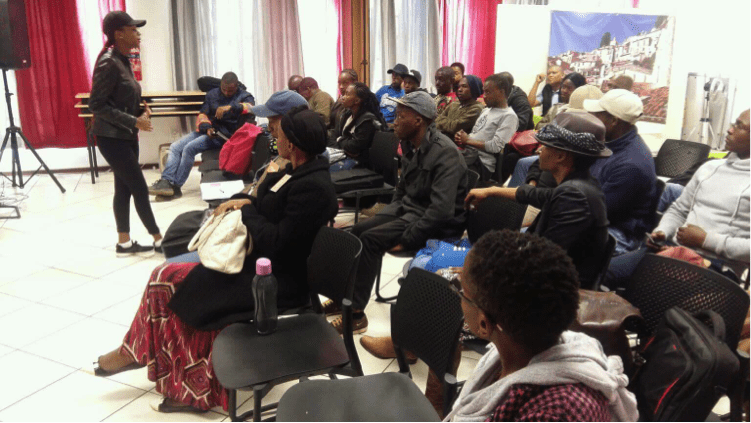
Lastly, we learn more about entrepreneurship through the lecture series that are held every month by rise, where successful entrepreneurs and architects share their experiences and business skills to the students and inspire, graduates, lectures and the public. Also the film screenings that are held every month, whereby we have interesting discussions after watching the selected video. It also forms part of our learning as we share and discuss the problems and the solutions that face our community.
In the fellowship we all have roles that I think are going to help in our future. At the moment, I’m a logistics and plant manager. I make sure the tools on site are well protected, safe and clean. For me it’s quite a challenging role because, we as people are not the same, some are irresponsible and some are not cooperative. This kind of work requires a person to keep their eyes open all the time, because some materials might disappear and you never know where to find them. We now have our first two international students from India and Malta from the faculty of Architecture and Structural Engineering, who I believe we are going to learn a lot from them.
After the fellowship
Since I’m from a country of people who believe that, constructing a house is only for people who have money. I’m going to encourage the people to use locally available materials, like building with clay bricks. Lesotho is one of the coldest countries during winter and many people especially living in the urban areas spend a lot of money to warm their house. I’m going to introduce the cheap method of keeping the building warm in winter and cool in summer that I learned from the fellowship.
Adventure and Passion; the two words that come to mind when Mamanti Phothane Makara is mentioned (by the way that is my name). They tell me I am “generally” friendly and I have a charismatic smile and I believe them 🙂
I am very passionate about architectural design and interior life in general, but when I need to relax I like to tour and bike; I just love the feeling of the pumping adrenaline. In the biking language I am a “biker chick” well, let me not go much into the details of what that means, but for sure I am a biker.
On the side of my professional passion; Architecture, I am a proud member of the in loco program. I am learning a lot here and becoming better each day. Through the business trainings in the program, I am becoming a better entrepreneurial thinker; which is helping me in my existing businesses.
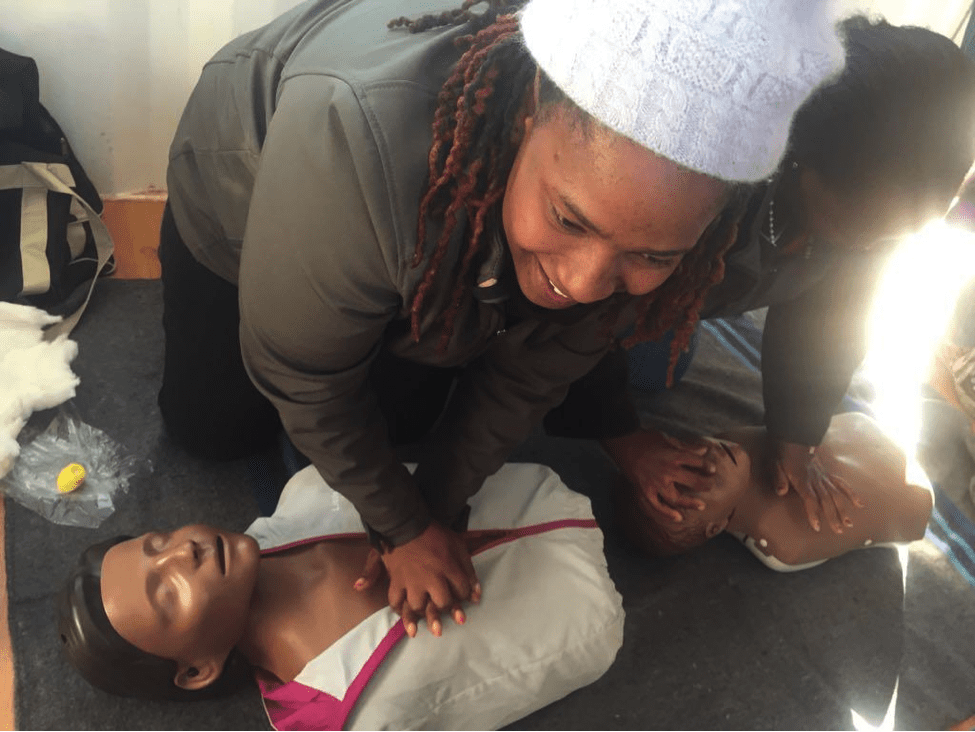
As I mentioned, I am learning a lot! I am grateful that I had the opportunity to be part of the First Aid Trainees who are supposed to always be ready on site in case of an emergency. It was not only fun; it was eye opening to the kind of person I am when it comes to dealing with emergencies and the importance of avoiding them.
Another learning opportunity I got was training by Afrisam, a cement manufacturer. We learned how to mix mortar and how to lay bricks. When we were told we are going to lay the bricks ourselves I must admit I was a little scared but the training made me realise that it is not so hard. The certificates we received after the training was the cherry on top; it made me feel like a professional in bricklaying.
Who would have thought that one day I, an Interior Architect, would be given a chance to be dealing with the procurement of such a prominent project but yes, in loco made me step out of my comfort zone completely. I am thinking outside of the box now as far as my career in the built environment is concerned. I am just a week into the role of a buyer for the project and I am looking forward to the next few weeks in this role.
Building confidence came in the package for me as well because one of the unexpected days I had to present to the representatives of World Bank and since that day forward the sky is limitless. I could pinch myself a thousand times; like, me presenting to such high profile people, wow! Not knowing that I will later discover that it was not going to be the last. The great connections we are making at in loco are amazing.
We are also expecting international students from the built environment to visit us in Lesotho and it is really exciting and we fellows are looking forward to meeting them. I am already thinking of places to take them if we get the chance. They will definitely bike with me at least once.
On top of all that, the most wonderful thing is to give back to the community. Having been given the chance to improve people’s lives and value to their wellbeing. Working closely with the orphanage only opened my eyes to the other side of the world and has helped me to value every opportunity that comes my way, and it really helped me to appreciate life as it is.
That is how much experience in the fellowship has been so far; full of learning, fun, out-of-the-comfort-zone experiences and a lot of self-discovery.
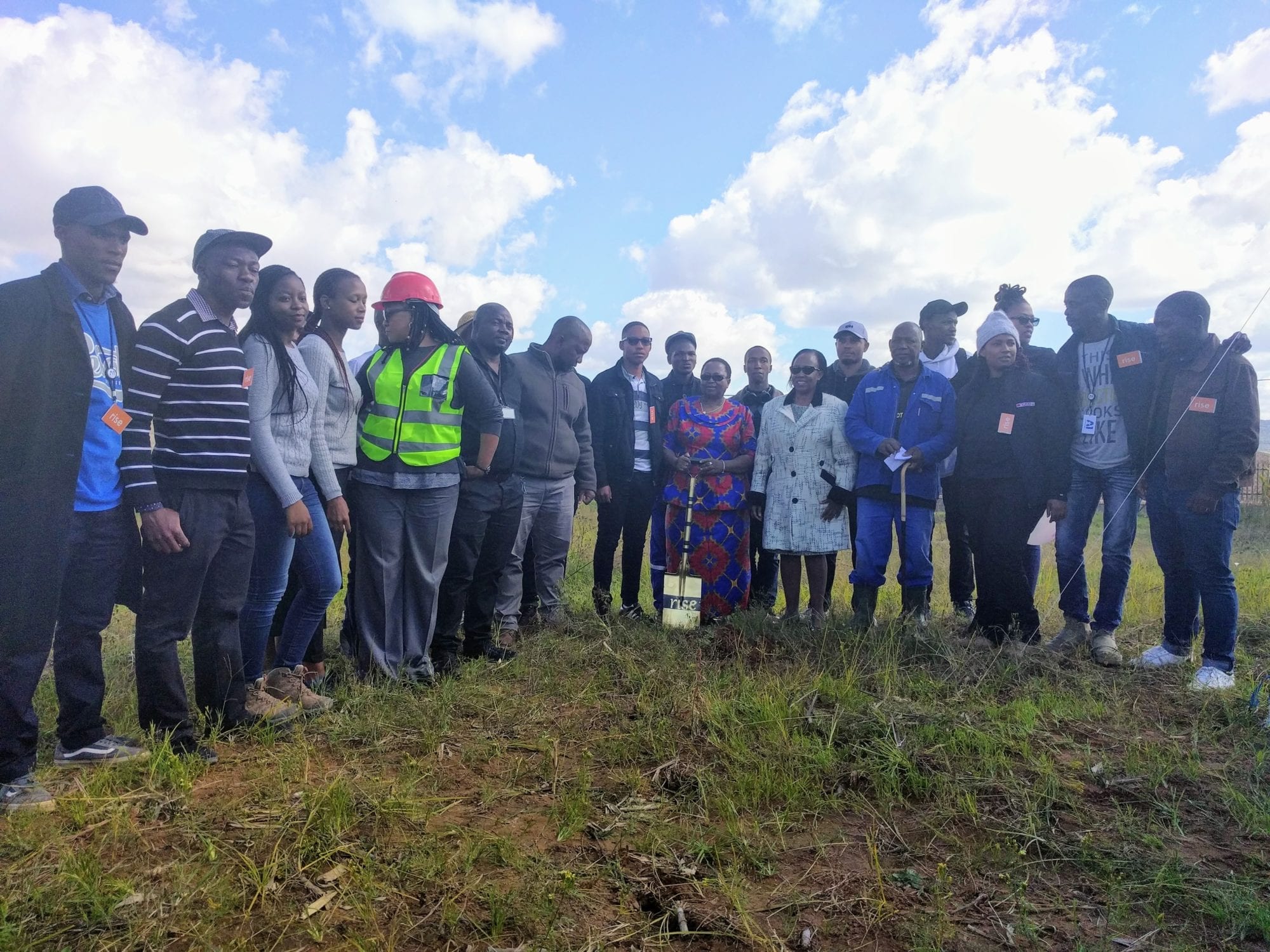
It has quite literally been a ground-breaking week for rise, as we FINALLY got out the spade and dug the first foundations for the residential center and business hub for vulnerable youth in Lesotho. Over 70 people turned up to celebrate with us and it was amazing to have the support of the Ministry of Social Development, local and international corporates, the local Chief and community members. Not to mention some of the inspirational youth who will benefit from the new building! None of it would have been possible without our awesome sponsors, stakeholders and partners that give their time, expertise and materials to our cause. Feeling proud here at rise!
Here is an artist’s impression of the residential center that we are NOW BUILDING! It was designed entirely by our in loco fellows and will house 6 girls and 6 boys, age 14+ who will be moved here from the desperately overcrowded GLC Orphanage close by. As well as being a safe home for the youth to live and finish school, the residence will help them transition to independent life as they will be launching their own sustainable small income generating activities. It’s so inspiring to be part of their ideas and to genuinely know that these initiatives will not only support them, but others in the community, for many years to come.
International Workshops – July & August
True to our core values, we work hard to build relationships and link expertise from around the world to make lasting change happen. There is no part of this project that isn’t living and breathing social enterprise and at every turn we equip the fellows, graduates, mentors and young orphans with skills that they can benefit from long term and share with others in the community. We believe this is a dignified and long-term path to development.
Part of this is our International Design & Build Workshops in July and August. These act as a hands on knowledge exchange between local fellows and international students, as well as help raise essential funds to make this project possible. We’re excited to see the results of this as our first cohort of adventurous students arrive from all over the world in July. We have a few places left to fill the workshops, so have extended the deadline for applications until 30th May. More information
Making your dollar stretch even further
BIG NEWS on the fundraising front; our co-founder and principal sponsor BOND events, who run networking events for the architecture industry in North & South America, have agreed to donate $1.67 for every $1 we raise.
Shop on Amazon and do good for the world!
This is doubly exciting, as we’ve signed up for Amazon Smile USA. So if you’re purchasing on Amazon PLEASE use Amazon Smile and put rise international as your charity of choice. What better way to feel good about your shopping! Start now
Words from the fellows….
We thought you might enjoy reading about our Lesotho project first hand; our local fellows have been bravely writing their first blogs, sharing some of their experiences of what it means to them to be part of the rise in loco fellowship team. These heartfelt and often witty words, offer an insight to the huge learning curve and day-to-day adventure these guys are on.
Finally, our founder, Daniela Gusman, is going to be attending the Real Estate Weekly Women’s Forum, in NYC on June 5th. It’s an honor to be invited as the only not-for-profit sponsor to this event, and to be able to share the innovative ideas and work of rise international with the leading innovators across the business spectrum. Daniela will be looking for industry experts with vision, who are keen to build a CSR program within the architecture and design community by partnering with rise. She will also be unveiling the exciting news about the launch of our architecture competition…designing residential houses for low-income families made from locally sourced materials! More about that to come….but if you’re in New York and interested in getting in touch to find out more, pop by and say hello at the event or email directly on daniela@riseint.org
Follow us live
Thank you for reading our newsletter and supporting us all here at rise International. Keep your eyes open for news on our build and ongoing work, as well our first step into Facebook LIVE, where we will be screening our guest lecture series at Lerotholi Polytechnic! These fascinating lectures, presented by industry experts, have included some interesting debates exploring many issues, relating to the significance of architecture, building from local materials, sustainable development in vulnerable communities and design failures when customers are not an integral part of the design process of any building, product or service.
Our community partner, God’s Love Centre (GLC) is overcrowded with 50+ children living in a 2 dorm-room house. Since the land on which the orphanage is located is quite small, we acquired an additional piece of land just 1 km up the road from the existing site. There are 200,000 orphans in Lesotho, which constitutes 10% of the population. Most of the other childcare facilities are also full to capacity, so unfortunately it is unlikely that the need for more housing for orphans is going to be resolved soon.
After a lot of discussions with GLC and the community at large, it was decided that the younger children up to 13 years old should remain at the existing site along with the Pre-school, and the adolescent youth from 14 upwards should be located at the new site, which will include various small businesses including an Internet Café, vegetable gardens and a piggery.
The in loco fellows are busy designing, planning, compiling the Bill of Quantities and negotiating with suppliers the best possible rates in order to keep construction costs down. Final drawings will be submitted to the authorities in March to obtain the building permit approval.
Refurbishment plans for existing site
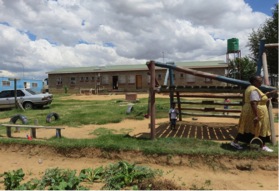
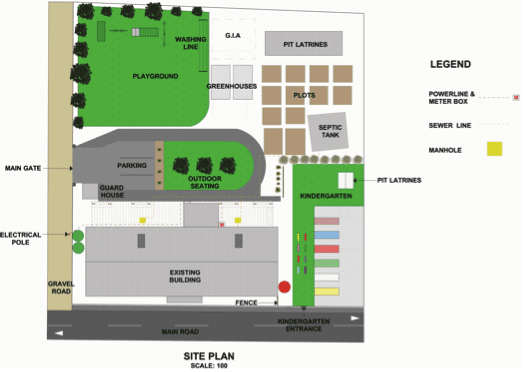
The in loco fellows are busy planning all the improvements needed on the existing site including installation of water harvesting tanks to solve the problem of shortage of water, partitioning the dorm rooms so that children have more privacy, expansion of kitchen, re-allocation of pit latrines to make better utilisation of outdoor space to create play areas for the children as well as increase the vegetable growing areas and installing a roof over the converted shipping container where the pre-school is located so that the classrooms don’t get so hot in the afternoon sun. Renovation works should commence later on in March (subject to funding).
Existing site Proposed layout for refurbished site
We are excited to share with you our first newsletter. A lot has happened in the past few months. Here are some of the highlights…..
Organisational strengthening of our local partner GLC
Our community partner God’s Love Centre (GLC) , is a home for orphaned and abandoned children. An integral part of our partnership with GLC is not just to improve the quality of lives of the children living there with refurbished and additional buildings, but also to help the GLC leadership gain access to skills and networks they need in order to excel in the running of the childcare facility. This includes strengthening their governance, financial management, communications, quality of care, fundraising and overall management. A series of weekly leadership trainings have started and will continue until end of September.
in loco fellowship launchedin Lesotho
Twenty of Lesotho’s most promising young entrepreneurs have been selected to join an 8-month design & build fellowship program which will run from February to September. Read more.
Read the 1st of the in loco fellows blog series here.
Participatory Design Workshop An intense 10 days of learning about human centred design and then putting those learnings into practice by going into the community and finding out their exact challenges, needs and wishes for a better quality of life at the orphanage. The in loco lead Architects, Pedro Clarke and Luca Astorri visited Lesotho from Portugal and Italy respectively to run the workshop. Read more.
Basic Business Skills
Training of Trainers
10 dedicated youth leaders were selected and trained as business coaches on how to facilitate basic business skills to low literary participants.
We can’t wait to see what small businesses are launched once these trainings have been implemented! Read more
Construction Update
Since the current GLC site is already overcrowded with 50+ children living in the 2 dorm-room house, we had to acquire an additional piece of land 1 km up the road from the existing site. There are 200,000 orphans in Lesotho, which constitutes 10% of the population. Most of the other childcare facilities are also full to capacity, so unfortunately it is unlikely that the need for more housing for orphans is going to be resolved soon.
After a lot of discussions with GLC and the community at large, it was decided that the younger children up to 13 years old should remain at the existing site along with the Pre-school, and the adolescent youth from 14 upwards should be located at the new site, which will include various small businesses including an Internet Café, vegetable gardens and a piggery.
The in loco fellows are busy designing, planning, compiling the Bill of Quantities and negotiating with suppliers the best possible rates in order to keep construction costs down. Final drawings will be submitted to the authorities in March to obtain the building permit approval.
Refurbishment plans for existing site
The in loco fellows are busy planning all the improvements needed on the existing site including installation of water harvesting tanks to solve the problem of shortage of water, partitioning the dorm rooms so that children have more privacy, expansion of kitchen, re-allocation of pit latrines to make better utilisation of outdoor space to create play areas for the children as well as increase the vegetable growing areas and installing a roof over the converted shipping container where the pre-school is located so that the classrooms don’t get so hot in the afternoon sun. Renovation works should commence later on in March (subject to funding).
Existing site Proposed layout for refurbished site
Partnerships are key
All of this work would not be possible without key partners. Throughout the planning of the program, partnerships have been formed with the Ministry of Social Development (MoSD) as well as Limkokwing University and Lerotholi Polytechnic. Read more.
Changing the face of architecture in Lesotho Part of our mandate is to increase awareness and get people thinking outside of the box when it comes to architecture, which we are doing in 3 key ways:
Guest Lecture Series The first of which took place in February with Luca Astorri who spoke about his experiences in architecture in a development context building a school in a Nairobi slum area. March’s Lecture will be on “Creating your own Sustainable Space” by T’siu Moorosi 16th March at Lerotholi Polytechnic’s lecture theater.
Film screenings and Debates – in partnership with Alliance Française about the role of architecture for the wider community. Check out our FaceBook page for upcoming events.
Architecture Library – since Lesotho doesn’t have one we thought it’s about time it did! We are asking any visitors coming to Lesotho to bring architecture books with them and any nearby architecture firms in South Africa are also welcome to make donations!
Donors
BOND Events continues to be our main donor and has pledged to donate $1.67 for every $1 raised from other donors up to a value of $50,000 in 2018.
We are pleased to announce two new donors this month:
Vodacom Lesotho who is going to sponsor the 6 female in loco fellows as part of their Gender Equality and women empowerment initiatives.
Agara Foundation from Malta, is currently fundraising for laptops and volunteers to come to Lesotho from Malta in August to set up a computer lab at GLC and give the necessary software training on how to set up and run an Internet Café.
How can you get involved?
Thanks to your generosity, we have raised over $50,000 so far through donations, sponsorships and the purchase of art from our fundraising event rise in the city.
However we still need to raise another $100,000 to make this project possible. Every $1 counts so please join us on this journey of learning and invest here. You can:


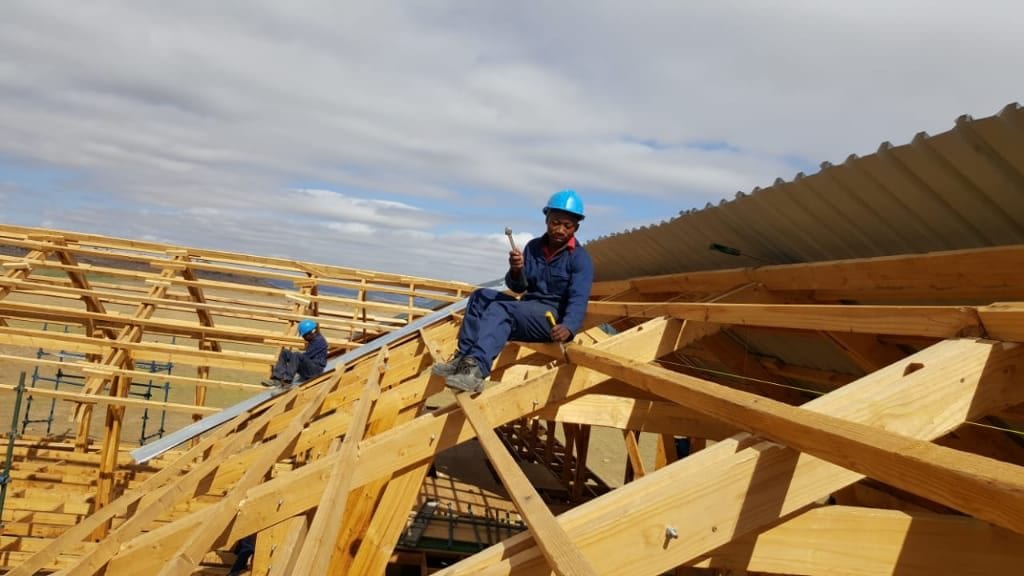











 Our community partner, God’s Love Centre (GLC) is overcrowded with 50+ children living in a 2 dorm-room house. Since the land on which the orphanage is located is quite small, we acquired an additional piece of land just 1 km up the road from the existing site. There are 200,000 orphans in Lesotho, which constitutes 10% of the population. Most of the other childcare facilities are also full to capacity, so unfortunately it is unlikely that the need for more housing for orphans is going to be resolved soon.