Information Library

Why do we need an Enterprise Hub in Lesotho?

An Enterprise Hub in the entrepreneurial sense is a kind of greenhouse for start-up enterprises. In this protected incubation environment, entrepreneurs with innovative business ideas can be consulted and trained. Incubation Hubs are contact points for entrepreneurial learning, thinking and connecting people where they share, network and mutually benefit from one another.


The importance of having an Enterprise Hub in Lesotho is immense; a place of this nature would be able to open up multiple doors for entrepreneurs and is currently an essential missing piece in the entrepreneurial ecosystem. With the unemployment rate in Lesotho as high as 30% amongst youth, there is a dire need for young people to go into business in order to make a living for themselves and their families. The rate of poverty in Lesotho stands at almost 50% , which calls for an urgent need for Basotho youth to be motivated, skilled and well equipped to create platforms for employment and thus fueling the country’s economy.


The Hub will represent an environment in which aspiring entrepreneurs can prosper in the entrepreneurship learning space. They will gain access to essential business development services from business and financial planning to legal and human resource spets. They will get to share their knowledge through peer to peer interaction, while at the same time having much needed space in terms of offices, meeting rooms and workshops to experiment their ideas and create prototypes of their forthcoming products and services before taking them to market. The Hub will also offer access to market and act as a referral centre linking startups to clients and potential investors, thus being a centre of business excellence acting as a benchmark for other businesses in the country. The existence of this Hub will inspire innovations that could change the livelihoods of a significant number of people living in Lesotho.


An Enterprise Hub therefore signifies a ray of hope for multiple entrepreneurs in Lesotho who have great ideas and new businesses, but lack the platform and tools needed in order to make these ideas and enterprises flourish. The Hub will also be a place of inspiration for the Basotho nation at large; a place where some of the wildest dreams are born and attained, a place to birth some of the most successful businesswomen and men to ever come out of the Mountain Kingdom.
To make all this happen we need to raise $100,000 by December 30, 2020. Learn how you can help here
You can read more about the plans for the Enterprise Hub here

READ MORE
News

Design Competition

There’s something about a change of season that inspires change, particularly spring which is the season we have just started in Lesotho. It births so much freshness, it stimulates new beginnings everywhere.

So in light of new beginnings, we are inviting young Basotho creatives to design a new logo for our organization.

This is a competition – so drink up all your creative juices and design a logo that will blow our minds. Think sun rays / hope / change / new beginnings, think “rise”.

To enter

Send your full name, your social media handles, contact details and your originally designed logo to competition@riseint.org

Competition closes on 15 October 2020. Winner will be contacted within 15 days of closing date.

Best of luck!


Prize

The winner gets a 4-week internship with rise.

READ MORE
2020

IN LOCO FELLOWS 2020 BLOG SERIES #2: KE NGOANANA OA MOSOTHO

My name is Mosa Nkhabutlane, “kengoananaoamosotho”, (I am a Mosotho girl) who was born & bred in Lesotho. I studied Interior Architecture from the University of Pretoria and I am currently an in loco fellow at rise international. I applied for this program because I wanted to equip myself with an entrepreneurial career in the built environment and creative sphere in Lesotho.

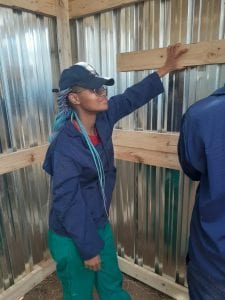
Mosa Nkhabutlane standing inside the site office
Mosa helping to set up the site office

Being part of the 2020 cohort, we are currently designing LNFOD (Lesotho National Federation of Organizations of the Disabled) offices which are going to be located in Naleli. With these offices, we hope to create a precedent for inclusive design in the country. It’s been a real joy to be learning about inclusive design on a practical level so early in my career. So often, we can allow our egos as designers to get in the way of the buildings and objects we are designing and in doing so, we neglect the people for whom we are actually designing and creating. rise has been really instrumental in guiding us as to how we can design in an inclusive manner.

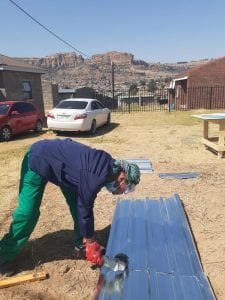
Mosa cutting metal sheets
Mosa constructing the guard house

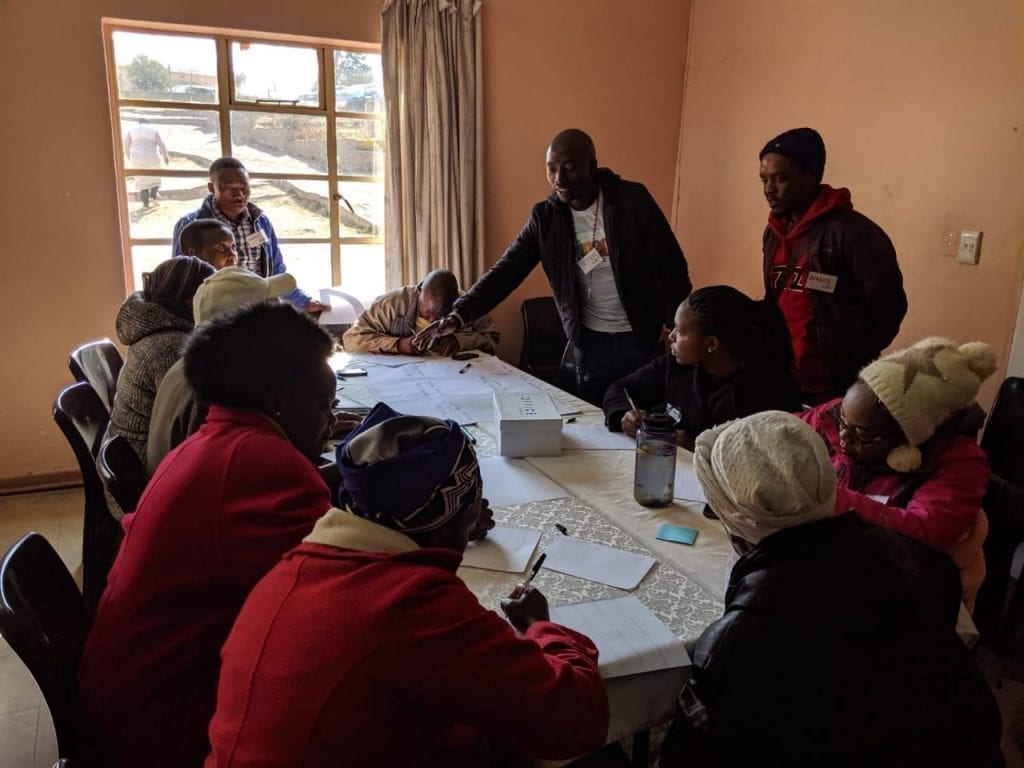
Before we started designing the LNFOD Offices, we met with LNFOD Staff & the Naleli Community. We then hosted a Participatory Design Workshop with LNFOD, which allowed us to communicate with our client and to find out what they need. Instead of assuming their needs, we listened to them, we learnt about how they function as an organization and in doing so, our design has been informed by the needs of the user. 

My experience at rise thus far, as an in loco fellow, has been one of growth and I hope it continues to be exactly that for the months that follow. We have just begun going to site and I believe that it is the “learning by doing” that is yet to mould us into holistic professionals.

In addition to architecture & design, I am also an entrepreneur at heart. I started a jewellery brand @madebymos in 2018. My brand has really allowed me to express myself, it is a baby of mine that allowed me to grow in a lot of different ways and to learn about the design business. It is through it that I learnt about creating campaigns, creative direction and the art of making. I have also learnt to respond to the needs of the customer and I am continuing to learn about managing the funds of a business. I believe that we need to equip ourselves as small businesses, in order to build sustainable businesses.

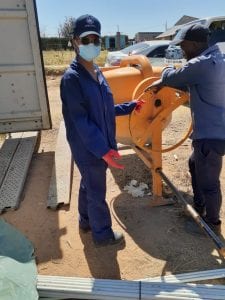
Mosa standing next to a concrete mixer
Mosa working on the LNFOD construction site

The business trainings that rise holds have been a great resource for me as an entrepreneur. We get to meet some of Lesotho’s greatest minds through these workshops and we are given the opportunity to learn from them. The opportunity to absorb knowledge from entrepreneurs who are making waves in this country is unmatched, especially because they are also born & bred in Lesotho. To be inspired by the people that look like us and have walked similar paths is a breath of fresh air. It feels like I am learning something new every day ever since I have been a part of the in loco fellowship. Some days are easy and mellow, some are challenging and new but most importantly, I continue to learn & to be equipped as a young, black female designer in the Mountain Kingdom.


READ MORE
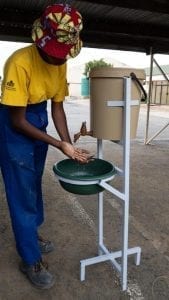
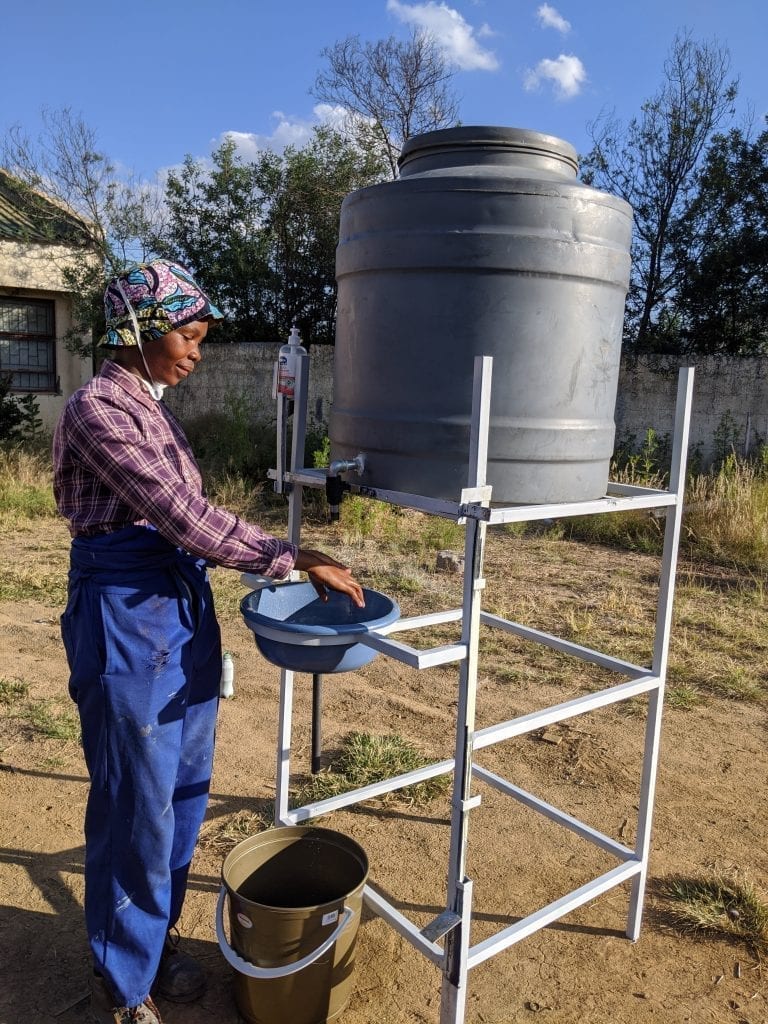
Community member using Hand Wash StationNews

in loco Alumni tackle deadly pandemic head on!

To date the deadly pandemic known as Covid-19 has spread across all 54 African countries except for two – Lesotho and Comoros! With no cure for the virus, the best prevention is isolation and good hygiene practices.  With a staggering one billion people around the world living in slum like conditions, the question would be how can African nations, especially a country on the lower end of the economic scale such as Lesotho, equip their people with adequate hand sanitation solutions to help fight the spread of Covid-19.

Single Hand Wash Station Prototype

To fill the void, a group of our very own in loco alumni, who have formed a company called xyz collaborative, have been working tirelessly to produce emergency hand-wash stations amidst the 21 day lockdown in Lesotho. Most members of vulnerable communities are without running water and as such are at risk of contracting the virus by coming into contact with contaminated surfaces.

in loco alumni 2019 cohort formed xyz collaborative company working on thir first project

The first batch of hand wash stations was commissioned by an NGO called Sepheo who wanted to support the Motimposo communities in which they operate. Just before lockdown started on 29th March, 10 hand wash stations were made and distributed at strategic locations, by shops, which are maintaining the stations on an ongoing basis. 

Double Hand Wash Station in use by community members
Double Hand Wash Station in use by community members in Motimposo

We are so proud of what our in loco alumni who are managing to work in a very challenging environment; with limited resources since nothing can be imported from South Africa because of the lockdown and within tight deadlines given the imminent pandemic reaching Lesotho.  Moreover the procurement of the necessary materials is a logistical nightmare since hardware stores are closed due to the lockdown.

And transport, is also proving challenging as there are very few taxis and cars on the road and the taxi/ bus fares have sky rocketed, especially since one cannot share a car with so many people anymore.

Single Hands Free Hand Wash Station being developed

The struggles the in loco alumni have to face daily to make these mobile hand-wash stations for communities is a true testament to their determination, resilience and commitment to help their fellow citizens.

We are battling on and making more hand wash stations, constantly improving on the design by making them hands-free thanks to the finanical support from Action Ireland Trust. The next batch of hand wash stations are being sponsored by UNDP for the Ministry of Health with 50 stations being installed at Health Clinics and hospiatls as well as for Maseru City Council who will receive 15 hand wash stations which will be installed in bus stations and other busy areas around Maseru.

Hands Free Hand Wash Station 220L
Hands Free Hand Wash Sation

We will continue to make as many hand wash stations as we can before the funding and resources run out. It is vitally important we give these vulnerable communities the lifeline they need.

If you would like to donate? https://riseint.org/donate/
For more information contact info@riseint.org or go to https://riseint.org

READ MORE
2020

IN LOCO FELLOWS BLOG SERIES #13: MAKING THE DREAM A REALITY

YOU CAN DREAM, CREATE, DESIGN AND BUILD THE MOST WONDERFUL PLACE IN THE WORLD, BUT IT REQUIRES PEOPLE TO MAKE THE DREAM A REALITY – blog by Bokang TJakotja, in loco fellow 2019 cohort

He who works with his hands is a laborer. He who works with his hands and his head is a craftsmen. But an artist works with his hands, head and his heart. With my experience through the in loco fellowship program I’ve learned that anyone can become an artist.

In 2018, before I joined the fellowship program I was a freelance carpenter when I first heard about the fellowship through my ex-colleagues from college who also happened to be part of the in loco fellowship alumni and always went on and on about the opportunities the fellowship presented.

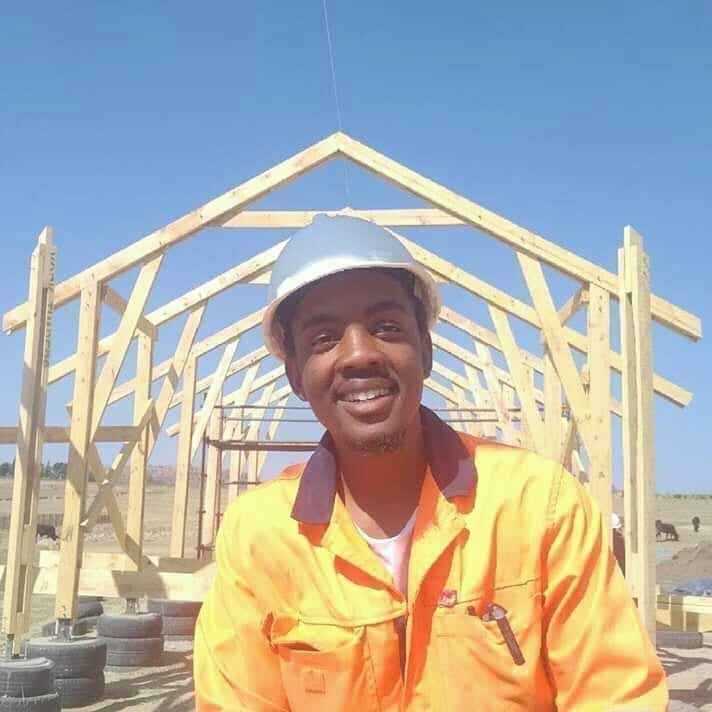
Bokang Tjakotja aka BK – in loco fellow and athor of this blog

I started following rise’s social media pages, and in May 2019 I heard  that rise was looking to recruit recent graduates to design and build a rehabilitation center for youth living with intellectual disability and autism. As the saying goes “it is in our hands to create a better world for those who live in it” and I made a pledge to work towards creating a better world making an impact in the lives of underprivileged communities and so I applied for the fellowship and I was admitted.

The first two weeks of the fellowship was about the participatory design workshops  and the transect walks to better understand the needs of the client and community so as to design and build what works for the client and not what we think will work for  them.

BK in front of the IDAL superstructure back in August 2019

After finalizing designs, construction immediately started, and my favorite part about the fellowship is being given a chance to learn about different roles within a short time. I was appointed as a plant and logistics manager then health and safety office and finally I was to oversee the whole construction process as a site manager.

I acquired both soft skills and technical skills during the fellowship, my communication skills, public speaking improved and  I acquired some management skills, sometimes making unpopular decisions which are in the best interest of the project and not individuals and developed some sharp problem solving skills. In the business part we held business trainings every Friday which helped us to perform well in our businesses and become better entrepreneurs.

I believe that all growth depends upon activity, and there is no development, physically or intellectually, without effort and effort means hard work.

BK spray painting the external walls of the IDAL Centre
READ MORE
2020

in loco fellows blog series #12: “A love in motion and a work in progress”

Everything we build ends up building us too, I feel that me being part of a social responsibility project to design and build an income generating facility centre for the youth of IDAL- Intellectual Disability and Autism Lesotho is showing love to others and a great platform for me to learn as a young Architect.

Starting from the beginning, my aspirations to study and practice architecture started at an early age in primary school after I won a second prize award of the Cashbuild Art at Heart primary school competition and ever since then, I knew I wanted to be nothing but an Architect.

Lesole Putsoane fondly known as Soulja

Alongside that love of craft and passion, I felt I was destined for greatness in this field. However, life being life, with nothing guaranteed or served on a silver platter, studying was not a breeze as I had imagined. I thought I had the right formula for it and had things under control but things were tough. Despite all my difficulties, I managed to manoeuvre through it all and managed to acquire a degree in Interior Architecture from Limkokwing University of Creative Technology.

After graduating, the pressures of life continued to press on, it’s been tough and stressful out here on field. In the practical world, one would find that the government and the private sector cannot provide jobs for everyone and that causes a lot of havoc.

Lesole Putsoane (sitting) with other fellows expecting an imminent storm

Being from an institution of Creative Technology, where I was taught from day 1 to create my own job, I started thinking of ways and strategies to escape poverty and I figured I could continue with freelancing as an Architect. It was something I was already doing while I was in school to make some extra income while I learn but projects would not come in as I wished, sometimes a month to 3 would pass by without a new client so I decided to use my time wisely when I still had it and started registering an Architecture and Construction firm (Far Beyond Imagination PTY LTD.)

This kept me busy but most projects would not be given to me because I was considered a rookie in this game so I had to scrape by and feed off the bottom of the chain. While in the process of proving myself and trying to win over clients one of my brothers sent me a poster of the rise in loco fellowship application and when I applied, I was fortunate enough be given an opportunity to be part of the 2019 design and onsite training fellowship programme.

Lesole Putsoane with the IDAL centre in the backgound

The 2019 cohort entails 13 recent graduates from different tertiary institutions and different fields of study (Architecture, Civil Engineering, Construction management, Water and Environmental Engineering, Carpentry, Education and Agriculture) who were given a chance to design and build a facility centre for the youth of IDAL from inception to completion. The most amazing part of the project was that it was a participatory design process so we had to know our clients well. The project kicked—off and as time went by things got tough because of the challenges on site, pressure and distance travelling to and from site. However, I have been learning a lot, enhancing my design skills and also obtaining experience on-site and learning how to use different tools and machines. During the fellowship I had the chance to work in 3 different roles each for 2 months, Plant and Logistics Coordinator, Site Architect & Health and Safety Officer which have exposed me to different disciplines too.

Almost every Friday we have business trainings as a way to guide us into better future entrepreneurs, and to become job creators rather than job seekers. Not only have I learned technical but also soft skills that include public speaking, negotiating and many more.

Lesole Putsoane

Finally, there are a couple of projects that I also got a chance to work on during the fellowship apart from IDAL which have also contributed in developing my design and detailing skills. My experience with rise International has been a great journey and a great learning platform for me and I’m grateful for the opportunity.

READ MORE
in loco program

in loco fellows blog series #10: WE ARE THE CHANGE WE SEEK

Everybody can be great. Because anybody can serve. You don’t have to have a college degree to serve. You don’t have to know the second law of thermodynamics in physics to serve. You only need a heart full of grace. A soul generated by love.” –Martin Luther King, Jr.

Drawing my inspiration from a strong belief that volunteerism is a powerful way of engaging people in tackling development challenges, I first heard of rise (Relationships Inspiring Social Enterprise) back in 2017 when they were calling for applicants to their first ever cohort in Lesotho. Unfortunately I could not apply at the time because I had just landed a new job at one of the design and construction companies in the country but that did not stop me from following rise on social media. It was through the social media platforms where my interest in the organization and its volunteer program grew greatly as I realized what the organization was doing not only for recent graduates through the entrepreneurship trainings but also for the disadvantaged children at God’s Love Centre and the surrounding community.

Finally, in 2019 another call for applicants into the second cohort was out. I did not have to think twice about submitting my application because by then I knew for sure that I wanted to be part of the rise family, so without hesitation I submitted my application and I got admitted into the program.

Being a fellow in the in loco program was a dream come true because as an Architectural Technology graduate I have always believed that great architectural design is a result of collaborative effort combined with innovative and sensitive values that transform spaces and places into creative and unique solutions for the betterment of people’s lives and earth as a planet.

What really fascinated me about the program is rise’s design approach, which involves the client from the very early design stage so that we can better understand the needs and problems of the client. This approach allows us to work with the client and come up with solutions that the client understands and has ownership of; in this way the designer acts as a facilitator while the client designs.

It has been four months into the program and I am proud to say that I have acquired so much knowledge about different disciplines. This is all due to the fact that the in loco fellowship programenables multi-disciplinary interactions between different professions in the built environment.

rise’s in loco-fellowship programis such a great platform because it also acts as a positive space where recent graduates can have fun, exchange ideas on how to build a better tomorrow,  help each other grow  while also serving their communities.

READ MORE
in loco program

in loco fellows blog series #9: At school it’s just the basics. The real learning is on site by doing

My name is Ntina (Peter) Makhetha. I am a 2017 Construction Management graduate. I first knew about rise’s in loco fellowship program in mid-2018 from one of my ex-tertiary colleagues who was one of the fellows in the first pilot program. Immediately after graduating we were all over the place looking for jobs. By the time I got to know about the opportunity applications were already closed. I saw how the in loco program gave them not only on site experience, but also the business training sessions turning them from being jobs seekers into job creators.  I couldn’t wait for the recruitment of the second cohort so I followed rise on social media to be updated about second in loco fellowship applications. 

Fast forward mid-2019 a post was published, I couldn’t miss it as I had been waiting for it, I applied and got lucky and was admitted. August came, we began our 6-month fellowship with my first ever experience, the participatory design workshop of the IDAL project, which was all about designing involving the client to understand and cater for their needs into the design. Within that 2 weeks workshop I took part in the Quantity Surveying Team, doing the Bills of Quantities. I learned more about teamwork as we had to work hand in hand with the design team and understand their drawings.

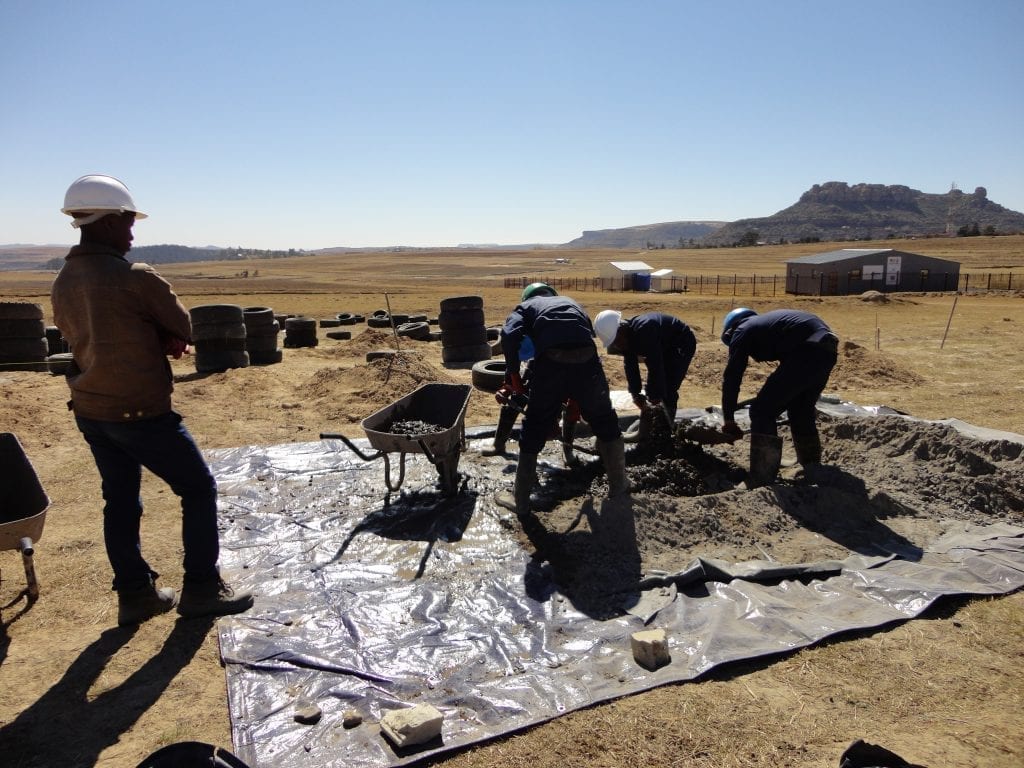
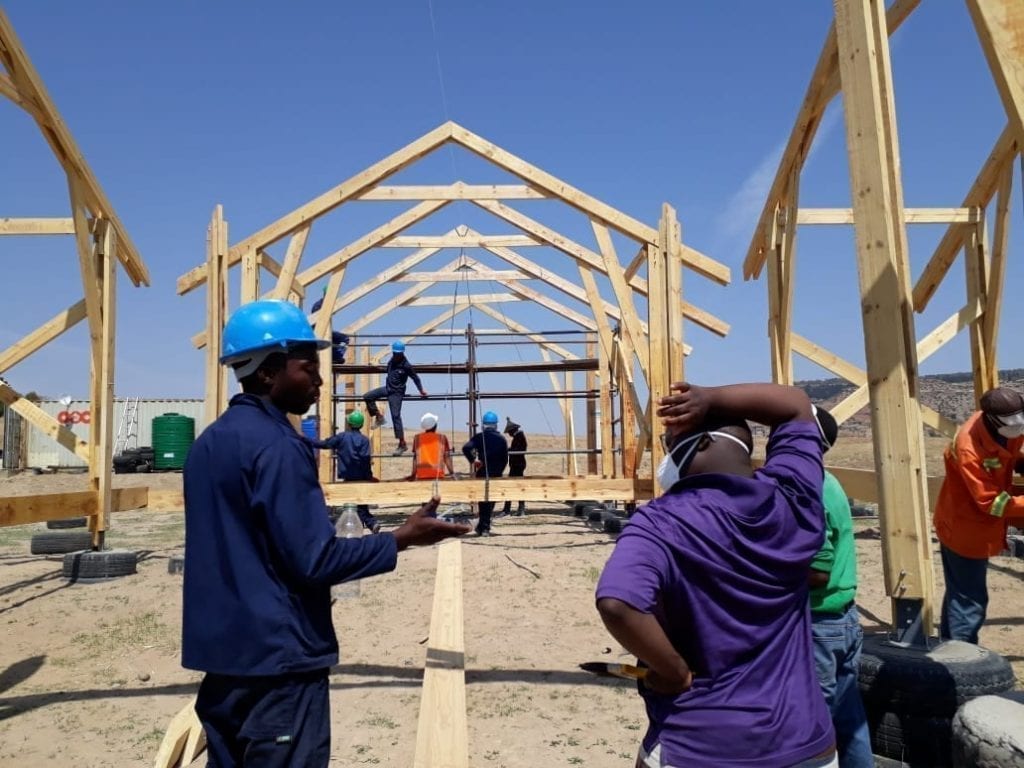
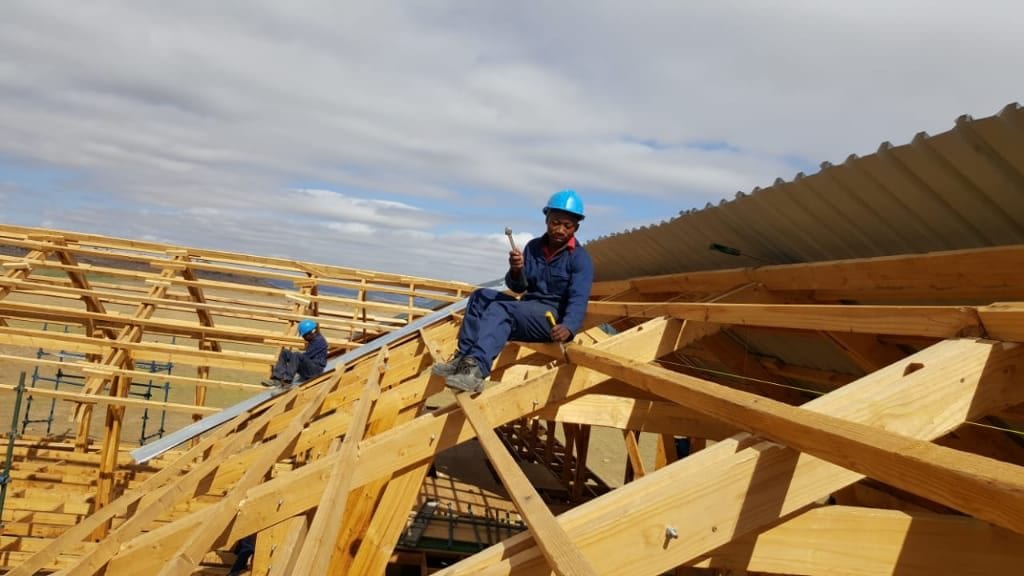
Later we went to site, for the commencement of the construction phase, as a Site Manager, it was such a huge opportunity and exposure to have taken a lead in the execution of a timber structure from its foundations to the top. Amongst all, the most critical tasks that I got my hands dirty on was setting out, excavation, levelling, reinforcement, concreting, raising up the pillars and roof trusses which are the major structural elements of the project. As the in loco program is about learning by doing, I switched roles 3rd month into the fellowship and took on the Events Coordinator. role I wanted to improve my soft skills, especially  my communication skills and be a confident public speaker which I managed to strengthen and now it’s safe enough to say I’m way better than before I joined in loco 2019.

 At the moment I’m working as a Plant and Logistics Manager as well as a Quality Control Officer. I did learn a lot of things in a short time. I learned more than I anticipated, multitasking and working under pressure. Many thanks to rise through its in loco program for all the valuable experience and entrepreneurship skills which has enable me to start developing my own Construction Company.

READ MORE
in loco program

in loco fellows blog series #7: Never lose hope, Give it a try

Some time after I completed my diploma in construction management in search for job opportunities, valuable skills and experience in the design and build industry, i come across one of my ex-classmates who introduced me to the impact of the in loco fellowship program. I never let the opportunity pass me by, I applied for the fellowship and was called for an interview. Guess what, today I am enrolled amongst the in loco fellows at rise International (Relationships Inspiring Social Enterprise).

We are currently working on the project of IDAL (Intellectual Disability & Autism Lesotho) Centre. The first thing we did for the project was to conduct a Participatory Design Workshop, the aim being to understand the clients and their needs and thereof come up with solutions to their problems with the in loco materials and talent.

The first week of the program I had to work on the tendering process where i did the costing of the project by preparing the bill of Quantities. It was an enjoyable time for me to enhance the skills and knowledge I had prior to school by using the necessary tools introduced to us by the rise team which were the bills of quantities templates, schedule of works and the rise database. Such tools are necessary in managing time, cost and effort.

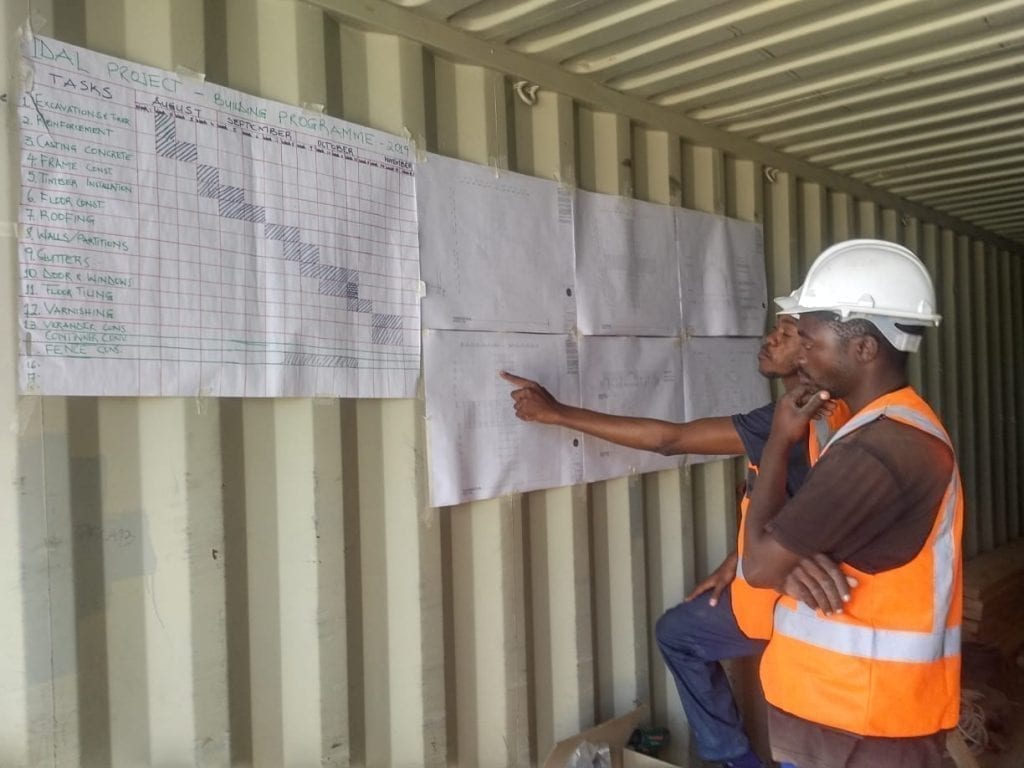
Two weeks later it was my time to get to experience the role of being the site manager. Very challenging moments to execute the project, giving tasks to the other fellows and the application of the managerial skills and knowledge I got at school, conducting site meetings, preparing site reports, schedule of works and many others.

 The fellowship has changed me from being a job seeker to an entrepreneur through the business sessions we are getting, fire is burning inside me to bring tremendous changes into people’s lives. I gained a lot of both soft and technical skills in the managerial system by collaborating with the fellows and the rise team who I regard are my mentors.

READ MORE