Since the beginning of this year, countries around the world have been facing unbearable health and social emergencies due to the global Covid-19 pandemic. In the most vulnerable countries, millions of people do not have access to critical life-saving supplies and basic primary health facilities for hand sanitation. The Water and Sanitation policy of 2007 states that “all Basotho are entitled to have access to a sustainable supply of potable water and to the provision of basic sanitation services at an affordable cost.”
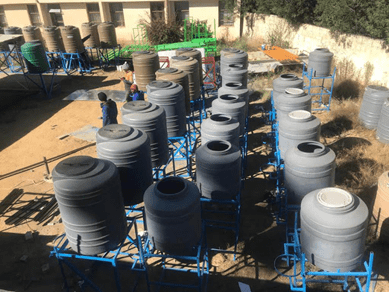
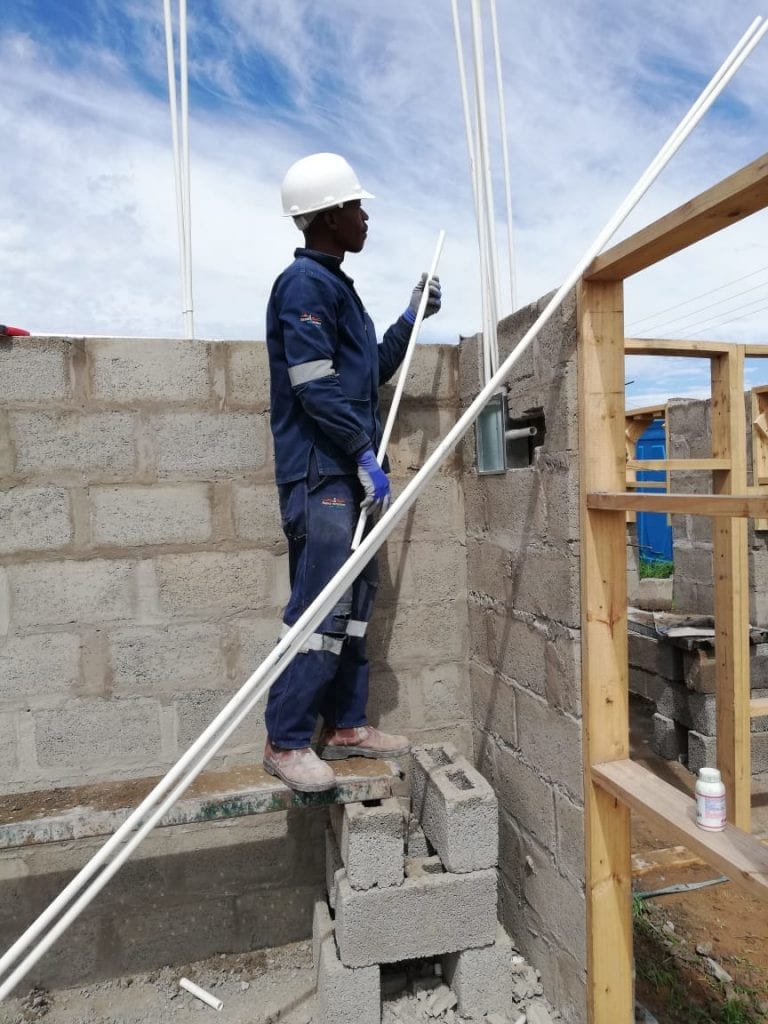
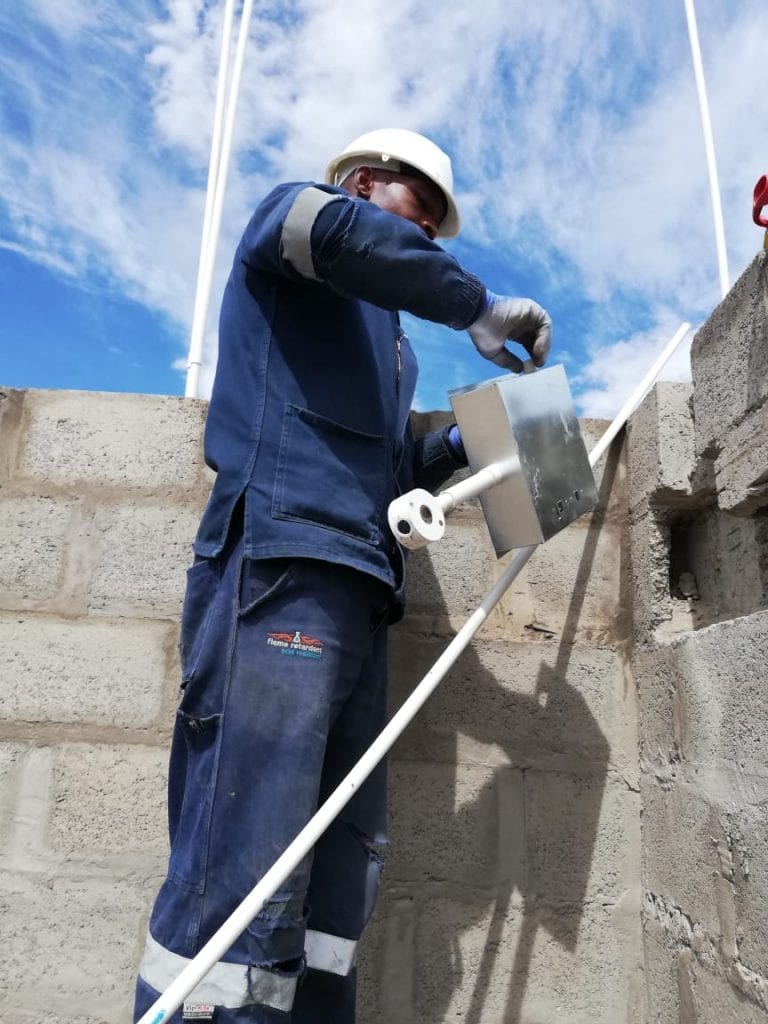
Standing by the policy rise was commissioned by the United Nations Development Programme to make 65 hand wash stations for the Ministry of Health and Maseru City Council to combat the COVID-19 pandemic in Lesotho. The United Nations Development Programme (UNDP) had learnt about the excellent work that had been done by our in loco alumni in making and distributing hand-wash stations earlier in the year when an NGO called Sepheo had commissioned rise to make and install 10 emergency hand-wash stations in the Motimposo communities in Maseru, Lesotho.
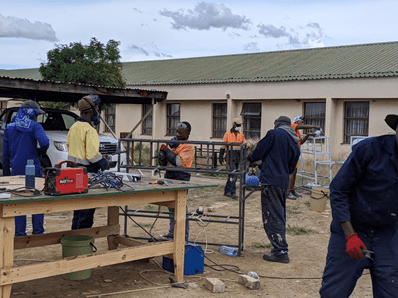
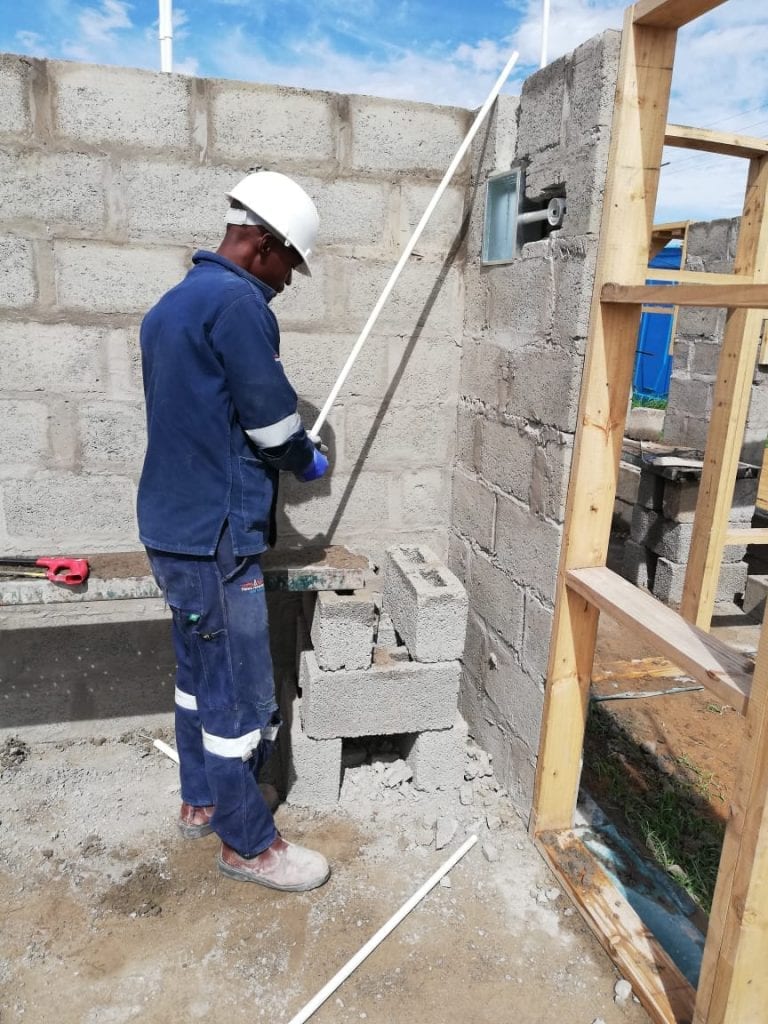
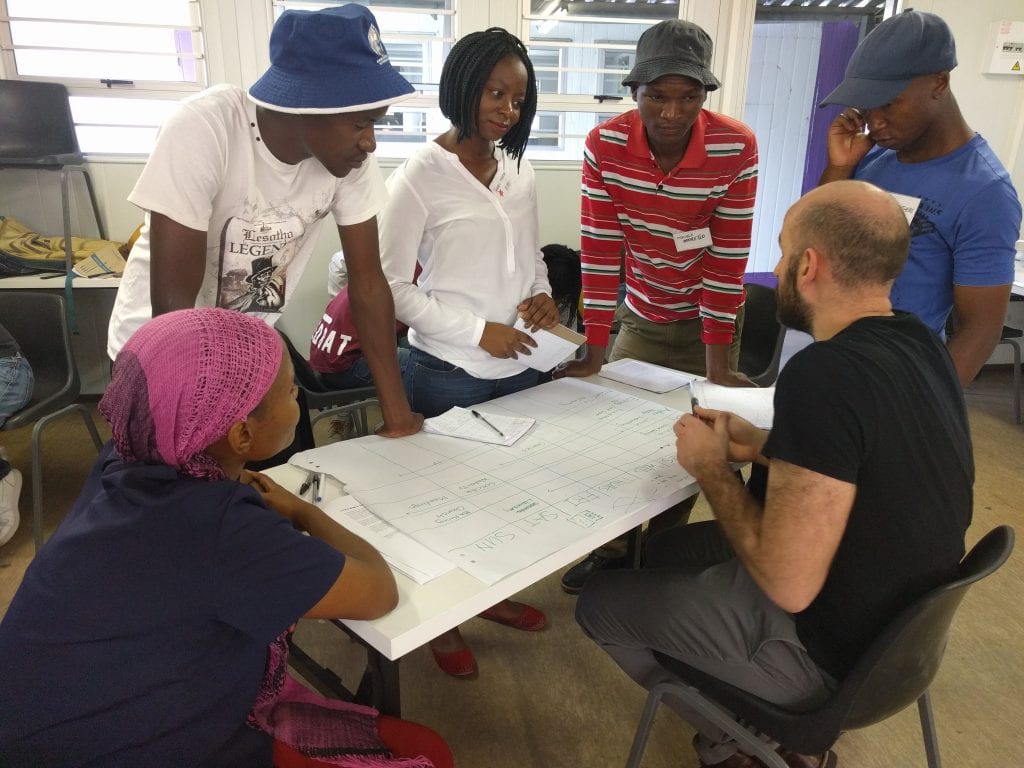
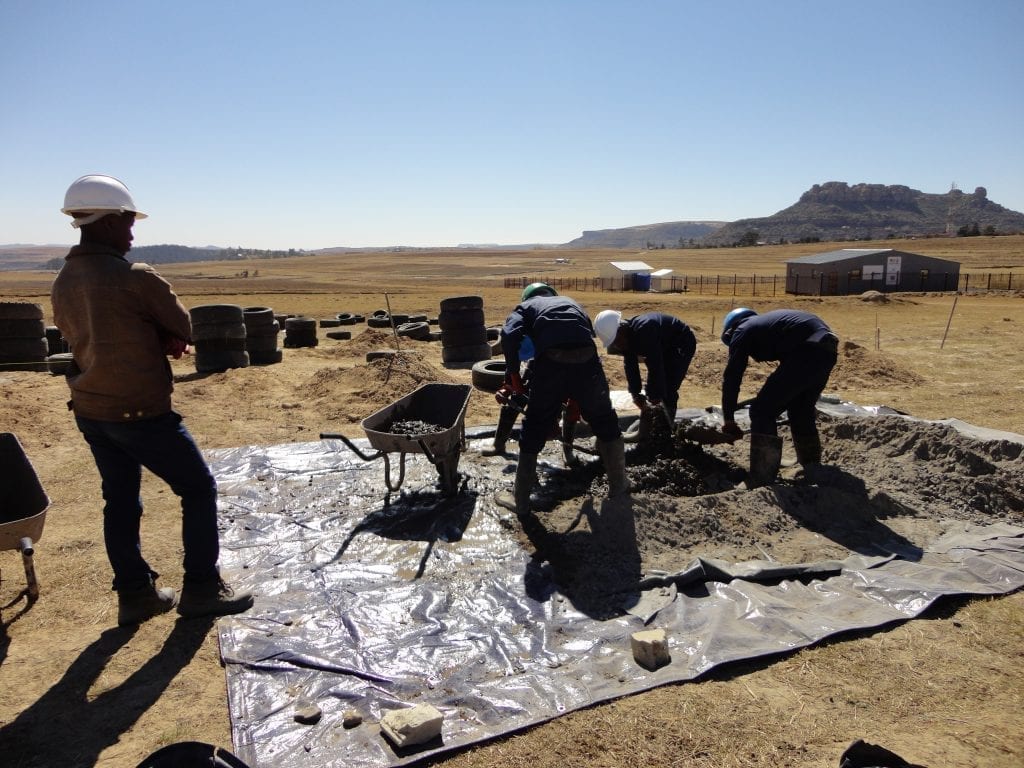
Ten in loco alumni who started their own company called xyz collaborative constructed and distributed 65 hand wash stations. Fifteen for Maseru City Council for both taxi and bus stop areas and 50 for the Ministry of Health which would be installed in clinics and hospitals all over the country.
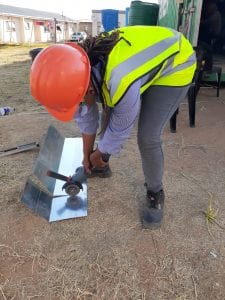
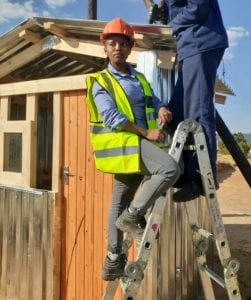
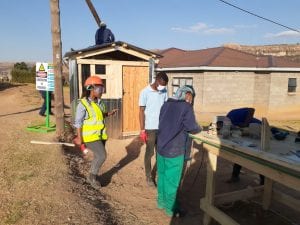
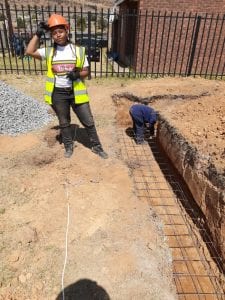
in loco alumni who have formed a company called xyz collaborative making the hand-wash structures
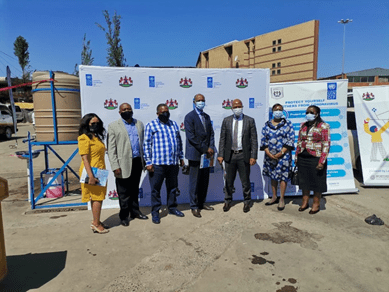
This project was completed in just 5 months and the UNDP hosted a hand over ceremony in Maseru, Lesotho to recognise and appreciate the work of rise, and to introduce the use of these hand wash stations to the community.
UNDP and rise team at handover ceremony
Subsequently, UNICEF Lesotho commissioned rise to build another 40 hand wash stations for health clinics and facilities in all 10 districts of Lesotho to some of the most remote and hard to reach areas of the Mountain Kingdom.
My name is Poloko Phalinyane. I am a twenty seven year old Mosotho man born in Rothe, in the outskirts of Maseru. I studied Electrical Installation at the renowned institution of Lerotholi Polytechnic. I enrolled in 2015 and completed in 2018. I am part of the in loco fellowship of 2020 with rise international. What sets me apart from a crowd is my work ethic and desire to produce excellence in everything I do. I am a patient person and I act promptly in every task; giving it all of my time and attention. I am a person filled with laughter and always willing to offer a helping hand.
The most important of all reasons why I applied for the in loco fellowship is the entrepreneurship aspect of it all. I was curious about the business trainings provided in the fellowship – on how they can improve and add value to the informal business I was already running. Although at the time I already had much experience in the built environment through offering services in electrical installation and installing building finishes, I knew that I could learn more. That is what is currently happening in my time at the fellowship.
At this point in the fellowship, 4 months in, I have acquired a lot of skills and lessons that I didn’t have before. In line with the entrepreneurial training, I have learned how to keep documentation of all transactions, budgeting skills, how to improve my negotiation skills, how to position my brand, and how to advertise my business. In construction I have learned about the inception of construction cycles, what tenders are and what they deal with, the preparation of the Bill of quantities, preparation of electrical drawings, technical skills in building foundations, surface bed and a cavity wall.
As a Mosotho man I want to be an example to the community I come from. I want to be an attestation that hard work, discipline and laughter are ingredients of success. I want to build my skills not just to work for an existing company but to run my own enterprise one day. An enterprise built from scratch by a Mosotho man. One that can be successful and uplift the Basotho youth by providing jobs and convenience for communities in the outskirts of Maseru. Owning an electrical store that is situated in the north of Lesotho is the one dream I really want to come true. I want to transition from old ways of making my services available to customers and incorporate digital platforms to keep up with the times because digital media has taken over the world.
Growing up I never had a specific aspiration but I always knew that in everything I choose to do, I shall always give it my all. Lesotho has a high unemployment rate and opportunities are very scarce so it’s no surprise that I want to be a successful entrepreneur, it is one of the major motivations to make money and secure a comfortable future. There is a saying that says the early bird catches the fattest worm and every day when I wake up I work towards catching the fattest worm.
The landscape of business today is constantly changing and increasing in complexity. Innovation is critical to success, and a combination of skills is the key. Having a mentor to help manoeuvre through the business landscape; someone who has more experience, who guides a less experienced person by building trust and modelling and inspiring positive behaviours. A mentor essentially helps their mentee be accountable for their vision, their goals and plans. An exceptional mentor can help a fledgling entrepreneur think through effective strategies, crunch numbers and create realistic business plans. However, mentorship is not only beneficial to the mentee but also to the mentor. The time spent pushing another person towards being the best possible version of themselves develops one’s leadership and management skills.
The need for mentorship in Lesotho
Lesotho is a low- income, land locked country in Africa where the rate of poverty stands at almost 50%. This calls for an urgent need for the youth to venture into entrepreneurship in order to survive. Yet most start-ups in Lesotho fail due to lack of access to business support services. There are no formal leadership development programs and there is an existing generational gap between experienced and less experienced people in workforces. Therefore, there is a need to ensure that professionals are equipped and future- ready. Krynauw Nel, an architect in South Africa, who virtually mentors a young entrepreneur in Lesotho, when asked about the potential impact of mentorship on Lesotho’s economy stated “the biggest issue for a small enclave like Lesotho is exposure to wider practices. We forget that not everyone has access to the same exposure we have even in South Africa if not to the world at large. Widening the horizons for locals and increasing their networks can make a massive impact. I find a total hunger for that. When that exposure is supported by a compassionate mentor, it can make a huge difference to at least one individual.” Tshepang Thabane, Krynauw’s mentee and graduate from in loco 2018 cohort also stated that “Lesotho needs to invest heavily in mentorship programs and platforms in order to tackle the high unemployment rate as they help turn lofty goals into tangible goals.”
In this day and age where the 4th industrial revolution has almost taken over, mentorship programs have proven to be game changers and what’s more, they can be done remotely. This is all the more important as we navigate through a global pandemic.
rise mentorship program
In 2018, we launched a ground breaking fellowship program, a practical ‘learning by doing’ live design, build and entrepreneurship training program called in loco. The fellows receive business and entrepreneurial training as well as an introduction to professional networks, access to market and employment opportunities. in loco fellows practice the principles of entrepreneurship and social impact while receiving hands-on training in community designed infrastructure projects. At the end of each cohort the fellows are given the opportunity to select a mentor from everyone they would have interacted with during the fellowship, we then facilitate a mentor-mentee relationship benefiting both parties.
Celebrate National Mentoring Day with us
We are working on designing and building Lesotho’s first Enterprise Hub for start- ups in the country’s capital of Maseru as part of our rise in the city 2020 campaign. This Hub is a key component to building Lesotho’s entrepreneurship ecosystem to fight against poverty in the country. The wheels of our campaign are the creation and facilitation of a mentorship program that will award start-up architects in Lesotho the platform to be mentored by successful international architects who continue to sign up to our campaign. Watch this brief 2 minute video that explains how it works and help spread the word!
My name is Paki T’sotleho, I am a 29 year old man with a heart of a kid, a mind of an old soul and the body of a giant. I am part of the 2020 cohort of the in loco fellowship and a contributor to the vision set by rise international. I hold a Bsc in Construction studies in the built environment from the University of the Witwatersrand. This program focuses on all aspects of construction; from Construction Management and Technology, Quantity Surveying, Property studies, Construction law, Building design, Building science and Construction Economics. The importance of this programme is to broaden one’s take on the construction industry so that going further with either a professional career or a contractor/ entrepreneur route you understand your role and how you fit in and keep up with the ever growing and changing construction industry.
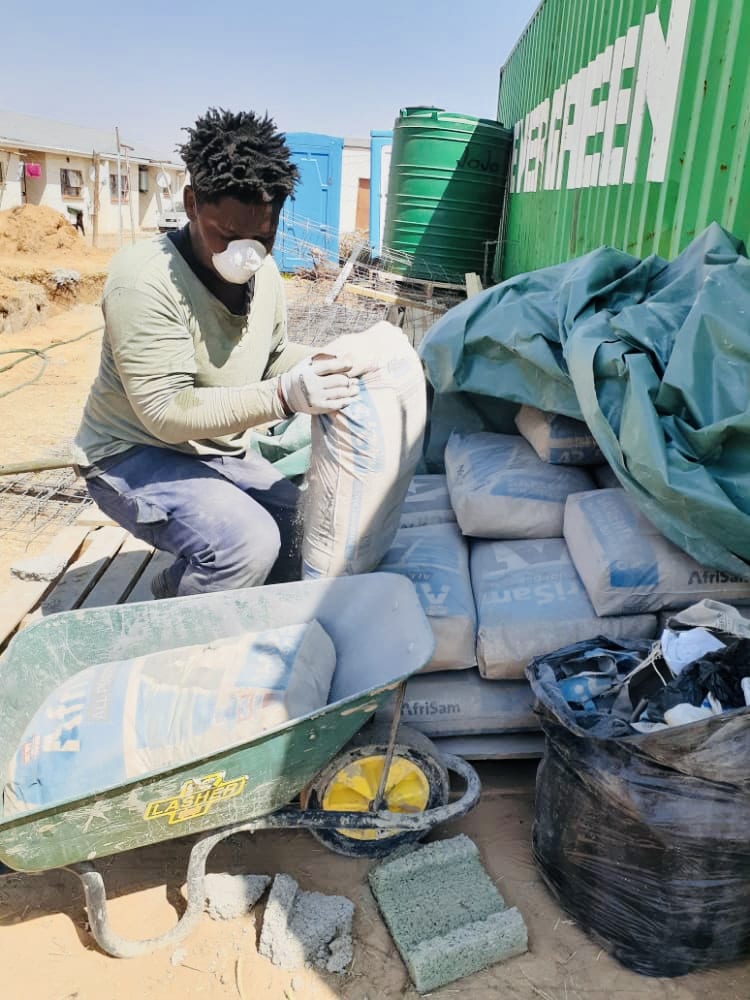
Paki working on site
I strongly believe that ignorance, coupled with the “know it all” attitude is the root of the downfall of our Basotho People and hinders growth for Lesotho. In return this attitude leaves us, the youth, with a frustrated and discouraged outlook for Lesotho. With that said, the reason I applied for the in loco fellowship programme was that for the first time I came across a programme that seemed eager to give the young Mosotho child a vision, a platform to voice their creativity, challenge and grow their acquired skills from the built environment and at the same time teach them how to be independent and to self-sustain themselves when they go out into the field.
At this stage of the fellowship programme (3 months in), I have learnt how to breakdown Bills of Quantities into a material list. They can be used as a point of reference to see if your project is in line with the budget and indicate expenses that were not accounted for in the Bills of Quantities. I have also learnt the most tricky aspect of construction which is the Preliminaries in a practical sense, that has to do with site preparation, site establishment requirements, administrations and organisational requirements for the personnel on site. On top of the construction aspect of the programme there is also the entrepreneurship aspect. In this part of the programme I continue to learn about how to position your brand, how to locate and expand your market, how to execute social media marketing, the importance of customer service, and a whole lot more that helps you tick all the boxes necessary to successfully start and operate your business.
Since the fellowship started in July 2020 I have been performing the role of a buyer as well as a laborer on site. As a buyer, I am responsible for making sure all the tools and materials needed on site are sourced in accordance with the construction schedule; when they are needed and at the best value for the client. I assure you this is no walk in the park. Finding the balance of being within budget but trying your best to get the best quality material and services possible is very challenging. This role requires a lot of planning and preparation skills but it is mostly exciting if you have worked as a consultant Quantity Surveyor like I have.
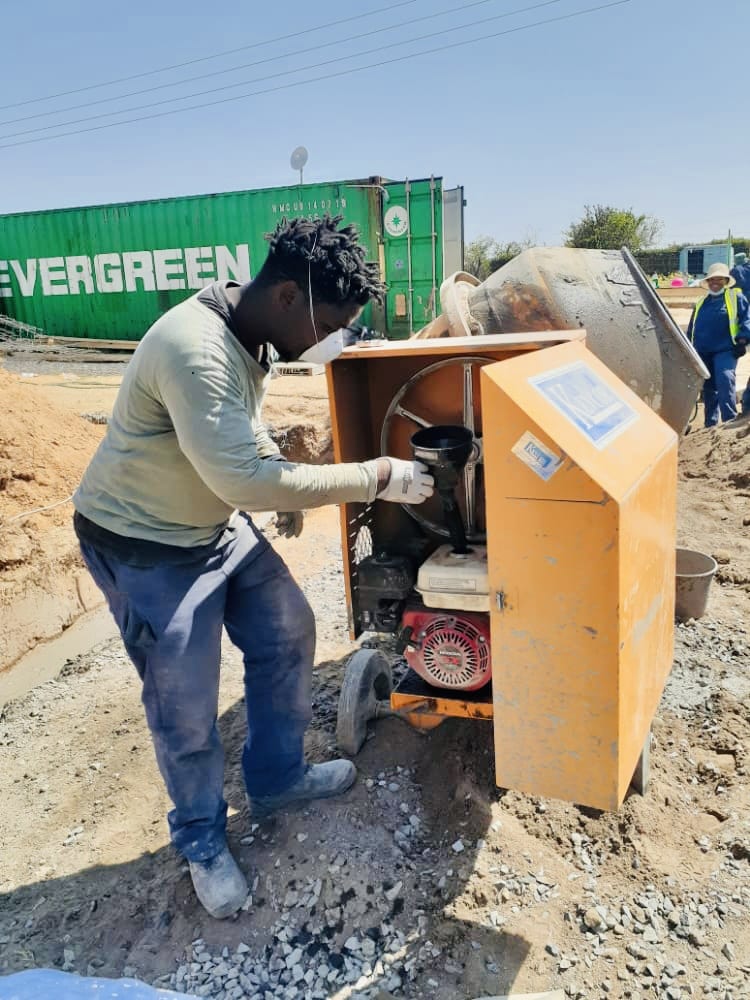
Paki operating cement mixer
Being able to see equipment and material, to interact with suppliers, all of which makes me feel hands on. It also solidifies my confidence in my profession as a Quantity Surveyor – this profession in Lesotho is easily brushed off and given little to no recognition. As for being a laborer, this is the most rewarding experience ever – I get to see that I am capable of creating something from nothing with my own hands and personally, I have always wanted to be the kind of man who is handy. So this experience is giving me the skills I need to be this man and tuning my mind to be oriented in problem solving in every task I face.
I am currently working in a project where we are constructing an inclusive building for LNFOD (Lesotho National Federation of the Disabled). The in loco programme encourages fellows to advocate for inclusive buildings in every project that we take on for the benefit of people with disabilities. Secondly, this project challenges us as the future Lesotho construction industry; to come up with the technology to allow for all physical work to be done by everyone, no matter their gender.
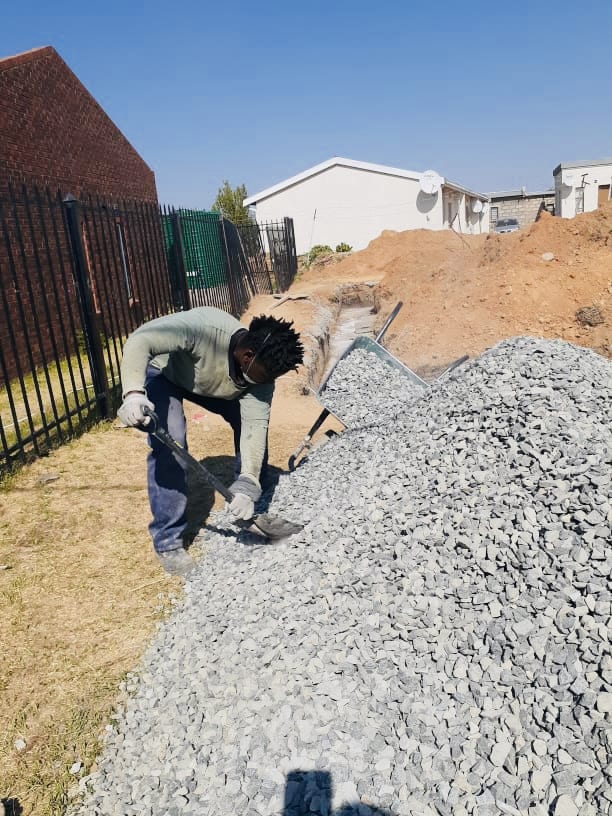
Paki preparing foundations
In conclusion I would like to leave with an overview of my future aspiration. My dream is in three stages; first I would like to open a lamp shop and everything wood that will later have a coffee shop. Secondly, I would like to start up a recreational center/camp, and lastly to facilitate community projects that build parks with sports grounds all over the country. “Along with the trees, the animal in me and the soil I ground myself on, teaches me how to be human” – Paki Ts’otleho
Intergalactic means movement between spaces. Buildings occupy space, from their foundations upwards. Therefore in this blog, intergalactic is compared to construction because of the fuming passion I have for the built environment and intergalactic.
My passion for the built environment grew after several setbacks from the University of Free State, where I was enrolled in the faculty of natural sciences, however I dropped out from the University and I enrolled for a National Diploma: Building at the Central University of Technology, Free State (CUT) where I graduated in record time. The faculty of Engineering has always been best for me…HAHA.
Malingaka working on construction site
Upon completion of my diploma, I was awarded a MerSETA women in engineering bursary. This encouraged me to further my BTech in Construction Management which I also completed in record time. A fiery love for construction grew deeper, so much so, that I established my own construction company named Khal Construction Engineers the same year I enrolled for my BTech, with a view of creating a better industry that would lessen surplus costs, delays, accidents on construction site, and upsurge job creation. My first project in construction was plastering and floor pouring a residential building.
The business did not go so well. Our marketing was poor, we could not get customers as we were unknown in the industry, project hunting became all-consuming but there were still no doors opening for the smart, enthusiastic ‘Malingaka. But I don’t accept defeat; it’s just not in my DNA. Therefore I enrolled for a Masters at the University of Johannesburg while job hunting and tender hunting. Being the go getter that I am, I completed my Masters within a year. The same year in December my company got its first client! Sufficient grace, right?
Malingaka building a guard house
That first client was a stepping-stone to many. Currently I have over two years’ experience in the industry and already embarking on the journey to bag my PhD in Construction Management. Though my business is facing challenges such as lack of construction equipment to commence a project, rise has a solution to my challenge since fellows and alumni are able to borrow construction equipment from rise.
My first encounter with rise international was when I navigated through the internet for job vacancies. I believe it was through www.selibeng.com that I saw the opportunity for the in loco fellowship. rise’s mission and vision caught my attention, I was amazed. With much enthusiasm I applied for the fellowship and got in. I must say I am super grateful for this platform; it has been nothing but a place of growth in the built environment, industry and entrepreneurship.
Malingaka and other in loco fellows working on LNFOD site
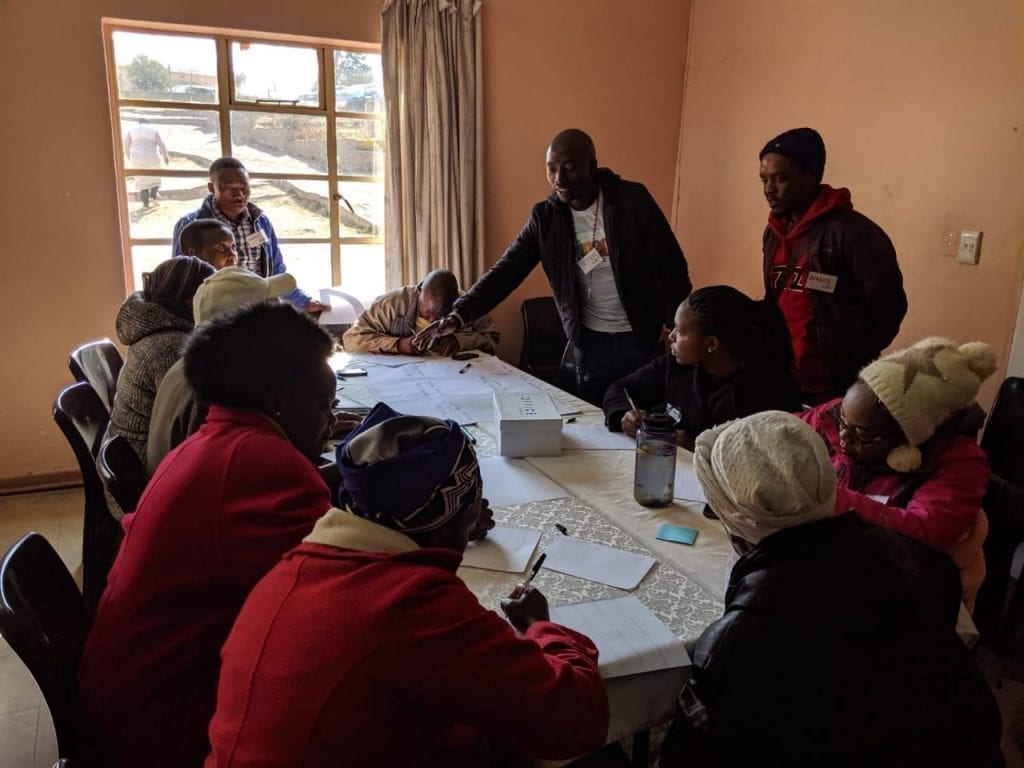
“Don’t let an opportunity pass you by, grab it and make the most of it.” I’ve been doing the most, learning by doing, learning from my other fellows, grabbing every skill and networking. rise has taught me that “Letso’ele le beta poho”, (Together we can overcome). Team work is the utmost, sharing innovative ideas amongst the fellows, problem solving and building each other through business partnerships. At rise, I have learned the importance of marketing, effective communication, negotiation skills and working in groups with other fellows. Amongst the activities we’ve done with rise, I enjoyed the Participatory Design Workshop and team building the most; what an experience!
‘Malingaka Maoeng
I am excited to learn more from my fellows, to experience getting our hands dirty on the 2020 project. I have been getting along well with other fellows; it has really been fun working with each and every one of them. It is as if we’re one big happy family.
An Enterprise Hub in the entrepreneurial sense is a kind of greenhouse for start-up enterprises. In this protected incubation environment, entrepreneurs with innovative business ideas can be consulted and trained. Incubation Hubs are contact points for entrepreneurial learning, thinking and connecting people where they share, network and mutually benefit from one another.
The importance of having an Enterprise Hub in Lesotho is immense; a place of this nature would be able to open up multiple doors for entrepreneurs and is currently an essential missing piece in the entrepreneurial ecosystem. With the unemployment rate in Lesotho as high as 30% amongst youth, there is a dire need for young people to go into business in order to make a living for themselves and their families. The rate of poverty in Lesotho stands at almost 50% , which calls for an urgent need for Basotho youth to be motivated, skilled and well equipped to create platforms for employment and thus fueling the country’s economy.
The Hub will represent an environment in which aspiring entrepreneurs can prosper in the entrepreneurship learning space. They will gain access to essential business development services from business and financial planning to legal and human resource spets. They will get to share their knowledge through peer to peer interaction, while at the same time having much needed space in terms of offices, meeting rooms and workshops to experiment their ideas and create prototypes of their forthcoming products and services before taking them to market. The Hub will also offer access to market and act as a referral centre linking startups to clients and potential investors, thus being a centre of business excellence acting as a benchmark for other businesses in the country. The existence of this Hub will inspire innovations that could change the livelihoods of a significant number of people living in Lesotho.
An Enterprise Hub therefore signifies a ray of hope for multiple entrepreneurs in Lesotho who have great ideas and new businesses, but lack the platform and tools needed in order to make these ideas and enterprises flourish. The Hub will also be a place of inspiration for the Basotho nation at large; a place where some of the wildest dreams are born and attained, a place to birth some of the most successful businesswomen and men to ever come out of the Mountain Kingdom. To make all this happen we need to raise $100,000 by December 30, 2020. Learn how you can help here You can read more about the plans for the Enterprise Hub here
Everybody can be great. Because
anybody can serve. You don’t have to have a college degree to serve. You don’t
have to know the second law of thermodynamics in physics to serve. You only
need a heart full of grace. A soul generated by love.” –Martin Luther King, Jr.
Drawing my inspiration from a strong belief that volunteerism is a
powerful way of engaging people in tackling development challenges, I first
heard of rise (Relationships Inspiring Social Enterprise) back in 2017 when they were calling for applicants to
their first ever cohort in Lesotho. Unfortunately I could not apply at the time
because I had just landed a new job at one of the design and construction
companies in the country but that did not stop me from following rise on social media. It was through
the social media platforms where my interest in the organization and its
volunteer program grew greatly as I realized what the organization was doing
not only for recent graduates through the entrepreneurship trainings but also
for the disadvantaged children at God’s Love Centre and the surrounding
community.
Finally, in 2019
another call for applicants into the second cohort was out. I did not have to
think twice about submitting my application because by then I knew for sure
that I wanted to be part of the rise
family, so without hesitation I submitted my application and I got admitted
into the program.
Being a fellow in
the in loco program was a dream come
true because as an Architectural Technology graduate I have always believed
that great architectural design is a result of collaborative effort combined
with innovative and sensitive values that transform spaces and places into
creative and unique solutions for the betterment of people’s lives and earth as
a planet.
What really
fascinated me about the program is rise’s
design approach, which involves the client from the very early design stage so
that we can better understand the needs and problems of the client. This
approach allows us to work with the client and come up with solutions that the
client understands and has ownership of; in this way the designer acts as a
facilitator while the client designs.
It has been four
months into the program and I am proud to say that I have acquired so much
knowledge about different disciplines. This is all due to the fact that the in loco fellowship programenables multi-disciplinary interactions
between different professions in the built environment.
rise’s in loco-fellowship programis
such a great platform because it also acts as a positive space where recent
graduates can have fun, exchange ideas on how to build a better tomorrow, help each other grow while also serving their communities.
My name is Ntina (Peter) Makhetha. I am a 2017 Construction Management graduate. I first knew about rise’s in loco fellowship program in mid-2018 from one of my ex-tertiary colleagues who was one of the fellows in the first pilot program. Immediately after graduating we were all over the place looking for jobs. By the time I got to know about the opportunity applications were already closed. I saw how the in loco program gave them not only on site experience, but also the business training sessions turning them from being jobs seekers into job creators. I couldn’t wait for the recruitment of the second cohort so I followed rise on social media to be updated about second in loco fellowship applications.
Fast forward
mid-2019 a post was published, I couldn’t miss it as I had been waiting for it,
I applied and got lucky and was admitted. August came, we began our 6-month
fellowship with my first ever experience, the participatory design workshop of
the IDAL project, which was all about designing involving the client to
understand and cater for their needs into the design. Within that 2 weeks
workshop I took part in the Quantity Surveying Team, doing the Bills of
Quantities. I learned more about teamwork as we had to work hand in hand with
the design team and understand their drawings.
Later we went to
site, for the commencement of the construction phase, as a Site Manager, it was
such a huge opportunity and exposure to have taken a lead in the execution of a
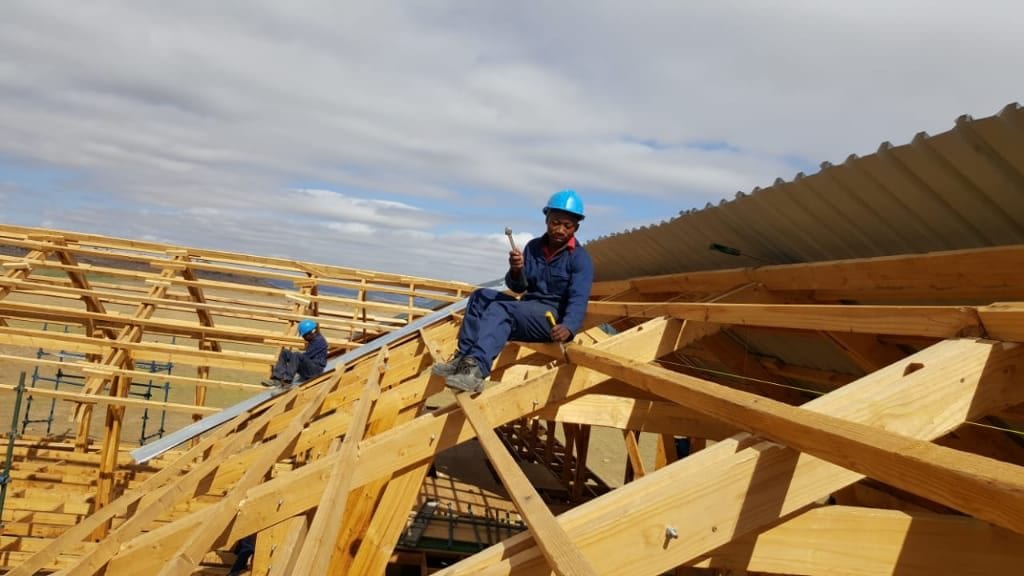
timber structure from its foundations to the top. Amongst all, the most
critical tasks that I got my hands dirty on was setting out, excavation,
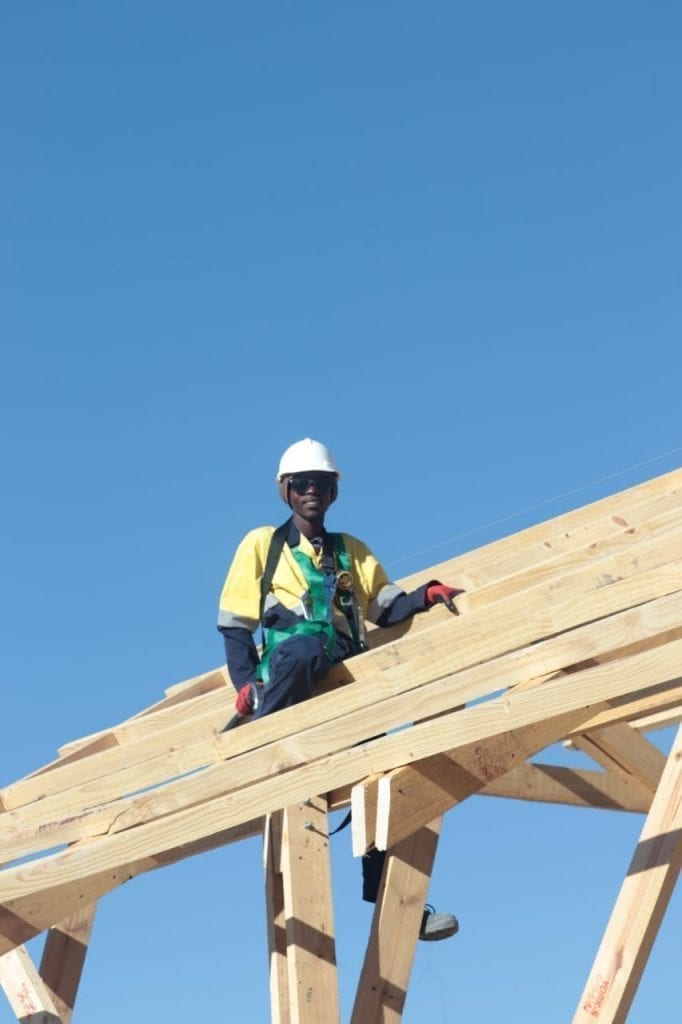
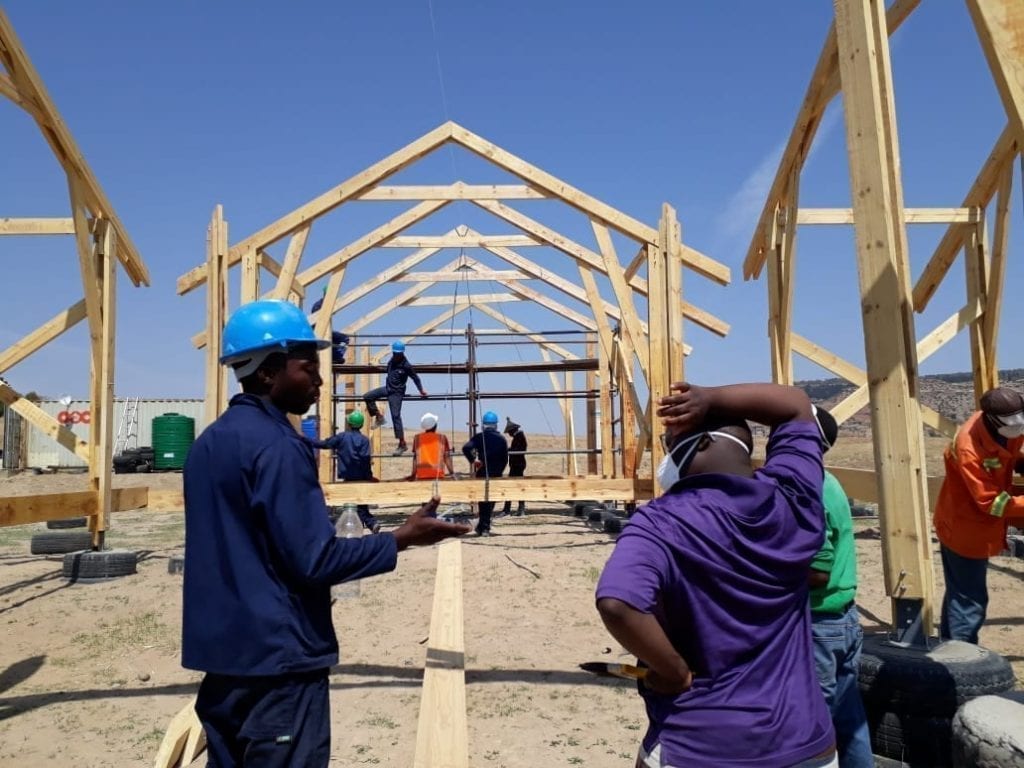
levelling, reinforcement, concreting, raising up the pillars and roof trusses
which are the major structural elements of the project. As the in loco program is about learning by
doing, I switched roles 3rd month into the fellowship and took on
the Events Coordinator. role I wanted to improve my soft skills, especially my communication skills and be a confident
public speaker which I managed to strengthen and now it’s safe enough to say
I’m way better than before I joined in loco
2019.
At the moment I’m working as a Plant and
Logistics Manager as well as a Quality Control Officer. I did learn a lot of
things in a short time. I learned more than I anticipated, multitasking and
working under pressure. Many thanks to rise through its in loco program for all the valuable experience and
entrepreneurship skills which has enable me to start developing my own Construction
Company.
Some time after I completed my diploma in construction management in search for job opportunities, valuable skills and experience in the design and build industry, i come across one of my ex-classmates who introduced me to the impact of the in loco fellowship program. I never let the opportunity pass me by, I applied for the fellowship and was called for an interview. Guess what, today I am enrolled amongst the in loco fellows at rise International (Relationships Inspiring Social Enterprise).
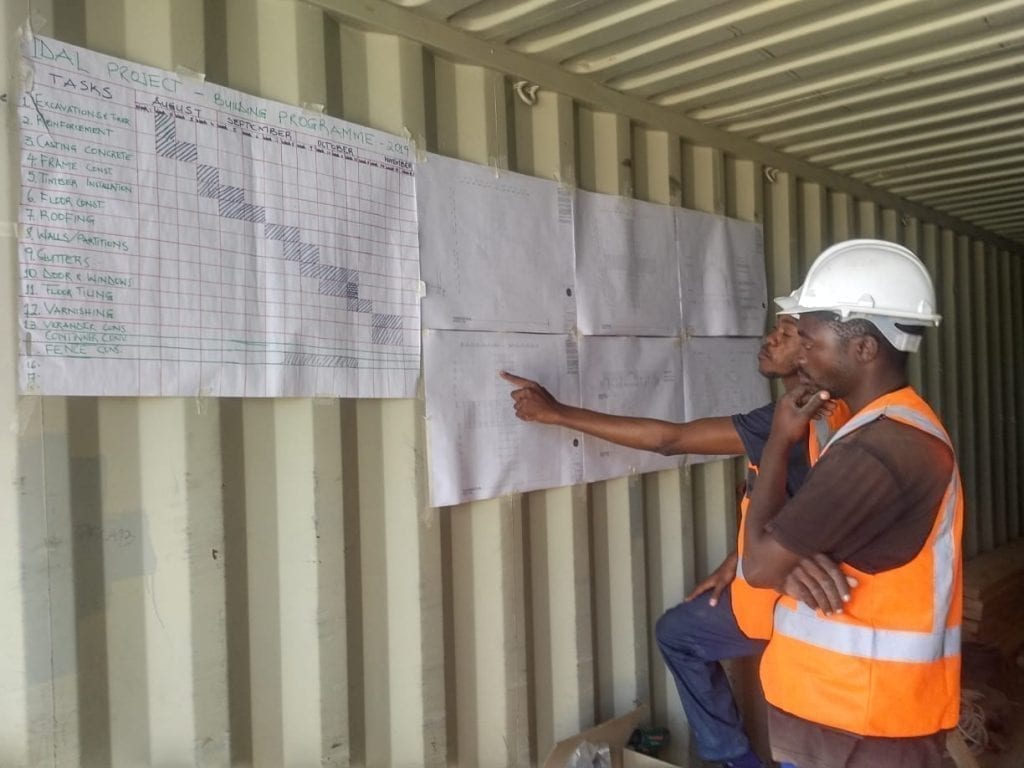
We are currently working on the project of IDAL (Intellectual Disability & Autism Lesotho) Centre. The first thing we did for the project was to conduct a Participatory Design Workshop, the aim being to understand the clients and their needs and thereof come up with solutions to their problems with the in loco materials and talent.
The first week of the program I had to work on the tendering process where i did the costing of the project by preparing the bill of Quantities. It was an enjoyable time for me to enhance the skills and knowledge I had prior to school by using the necessary tools introduced to us by the rise team which were the bills of quantities templates, schedule of works and the rise database. Such tools are necessary in managing time, cost and effort.
Two weeks later it was my time to get to experience the role of being the site manager. Very challenging moments to execute the project, giving tasks to the other fellows and the application of the managerial skills and knowledge I got at school, conducting site meetings, preparing site reports, schedule of works and many others.
The fellowship has changed me from being a job seeker to an entrepreneur through the business sessions we are getting, fire is burning inside me to bring tremendous changes into people’s lives. I gained a lot of both soft and technical skills in the managerial system by collaborating with the fellows and the rise team who I regard are my mentors.
Being
a fellow changed the way I perceived myself and the world around me. After a
car accident I experienced in 2015, which made me lose my memory, I never
thought I would ever be myself again.
I
am that nice lady, an extrovert nurturer who always wears a smile on her face,
creates a peaceful environment and enjoys working with other people. Feeling
incompetent because of the accident, I turned to selling printed t-shirts, caps
and so on, and promoting developing companies to be well known in and out of
the country. Divine Ginger Company and Tlotsa Company are my life examples.
This
way of life grew into my love for working and made me think that I could become
a better businesswoman because I could fend for myself and also feed my family through
this business. While I was doing all these duties, I never thought I would go
back to my profession as an Agricultural Education graduate. I had a fear of
meeting with other people of the same profession, thinking I am no longer good
enough to be in the professional world due to my memory loss during
accident.
In July, when I was browsing FaceBook and advertising my stuff, I saw an advertisement for a job application from rise. It caught my attention when I found that it partnered with God’s Love Centre orphanage because as a nurturer, I gain satisfaction by helping others. So I knew it would be a great idea to be part of the in loco program.
Berny on site
This
is my third month in rise and I feel
very lucky to be part of this fellowship because it is more like a family than
a job to me. Rise does not only care
about work related issues but is also concerned about personal issues for each
fellow. This is because I met a problem health wise, where the pin metals
inserted on my pelvis after the accident broke and a doctor prescribed walking
less than a kilometer a day. And I thought that day was an end of my fellowship
with rise. But to my surprise, they
looked for a better way for me to work so that I do not further disturb my
fractures. This made me feel at home with the in loco program though this hinders me from exploring more on site
works as it is a design and built environment.
I am now an office administrator. It wasn’t easy at first, but it is getting fun with time. I am learning a lot more computer literacy than before and all office administration tasks within the office environment. It is within a short period of time but I have learned so many skills. I am now an Agricultural Education graduate with office administration skills, improved computer literacy, report writing skills, events coordinating skills, quantification skills in the construction industry, carpentry skills and yet to master entrepreneurial skills and many more.
Berny in the site office
One of in loco’s goals is to transform job seekers into job creators, so this can only be accomplished by starting own businesses. In As part of the in loco fellowship rise, we are provided with business trainings every most Fridays, and this is amazing to me for it is the most important part I enjoy. Ever since I could remember, starting a business has been my dream. So I just want to put it out there that it feels amazing to be part of this fellowship. All in all, after the fellowship, I believe one becomes a better version of themselves holistically.
Berny with one of the 100 trees she managed to get donated to the project