In this day and age in our country of Lesotho in order to succeed in any
profession you’ve got to have connections and experience, a college
diploma/degree alone does not guarantee success.
I got introduced to rise back in 2017 when one of my lecturers at my former school insisted that I should attend a lecture by rise founders and that I would get to learn a lot from the lecture. Without disappointment I did get to learn a lot; about the projects rise has done in Southern Africa that tackled major issues in less privileged communities and about sustainable building using locally sourced materials. This captured my interest in rise and I started following them and attending some of their lectures and film screenings to acquire more knowledge that I could have not get from school.
This is me, Jeff (Mojalefa Hatane)
Fast forward to June 2019 I’m an unemployed graduate and struggling with
my freelancing business of Architecture and Graphic Design, with a few clients
under my belt. Two friends of mine told me about the in loco 2019 program and that I should apply for it as it would be
a great learning experience for me where I would acquire entrepreneurial,
design and construction skills. I did not hesitate and I applied for the
program since I had already known about the in loco program from the previous year
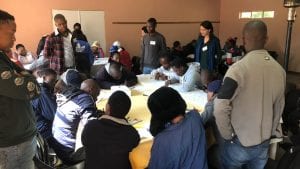
My prayers were answered and I had been accepted into the program. Now into the program, the project we are currently working on is the IDAL (Intellectual Disability and Autism Lesotho) centre, first off we had to design it but in order to do that we had to understand our clients (people with intellectual disabilities and their families) and their needs. We conducted a Participatory Design Workshop (PDW), which helped us to better understand our clients and their problems, and came up with solutions together. The PDW was a new concept to me but with guidance from the rise members I quickly learned it and I would say it’s a very useful tool to have as a designer.
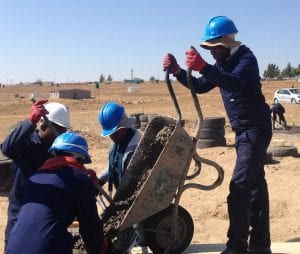
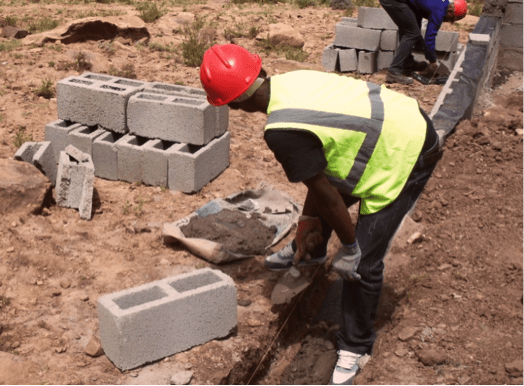
Jeff casting the foundations with other fellows
A few weeks into the program now on construction site I’m gaining a lot
of construction experience from concrete mixing to working with timber, learning
from the challenges we encounter, developing my skills through my fellow in loco fellows and the rise team and creating networks. Half
of the program is the business enterprise where we are taught to be job
creators rather than job seekers and I would say it’s coming along fine, I’m
still open to learning more and challenging myself.
A lot of challenges have presented themselves but through hard work and dedication from me and the rest of the fellows we have yielded goods results and I can say I am proud to be part of the cohort.
Jeff, proudly standing in the centre of the IDAL Centre currenty under construction
Lesotho, a land with a big smile enclosed in too narrow borders to release its strong energy. For me this is the sentence that best describes my experience in this beautiful country. I’m an architect, I’m from Italy and it was my first time in Africa.
The choice to fly to Lesotho and be part of the in loco fellowship came very spontaneously thanks to a dear architect friend, Luca Astorri, for whom Africa is his second home. I didn’t ask questions, I didn’t know what to expect, I trusted him and the joy on his face while speaking about it. It was enough for me to buy the ticket.
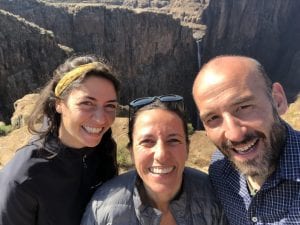
Clarissa Orsini with rise’s Founder, Daniela Gusman and Program Director, Luca Astorri
Once arrived, I was welcomed with open arms by a world completely unknown to me. It was not easy at all to have the courage to let myself free to fall in this great and profound embrace. After the first moment of dizziness the emotions overwhelmed me, everything was impregnated of joy and suffering in the same moment, I didn’t know how to behave.
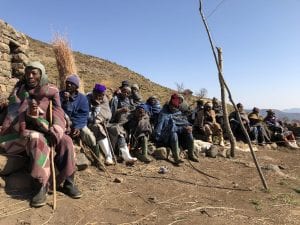
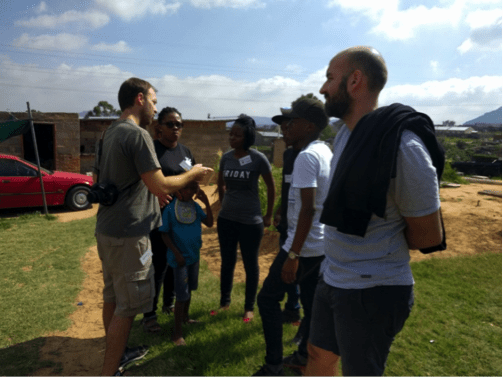
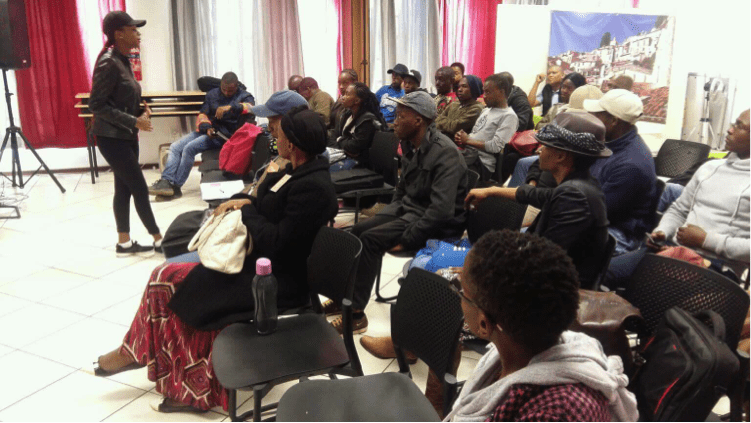
Ha Sekantsi, Community Meeting
It is necessary to get rid of many mental patterns and preconceptions in
order to be in tune with this country and make a tangible contribution. It
wasn’t easy at first but the guys from the fellowship were wonderful in helping
me with this process. Being in contact with them I realized that it is not
important where you come from and how you are used to doing things, there is
always something new to learn and there is always a different way to teach
others, there is no right or wrong approach. The only thing that matters is that you have
to be open to challenges and not be scared, this is the only universal language
and for me it was the only language to communicate with them and feel part of
something much bigger then myself. It seems simple and for me it was, but only
thanks to the people I met who have always transmitted love and understanding
towards me. The first few weeks were just about this: teaching and learning.
As an architect I taught them what they needed to know at that time, we followed them step-by-step to convey the important notions and procedures to the world of work. As wonderful human beings they taught me the practicality of life, the ability to always (almost) smile, despite the surrounding conditions.
They are participating in this
fellowship because they have great faith in the world and they want to make it
better with their contribution for themselves, their families and their
country. When they speak about something, they never do so in the singular
form, the speech always includes their loved ones and their community in which
they welcomed me and they made me feel part of it and I will never stop to
thank them for all of this.
in loco fellows 2019 and Clarissa
I feel really grateful to all this.I came back to Italy with a great joy that accompanies me every day. Even in difficult times, thinking back to Lesotho reorders priorities and makes fatigue much more bearable. It is a country that has also given me incredible landscape memories but without the people who live there it would not be the same.
Foundations at IDAL Centre
I left from there with the certainty that I would come back and I would
like to come back soon to be really useful for whatever is needed. One of the
most important lessons I have learned is that, every now and then it is good to
leave the emotions aside and bring yourself into the capacity of being practical,
pragmatic, doing what is needed where and when it is needed without asking too
many questions, and making yourself completely available.
For too long a time, I believed that success in the construction industry in the tiny Kingdom of Lesotho had been reserved for prominent professionals who have grown with stature in the country. That employment didn’t include all but those individuals for whom the society has great reverence. To an extent, there is truth to that; experience definitely sets precedence in a sense of surety, especially when we consider the amount of knowledge one should have when creating something as complex as a house. Even so, this is only a part of a large whole.
I got introduced to rise
through one of the lecture series they run at my school. What caught my
attention about these series, along with the film debate sessions, was the
creation of an interactive space for people of predominately students and
recent graduates of different disciplines within the built environment. This
habitat was a rare yet an exciting setting to be part of, and a much needed one
at that.
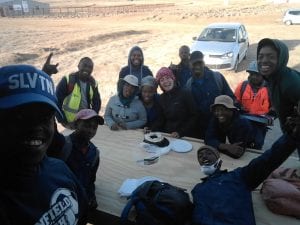
Kole taking a selfie with some of the other in loco fellows
My interest in the organization of rise grew amicably with each interaction, whether it be social
media, or community donation drives. Then finally, I came upon an advertisement
of a job application for the next cohort. I was religiously following the
cohort progression of the GLC Centre by then, and I did not want to miss out on
the amazing opportunity to become part of their pilot program, in loco. Without
hesitation, I took a leap of faith, and after a couple of, what seemed all too
long, weeks, I became part of the 2019 cohort fellowship.
Kole sitting on scaffolding with Retsepile – another Architecture fellow
In this venture I have learnt so many skills and trades that I had not thought I would have known in such a short space of time. The profound opportunity to amass a network of skillsets from young and eager individuals has truly been a mind changing experience. By going against the norm where people assume that in order to create a well built structure you have to be very experienced, but that’s not really the case because we are young graduates with not much experience, but we are erecting an iconic building in the country. I have been able to consistently challenge myself while harnessing plenty of techniques including carpentry, social media marketing, as well as my architectural designing craft.
Kole learning by doing
The cohort has taught me that with the removal of a miniature mindset persona of having the experienced gain all the power, it invites a conversation that indulges with not just the freshly eager to work graduates, but also that these creative minds can also learn to create opportunities for themselves and others as well. Entrepreneurship is vital in our communities, and rise has helped me to learn how to harness that power to invoke a positive shift in a life of more than many.
My believes grown from rise can be combined in three words: challenge, change, cohesion.
“You must be the change you want to see in the world,” Gandhi once said. As a graduate you think that you could never make a difference in the world, but you can. It all starts with your thoughts. They soon become words, which become your actions, which become your habits, which become your character, which become your destiny.
We are constantly making decisions that shape the rest of our lives. Each choice we make can forever affect our future, our impact on society, and the way others perceive us. That’s why it is so important to develop our characters. Even a simple notion can spark a lifetime ideal – positive or negative. When we help out our communities, we are influencing ourselves in a positive way that often follows us throughout our adult lives. Each tiny thought, word, action, and habit, changes your future.
I’m Lebohang Mosiuoa (Figas). The biggest decision that I have ever made was in 2012, when I had to choose whether to study Architecture or a Bachelor of Science. Since I was a little child, I had a passion for architecture, but I was good in sciences and maths in high school. While at primary and high school I spent most of my time on drawing buildings. I had to drop my environmental health science studies and join Limkokwing University of Creative Technology to follow a dream that I have had since I was a child and that dream was to study architecture. My career started in 2016, when I volunteered to join Habitat Youth Build with Habitat for Humanity Lesotho to construct a two-room house for homeless orphanage children at Mafeteng. Later that year, I was among the Limkokwing University Students who were competing to remodel and renovate Lhda Katse Lodge in which our team won.
in loco Fellowship
Learning is a never-ending journey of discovery that can only be enjoyed when it is put into practice. It should never be confined to books and rooms, but instead it should be shared with the world. I’m proud to be an in loco 2018 fellow. When I first heard about the program, I thought it was all about helping an orphanage by building a better place for them. Since it’s in my heart to help vulnerable people, I decided to leave whatever I was doing and join the in loco eight-month fellowship.
Experience at in loco
When it comes to your career, you need to put in the work and practically engage in it as you learn, because it sets the foundation for you to be a champion and the best at your craft. As someone who is practicing architecture, I never knew about participatory design before I joined in loco. In the first week of the fellowship we had a participatory design workshop, which involved the fellows, God’s Love Centre staff and the children. The important things that I learned about it is that, it forces designers to look at things from another’s point of view, it is very important to respect other people’s opinions. It helps designers gather several other facts about certain design situations they may not have been aware of. Because of in loco we now know how to approach design better.
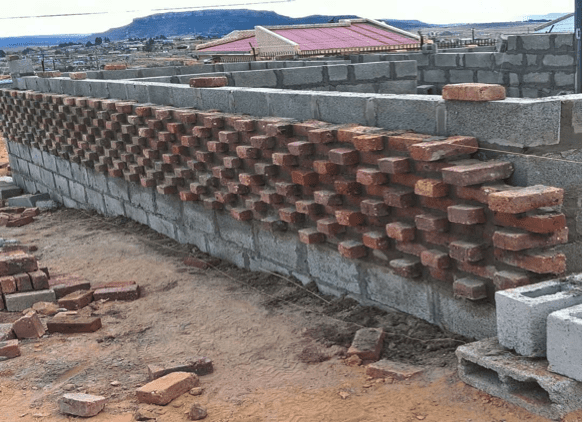
It’s a dream of everyone who practices architecture to work with international architects. Our culture and style of approaching things differ. We learn lot of things from our international architects Pedro and Luca. Because of them, we now know about participatory design, which we never knew about before they arrived. Our local style as people who are practicing architecture in Lesotho, is only to hear what the client wants and never encourage them to take part in the design process. Also they challenged us to came up with a unique brick pattern (see below) that will give the orphanage buildings their own unique shape.
Nothing beats the power of learning by doing, because it creates knowledge and skills foundation that is rooted in your interest and experience of the subject matter. At in loco we practice what we preach, gaining the skills that we never had before. In my life I never thought I would lay a brick, fix the reinforcement and mix the mortar. We do everything by ourselves, but with the help of professionals. I’m proud to say, I can now build a house on my own, because in loco gave us a chance to unveil our hidden skills that I never knew I had before.
Afrisam cement gave us training about the good use of cement, like the quality needed when mixing mortar for plastering, bricklaying and also for concrete. Also I got an opportunity to attend the paint training with Thetsane Paint Centre. I really learned a lot from that training since in my company we are also specializing with epoxy products, but we didn’t know where they are sold in our country. We as Basotho people we use paint for the sake of painting, but we didn’t know the steps to follow when painting walls, ceilings and everything that needs to be painted.
The most important thing that we learnt at in loco is the business training. Even though we are in architecture and built environment fellowship, we are also taught to be successful entrepreneurs. These happen in many ways, like being able to listen to successful business people who come to give us testimonies on how they tackle business and how they started. The important thing that I learned from all of them is that you have to have passion in what you do and also you must have skills. You really don’t need capital to start a business, but as little as you have you can start a business.
Lastly, we learn more about entrepreneurship through the lecture series that are held every month by rise, where successful entrepreneurs and architects share their experiences and business skills to the students and inspire, graduates, lectures and the public. Also the film screenings that are held every month, whereby we have interesting discussions after watching the selected video. It also forms part of our learning as we share and discuss the problems and the solutions that face our community.
In the fellowship we all have roles that I think are going to help in our future. At the moment, I’m a logistics and plant manager. I make sure the tools on site are well protected, safe and clean. For me it’s quite a challenging role because, we as people are not the same, some are irresponsible and some are not cooperative. This kind of work requires a person to keep their eyes open all the time, because some materials might disappear and you never know where to find them. We now have our first two international students from India and Malta from the faculty of Architecture and Structural Engineering, who I believe we are going to learn a lot from them.
After the fellowship
Since I’m from a country of people who believe that, constructing a house is only for people who have money. I’m going to encourage the people to use locally available materials, like building with clay bricks. Lesotho is one of the coldest countries during winter and many people especially living in the urban areas spend a lot of money to warm their house. I’m going to introduce the cheap method of keeping the building warm in winter and cool in summer that I learned from the fellowship.
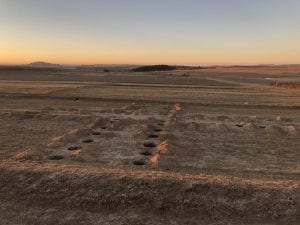
Digging foundations for Residential Centre & Entrepreneurship Hub for adolescents who will move here from the overcrowded GLC centre for orphans and vulnerable children.
I am Madane Bataung, a graduate in civil engineering from Lerotholi Polytechnic in Lesotho. I am also the founder of @Nebulart Recycling Group. I am that nice guy who leaves his car unlocked to offer a safe haven for someone in case they encounter a polar bear! Old music and me…..same WhatsApp group. I would walk away from signing a million dollar contract if anyone offered me vinyls I don’t have already!
It has been such a change in environment these past three months. Let me just put this out there, I feel good to be part of the in loco fellowship. I know some people might ask what I’m doing here or maybe wondering if I have given up on my company, not a chance.
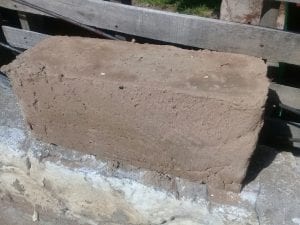
Trust me I have ulterior motives for being here. I get to make and test mud bricks that may be used in the construction. This was super exciting to do because building with mud has been a fantasy of mine.
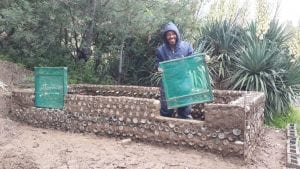
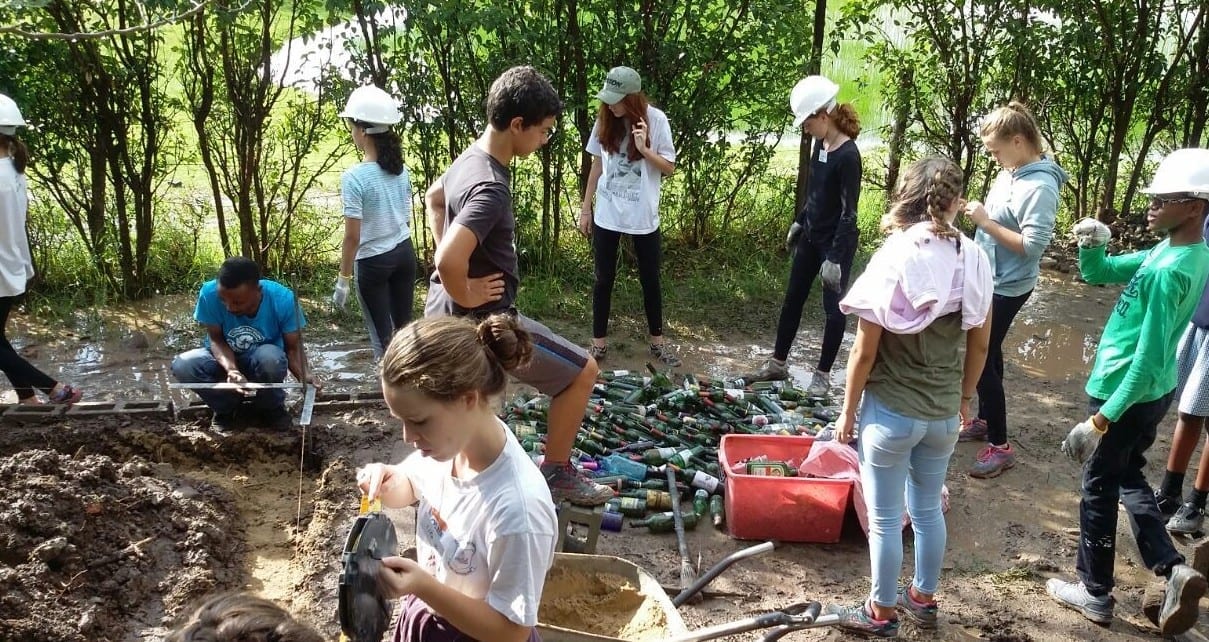
That is why I have been building with waste cans, glass bottles and mud to build recycle bins (see Nebulart’s Facebook and other social media). So now I am about to get firsthand experience building a home, surely you can see the snowball effect with the mud bricks here. Plus I am also being given business training to improve my company.
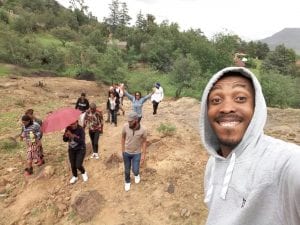
We had a trip to Morija two months ago to study some vernacular architecture. I never knew Morija holds the record of having the oldest standing building in the country (Maeder House – built in 1843). That was like those high school trips that will forever get you smiling from ear to ear when they come to mind. For starters, I got the best view in the mini bus, “the back seat”.
I know for a fact that every fellow will not forget when the Boss Lady was on door duty and would shout out “Morija, Morija, phakisa, phakisa (hurry, hurry) at every stop, I think she took a wrong turn in profession, she would have made an awesome taxi driver assistant {hahaha….}
We have just been given feedback on our work so far, which was a nerve-racking moment before I could sit down with the coaches. The feedback was unexpected. I found out new things about myself, where I have been doing a good job and where I need to improve.
I can say it’s safe to say it was an eye opening session of constructive criticism which I have built a “lesaka” (fondness) for. Never thought I am that much of a hard worker, self driven or disciplined (not blowing my own trumpet here!
I had a conversation about music with the Boss Lady (she’s definitely not going to like that name) a few days back and wow! She’s got some dope hip-hop artists I’ve never heard of, can’t wait to hear what everyone else in the studio is listening to.
There have been times in the office when I would just be mind blown by the level of disinterest or reluctance from some of the fellows to take on tasks. In a way, I would be glad I don’t have to be that sick patient who would cut in line at the hospital just because my injury is more urgent. I had more options to choose which skills I would like to learn next without “competing,” but that was then. Now, now I think everyone has figured out, if they want to make it out alive and succeed after the fellowship, it is up to us to add on to our skills because no one can take away our talents.
Our community partner, God’s Love Centre (GLC) is overcrowded with 50+ children living in a 2 dorm-room house. Since the land on which the orphanage is located is quite small, we acquired an additional piece of land just 1 km up the road from the existing site. There are 200,000 orphans in Lesotho, which constitutes 10% of the population. Most of the other childcare facilities are also full to capacity, so unfortunately it is unlikely that the need for more housing for orphans is going to be resolved soon.
After a lot of discussions with GLC and the community at large, it was decided that the younger children up to 13 years old should remain at the existing site along with the Pre-school, and the adolescent youth from 14 upwards should be located at the new site, which will include various small businesses including an Internet Café, vegetable gardens and a piggery.
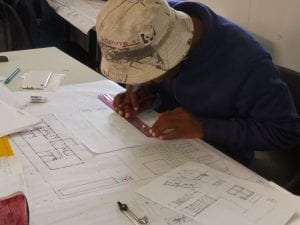
The in loco fellows are busy designing, planning, compiling the Bill of Quantities and negotiating with suppliers the best possible rates in order to keep construction costs down. Final drawings will be submitted to the authorities in March to obtain the building permit approval.
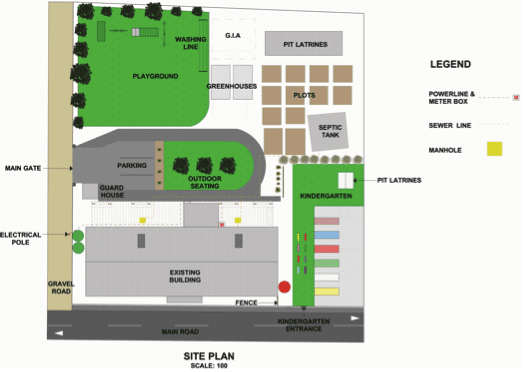
Refurbishment plans for existing site
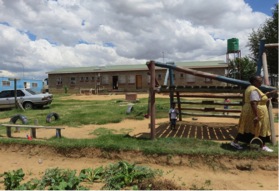
The in loco fellows are busy planning all the improvements needed on the existing site including installation of water harvesting tanks to solve the problem of shortage of water, partitioning the dorm rooms so that children have more privacy, expansion of kitchen, re-allocation of pit latrines to make better utilisation of outdoor space to create play areas for the children as well as increase the vegetable growing areas and installing a roof over the converted shipping container where the pre-school is located so that the classrooms don’t get so hot in the afternoon sun. Renovation works should commence later on in March (subject to funding).
Existing site Proposed layout for refurbished site

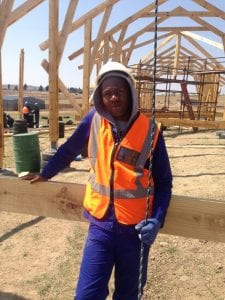







 I am Madane Bataung, a graduate in civil engineering from Lerotholi Polytechnic in Lesotho. I am also the founder of @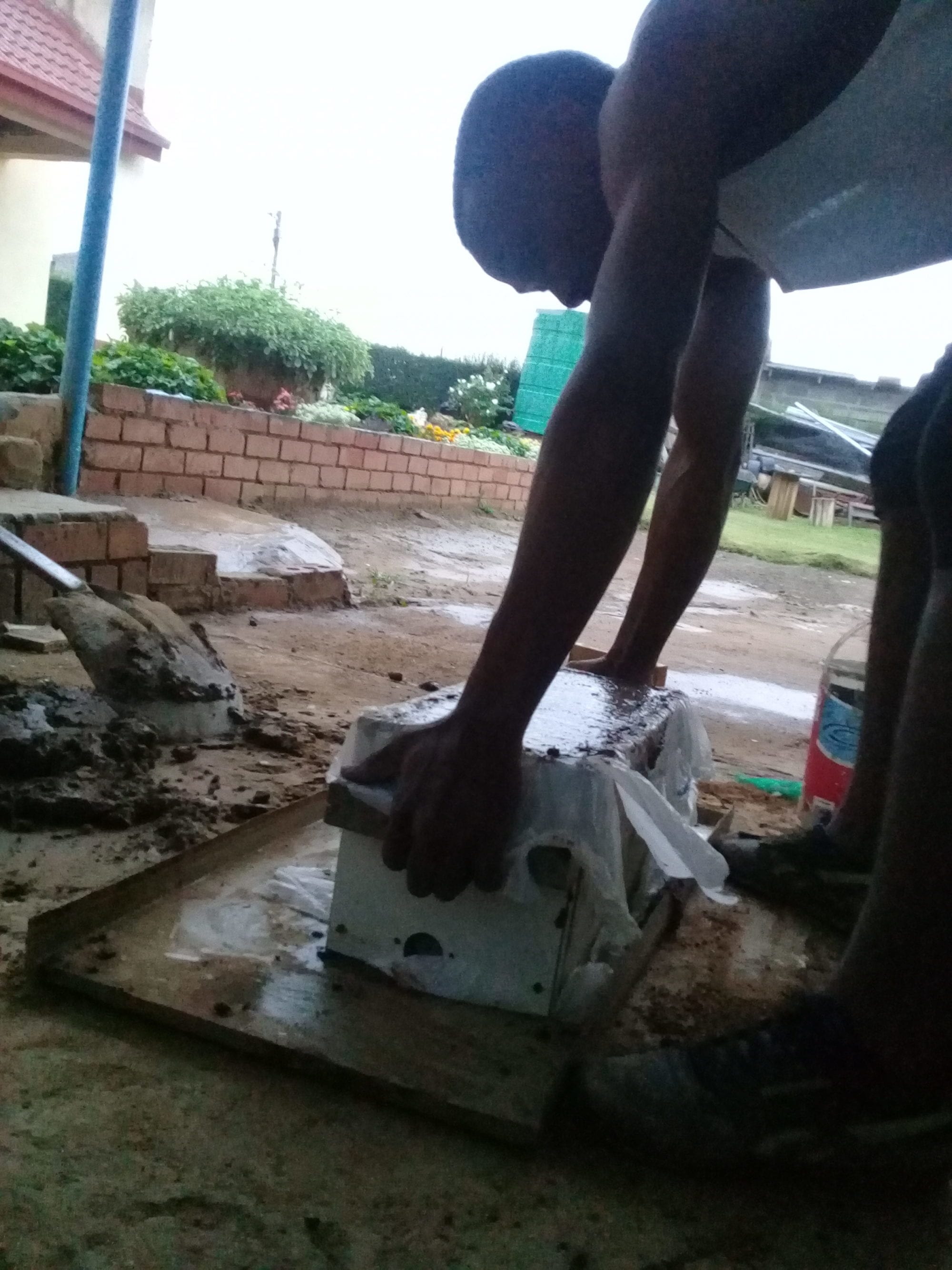

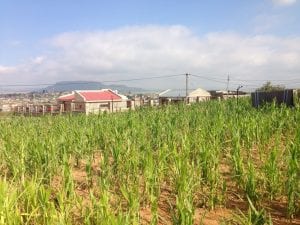 Our community partner, God’s Love Centre (GLC) is overcrowded with 50+ children living in a 2 dorm-room house. Since the land on which the orphanage is located is quite small, we acquired an additional piece of land just 1 km up the road from the existing site. There are 200,000 orphans in Lesotho, which constitutes 10% of the population. Most of the other childcare facilities are also full to capacity, so unfortunately it is unlikely that the need for more housing for orphans is going to be resolved soon.