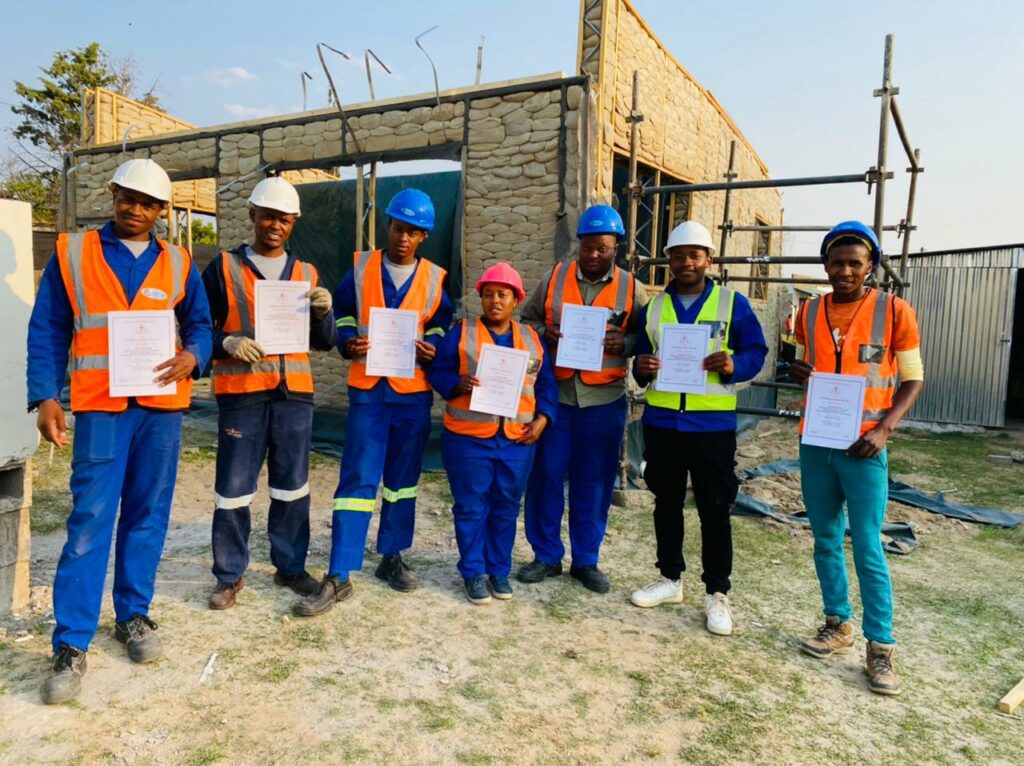
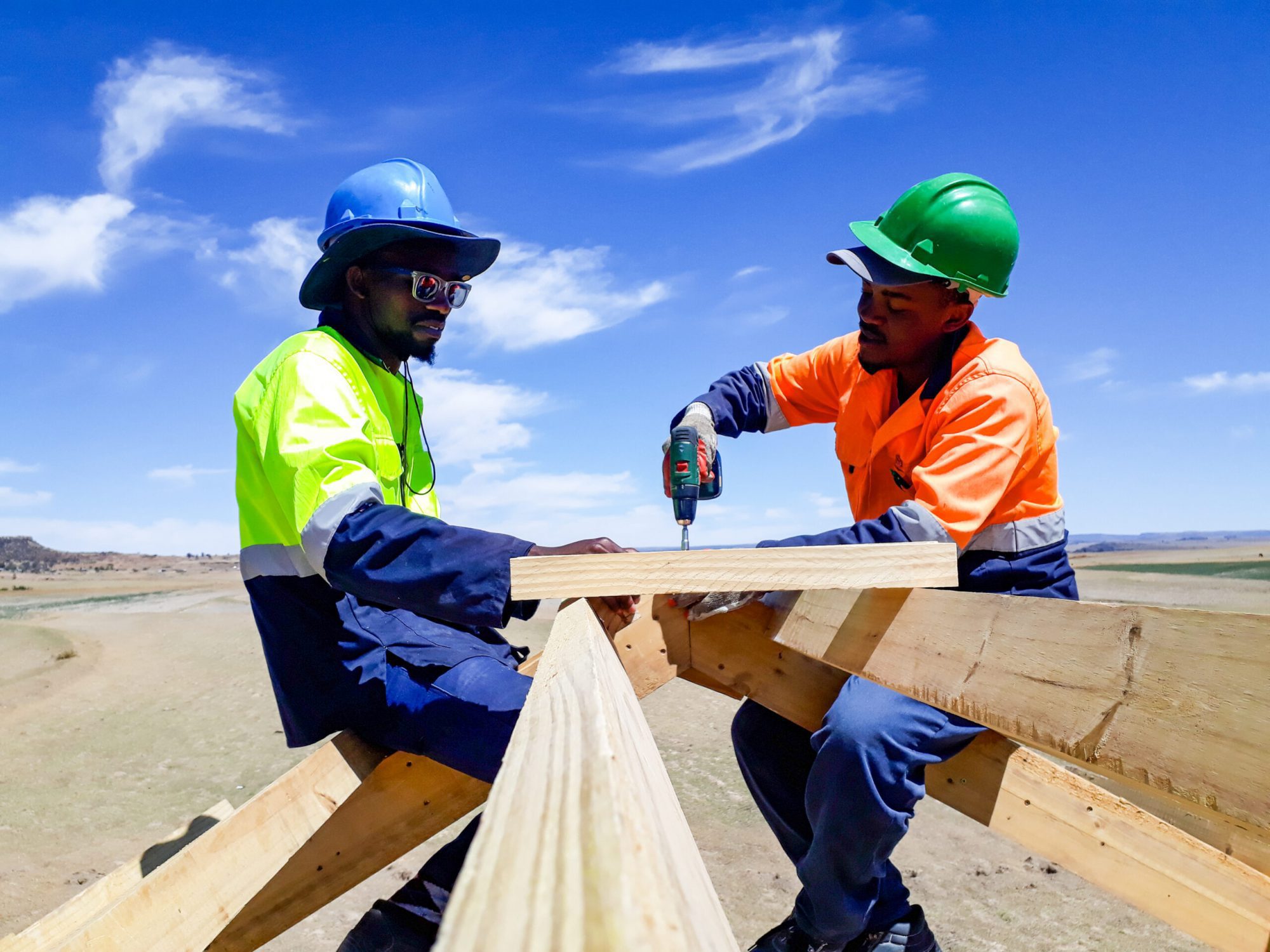
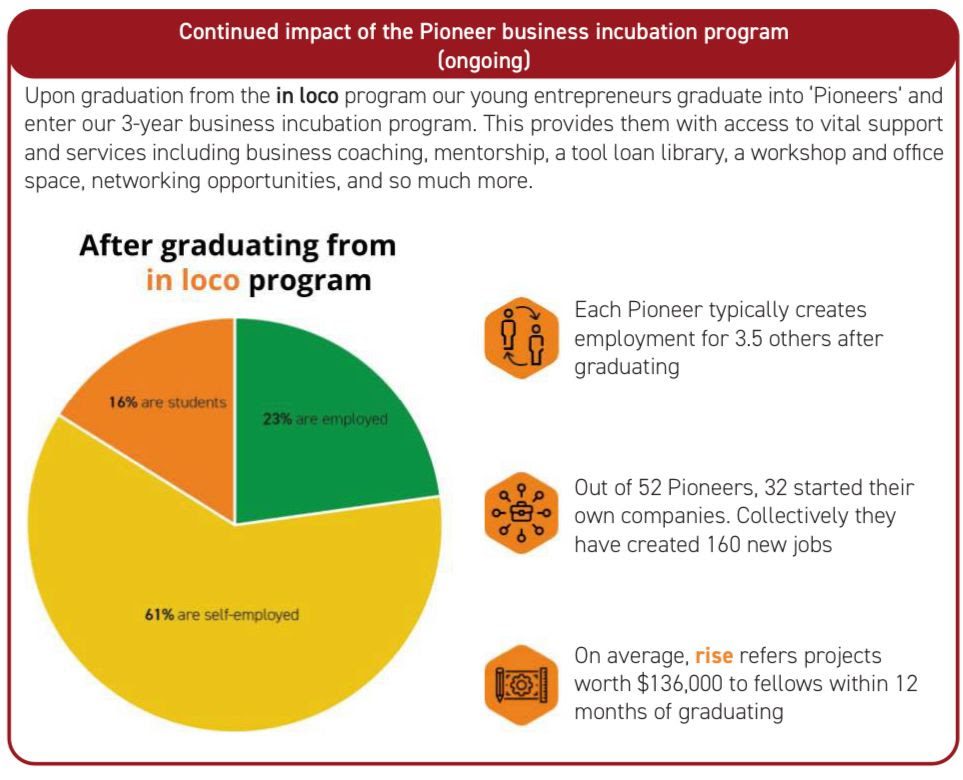
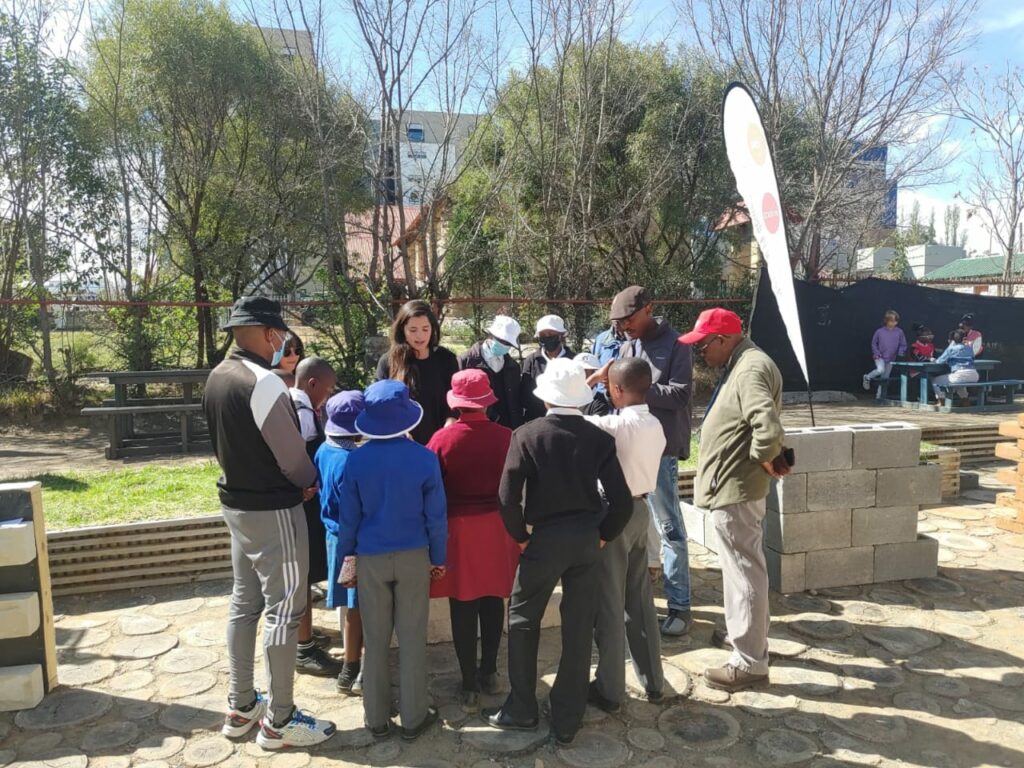
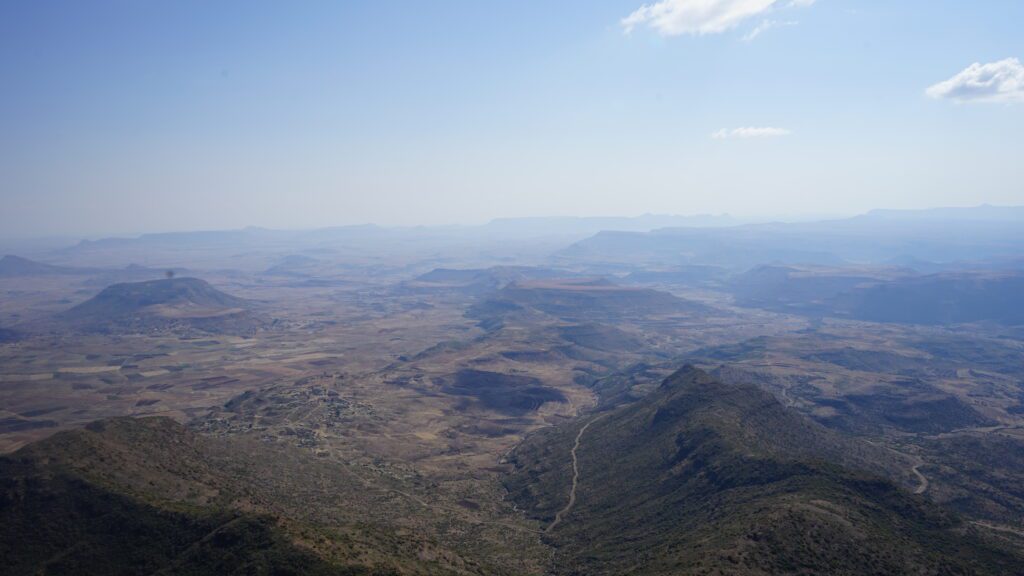
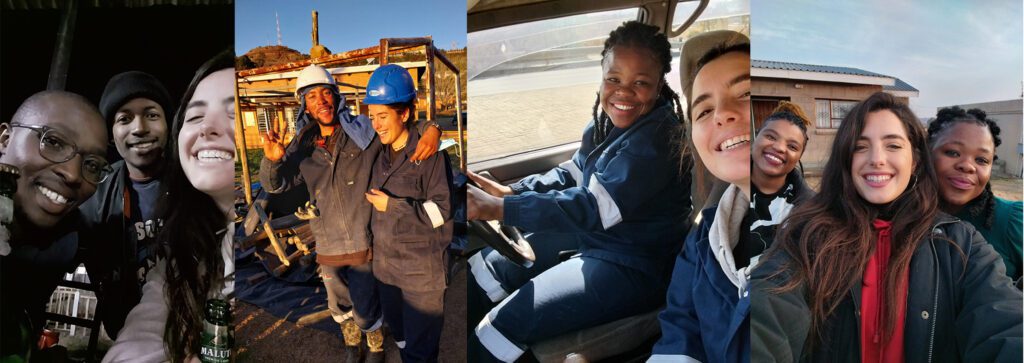
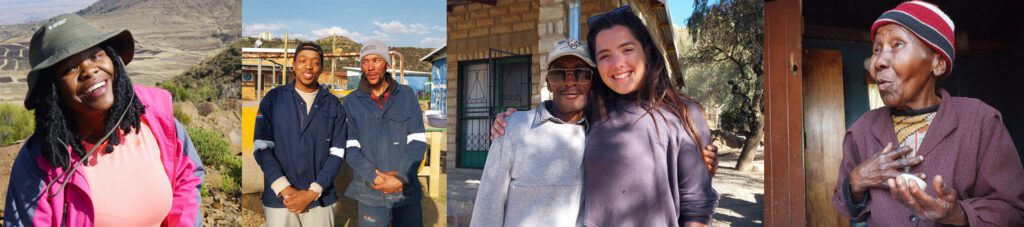
Thank you for supporting our entrepreneurship development programs in Lesotho in the past. Thanks to your generosity, we have been able to graduate over 50 fellows from our design, build and entrepreneurship in loco program, 71% of whom have gone on to become Pioneers and created over 183 jobs for others as a result of the skills and business training we have provided them with thanks to your assistance.
JOIN THE RISE TOGETHER MONTHLY DONORSCLUB
Your support has already had an impact on our Pioneers’ Business Incubation Program and others who are following in their footsteps being our in loco program fellows. But the reality is, in order for us to continue touching more lives and spreading the impact to transform more job seekers into job creators, we need your help.
This year, we invite you to make your valuable support go even further by joining the rise Together Club – a monthly donating program to support our youth skills development and employment generation programs. Your ongoing monthly support will:
Contribute towards training more job creators
Provide business coaching for more entrepreneurs
Equip entrepreneurs with essential tools and workspace
You can easily sign up online here to make an impact without ever worrying about writing another cheque! (Unless you want to).
Become a rise Together Club member today and you’ll enjoy:
The knowledge that your donation is put to work immediately.
Monthly newsletters on the difference your dollars are making.
Hassle-free automatic monthly donations from your credit card.
The ability to change or suspend your donations at any time.
Complete statements provided for tax purposes.
The joy of knowing that you’re improving someone’s life.
Sponsor young Basotho through our Pioneer Business Incubation Program by making a $50 donation a month and experience the fulfillment of changing a life.
Alternatively you can also start a fundraising initiative on behalf of rise by simply visiting here where we have numerous fundraising opportunities for you.
We are thrilled to announce the release of rise International’s Bi-Annual Evaluation Report, highlighting the impactful work we’ve accomplished over the past two years. This comprehensive report encapsulates our dedication to sustainable development and community empowerment in Lesotho.
Key highlights of our achievements.
Thanks to funding from Irish Aid, rise International successfully completed an extensive research on Innovative Sustainable Building methodologies in Lesotho, paving the way for more environmentally friendly and cost-effective construction practices.
Through our ‘in loco’ learning-by-doing program, we have positively impacted over 17,600 lives in Lesotho, empowering individuals with practical skills and knowledge to thrive in their communities.
Fig 1 : in loco impact
rise International joined forces with the World Bank to address the critical issue of youth unemployment in Lesotho, working towards creating sustainable solutions for economic empowerment and job creation.
We are proud to continue our partnership with Action Ireland Trust (AIT) as their implementing partner. The ongoing 5 Hub Schools project, designed to enhance infrastructure and facilities in priority schools identified by the Ministry of Education & Training, has already brought essential amenities like running water toilets, boreholes, school kitchens, rainwater harvesting systems, and food gardens to communities in the densely populated Lithabaneng area in Maseru district.
Fig 2 : Opening of Seboka Primary School Kitchen
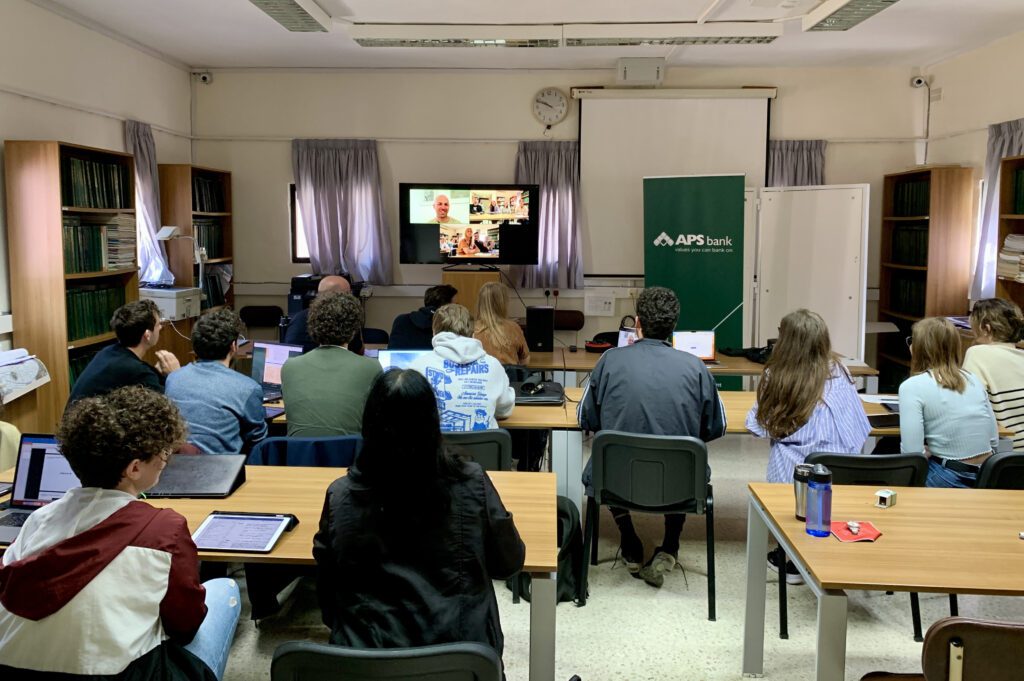
Our collaboration with local and international universities has enriched our programs with diverse perspectives and expertise, ensuring that our initiatives are at the forefront of innovation and best practices.
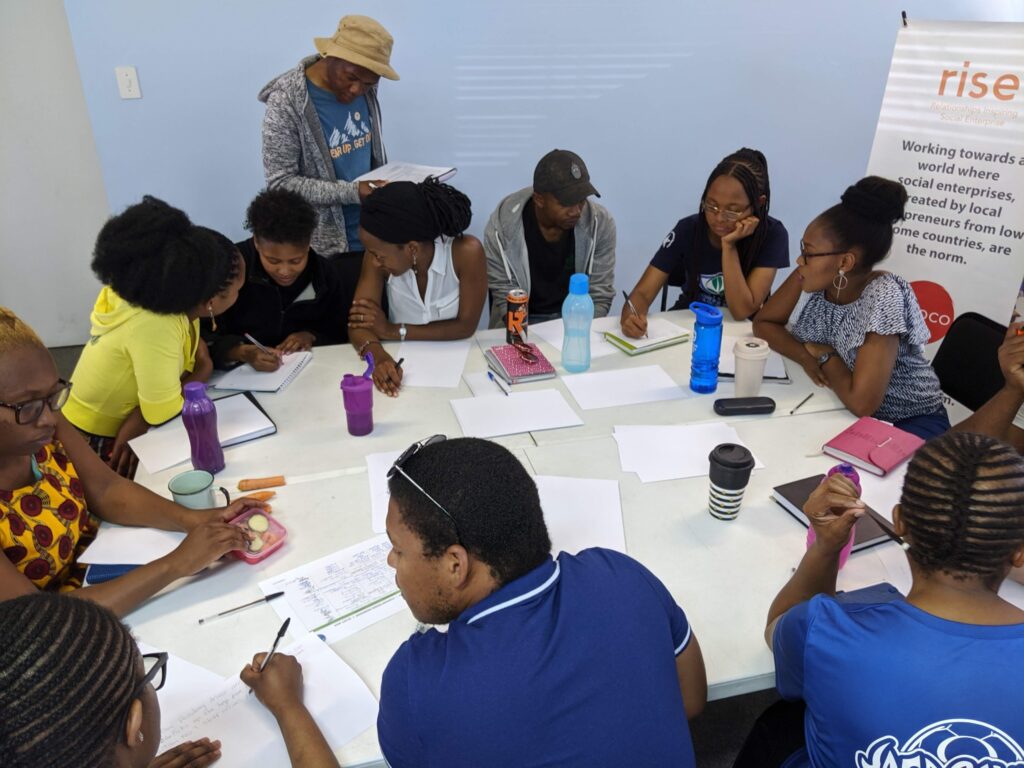
Fig 3: Uni of Malta Participatory Design Workshop Training
We extend our heartfelt gratitude to all our donors for their unwavering support. Without your generosity and belief in our mission, none of these achievements would have been possible. Your contributions have transformed lives, empowered communities, and paved the way for a brighter future for Lesotho.
As we celebrate these milestones, we are reminded of the collective impact we can achieve when we come together in solidarity and commitment to positive change. Together, we are shaping a better tomorrow for Lesotho.
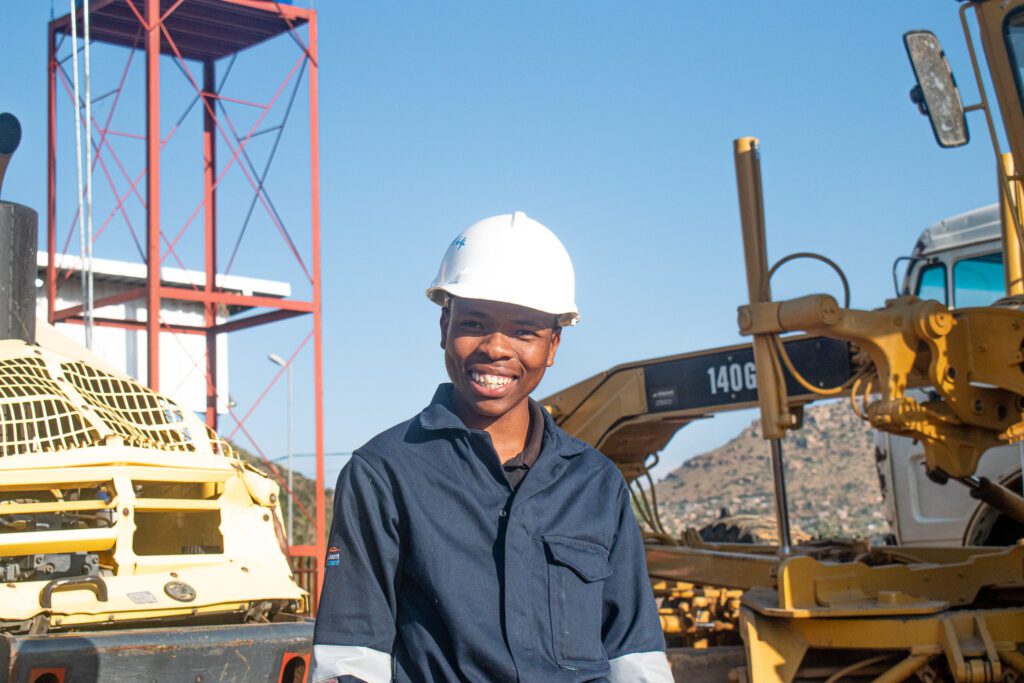
My name is Sello Mohami, but most people know me as Macala. I am a 22-year-old Mosotho man and a certified Construction Management technician having graduated from Lerotholi Polytechnic in 2022.
Sello Mohami
I was born and raised in Maseru central Ts’enola-Motimposo where I got interested in this field of construction due to the lack of roads which leads to a lot of accidents and also lack of advanced infrastructure.
Later on relocated to the south side of Maseru which is Mazenod Ha Sekepe, where I was part of the team which designed and constructed my new home there, that is when I developed a deep love for construction and electric works. I was working directly with the bricklaying and electrical installation team and I was working there as unskilled labour, that is when I recognized how passionate I am with construction works. On the other hand I think I had a positive influence from my uncle who has been in construction for approximately 15 years. He is an experienced Bricklayer who has worked on various projects in Lesotho under Lesotho Steel Products. He has been supportive and very keen to help me grow in this industry.
Mohami on the construction site
I am a student-athlete at Kick4Life and this is where I learned about the in loco fellowship when I was introduced to the stadium of Life project by Kick4Life. Kick4Life knew how passionate I am in stadium construction and they helped me out to apply. I am very grateful to Kick4Life because now I am part of rise International 5th in loco fellowship because of their guidance.
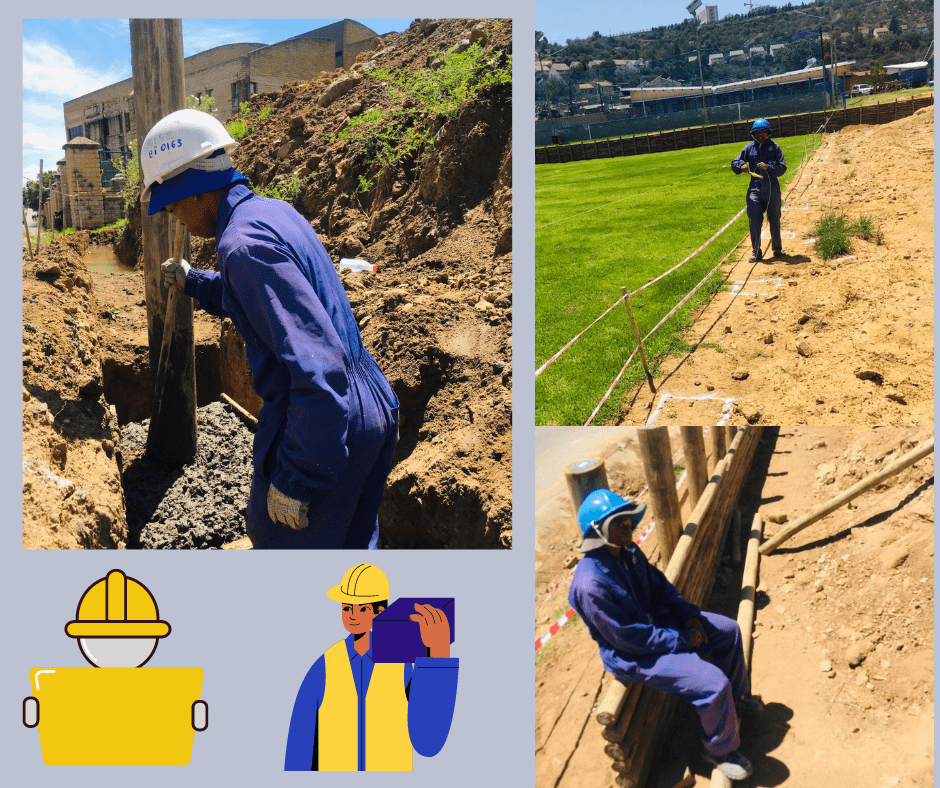
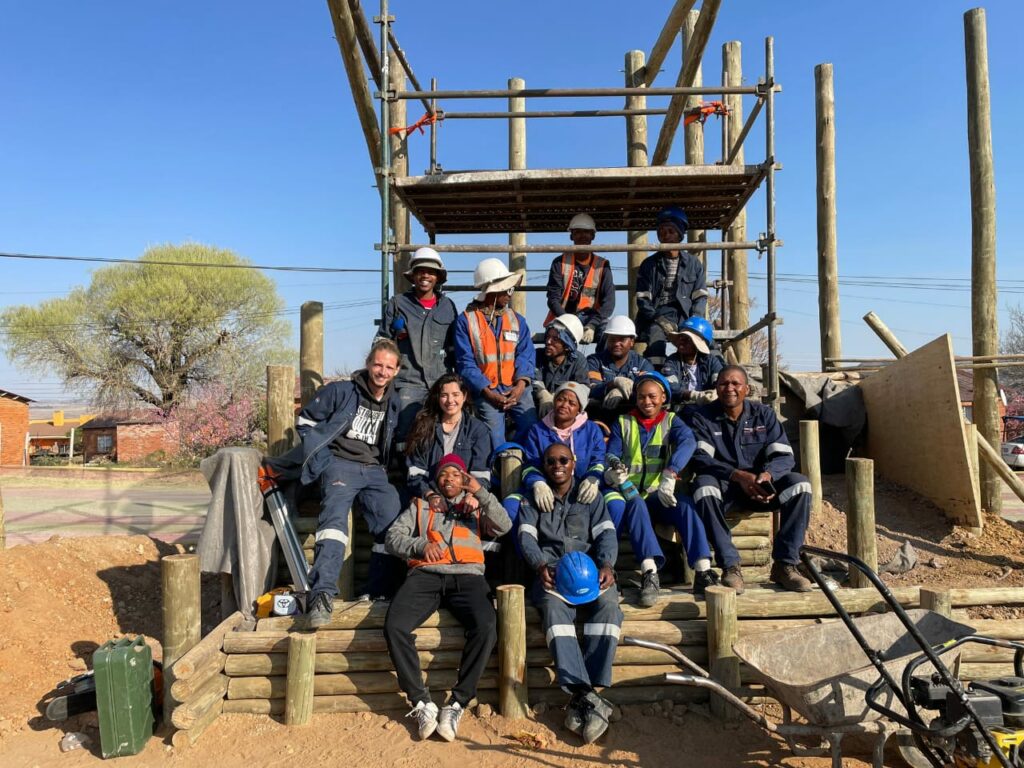
As a fellow in the in loco program, I am privileged and proud to be part of 9 hard working mates where we are trusted to design and construct the 4th phase of Kick4Life – Stadium of LIfe. This is the unique project which uses FSC approved gum poles to construct stands and containers for dressing rooms. In the first months of the project I was given a role of being a site manager, this was quite a challenge because my work was to oversee all the site works and also to lead and come up with solutions.
As a construction manager people always think it’s easy for you to lead but it is never that easy to manage people with different attitudes and disciplines, but as i have always believe i was born a soldier i managed to overcome all the challenges and that is when i was confident about my career choice and i know construction site is my other home and leading people is my favorite meal. Later on I transitioned to being a Buyer where I was capable of preparing Bill of Quantities and procuring all material needed on site. In this role I improved mostly in preparing Bill of quantities, negotiating with hardware and individuals also learned to work within a tight budget.
Mohami on site
When I first joined the fellowship my goal was to graduate from it with all the skills needed in construction which are Plumbing, Bricklaying, Electrical installation e.t.c, But with the cohort I am learning beyond my goal as i am being given business modules where I am guided on how i can turn one of my milestone which is having my own Construction Company. The fellowship has helped me to improve my communication and leadership skills and also the most important part of construction which is being hand-on, meaning bringing the theory acquired from school down to the ground onsite.
Isaiah 60:22
“At the right time, I, the LORD, will make it happen”.This is my everyday motive, I rely mostly on the Lord’s timing. If things get worse I keep pushing until God presses His timer for them to get better.
rise Hosted Athabasca University Students as part of a knowledge exchange and skills sharing program
Thanks to a Canadian government-funded program, the Global Exchange Opportunities Program, nine students from Architecture, Heritage Resources Management and Computer Science as well three faculty members from Athabasca University in Canada visited Lesotho for a 2-week visit this month.
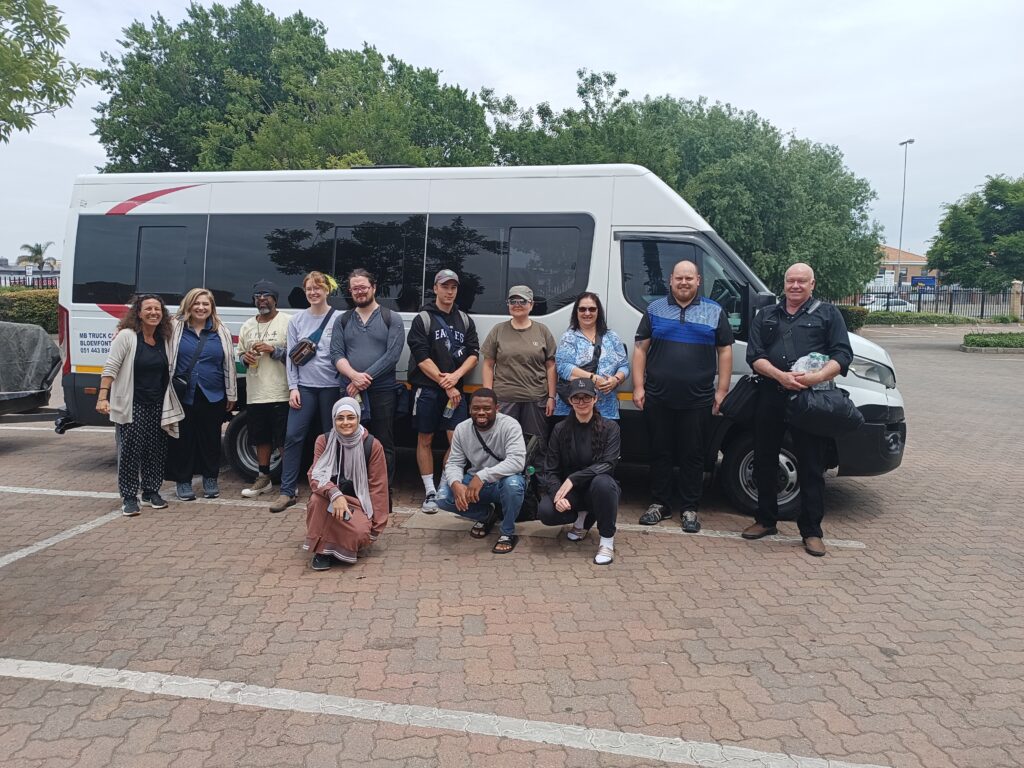
rise Executive Director – Daniela Gusman with Athabasca University students and tutors upon arrival in Lesotho
During this trip in Lesotho, the contingent had the privilege of visiting Morija, Lesotho’s cultural and historical center, where they spent a large part of their time. Along with 10 Architecture Technology students from Limkokwing University of Creative Technology, the Athabasca students were trained in how to facilitate a participatory design workshop (PDW) for the proposed development of the heritage park in Morija. After gathering all the opinions, needs and wants of various members of the community as well as key stakeholders, the students worked tirelessly to analyze all the information and came up with some potential layouts for the potential development of the Heritage Park, which they then presented to the community and stakeholders for validation.
Athabasca University students and tutors engaging in a PDW with rise pioneers and Morija community members
While in Morija, alongside community members and rise’s in loco fellows, the students got their hands dirty as they got to learn about how to construct using rammed earth and how to make earth blocks.
Construction of rammed earth and earth blocks
An important element of the visit, was for the students to exchange their knowledge and skills in a practical manner, whereby they got to work hand-in-hand with rise’s in loco fellows who are currently building the Stadium of Life, a football stadium for a non-profit called Kick4Life who use sport as a tool for social change.
The National University of Lesotho also hosted the students for a lecture on The role of Basotho design culture in architecture which was led by Ms Mpinane Qhobela. They also engaged in another lecture session which was hosted by the Limkokwing University of Creative Technology on the History of Architecture in Lesotho given by Ms Boikokobetso Mohlomi which can be seen Limkokwing University Lecture Part 1Limkonkwing University Lecture part 2
As part of the study and exploring Lesotho, the group also visited the national monument and mountain called Thaba Bosiu, the rural horseriding community of Semonkong, the University town of Roma and the capital of Maseru at the National University of Lesotho learning about the Mountain Kingdom’s heritage, architecture and tech challenges and opportunities.
rise Executive Director, Daniela Gusman with the staff of Botho University Lesotho and some of the Athabasca University tutors and students after a lecture.
Lastly the students had an opportunity to interact with Basotho artists, musicians, dancers, participate in a drumming circle as well as visiting some of Lesotho’s successful social enterprises including Pheha Plastic and Noma Pads where they joined a session learning about the establishment’s operations and a hands on experiment of using the machinery machines to make plastic recycled products and reusable sanitary pads!
This visit was part of a 2-year program funded by Global Exchange Opportunities which will also include another group of up to 15 students coming to Lesotho in 2024.
For anyone interested in visiting Lesotho on an educational trip contact us at info@riseint.org or sign up for updates about our International Workshops which you can learn more about here
SPECIFICATION SHEET TABLE FOR DIFFERENT BUILDING MATERIALS:
Materials Specification Table comparing properties and specs of conventional building materials with those of repurposed and indigenous, low-carbon alternatives.
I am Vasiliki, an architect engineer from Greece. During my master’s program in International cooperation in Sustainable and Emergency architecture in Barcelona, my passion for travel and engaging with people from diverse backgrounds led me to Lesotho for a three-month internship with rise international.
After this transformative journey and returning to the comfort of my home, it’s time to share the key aspects of it. Although every experience has its ups and downs, I’ve chosen to focus on the bright side and the new lens through which I now view life.
Working with rise international as an architect in Lesotho was a profoundly enriching and eye-opening experience. It provided me with a unique opportunity to apply my skills and knowledge to address real-world challenges and make a meaningful impact in a community that I grew to deeply appreciate. riseinternational’s mission to support sustainable development and improve the living conditions in Lesotho resonated with me from the very beginning. As an architect, I was part of a dedicated team working on projects that ranged from building infrastructure to community development. Our work aimed not only to create physical structures but also to empower the local community with the tools and resources needed for long-term growth.
Lesotho is a captivating country. Beyond the picturesque landscapes, the breathtaking waterfalls, and the endless mountains, there’s something extraordinary that words cannot fully capture. It’s the ideal place to regain your relationship with nature, to breathe and walk around the most beautiful scenery. It’s an experience you must live to truly understand.
Someone once told me that life’s experiences depend on how we perceive them. Every encounter and every moment shared with others provides us with a unique perspective, a new pair of glasses through which to view the world. If these perspectives resonate with us, we can wear them from time to time, gaining new insights along the way.
“The real voyage of discovery consists not in seeking new landscapes, but in having new eyes”
Marcel Proust.
To me, the real value of this experience lies in the people. I had the privilege to collaborate with. Despite our cultural differences and distinct backgrounds, they made me feel like I had discovered my rightful place. The Basotho people lead their lives in a simple, authentic manner, a way that I may have, in many respects, forgotten.
They are warm and have a natural gift for hospitality. They eagerly engage with newcomers, welcoming them into their homes and offering food and drink. In their company, I felt an instant connection to their community. They made an effort to familiarize me with their traditions and way of life but also to learn about my perspective of life and my culture.
Basotho people possess a sense of philotimo, a Greek term, which captures the essence of integrity, honour, and respect, shapes social interactions, fosters strong connections within communities, and underpins the sense of pride and identity. It’s a concept that is difficult to fully capture in words but is deeply understood and appreciated by those who embody it in their actions and relationships.
This experience has not only enriched my professional skills but also left a lasting impact on my perspective as an architect, reminding me of the profound impact we can have on communities in need. In Lesotho, I learned that it’s not just about discovering new landscapes; it’s about gaining new perspectives and insights by embracing the world through fresh eyes.
“Don’t tell me how educated you are, tell me how much you have traveled”.
This sentence from prophet Muhammad has always inspired me, even if I’m not particularly attached to religion, this specific one touches my soul since I heard about it, probably more than ten years ago. My parents instilled the love for travel in me since I was a child and as soon, I was “old” enough to travel by myself I immediately took the opportunity.
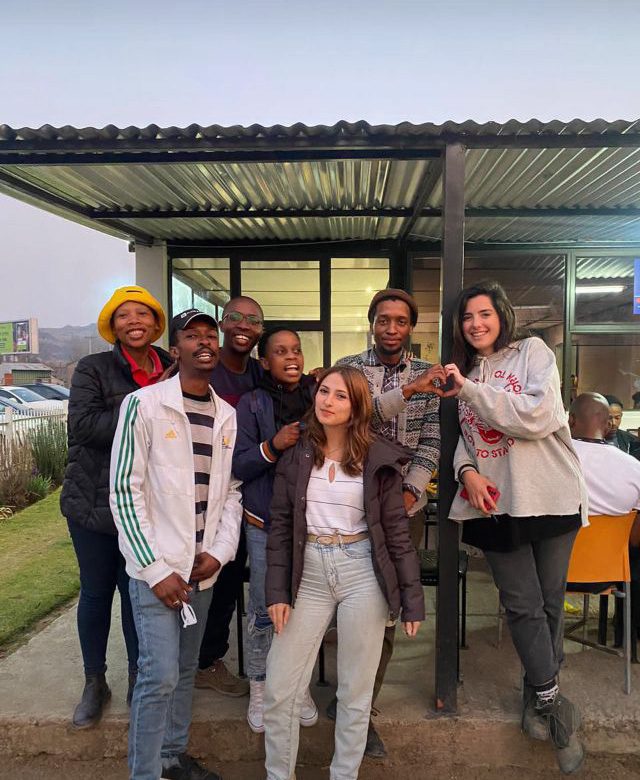
I am Emma Biraghi, a 20-years-old Italian woman and unlike all other people that had an experience with rise, I’m not an architecture student. I’m an Italian student of international politics and law and I wanted to do a voluntary experience during summer. The problem was that no organization gave me the possibility to go so far from home at such a young age; however, rise trusted me and, thanks to the fact that I knew the architect Luca Astorri, I managed to do this incredible experience.
When I booked the flight tickets I was scared out of my wits, I understood that I was about to actually go to Lesotho and the dream was becoming true. It was not only my first time in Africa, but also my first trip without my family nor my friends: I would have been completely alone. Fortunately, Daniela and Luca greeted me with open arms and the reality was not that scary.
I stayed in Maseru for two weeks, but those days were sufficient to make me fall in love with Lesotho: definitely one of the most amazing places I’ve ever been.
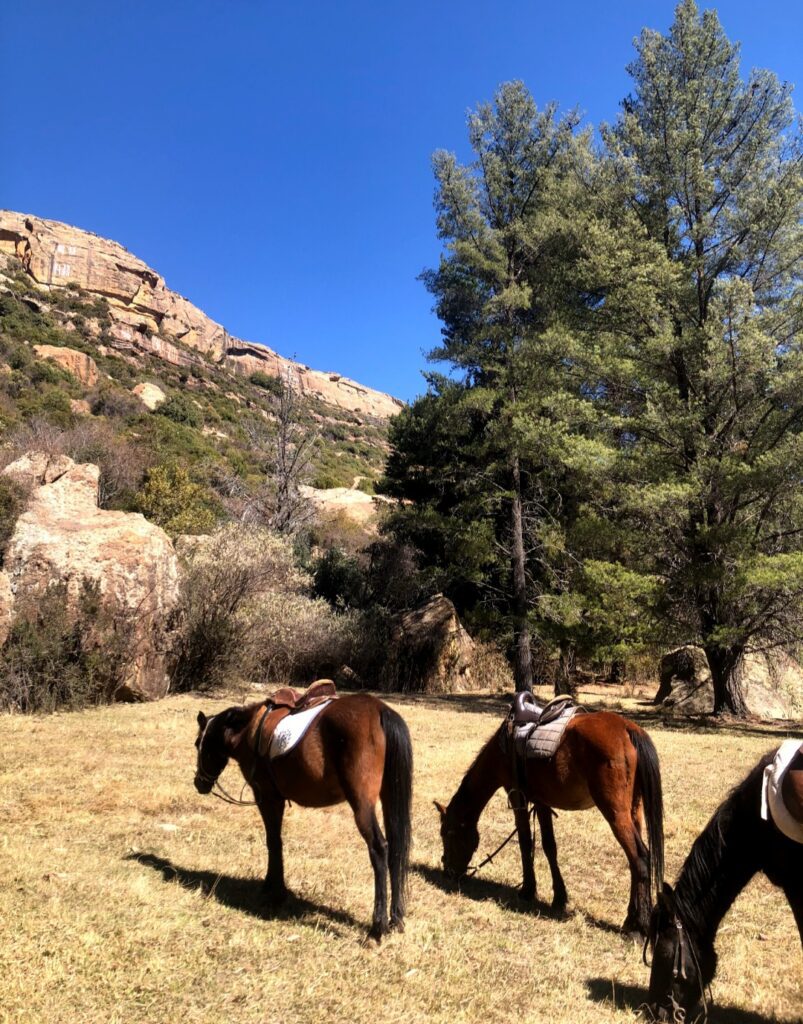
I left the hot Italian summer for winter, which probably is the thing I liked less about Lesotho; however, it gave me the opportunity to see some spectacular views from mountains and go horse-riding to see dinosaur footprints!
Apart from the beautifulness of the place itself, my voluntary experience was great too. Since I am not an architecture student, I worked with a partner of rise: Lesotho National Federation of Organisations of the Disabled (LNFOD) , an umbrella body that advocates for the human rights of persons with disabilities by representing their needs to government, private sector, and the entire community.
The time I spent with LNFOD gave me the opportunity to see a different way to do business: we’re used to imagining business meetings as a group of serious people with suit and tie, but in Lesotho things are different. I participated in a meeting for a microcredit project for women with disabilities in business and the most amazing thing to see was that everybody had the traditional clothes of the Sesotho culture, and they were singing the traditional songs, playing instruments and dancing during break time. This way of doing business shows a strong attachment with the tradition and the community that we lack in Western culture, especially in Milan, where I’m from.
The Basotho society are more traditional, they have such a strong and powerful connection with their community, they have great faith in the world, and they express that by contributing to the growth of their society; for a city dweller like me was incredible to have a contact with a sense of belonging that I never experienced in such a strong way.
Another thing that was unbelievable was the strong contact with nature: Maseru, the capital of Lesotho, is a small city where cows and sheep cross the road with the people! There are many huge parks and in 10 minutes by car from the center it is possible to reach the mountains and the spectacular views that they offer. I strongly believe that the closeness to nature is one of the main reasons why Sesotho people always smile and are so kind, just imagine that they say “Hello! How are you?” to every person they meet in the street.
Leaving Lesotho, I was surely a bit heartbroken, but I’m grateful to have discovered their social connection, which I hope I’ll keep with me now that I’m in Italy. Going on the opposite side of the globe totally shifted my way of looking at the world and opened my mind to visit many more places where I can discover a new perspective, as it happened in Maseru with rise International family.
It is incredible how time flies when you’re having fun! As we look back at the month of September, rise International held various advocacy events with key stakeholders from the private and public sector as well as civil society.
Official launch of the Circular Innovations Expo
Started out with a roundtable discussion with relevant stakeholders in the policy-making of the built environment from government ministries, City Councils, academia, the European Commission, and Habitat for Humanity hosted by the British High Commission in Maseru. The aim here was to present our key findings from research done on indigenous and alternative low-carbon building materials and initiate a dialogue on how to develop an ecosystem towards developing these sustainable, thermally efficient locally sourced building materials.
Fig1 – Collage of the round table discussions with relevant stakeholders led by rise team and the founder – Daniela Gusman
The second event was a knowledge exchange workshop between Lesotho and Irish Town Planners on how learning from good urban planning practices in Ireland can be implemented and disseminated in Lesotho at the district level. The different Ministries that enforce planning regulations and building codes, benefited from the experiences that were shared from Ireland setting them on a pathway to success in reducing Lesotho’s dependence on South African Building Codes and to increase compliance in the country.
Fig 2-3: Attendees of the stakeholders’ conference during a presentation
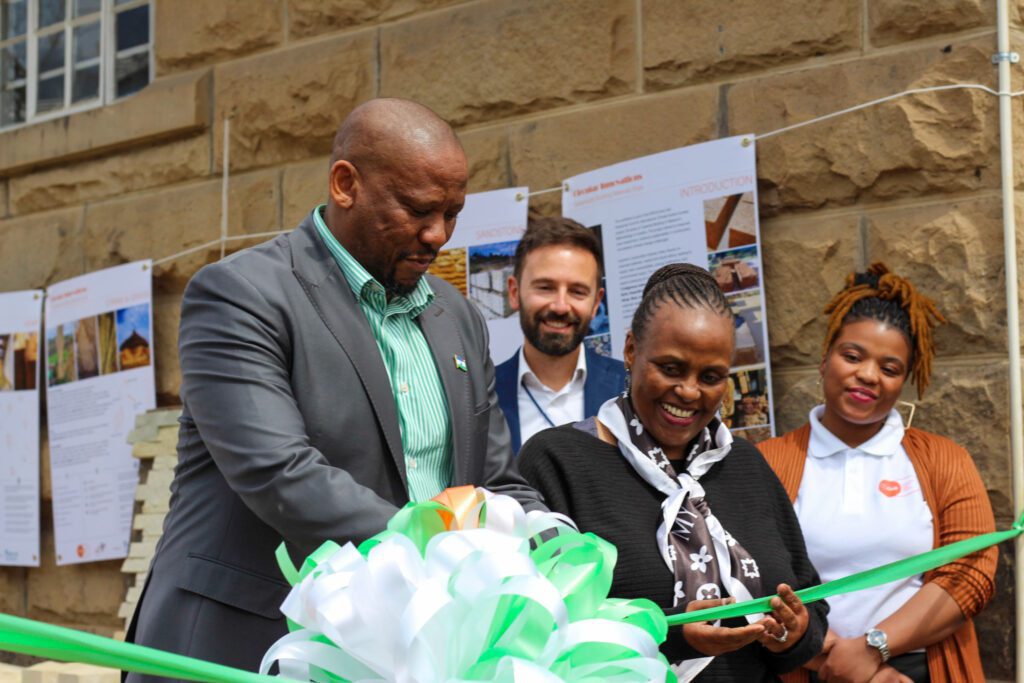
These engagements were paving the way for the Circular Innovations Conference and Expo which was officially launched by the Principal Secretary of the Ministry of Local Government, Chieftainship, Home Affairs and Police, Mr. Moshe Mosaase. The Conference and Expo were the culmination of 11 months of research and formed the last of three phases of our Research and Innovation program on locally sourced and eco-friendly building materials. The aim of the expo was to raise awareness of the production and use of low-carbon locally sourcedindigenous and repurposed building materials. This was done by showcasing alternative building materials for sustainable building in Lesotho to promote economical and environmentally friendly methodologies within the context of Lesotho’s unique cultural and environmental landscape.
Fig 4-5 Principal Secretary Moshe Mosaase addressing the conference attendees. rise Design and Construction coordinator – Thato Nkikana addressing attendees and some of the key stakeholders in attendance.
The exhibition consisted of a series of installations of sustainable, low-carbon indigenous, and alternative building materials with good thermal qualities. These materials can build houses that are warmer in winter and cooler in summer, reducing the need to burn expensive fossil fuels such as paraffin and charcoal, which helps reduce heating and cooling costs, while at the same time helping the environment by reducing carbon emissions.
Fig 6: Repurposed cans wall, attendees of the expo launch, and adobe bricks
Watch this space….. on next steps where we shall be publishing our findings, reporting on the progress from the pledges made at the Conference and surveys completed by the general public at the Expo on which building materials they are most interested in.
If you are interested in learning more about this initiative please write to us on events@riseint.org
Compressed Earth Blocks (CEBs) are a natural infusion of modern technology with one of the earliest elements of man-made structures: the mud brick or adobe block (Bowen 2017). They are essentially moulded adobe blocks produced using mechanical compaction. According to Earth Building and Association of Australia (2022), making CEBs requires dampening the earth and mechanically pressing it along with some sand and a small amount of aggregate binder such as cement at high pressure in a mould, and then setting aside the produced bricks to dry naturally. Studies show that compacted earth has been used before written history, so the utilisation of earth in housing construction is one of the oldest methods used around the world.
Some developing countries are no exception to the adoption and use of CEBs. According to Finnan (2018), the CEB method for construction is not only implemented in Gambia (see figure 1), but also in other African countries such as Burkina Faso, Ghana, and Nigeria as well as Sudan. According to Adam and Agib (2001), various traditional materials have proved to be suitable for a wide range of buildings and have a great potential for increased use in the future, including CEB (See Figure 2). In South Africa, the use of CEBs is gaining popularity. Moreover, Agrément South Africa (2016) has approved the CEB Building system for single-storey buildings.
Fig. 1, Building constructed from compressedFig. 2, Bricks left to cure , in Gambia
The production of various types of soil bricks, such as adobe, mud bricks, and fired bricks, is quite prevalent in Lesotho, however, CEB has not been used due to a lack of knowledge (Adam and Agib, 2001). As a result, there is a pressing need for research to be conducted on this particular building material.
1.3. Advantages of Compressed Earth Blocks
From an architectural perspective, Compressed Earth Blocks offer similar form and functional qualities as brick, stone, and other masonry units. Moreover, they are more easily produced than stone and are more durable. Furthermore, the structural integrity of the material allows it to be used as a structural wall system that requires minimal reinforcement or additional framing (Bowen 2017).
The capacity of the material to absorb and radiate solar energy as heat is also one of its great advantages (Bowen 2017). This capacity can be termed ‘thermal buffering.’ This means that the material will absorb heat when it is cooler than its surroundings and re-radiate it when it is warmer than the surroundings. The energy-saving effect of thermal buffering is most marked by reducing the need for cooling, but it also has a comforting comfort effect because it reduces internal temperature swings (Bowen 2017).
The materials that go into making CEBs mostly come from nature. There is a reduction in chemicals that are used in the making of these blocks, therefore the material releases no harmful or toxic gas ( Happoadmin, 2022).
The usage of cement (usually about 4-10% of the soil and sand mix depending on the soil composition) is lesser and has the ability for on-site production, curing, and fixing, thus the cost reduction (Nnadi & Delunzu, 2022). According to Happoadmin (2022), CEBs are about 40% cheaper than conventional materials. Therefore, due to their thermal mass quality, CEBs can save anywhere between 10-15% on cooling and heating costs. Also, the time required to manufacture these blocks is minimal.
Manufacturing of CEBs can provide employment opportunities while inculcating social values in them. The compression machines can be powered or operated by hand, and do not require a lot of energy to produce like brick or concrete leading to low carbon emission (Happoadmin, 2022).
1.4. Disadvantages or limitations of Compressed Earth Blocks
When compressed earth block structures are exposed to prolonged weather conditions such as wind and water without proper roofing, they erode easily; however, adding stabilisers like cement improves the strength. Also, there is a time wait with the construction technique, because after the blocks are pressed, materials must dry; therefore the curing duration typically of 28 days also depends on the material used (pure earth with water, cement, or lime for stabilisation). Lastly, failure to mix soils correctly leads to weak blocks that crack easily (Bowen 2017).
2. Primary Explorative Research Findings
To collect primary data, snowballing, and stratified sampling were convenient sampling techniques for this study because it was imperative to select participants with first-hand knowledge about compressed earth bricks from a wide range of professionals and experts who have worked or are working on producing compressed earth bricks. This chapter presents the findings from one face-to-face, 3 calls, and seven Zoom interviews that lasted between 45 minutes to an hour each held in January and February 2023. A set of questions (check Annex 2 questionnaires for CEB) which included open-ended questions, had been prepared with the aim of gathering information about some specific topics such as availability, accessibility, cost, durability, knowledge, and techniques around producing compressed earth bricks.
2.1. Knowledge and techniques used when building using Compressed Earth Bricks
It was crucial to collect information from individuals who possess direct experience in producing Compressed Earth Bricks outside of Lesotho, as there is limited expertise within the country regarding both the production process and the specific machinery involved. All eleven respondents emphasised similar techniques, such as creating a dry mix of suitable soils with water and a small portion of cement for stabilisation. Respondents emphasised that surface soil isn’t utilised due to its organic content for gardening; instead, subsurface soil is preferred. Respondents stated that samples are examined to verify the accurate percentage of components, with a special focus on clay percentage, which can lead to significant expansion and cracking. Additionally, it’s important to assess the presence of rocks in the soil. Similar to clay, these rocks can also lead to cracks and gaps in the blocks. Respondents also indicated that cement is employed for mix stabilisation. The typical cement-to-earth ratio is around 10:90, which strengthens and stabilises the Earth Blocks.
Respondents stated that the strength of CEBs primarily derives from the pressure applied during production. Even with a lower cement content, such as 5% (5:95), it can yield a 7 MPA earth block, matching the compression rating of an inexpensive cement block. Respondents also described the production process using either a manually operated or diesel-powered compressed earth machine, which can be compact and portable. Finally, a machine can also be designed to produce 3 / 4 blocks simultaneously (see video CEB) The last important step Respondents mentioned about the production was the curing period which takes 28 days before being able to be used to build while placing it in the sun.
2.2. Costs and accessibility
Five respondents highlighted the cost-effectiveness of producing CEBs.This is attributed to on-site production, where the soil is readily available and cement usage is minimal compared to conventional bricks. Moreover, basic mechanical machinery for lower-scale production is relatively inexpensive.
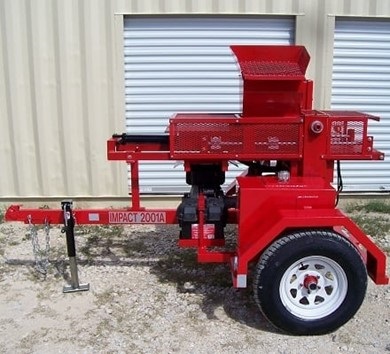
One of the respondents indicated large-scale production costs required an outlay of M66 7049 (EUR 33,352) for machinery such as AECT Impact 2001 – a CEB Machine (see Figure 3). However, in the long run, these are offset by fairly cheap operational costs for energy and raw material consumption and usage.
2.3. Environmental Impact of Compressed Earth Blocks
Another key aspect we needed to grasp in our research was the carbon emitted during production and the overall impact of soil extraction. All eleven Respondents confirmed that Compressed Earth Blocks are less harmful to the environment compared to traditional materials. Specifically, producing CEB leads to fewer emissions and significantly less cement/lime per brick. Respondents pointed out that decreasing cement usage results in a significant 50% reduction in embodied carbon emissions. Additionally, Respondents emphasised that producing Compressed Earth Blocks provides a compelling opportunity to utilise earth extracted and processed directly at the construction site.
This offers a notable advantage compared to other materials in that earth is abundant throughout Lesotho, it reduces transportation costs, minimises transport-related pollution, and provides a solution for the displaced earth that is excavated on construction sites.
2.3. Durability of Compressed Earth Blocks
All eleven respondents affirmed that once cured for 28 days, CEBs exhibit durability. They noted that the material’s quality and solidity increase progressively, resulting in buildings that are recognized to endure for over 60 years. However, no compressive strength data was provided by the respondents to determine the optimal earth-to-cement ratio in terms of cost-effectiveness. This ratio varies based on the soil composition and clay content, which differ between sites.
3. Feasibility of Compressed Earth Blocks
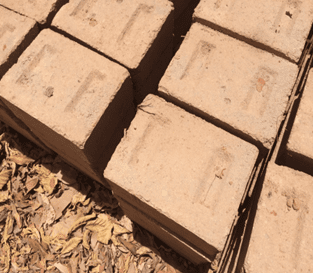
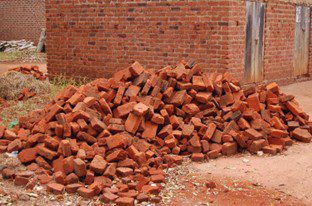
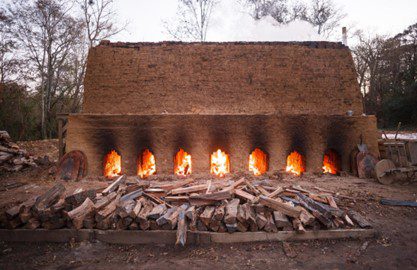
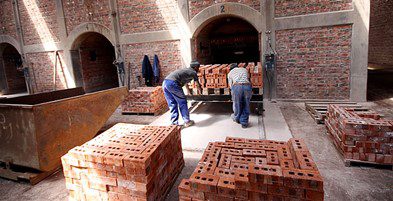
There is an industry for earth-based bricks such as Fired bricks,& loti bricks (see Figures 4a, 4b, and 4c) which in Lesotho are manufactured formally in a factory called Loti Bricks as well as provided informally by artisans who create their furnaces on the roadside, against which we can discuss the feasibility of CEBs. This means that the policy framework for the production of CEBs currently exists which makes it viable as an enterprise. The difference in production processes skews the advantage towards CEBs because of lower emissions and fewer materials with embodied carbon (lime & cement). Lastly, there are no speed skills required in the production of CEBs which makes for relatively affordable and accessible labour requirements.
Fig. 4.1, shows fired bricksFig. 4.2, Shows production of fired bricksFig. 4.3, displays the production of Loti bricks
4. Distribution of Compressed Earth Blocks
The distribution of CEBs is tied to two main factors; accessibility of machinery and earth. For an industrial plant, it will be difficult to move the machinery to the building site, unlike the more compact mobile systems, which do not require transportation and warehousing. Since warehousing and transportation for alternative building materials are well developed in Lesotho, CEB companies can piggyback on these systems to distribute their products all over the country.
5. Unmet needs of Compressed Earth Blocks
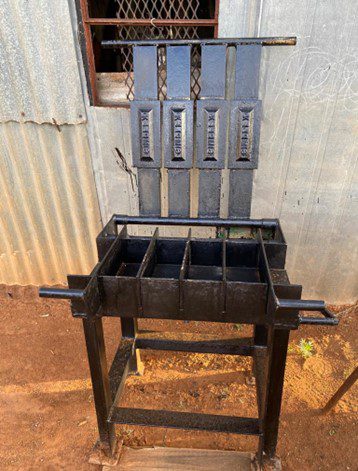
The CEB market is untapped despite a history of other earth bricks, for instance, adobe bricks, in Lesotho. The oldest buildings in Lesotho are built from adobe and date as far back as 1843. However, there is no record of compressed earth buildings that we could find in Lesotho, although there is a growing interest in the production and use of this technology, one local artisan has made his own CEB machine (see Figure 5).
fig 5 Displays compressed earth block machine by a local artisan in Lesotho
6. Conclusion of Compressed Earth Block
From an economic standpoint, there are a few factors that this paper has outlined that are critical to the development of a CEB-based industry. The first is that we do not have price-per-brick data that we can use in comparison with conventional materials to come up with a cost-per-square-meter standard. It is possible to project that, after the initial capital expenditure into the machinery, the material and labour operational expenses are fairly lower than competing fire bricks. There is a less labour-intensive process, a passive curing process, and the potential for on-site production which projects for a cheaper product. Overall, our analysis points to an economically viable option that will yield a whole set of new jobs, complementary businesses, and alternatives to highly processed conventional materials.
The environmental impact of producing and using CEBs requires some thoughtful analysis since there are aspects of embodied energy and impact offset by some relatively cleaner and raw processes. The embodied energy is in the cement (when and if required) to enhance the compressive strength and durability of CEBs as well as the associated energy required to operate the diesel-operated machinery, though there is also CEB machinery available that is manually operated. However, these costs to the environment are offset by CEBs requiring very few materials that are abundantly available across the country. There are also no toxins associated with the production of these bricks onsite.
The sociopolitical conditions forebear a high potential for the development of the CEB industry. All of the raw materials are unregulated and the process does not emit any toxins that would require further approval. Competing materials like fired bricks have created a context for digging earth for manufacturing bricks and created a marketplace for alternatives to cement blocks. The demand for these materials should not be an issue since CEBs can be seen as an alternative to fired bricks and adobe blocks which have been used for a long time in Lesotho.
7. Recommendations for Compressed Earth Blocks
Our classification of the audience for the potential of CEBs is in the state, development partners, and the private sector. To the state agencies and development partners in the green economy, this paper recommends that a rating system be developed( see Annex 1 Material Specification) to illustrate the environmental benefits of using CEBs above alternatives. Secondly, once this industry is developed, a levy on imports may be used to discourage direct competition for CEBs to curb the overall carbon footprint and cost of importing a building material we can produce locally.
Development partners include NGOs, academic institutions, and private donor institutions with an interest in the spectrum between the basic need for shelter to the development of industry. From a technical perspective, this paper recommends that in-depth research be conducted into the performance of CEBs to support their readiness for the market. With the support of NGOs and donors, better regulations may be placed on where and how to mine the earth used for CEBs and other similarly resourced bricks to ensure environmental security for future communities.
Lastly, the private sector will play a key role in maximising the benefits of CEBs’ use in construction at all levels of the industrial hierarchy. At the top level, advocacy for CEBs in line with job creation, environmental impact (positive and negative), and built industry value chain development needs the participation of influential individuals and associations (Private Sector Foundation of Lesotho and the Lesotho Chamber of Commerce and Industry). Investment into the industry from financial institutions is also key to the mobilisation of the use of CEBs through funding the required infrastructure, marketing, and labour.
Compressed Earth Blocks are economical, produce low-emissions, and are primarily locally producible building materials. They are a good alternative for low-cost housing since Adobe alternatives have been used in Lesotho in the past. There is an opportunity for the mass production of these blocks which in turn will generate manufacturing jobs. To raise awareness and create demand for this building material a highly visible and utilised demo building made from CEB should be built to train community members on how to make CEB and build with it and gauge the interest in the material once it’s known. The presses can then be left with communities as income-generating activities to make CEBs and sell them; in this way, the economy will circulate amongst the communities.
8. Appendix
Respondent No
Name of Company
Number of Years of Experience
Profession/ Qualifying criteria
Respondent 1
Dwell Earth
30 years
Seller of CEB machinery and trainer of producing CEB
Respondent 2
Blessman International (Compressed earth block constructor)
5 years
Board of Directors of Blessmen
Respondent 3
Blessman International (Compressed earth block constructor)
7 years
Constructor and offers technical guidance on Compressed Earth Block
Respondent 4
Individual Contractor
30 years
Builder and producer of CEB in Lesotho
Respondent 5
Blessman International (compressed earth block constructor)