Information Library

Building with Straw and Grass

Desk Research & Primary Findings

Issued on: 30 August 2023

Table of Contents

1. Background

1.1 Overview of Straw and Grass as a Building Material

Grassland vegetation has dominated Lesotho’s landscape for the last 23,000 years or more, as documented by Oppong 2008. However, over time Lesotho’s grasslands have been substantially transformed by human activities to provide shelter and insulation before industrialised roofing and brick materials were introduced, according to Oppong (2008). Grass and straw have been used since the early 1600s for roofing and to build walls by mixing clay with cereal straw or grass and laid up on top of one another into a free-standing wall. Today the materials are most commonly found in rural villages, lodges, guest houses, and historical buildings as a homage to traditional methods of building and roofing.

However, in recent years migration patterns within the country and outside have resulted in the material being replaced with modern alternatives such as metal roofing and concrete blocks especially in urban, peri-urban, and to a small extent in rural areas. The apparent shift from using the material has been due to the fact that grass and straw  is viewed as low-cost, and it is associated with traditional housing, mostly used by people in rural areas with little or no source of income to afford modern materials (Oppong, 2008).

According to Oppong (2008) although thatched roofs have been common in Lesotho since ancient times, in the present day, the lack of incorporation of thatch roofing and the use of compressed straw in a more modern architectural world to meet the housing needs in the country reduces the prospects for sustainable development.

2. Types of Straw and Grass used as a Building Material in Lesotho

In Lesotho, there are two varieties of grass suitable for roofing and insulation: cereal and natural/wild grass, found in different regions. Lesotho can be divided into four major ecological zones namely; the Highveld Grassland, Afromontane(foothills), Afroalpine(lowlands), and Senqu Valley, which are home to a variety of grasses and agricultural produce.

2.1. Cereal straw

Due to the unique climate and soil conditions in Lesotho, the most common cereal crops are maize, wheat, and sorghum which are the primary grains consumed locally. There are byproducts from the harvesting of these crops that can be incorporated into the built industry, particularly as roofing materials and for insulation. In Lesotho, wheat straws have been used for roofing, particularly in the highlands of Lesotho. This is due to the fact that highland districts such as Thaba-Tseka, Mokhotlong, Qacha, and Quthing were identified as the top-producing regions for straw in the country [1] (The Lesotho Vulnerability Assessment Committee’s Crop Estimates report for, 2022).

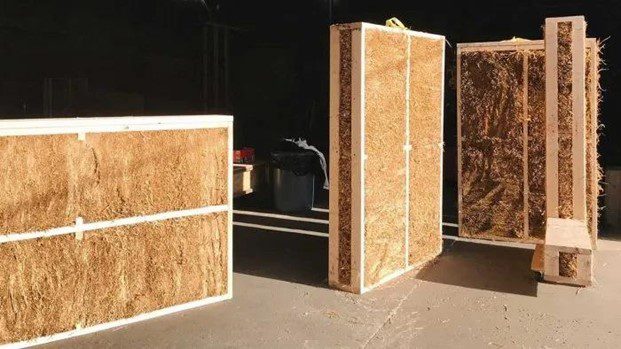
However, the introduction of compressed straw as an insulation material has not been instigated in Lesotho. The compressed straw buildings were first constructed in the late 1800s in Nebraska, USA with the development of steam-powered balers. Even in earlier days, walls made from either tired bundles of straw coated with clay or compacted loose straw mixed with clay have been constructed for centuries throughout Asia and Europe. With the growing awareness of the strong and risky effects on climate, the notion of both reducing carbon costs and carbon sequestration has led to the effective use of compressed straw as a building (Sarath, C & Kumar. B, 2012). Therefore, there is an opportunity to explore compressed straw as a possible building technique for contemporary building standards and preferences in Lesotho (See Figure 1 which shows compressed straw).
2.2. Wild grass

In Lesotho there are four different types of wild grass available that can be used for thatch: qokoa (Hyparrhenia tamba), mohlomo (Hyparrhenia hirta), tsaane (Eragrostis chloromelas), and lehlaka (Phragmites australis), available in different districts in different quantities (Kose, 2021). It is important to note that some of the naturally growing grasses, like qokoa and mohlomo, are legally protected and are prone to sociopolitical controls that may influence their availability for use in the built industry. Another important issue to note is that some of these grasses may be farmed, which again has an impact on the availability of the grass. These socio-political aspects of grass use in the building industry are explored in detail later in this paper (See Figure 2, which shows the Agro-ecological zone).
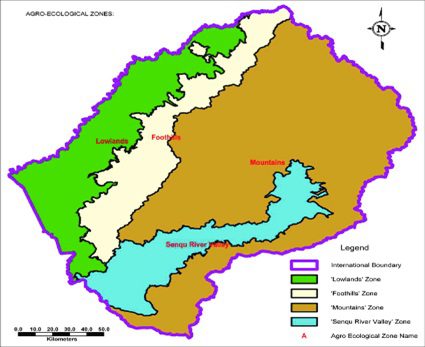
2.2.1. Highveld Grassland ( Lowlands)

This zone spans from the western lowlands of Lesotho starting at the lowest point (1400 m.a.s.l) which includes the Southern region of the Senqu Valley and extends to about 1800 m.a.s.l. Its main vegetation consists of grass species, the bulk of which are Hyparrhenia Hirka mohlomo and qokoa.

Mohlomo typically grows on mountains and between mountain slopes. According to the Ministry of Natural Resources World Wetlands Day report in 2004, mohlomo is considered to have the best quality among all types of wild grass for thatch in Lesotho, and its quality is comparable to that of thatch used in South Africa. It can last for 20 years or more (See Figure 3).
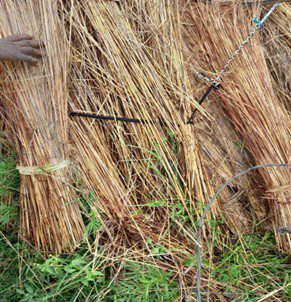
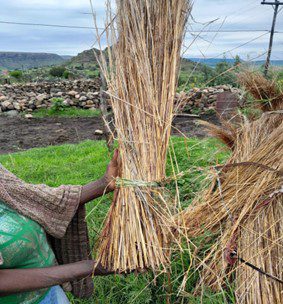
Qokoa, on the other hand, has larger stalks, is less durable, and rots more easily. It is also available in the northern parts of Lesotho

Tsaane is found in the Southern regions of Lesotho. It is characterised by short stalks which make it less durable because it allows water to penetrate in the house.

2.2.2 Afromontane Grassland Zone ( Foothills)

This zone ranges from 1800 m.a.s.l to around 2500 m.a.s.l in altitude. Geographically, it ranges from the upper Senqu Valley to the watershed, covering most of the Maloti Mountain range in the centre of the country. The foothills also include parts of the Drakensberg mountain range in the north as well as the eastern side of the Senqu Valley. It has a wide range of grasses mainly mohlomo and qokoa and it grows successfully due to the volcanic soil and warmer temperatures. They are a significant region for the natural growth of a variety of grasses that can be used in the built industry.

2.2.3 Wetlands Zones

The wetlands are mostly in the lowlands, particularly in the Districts of Berea and Maseru which is where water reed (Phragmites australis) commonly known as lehlaka can be found. It is a highly durable building material, lasting up to 20 years or more.

3. Application of Straw and Grass

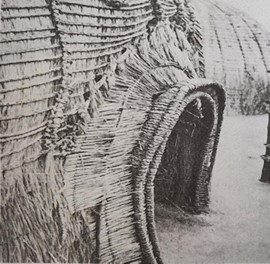
Historically, a typical grass-thatched hut was constructed on a circular foundation dug into the ground. Long, flexible poles were inserted into the foundation (Mokorosi, 2017), as shown in Figure 4 with the top bent inwards and tied together to create a hemispherical shape. Thinner poles or split poles were woven in and out of the larger poles, and grass was used for thatching. The grass would usually extend to the ground, forming a beehive-like structure for the hut (Casalis, 1861; Dreyer, 1993; Mokorosi, 2017). Mud was sometimes applied to the outside of the huts as well (Casalis, 1861, See Figure 4)
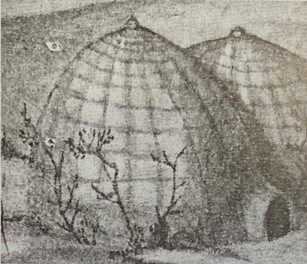
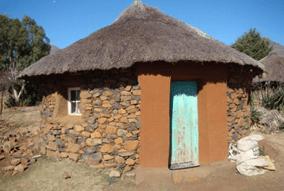
In the 1900s, there was a shift away from grass-thatched huts to more durable materials such as stone, earth, and timber. These materials were all locally sourced, and water and cow dung were used as binders. Traditional huts began to feature stone foundations and walls, with thatch being used primarily as a roofing material (Mokorosi, 2017). During the 20th century, the most common traditional house type in Lesotho was the rondavel, which could be either circular or rectangular in plan (Anderson & Stovre, 1997; Liechti & Hill, 2019, See Figure 5a and 5b).
According to a report by New Media (2020), various techniques and equipment are employed when building with thatch, and specific dimensions and angles need to be followed when roofing with thatch. The report states that a thatched roof should have a minimum pitch of 45 degrees and a minimum of 35 degrees over dormer windows. To achieve a smoother thatched roof, the Thetho tool, also known as deskspa (Language used by Basotho thatchers), is used. The smoother the finish, the better the water will run from it, preventing leakages and prolonging the roof’s lifespan.

As per Premier Guarantee (2022), wild thatch is first placed in position and then raked to give it a “poured onto the roof” appearance. For new work, the overall thickness of natural thatch is 400mm, while cereal straw has a much neater and trimmed look. During installation, the thatcher dresses and knocks the thatch into shape, and the overall thickness for new cereal straw work ranges from 300-450mm (Premier Guarantee, 2022).

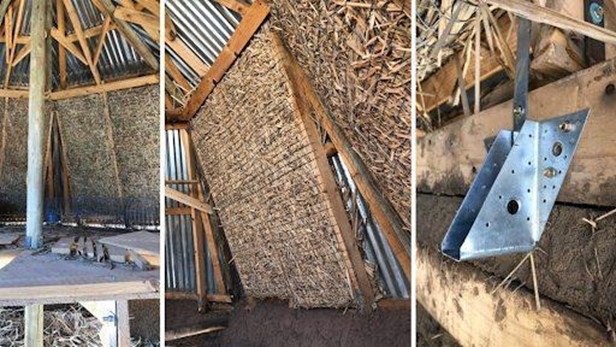
Additionally, straw and reed can be used for insulation by placing the materials directly onto the rafters in order to provide support and insulation for the corrugated iron roofing. While this material is most abundant in wet lowland areas, it has become increasingly scarce in recent years due to the degradation of wetlands, particularly in Koro-koro and Qalabane (Ministry of Natural Resources, World Wetlands Day, 2004) (See Figure 6).
4. Advantages of Straw and Grass as Building Material

According to Stronbach & Walter, 2022, building with straw and grass significantly reduces both embodied and operational carbon compared to construction with  conventional  materials due to the absence of energy required during its harvesting process. Also, straw stores CO2 which remains locked up in the structure of straw buildings. It is also thermally efficient, renewable, biodegradable, and readily available in Lesotho, particularly cereal straw and Mohlomo and Qokoa grasses.

In comparison to all other roofing materials such as metal sheets, thatch has a higher insulation value as can be seen in the Material Specification Table in Annex XX[1] . As a result, buildings with grass and straw walls are more thermally efficient, reducing the amount of energy required for heating during winter and cooling in summer. This not only benefits the environment but also provides economic benefits by reducing the consumption of fossil fuels such as paraffin and charcoal used for heating in Lesotho’s long and bitterly cold winters. The density of  compressed straw in construction influences the air gaps between the stalks and between the bales themselves and therefore the thermal conductivity efficiency. Compressed straws are high-performing insulators and experience minimal decomposition over time (Marlow, 2021).

5. Disadvantages of Straw and Grass as Building Material

Stronbach and Walter (2015) reported that grass and straw  are vulnerable to fire. Lightning strikes and open-flame cooking fires are often the culprits. In the absence of building standards about thatch in Lesotho, we referenced South Africa’s thatched roof construction law and standards (SANS 10407). It states that insurance premiums for grass and straw buildings are much more expensive than other roofing materials such as clay tiles, due to their vulnerability to catching fire which can also affect neighbouring buildings.

Additionally, Marlow (2021) pointed out that the quality of straw and grass is dependent on good weather during germination, cultivation, and harvest, which is often reliant on hard-to-find casual labour and old manual equipment. Consequently, harvesting and processing costs are increasing, and the quality of the grass and straw is often poor, necessitating the use of expensive thatch sealants. As a result, many building owners are turning to alternative materials, leading to a decline in demand for thatch roofing.

The issue of durability is another concern for thatch roofing, despite that a well-maintained thatched roof can last up to 20 years, which is comparable to or longer than other competing materials. However, due to improper drying, a lack of access to superior grass species, and possible termite infestation, many thatched roofs may require replacement more frequently than the expected lifespan of 20 years, leading to a shift towards corrugated iron as a cheaper and faster to install alternative. Additionally, thatch is vulnerable to damage from hail, further exacerbating problems with thatched roofing (Marlow, 2021).

6. Primary Explorative Research Findings

6.1 Research Methodology

To collect primary data, a stratified sampling technique was used based on different qualifying criteria which were all aligned with the number of years of experience from 10 years or more. The selection criteria of the interviewees were based on their qualifications, skills, and knowledge because it was imperative to select participants with a first-hand understanding of thatch from a wide range of occupations. The participants were not paid to take part in the interviews. A set of questions, (see here research questions on thatch)[2]  was prepared with the aim of gathering information about some specific topics such as availability, accessibility, cost, durability, and knowledge around construction techniques with thatch.

The chapter is divided by topic and summarises  the information  collected from the interviews, presenting the key findings. A total of  11 interviews with thatch experts and professionals have been conducted from January to June 2023; the researchers conducted face-to-face interviews, which lasted around 45 minutes each, to gain insights into people’s experiences, opinions, and facts about thatch in Lesotho. The respondents represented the entire spectrum of the thatch industry in Lesotho ranging from government officials through skilled professionals and built industry experts. On average our respondents had 24.5 years of experience ranging from 7 years to 41 years.

6.1.1. Availability of Grass & Straw in Lesotho

Seven of the Respondents confirmed our desk research findings that the different grasses in Lesotho can be found in the three ecological zones: Highveld Grassland, Afromontane Grassland, and Afro-alpine Grassland. The Respondents  stated that the availability of grass and straw is highly dependent on the season. The Respondents further stated that grasses are available in abundance during the Spring harvesting season when the grass is dry, while cereal straw is available in Winter, particularly in June and July.  Although the majority of respondents said that the three kinds of grass (Qokoa, Tsaane & Mohlomo) are available in abundance.

 Three of the respondents  opposed that viewpoint and claimed that both grass and cereal thatch are deteriorating in quality and quantity. The respondents further mentioned the changing climate, combined with insufficient management of this resource and land use, has resulted in the need to import thatch from South Africa particularly to build and maintain some of the historical buildings and lodges. Also,  respondents  indicated that, in recent years  the government has shifted from using grass as a roofing material to using modern building materials when building public infrastructure like the new museum.

Respondents also stated that overgrazing and deforestation have led to a reduction in the production of natural grass for thatch.

6.1.2. Cost of Grass and Straw in Lesotho

Our goal was also to understand the short and long-term costs of using grass and straw. These covered the purchase of the raw materials, the cost of labour, the ongoing cost of maintenance as well as any reduction in heating costs given the postulated thermal efficiency of thatch. Six of the Respondents, who are experts in roofing & ministries, indicated that the use of thatch is expensive in the short term due to the costs of labour and cost of material since grass is only available at no cost for the residing local communities and not to external parties residing outside of the communities. Additionally, Respondents further stated that the majority of the suppliers stockpile the material in order to raise the prices while also reducing the size of bundles.

In contradiction to our desk research which found that Lesotho’s quality of grass and straw matched South African standards,  two Respondents outlined that poor  quality material and lack of skilled labour in Lesotho to build large structures has resulted in the Ministry of Tourism importing these resources from South Africa to  build  the Thaba Bosiu cultural village. The Respondents indicated that the cost of labour sourced in Lesotho is expensive, costing  M400.00 (EUR 20)  per square metre.  Compared to metal or clay roofing which incurs labour costs of M45.00 (Euro 2.25)  per square metre respectively.

However, five of the Respondents argued that there are short-term and long-term benefits of using this material in that there are short-term benefits as the material is essentially cheap, costing M10.00 (Euro 0.50) per bundle. The Respondents further stated that the material is free for the suppliers residing in areas where the grass is available  because grassland is held communally. The use of resources is regulated by chiefs and village councils who allocate pieces of land, called ‘litema’, to individual households to harvest  for free. Additionally, the Respondents expressed that  buying the material from individual households who are the primary suppliers of the material in Lesotho makes the buying price  cheap mainly because a lot of suppliers are not formally employed, they have resorted to selling thatch as a way of supporting their families therefore the price is negotiable. The Respondents further outlined that because wheat is already being cultivated in the country each household can grow it, making it free. Furthermore, the Respondents indicated  that there are long-term benefits that involve an 80% reduction in the cost of heating materials due to their thermal efficiency.

6.1.3. Quality & Durability of Grass and Straw in Lesotho

Eleven  of the Respondents explained that the different types of grass have different qualities and characteristics that affect the lifespan and maintenance of thatched roofs and insulation. The respondents stated that in the previous years, Mohlomo was considered to be the best quality among the different types of grass with an expected lifespan of about 20 years without requiring any maintenance. However, the eleven Respondents expressed that in recent years the quality of Mohlomo  has deteriorated and needs maintenance after approximately 3 to 5 years due to the poor quality of grass species and the harsh weather conditions. Respondents also articulated that cereal straw is also no exception as the amount of yield and quality have decreased meaning that regular maintenance of roofing is needed every 8 months or so. The Respondents asserted that the  quality of  Qokoa and Tsaane has also been negatively affected by changing climatic conditions and land degradation.

To address this, Respondents declared that modern materials like thatch sealer (a solution that has to be sprayed on both sides of the thatch to prevent moisture from entering into the structure) have been used to improve its longevity, but it comes at a high cost of M4,000 (EUR200) for 20 litres which is the amount that is needed for a typical standard size rondavel.

6.2 Knowledge and Techniques of Grass and Straw in Lesotho

All of the eleven Respondents indicated that there is a shortage of skilled thatchers and that the trade is dying out. Additionally, the Respondents further showed that due to the informal nature of these artisans, little information exists on the availability of skilled thatchers, and there is no database or Trade Association, or formal entity for thatchers.  Also, the Respondents made further indications that the new generation shows little interest in learning this technique. The Respondents further confirmed that the lack of or no skilled labour capable of roofing large structures results in skilled thatchers being sourced from South Africa. Therefore, a list of skilled Thatchers’ is needed to help formalise the sector and encourage young people to take up the thatching trade within the built environment by providing it as a trade in the vocational and technical schools.

7. Feasibility of Grass and Straw

Lesotho’s thatch market is highly dependent on the demand  for cultural and tourism-related buildings such as lodges and restaurants which contribute highly to the economy and to the preservation of  Basotho’s culture. However, skilled thatchers are scarce and overly expensive if you find one, making it a costly material in the short term that is not available throughout the year and production is highly susceptible to climatic change.

8. Distribution Patterns of Grass and Straw

Community members are the primary distributors of thatch; as mentioned above they are given rights by the Chief as the land is held communally in the country and regulated by them. It’s usually sold informally on demand when someone needs it, and not sold in any markets or hardware stores.

It is not a fragile material, hence it is easy to transport and does not require special packaging. When stored properly, thatch can last for a long time without going rotten.

Distribution patterns depend on policymakers and decision-makers as  areas where it’s available need to be mapped out, and regulations on who can have access to the land on which it grows need to be developed before it can be distributed to the public on a large scale.

9. Unmet needs of Grass and Straws in Lesotho

The main unmet need regarding the grass and reeds for thatch is the lack of documented information about the location of natural thatch resources (such as water reeds and wild grass for thatch), which makes it challenging to determine their availability in the country.

Furthermore, the traditional knowledge and techniques used in thatch roofing are often not recorded and are only known by a small group of elderly community members. Unfortunately, some of these skilled thatchers pass away without transferring their knowledge to the younger generation, making these techniques even more scarce.

10. Conclusion

The fact that the grass for thatch is not readily available to the mass market, and thatchers are not recognized as a formal profession, thatch remains a cottage artisanal industry in Lesotho. The decrease in the use of thatch for roofing and insulation has led to an increase in the use of modern building materials that are not sustainable: economically, environmentally, and socially. This is because of the notion that thatch is not available in the country due to no mapped-out areas showing its availability and accessibility.

Additionally, the lack of a documented list of  skilled personnel with knowledge of the material has contributed to the shift away from using this material. However, thatch roofing and straw insulation as well as compressed straw bales offer plausible alternative solutions in the development of sustainable housing in Lesotho to meet the outstanding housing needs. Hence, there is a need to revive this material to promote its thermal efficiency, which results in an 80% reduction of costs in heating and cooling and also lower carbon emissions from the extraction process and the use of the material.

11. Recommendations

It is important for the government and other relevant stakeholders to conduct a comprehensive survey to document the knowledge and techniques applied when roofing with thatch, map out the areas of availability and accessibility of natural grass for thatch, and provide training and formalisation of the skillset of thatch. This will not only preserve this valuable cultural heritage but also create job opportunities, promote the use of sustainable and locally available materials, and contribute to Lesotho’s efforts to reduce carbon emissions by lowering the use of alternative heating fuels due to the thermal efficiency of the material. Also, little or no energy is used when harvesting and building using the material. Furthermore, there is a need for advocacy and awareness-raising campaigns to promote the use of thatch as a roofing and insulation material in urban, rural, and peri-urban areas and its benefits to the environment and the economy.

In addition to mapping out areas where thatch is available, it would also be important to create a database of skilled thatchers to preserve and pass on their knowledge to future generations. This could be done through apprenticeships, training programs that can last up to 8 weeks, and certification courses, which would provide a path to formalise the skillset and make it a viable career option for younger people. By promoting the use of thatch as a sustainable and cost-effective roofing material in the long run, and providing the necessary support and resources for its cultivation and preservation, the country can create a thriving industry that benefits both the economy and the environment.

Different approaches need to be adhered to in order to lower the cost of using the material through preservation and exchange of skills which will help lower the need to hire external labour outside of the country and to import thatch while also leading to the abundance of the material through improved conservation majors.

12. Appendix

Appendix A: Table of Respondents

Respondent NoName of Company/ ProfessionNumber of years of ExperienceProfession
Respondent 1Entrepreneur30 yearsSkilled thatcher
Respondent 2Ministry of Tourism22 yearsDirector Tourism
    
Respondent 3Ministry of Environment13 yearsEnvironmental Spet
Respondent 4Entrepreneur22 yearsThatch supplier
Respondent 5Entrepreneur7 yearsArchitectural designer
Respondent 6Building and Design services35 yearsHead of Architecture
Respondent 7Entrepreneur30 yearsSkilled thatcher
Respondent 8Entrepreneur40 yearsSkilled thatcher
Respondent 9Entrepreneur12 yearsSkilled thatcher
Respondent 10Entrepreneur17 yearsSkilled thatcher
Respondent 11Thatch supplier41 yearsThatch Supplier


13. BIBLIOGRAPHY

 Ashour, T. &  Wu, W. 2011. Using Barley Straws as Building Material. https://www.researchgate.net/publication/287478964_Using_barley_straw_as_building_material

Casalis, E., A., 1861. The Basutos. J. Nisbet. Retrieved from: https://doi.org/10.5479/sil.262374.39088000167106

 Chen, J. Elbashiry, E. &  Yu, T. 2017. Research progress of wheat straw and rice straw cement-based building materials in China https://www.researchgate.net/publication/318480337_Research_progress_of_wheat_straw_and_rice_straw_cement-based_building_materials_in_China

Dreyer, J. 1993. The Basotho hut: From Late Iron Age to the present. South African Journal of Ethnology, 16(3) https://journals.co.za/doi/pdf/10.10520/AJA02580144_730

 Lesotho Vulnerability Assessment Committee Crop Estimates, 2022. https://drmims.sadc.int/en/organizations/lesotho-vulnerability-assessment-committee-lvac

 Marlow, C. 2021. Traditional Straw Thatching in Time of  Shortage. https://historicengland.org.uk/content/docs/advice/traditional-straw-thatching-times-of-shortage-context167-mar21/

Ministry of Natural Resource, 2004. World Wetlands Day. https://www.ramsar.org/news/world-wetlands-day-2004-lesotho

 Mokorosi, S. A. 2017. Basotho Traditions: Indigenous Architecture and Creativity. Morija Printing Works. https://searchworks.stanford.edu/view/13170501

Oppong, R. 2008. A Trio Sub- Saharan African Compendium: “Losing the sense of thatch” http://dev.ecoguineafoundation.com/uploads/5/4/1/5/5415260/thatched_roofs.pdf

Premium Guarantee, 2022. Thatched Roofing: Interaction with Modern Construction Techniques. https://www.premierguarantee.com/our-services/structural-warranties/

Stronbach, B. & Walters, W. 2015. An overview of grass species used for thatching in the Zambezi, Kavango East, and Kavango West Regions, Namibia. researchgate.net/publication/286447092_An_overview_of_grass_species_used_for_thatching_in_the_Zambezi_Kavango_East_and_Kavango_West_Regions_Namibia

READ MORE
Information Library

Building with Sheep Wool

Desk Research & Primary Findings

Issued on: 30th August 2023

1. Background

1.1. Overview of Wool

Baumgartner (2021) explains that Lesotho has a rich history and tradition in its wool industry, with high-quality wool produced by the nation’s sheep since the 1800s. The industry has a well-established network that connects local producers with brokers in South Africa who purchase the raw product for processing and sale. According to Forrester (2021), wool is the backbone of Lesotho’s rural economy, with producers ranging from smallholder farmers to breeders of large flocks with superior genes. Currently, there are over 1.2 million sheep with a significant potential for industry development. On average, one sheep produces nearly three kilograms of wool annually. Primarily, Lesotho exports raw wool to warehouses in Port Elizabeth, South Africa for grading and processing for readiness for the international market. 80% of the wool is the exported to China, while the remaining 20% is exported to European countries labeled as South African wool, along with South African wool (The Reporter Newspaper, September 22, 2022).

The observation was that wool is currently not utilised for insulation in buildings in Lesotho. According to the International Wool and Textile Organisation (2020), wool has diverse uses, which depend on the coarseness of the fiber and its other characteristics, including fiber length and crimp. Besides widespread use in the textile industry, there is an opportunity to use the insulation properties of wool in buildings which necessitated this research into the viability of the use of wool, in particular the lower grades of wool that are less attractive for the textile industry, and can be used as an insulation material in construction industry instead (The International Wool and Textile Organisation, 2020).

1.2. Wool as a building material

According to Renz (2022), wool has become increasingly significant in the construction industry due to its many natural properties. According to SANS 10400, XA building towards more sustainable and less resource-intensive building practices will reduce energy consumption. The goal is for all new residential and commercial buildings to contribute an estimated 3,500 MW of electricity savings. As nature has often inspired technological innovation and intelligent design, sheep wool is now at the forefront of these advancements (Renz, 2022). Renz (2022) further adds that the rising popularity of wool as an insulation material in construction is due to increased awareness regarding the health benefits and performance of natural fiber insulation. The thermal insulation is typically measured by its thermal resistance often referred to as the  R-value which determines the type of insulation that is required. According to SANS 10400 XA, Lesotho’s climate  requires a minimum R-value of 3.7 for insulation purposes. This would support the cause for effective insulators such as sheep wool. The table in Annex 1 Material Specification relays a comparison of wool’s thermal performance against other conventional materials.

This research explores the possibility of using wool as a brick and an insulating material in Lesotho, looking at its availability, durability, cost, and thermal efficiency

1.3. Wool bricks

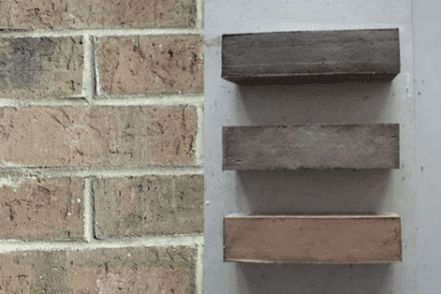
Fecyt (2010) reports that researchers from Spain and Scotland conducted a study on the use of sheep wool in various composite materials, such as adobe bricks and cement mortar, and made several significant findings. The research revealed that wool fibers can enhance the strength of compressed earth bricks, decrease the occurrence of fissures and deformities due to contraction, reduce the bricks’ drying time, and increase their resistance to flexion (refer to Figure 1). Remarkably, these wool bricks can be produced without firing, resulting in energy conservation. Also,  bricks are considered a sustainable and healthy alternative to conventional building materials, which is why wool bricks are gaining more attention in research (Fecyt, 2010).

2. The advantages of Wool

Wool is a sustainable and renewable material that is also natural. It does not cause any harm to human health and is non-irritating to the eyes, skin, or lungs. Unlike rock wool or fiberglass wool, which is hazardous to install, wool fibers are much safer to handle. Wool is breathable and can absorb and release moisture without compromising its thermal performance, making it ideal for insulation (Denes, Manea & Florea, 2019). Additionally, wool is fire-resistant and can extinguish itself in the event of a fire. It can also absorb volatile organic compounds (VOCs) from the environment, making it an excellent choice for indoor air quality. Wool is static-resistant and does not attract lint and dust, making it resistant to dirt. It is an effective insulation material for both thermal and acoustic purposes, as it absorbs noise and reduces noise levels. When wool fibers absorb moisture, they generate heat, which helps to prevent condensation in structures and minimize the risk of mold and mildew formation (Denes, Manea, & Florea, 2019).

A sustainable and renewable material, sheep’s wool insulation has no adverse impact on the environment. It boasts an R-value of approximately 3.5 to 3.8 per inch of material thickness, which is 0.3 to 0.6 points higher than fiberglass, cellulose, or mineral wool. A higher R-value indicates that a material is more effective at resisting the flow of heat (Denes, Manea & Florea, 2019).

Sheep’s wool insulation is a versatile and eco-friendly option available in various sizes and thicknesses, including slabs, batts, and rolls. It is a completely natural product that requires 15% less energy to manufacture compared to glass wool insulation, making it more sustainable. Thanks to its high nitrogen content, sheep’s wool is one of the few fibers that are naturally flame-resistant and self-extinguishing. Instead of igniting, it will simply smolder and singe away, reducing the risk of fire (Denes, Manea & Florea, 2019).

3. Disadvantages of Wool

The installation of sheep’s wool insulation can be costly. For example, in Europe, it can cost approximately €62 (equivalent to M1240) per square meter to achieve the recommended thickness of 300mm. This is considerably more expensive than mineral insulation, which costs around €17 (M340) per square meter (Tiza, Singhs, Kumar & Shetta, 2021). Another disadvantage of wool insulation is related to its cleaning and preparation process. To make it effective and suitable for use, wool must undergo treatment and cleaning that involves the use of harsh chemicals for disinfection and to address possible scab mite infestations (Tiza, Singhs, Kumar & Shetta, 2021).

4. Primary Explorative Research Findings

To collect primary data, snowballing was a suitable sampling technique for this study, because it was imperative to select participants with first-hand knowledge about wool from a wide range of participants. This chapter presents the findings from the face-to-face interviews that lasted between 45 minutes to an hour each held in January and February 2023, undertaken with professionals who work with wool. A set of questions, (see Annex 4 questionnaires wool) had been prepared with the aim of gathering information about some specific topics such as availability, accessibility, and cost of using wool as an insulating material. With regards to wool, we only had one interview which was with  the Wool and Mohair Association. This was because the Association is the central selling point of wool where it’s all collected from all 10 districts and they have information about the different grades of the material in the country and the amount collected yearly and sold.

4.1. Availability of Wool

The purpose of this exercise was to know where wool is available in the country and in what quantity and  to know the season of shearing and the quantity of wool sheared. Ten  Respondents (Wool and Mohair Association) revealed that the shearers are divided into government shearing sheds, estimated at around 155 sheds, and privately owned shearing sheds around 80+ in different districts. The respondents further indicated that in the Maseru district only there are 21 privately owned shearing companies which indicates an abundance of wool in the country. The Respondents further claimed that the amount of wool sheared in the country increases every year due to the rising reproduction of sheep, with farms in the Districts of Mokhotlong and Quthing producing the highest amount of high-quality wool. The Respondents stated that in 2020/21, the amount of wool collected was 1,000,283kgs and in 2021/22 the amount quadrupled to 4,379,590kgs.

Seven of the Respondents claimed that low-grade wool is not exported because there is no market for it abroad. As a result, it is sometimes disposed of as waste. Others said that low-grade wool is sold locally through the informal market by the roadside, mostly during the shearing months of August to December.

Three of the Respondents (supervisors of shearing companies  stated that as much as wool is available in abundance all the wool is sold and exported to already existing clients. They added that low-grade wool (for instance, black wool) is still sold to international markets such as China, where the value fluctuates around M70/kg (EUR 3.50) depending on the market.

4.2. Cost of Wool

Ten Respondents confirmed that there are 41 different grades of wool. Each has its own selling price, ranging from approximately M70/kg (EUR 3.50) for low-grade wool to M510/kg (EUR 25.50) for high-grade wool. The Respondents further claimed that the most expensive wool is lamb’s wool due to its softness. Other factors that influence the price include length, tenderness, and microns (measurement of the diameter of wool fiber).

5. Feasibility and Viability

Wool is Lesotho’s leading agricultural commodity export. And yet, the market has not introduced the utilization of wool as an insulation material, because most of the wool produced in Lesotho is auctioned and brokered to the South African textile industry. However, there is a quantity of low-quality wool that remains unexported. The exact amount of this unexported wool is unknown. Thus the question of the possibility of wool being a feasible and viable material for the local construction industry remains unanswered.

6. Distribution patterns

Wool already follows a certain chain of supply in the country from local to international market making it difficult to open up different distribution patterns from the one that’s already existing. Also due to its scarcity, it is not deemed profitable to join a different supply chain.

7. Unmet needs

Lesotho’s wool is exported because there are no manufacturing industries to process wool in the country. The exportation of Lesotho wool into South Africa means that the potential taxation and other economic benefits such as processing wool and mohair in Lesotho are lost to South Africa. Besides that, research into sheep wool as a building material in Lesotho has not been explored, meaning that the market of wool in construction does not have facts supporting its establishment.

8. Conclusion

When assessing wool as a potential resource in the built industry in Lesotho, it is important to consider the following factors: distribution patterns, development and marketing of wool in the built industry, wool harvesting innovations (from shearing of wool and standard separation of wool) cost and the availability of the material. Moreover, it seems as though there is a high potential for increased wool production in Lesotho with endless job opportunities and circulation of money within the country. The serendipity of pursuing this is expansion and growth in the built industry which will have long-term benefits to the environment.

Using wool in construction is not only good for the environment, but has the potential to bring a paradigm shift in Lesotho’s architectural landscape. Wool presents a green alternative to use as an insulation material which will result in the reduction of operational costs in the long run. We also need to emphasize the health benefits of working with and living in wool-insulated houses over alternatives like rock wool and fiberglass. However, the unavailability and high cost of buying both high and low-grade wool and an already existing market with different international countries, hinder the use of wool as an insulation material in the country.

9. Recommendations

We recommend that deeper insight into the wool data be established to determine the amount of low-grade wool that is available because it is currently unknown and to highlight the economic benefits of using it in the built industry. Since there is a well-established competing textile industry, we can focus on poorer grades which are known to be ignored by the export industry. To get wool and have ownership rights to the wool produced in Lesotho; establishing a wool testing laboratory in Lesotho will serve as an important step towards providing sampling and testing services in Lesotho. This will therefore encourage Lesotho wool and mohair farmers to sell locally. The initiative will ensure that a greater portion of wool and mohair products are produced and processed in Lesotho and a possibility of wool residue collection obtained during processing, before being exported. This will also encourage an increase in sheep husbandry that is relatively widespread in Lesotho, resulting in a wool increase. This will also serve as an entry point to the possibility of using wool for construction purposes. While the health and environmental benefits of using wool as a building material have been stated, it is important to place it in the context of conventional alternatives. Our regulatory bodies do not currently enforce the use, or banning, of alternatives such as fiberglass. This paper and follow-up discussion will create a platform from which the public can be informed of better materials for their homes and offices. This renewable resource is part of a larger food security value chain and it is recommended that the agribusiness sector is approached for collaborative exploration into these mutual benefits.

10. Appendices

Appendix A: Table of Respondents

RespondentsName of the organizationNo of years of ExperienceProfession
Respondent 1Wool and Mohair Association15 yearsMarketing Officer
Responden2Builders City14 yearsSalesman
Respondent 3Ez build18 yearsSalesman
Respondent 4Cash Build7 yearsSalesman
Respondent 5Archi Plan12 yearsArchitect
Respondent 6Qeme Shearing Organization25 yearsWool shearer
Respondent 7Ha Abia Shearing organization30 yearsWool Shearer
Respondent 8Ministry of Local Government17 yearsDirector of Housing
Respondent 9Ha Mantsebo Shearing organization21 yearsWool shearer
Respondent 10Entrepreneur16 yearsIndividual Wool seller


11. Bibliography

Baumgartner, P. (2022). Finding a way forward: Sector reforms in Lesotho’s wool and mohair industry. https://www.ifad.org/en/web/latest/-/finding-a-way-forward-sector-reforms-in-lesotho-s-wool-and-mohair-industry. Retrieved 09/12/2022

Denes, O., Florea, I., & Manea D. L. (2019). Utilization of sheep wool as a building material. https://www.researchgate.net/publication/332595258_Utilization_of_Sheep_Wool_as_a_Building_Material. (Accessed: 12/12/2022)

FECYT – Spanish Foundation for Science and Technology (2010). Bricks made with wool. https://www.k-online.com/en/Media_News/News/Bricks_made_with_wool

Forrester, N. 2021. The Magic of Wool in the built environment. https://archipro.co.nz/articles/building/the-magic-of-wool-in-the-built-environment-archipro-nz. (Accessed: 09/12/2022)

Global Market Estimates. 2022. Global Building Wool Insulation Market. https://www.globalmarketestimates.com/market-report/global-building-wool-insulation-market-2965. (Accessed:10/12/2022)

Home Logic: Solutions for Homes (2021). Sheep wool insulation Pros and Cons https://www.homelogic.co.uk/sheep-wool-insulation-pros-and-cons. (Accessed: 12/12/2022)

Innovative Applications in Architecture (2012). Material Strategies: Wool in Architecture. https://arch5541.wordpress.com/2012/11/25/wool-in-architecture/. (Accessed: 08/12/2022)

Korjenic A, Klarić, S, Hadžić A, Korjenic S. (2015). Energies: Sheep Wool as a Construction Material for Energy Efficiency Improvement. http://www.mdpi.com/journal/energies . (Accessed: 12/12/2022)

Renz, A. (2022). Sheep Wool Insulation: A Low Carbon Solution. https://buildersinsulation.co.uk/sheep-wool-insulation-a-low-carbon-solution/. (Accessed: 12/12/2022)

International Fund for Agricultural Development (2019). Spinning yarns – Investing in wool and mohair in Lesotho. https://www.ifad.org/en/web/latest/-/story/spinning-yarns-investing-in-wool-and-mohair-in-lesotho (Accessed: 10/12/2022)

International Wool and Textile Organisation (2022).Wool Notes. https://iwto.org/wp-content/uploads/2020/04/IWTO_Wool-Notes-Web-min.pdf (Accessed: 10/12/2022)

Legge,A.( 2018). A Smart, Natural Wool Insulation for Healthy Buildings. https://havelockwool.com/2018/04/a-smart-natural-wool-insulation-for-healthy-buildings/  (Accessed: 12/12/2022)

Manchee, L. (2020). Keela Permaculture Farm: Cleaning and Using Sheep Wool for Insulation. https://www.keelayogafarm.com/2020/07/29/cleaning-and-using-sheep-wool-for-insulation/ (Accessed: 12/12/2022)

Remi Network (2017). Sheep’s wool insulation is seen as a sustainable option. https://www.reminetwork.com/articles/sheeps-wool-renewable-sustainable-building-insulation/ (Accessed: 08/12/2022)

Romania Insider (2019). Agriculture minister says RO will see first wool-insulated houses this year. https://www.romania-insider.com/agriculture-minister-says-ro-will-see-first-wool-insulated-houses-this-year. (Accessed: 12/12/2022)

ScienceDaily (2010). Bricks Made with Wool. https://www.sciencedaily.com/releases/2010/10/101005085503.htm. (Accessed: 09/12/2022)

The Reporter Newspaper (2022). Lesotho wool cleared for sale to China. https://www.thereporter.co.ls/2022/09/22/lesotho-wool-cleared-for-sale-to-china .(Accessed: 10/12/2022)

Tiza, T. S., Singhs, S., Kumar, L. & Shetta, M. Assessing the Potential of Bamboo and Sheep Wool Fibres as Sustainable Construction Materials: A review https://www.sciencedirect.com/science/article/abs/pii/S221478532103916X

READ MORE
News

Kicking off 2023\’s newsletter cycle with strategic and strong collaborations from the Mountain Kingdom to the world!

Launching a new Research & Innovation Programme

  • We are very excited to have received support from Irish Aid through our partnership with Action Ireland Trust to spearhead revolutionary indigenous building materials research, that is aimed at capacitating built environment experts, entities, and regulatory bodies to shift towards more environmentally sustainable building methodologies. 
  • Over the course of 2023, we are going to research Indigenous building materials such as sandstone, thatch, and compressed earth blocks as well as repurposed materials such as wool, hemp, and packaging waste materials. 
  • We hope to develop solutions on how Lesotho can reduce its dependency on foreign imports, which currently stands at 70% for building materials. This will not only help the economy by creating jobs but will also help the environment by decreasing the amount of high-carbon building materials used and the high levels of fossil fuels consumed to keep these thermally inefficient buildings warm in winter. The project aims to document building materials in a catalog that will act as a reference document for everyone in the built environment on material specifications, carbon emissions and so much more.
  • Other phases of the project include:– Training of entrepreneurs in the Circular Economy (Teaser for activities to watch out for April Newsletter)

           -Training of policymakers  in the built environment

Celebrating 5 years of operation in Lesotho:

In November 2022, we celebrated 5 years of being operational in Lesotho and being fully led by a Mosotho woman as Country Director, which means that the Lesotho team is now 100% Basotho – an important milestone to have reached, which was part of the plan since we opened in Lesotho. We want to practice what we preach and increase the number of African entrepreneurs working in Africa instead of foreign entrepreneurs. Daniela Gusman, the Founder & Executive Director, has transitioned into an advisory role.

Partnering with Habitat for Humanity toward building environmentally sustainable affordable housing prototype:

At the end of 2022, rise signed an MoU with Habitat for Humanity Lesotho to collaboratively build an affordable housing prototype using sandbag methodology or adobe bricks, to help us move towards more environmentally sustainable affordable materials while simultaneously building comfortable and thermally efficient housing for the poor.

– Wrapping up the 4th in loco fellowship cohort:

  • The 4th in loco cohort is currently wrapping up a school kitchen, at Seboka Primary School in the Lithabaneng Area. This area has been identified, by the Ministry of Education, as one of 5 schools in critical condition in the areas of sanitation, food security, and clean water access. The kitchen is being constructed using the innovative and environmentally friendly sandbag method.
  • Thank you to donors Action Ireland Trust
  • The opening ceremony is planned for 5th April 2023.

International Workshop

Be part of international construction, engineering, and architecture students from the USA, Europe, and Asia who will participate in the in loco program alongside 10 young graduates in the built industry, benefit from an international design and build experience, and allow yourself to develop design skills suitable for working in challenging environments, and conditions of scarcity of resources.

This year’s workshop will take place from the 14th to the 25th of August 2023.

Click HERE for more info and to apply.

  • Upcoming events;

Join our monthly webinars, where on Thursday 30th March, Elisa Engel, the Founder of Citizen Architects, who also lectures at various universities, will be talking about  Ethics and Values in Architecture.

Join our radio shows at Bokamoso FM 97.4, every Tuesday, at 2:05 pm where you can learn more about opportunities in entrepreneurship, the built environment, rise’s projects, and programs.

READ MORE
rise News

Basotho take Heritage into their own hands

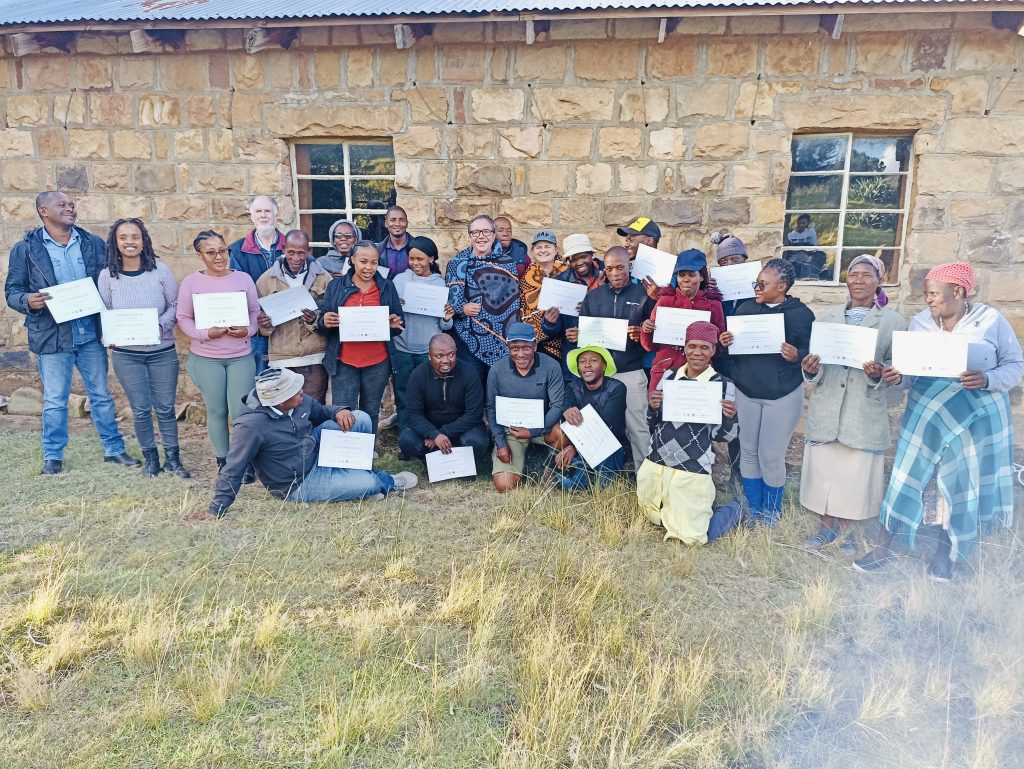
Seriti sa Makhoarane Heritage and Tourism Network (SSM) in collaboration with rise  held a first of its kind Built Environment and Heritage Masterclass in Makeneng, a small village in Maseru, Lesotho. This class was held at Makeneng (Matsieng), the royal village of Morena Lerotholi, the second-generation successor of Morena Moshoeshoe I. Architectural heritage spets from Cape Town; Janine de Waal and Graham Jacobs facilitated the Masterclass and shared their knowledge on the conservation of heritage in buildings.

A combination of people from different disciplines can now help create awareness and help youth in Lesotho with job creation in the Heritage and Conservation spectrum.  The participants and other interested persons now have the opportunity to establish an association of Heritage activists to advocate for issues and causes in Heritage Conservation. This kind of association would also work to publicize and help educate the broader public on how to better appreciate the rich heritage of Lesotho/Basotho. It would also be open to interested persons from various disciplines in order to apply “Kopano ke matla” to Heritage Conservation.

The Masterclass was attended by 20 participants including architects; researchers in Anthropology, students of heritage studies, historians, engineers, construction managers, quantity surveyors, and Makeneng residents skilled in indigenous building techniques such as stone masonry, thatch, and reed fencing.

It was a full house of experts. The Masterclass was held at Makeneng because of its rich built environment, especially when taking into account the previous royal villages of Morena Moshoeshoe I at Thaba-Bosiu and of Paramount Chief Letsie I at both Morija and Matsieng. 

Moreover, a rich and varied oral tradition has been recorded from the elderly inhabitants of Makeneng, allowing a full understanding and appreciation of the linkages between the built environment, archival sources, and living traditions. Finally, its unique architecture, landscape, and terrain give it a special ambiance with spectacular panoramic views to the north and east. Because of its geographical position, being on a dead-end road, it has largely been forgotten but Makeneng is a prime candidate for special recognition.

The Masterclass followed a participatory methodology as it involved knowledge and skills sharing between trainers and trainees. The trainers taught steps to follow to achieve heritage conservation of buildings, while trainees shared their knowledge and skills on Lesotho’s indigenous architecture.

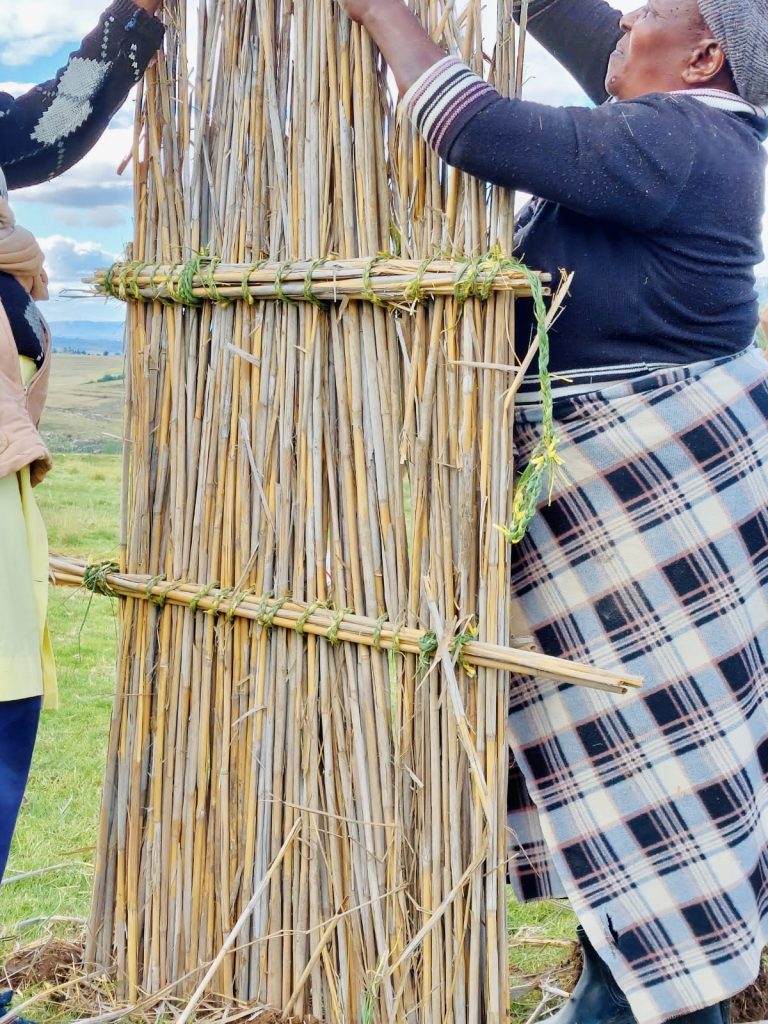
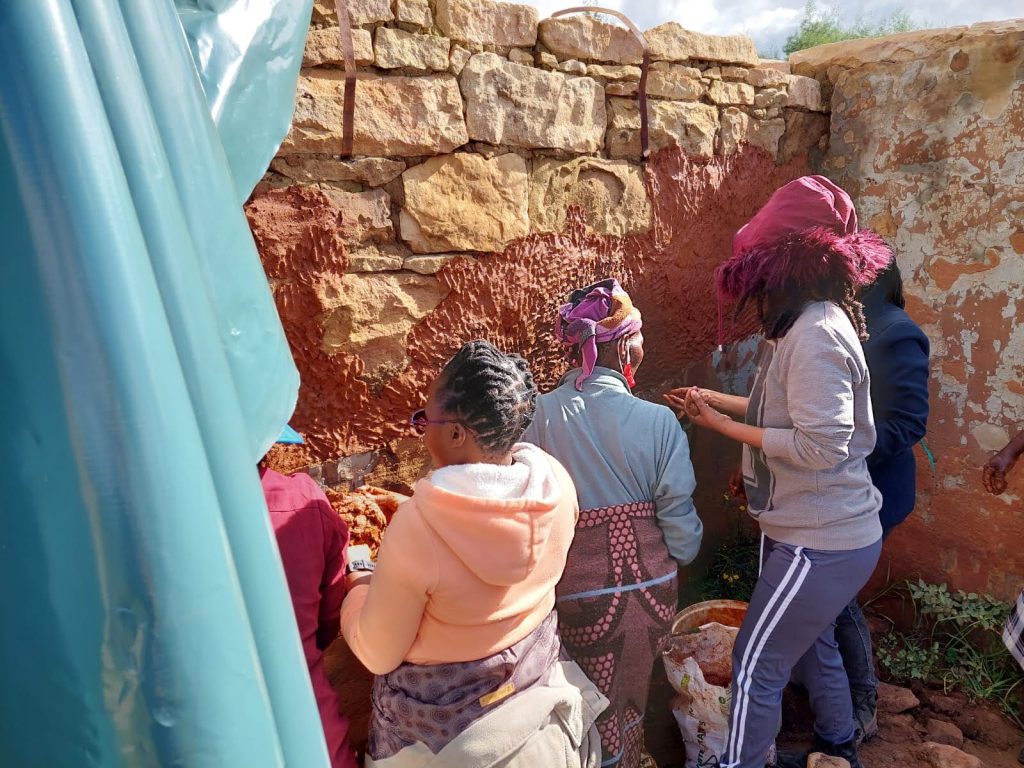
These were all illustrated through practical demonstrations like; How to protect the wall of the Evangelist’s House from further damage using cow dung and mud; Seotloana and Reed screen demonstrations, and many more. The Masterclass explored the importance of not only conserving heritage sites and buildings in Lesotho but the need to preserve and adapt indigenous knowledge systems to create energy-efficient buildings that will be more sustainable and climate-friendly.

About Seriti sa Makhoarane Heritage and Tourism Network (SSM)

SSM is a legally registered association committed to the preservation, presentation and promotion of heritage and tourism associated with the Makhoarane area.  

For more info on this initiative, please contact:

Mr Stephen Gill, +266 5885-8662, morija@leo.co.ls 

Ms Daniela Gusman, +266 5946-0734, daniela@riseint.org 

Mrs Maneo Ralebitso, +266 5801-6984, cereboz@yahoo.com 

Mr Pusetso Nyabela, +266 5886-0884, pnyabela20@gmail.com 


READ MORE
in loco program

Experience taught me well

I am Mpokho Kherehloa, a proud member of the in loco fellowship cohort of 2020 with rise international. I am a 24 year old Mosotho woman and my life is based on challenging the status quo in the Lesotho construction industry. I hold a diploma in Construction Management from Lerotholi Polytechnic. Not only do I have managerial skills in construction but I can also get my hands dirty in the field. I love doing labor intensive work and I always considered myself the definition of what we call “the complete package”. I can easily manoeuvre in the construction industry as an employable candidate. However, I was missing an integral aspect which I personally never thought was as important as my technical skills and this was having an entrepreneurial mindset.

Mpokho bricklaying

In the five months that I have been part of this fellowship, I have learned that rise international’s dominant mission is to equip its fellows with the skills and lessons that help newly graduates to develop their attitude towards being self-sustaining and being job creators as opposed to job seekers. As a woman in  construction, one can be tamed into thinking their career is good enough by being employed as opposed to being  the employer, as the Lesotho construction industry is male dominated. I also wanted to change the normality of having more men in construction than women.

Mpokho in the wiring process

I knew about this fellowship through a Whatsapp group, which talked about construction so it obviously grabbed my immediate attention.  So I applied just because I qualified for it, little did I know that there was more to the program than just construction work, there is intense business training. I am five months into the program with about 2 months left to completion. These five months felt like a whole 2 years, not because it was that difficult, but because of the knowledge and site experience I have gained. This experience has been everything and more than I could have ever imagined.

Mphokho checking levels of foundation

I  mentioned that I am a woman who knows her business and am not shy to get my hands dirty.  I  already knew most things that had to do with construction besides bricklaying and therefore my take away in construction skills so far is bricklaying. As for the entrepreneurship aspect there is a whole lot that I have learned, that has opened my eyes, and directed my way of thinking to be organized and be an executer. These lessons include good communication skills, taking calculated risks without doubting yourself, marketing strategies, customer care and how to prepare a business plan from start to end. And I have no doubt that with these skills acquired I will definitely be the complete package that I aspire to be.

Mpokho cutting timber

Apart from being inspired to be a job creator, I have a dream to contribute to my community by founding an orphanage. The reason is that I believe in giving everyone a chance to find their purpose, and having a warm bed to sleep in, food to eat and education meets the individual half way in helping them find their true purpose. Also it breaks my heart whenever I see homeless and abused children. So I believe my true purpose in this life is to give hope and support to those in great need of it.

READ MORE