

Small Business Survival in the Midst of Covid-19 in Lesotho
Lesotho, like other low-income countries around the world, has been hit the hardest economically by the novel Covid-19 pandemic. The consequences of policies like the “hard lockdown”- imposed to contain the virus by flattening the curve and off-loading pressure on hospitals, have had far-reaching economic ramifications beyond just the social isolation.
For poorer countries whose economies are highly reliant on small businesses, hard lockdowns mean the closure of all non-essential businesses, and the unintended consequences of this measure have put huge pressure on an already struggling economy and have exacerbated the high poverty and unemployment rates.
The challenges in the construction industry include an increase in the prices of building materials as well as lack of availability of the required materials due to border closures. In Lesotho, most products and especially building materials are imported from South Africa. According to the Assessment of the Socio-Economic Impact of Covid-19 on the Kingdom of Lesotho by UNDP, the pandemic is expected to induce price increases of merchandise due to disruptions to business operations because of limited stock and the non-availability of alternative supply sources.
More challenges faced by businesses of all sectors and sizes can be heard in the discussion from our recent Webinar on The Impact of Covid19 on the Built Environment, between Geoffrey Green from MAPEI South Africa, Sue Zenha from Neill Powell Neill Architects, and Mokhethi Rampeta from Lerotholi Polytechnic in Lesotho.
With an unemployment rate of almost 30% before the pandemic, the true economic cost of the unintended consequences of a hard lockdown on the relatively small economy of Lesotho is yet to be assessed. However, what is more important now is what the government and civil society organizations are going to do to mitigate the damage caused to the economy by the lockdown.
Survival strategies for small businesses

According to the Lesotho Bureau of Statistics Business Register (2014), MSMEs account for 76 per cent of the private sector economic activities largely in the informal sector. Self-employment is also a dominant form of employment in MSMEs and the informal economy. MSMEs provide jobs to 118,130 Basotho of whom 59 per cent are women and 83 per cent are self-employed owners.
However, most small businesses have been affected by lockdowns imposed by Covid-19, resulting in many closing down, while some have had to take cost-cutting measures such as lay-offs in order to survive.
While it is nearly impossible to plan for events such as a global pandemic, it is important for small business owners to be more aware of their surroundings, unique skills and their differentiating offering. Small business owners should rather be encouraged to explore partnerships, technology, and other resources that allow them to pivot and reinvent themselves in order to remain relevant in a world that has changed overnight.
It may be difficult to explore new opportunities while trying to do damage control from losing employees, customers, and revenue, but here are 3 tips on how to do just that:
- Where possible small business owners can opt for technology to provide services. Social media and other online platforms have made it easier to reach out to customers. For regular and loyal customers, entrepreneurs just have to reach out to them in order to maintain their relationship and remain top of their customers’ mind in order to keep the orders coming in. For new customers, a low-cost social media marketing strategy can be very effective.
- Entrepreneurs may have to work around the clock in order to keep their customers’ trust, and still maintain social distancing. Working in shifts will help keep employees and customers safe while keeping the business wheels turning. Entrepreneurs will need to keep up with the trends in order to navigate the Covid-19 pandemic. There may be some technological advancements and changes in customer needs that business owners need to be aware of. This may mean having to pivot for some businesses, while some only need to incorporate these innovations in their existing business.
Entrepreneurs will need to think outside of the box before they reach out for outside resources as captains of their own ships. But there are resources available.
Mitigation strategies by the government and other stakeholders

According to UNDP’s Socio-Economic Impact Assessment of Covid-19 in Lesotho, the growth projection was revised downwards from 0.4 per cent in May 2020, to -5.1 per cent in 2020/2021, due to the impact of COVID-19. This means that the country’s leaders have to find a way to mitigate the economic losses of the lockdown.
Lesotho recently pledged M350 million (Approx $22m) through Government financial support through the National Economic Stimulus Package on the Covid-19 pandemic. The Ministry of Finance and Lesotho National Development Corporation (LNDC) have signed an MOU authorizing LNDC to issue guarantees worth up to M350 million intended to support Basotho-owned businesses seeking loans from commercial banks under the newly restructured Covid-19 Response Partial Guarantee Scheme launched by Lesotho’s Prime Minister Moeketsi Majoro.
However, the government alone cannot revitalize the economy. The importance of MSMEs in business development has come to the forefront to help take on the responsibility of job creation, restructuring the business sector to weather the uncertainties of the new economic reality we live in.
rise: in loco and Enterprise Hub

rise International, through its in loco program, is helping mitigate the effects of the virus on employment by recruiting young entrepreneurs in the built environment taking them through a ‘learning by doing’ fellowship, equipping the participants with skills and hands-on experience in order for them to be better placed to start their own businesses. The fellowship includes an intense 6-month business training and professional development program that equip the fellows with skills and resources to tackle the crisis of youth unemployment. Once graduated from the fellowship, the Pioneers commence a 3-year business incubation program and gain access to ongoing professional development, business coaching, professional networks, mentorship and market. So far out of the 35 in loco graduates, 16 have started businesses which have created jobs for 29 others. The Pioneers have experienced an average monthly income increase of 56.7%.
rise continues to find creative and smart business solutions to address the challenging business environment. The organization is also fundraising for the development of an Enterprise Hub (E-Hub), a physical place where entrepreneurs can work, produce, collaborate, ideate, continue their professional development and build business relationships. The E-Hub will promote innovative thinking, stimulate creativity and design, as well as promote ethical business practices. The incubatees will be inspired to come up with innovative and creative ways in architecture, sales and marketing, delivery of services and products, and partner with entrepreneurs from across the globe to brainstorm ways on how to address the impact of the pandemic on small businesses.
As Lesotho keeps going in and out of varying degrees of lockdowns, small businesses continue to be affected by the Covid-19 pandemic. Until an effective measure to mitigate the impact of Covid-19 is put into place, the way businesses operate and their costs of doing so will continue to be affected.
Apart from the assistance that they will get from the Lesotho government, rise International and other MSME service providers,, entrepreneurs need to think outside the box now more than ever to weather the pandemic. They need practical advice on managing effective decision making, such as marketing rigorously, bringing on partners and employees, networking with key players in the industry, and managing risks.
Lesotho needs to put these ideas into place, even more now that the Covid-19 pandemic has changed the business landscape, making small businesses even more vulnerable as they battle a constant state of damage control. Entrepreneurship is challenging and Covid-19 has proved to be the greatest challenge. Small businesses will need strategies to adapt to the changes taking place and be ready for the unforeseeable future.


Breaking out of a cage
“You will never have a greater or lesser dominion than that over yourself, the height of a man’s success is gauged by his self-mastery, the depth of his failure by his self-abandonment. He who cannot establish dominion over himself will have no dominion over others,” – Leonardo da Vinci. My name is Thato Nkikana, born and raised in Maputsoe, Lesotho. I am a Mosotho woman holding a Diploma in Architectural Technology from Lerotholi Polytechnic. As a fellow in rise’s in loco program, our 2020 cohort designed and constructed the Lesotho National Federation of Organizations of the Disabled headquarter offices at Ha Ts’osane Maseru, Lesotho. I was the Site Architect of this great project which we have successfully completed and now awaiting inauguration.
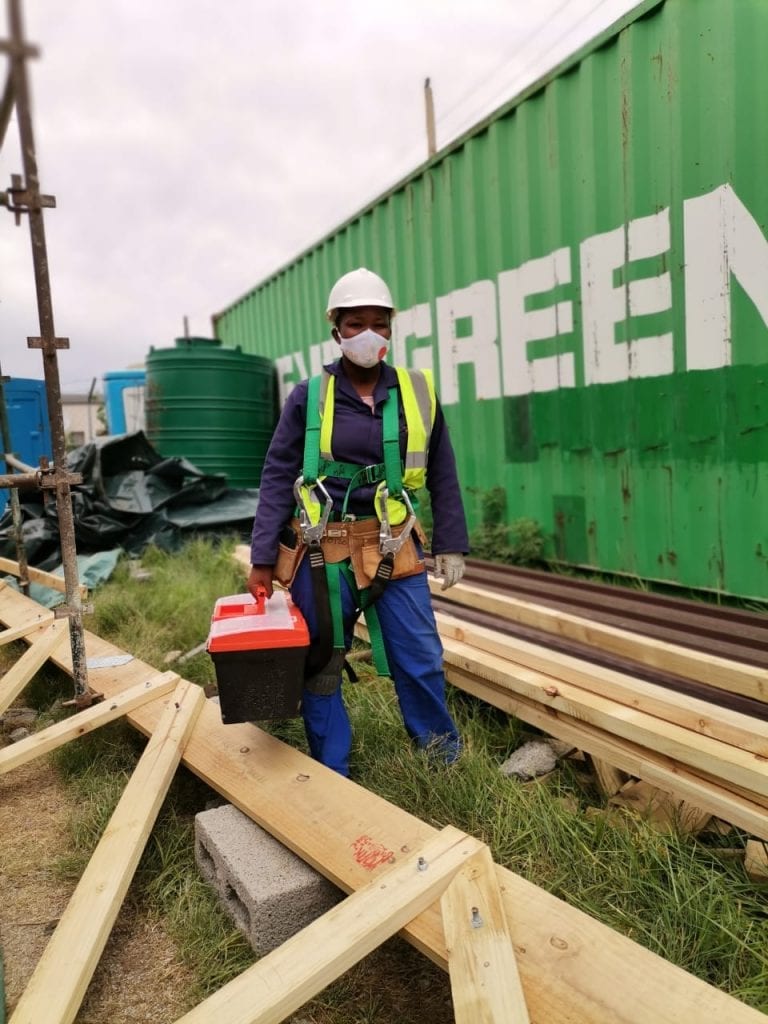
From my childhood, I was always fascinated by young and vibrant women who were classified as successful in their respective careers, this is where my aspiration to become a prominent career woman was birthed. With a great passion for architecture and construction, I decided that if I ever needed to, I would push and breakdown doors to bring about change and empower women in the built environment industry. I consider myself a supporter of well-being and employability for women in this sector and I firmly believe that entrepreneurship is the rightful path to our progression.
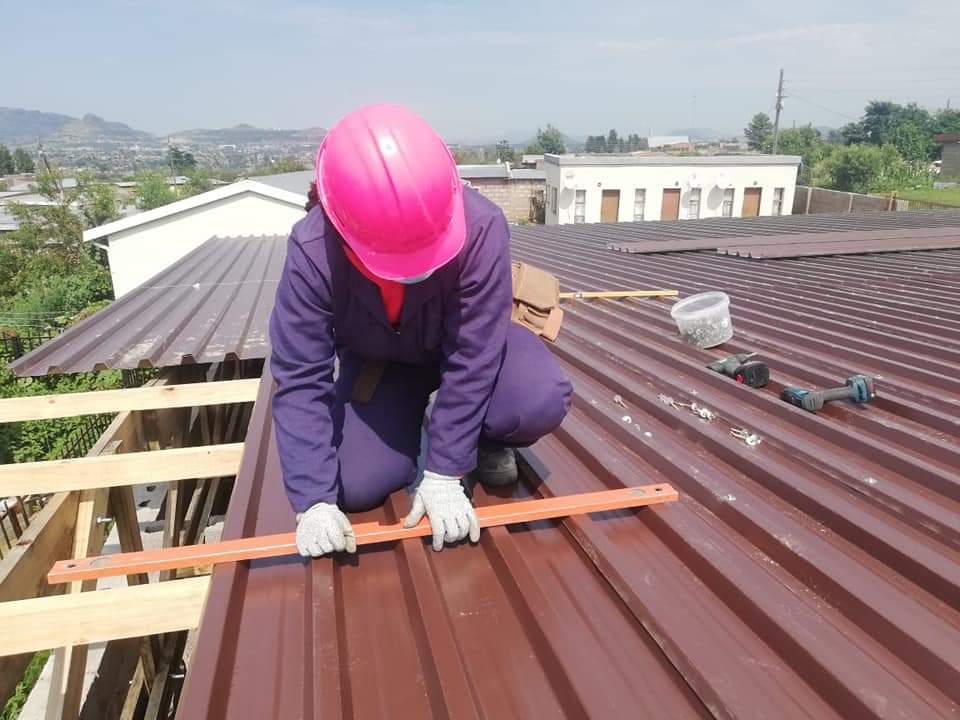
Educational institutions equip us with much needed theoretical knowledge, but in this field theory is only as good as the person practicing it. As a young graduate, I felt the need to join the in loco fellowship to gain practical experience in architectural design and construction. The “learning- by- doing” motto lured me into having interest in the program, and I am glad I gave it a chance because my life will never be the same again. Being a site architect in the project we just completed sharpened my eye on design correlating perfectly with actual construction work, it trained me on paying great attention to detail and making sure no stone is unturned when working in the field.
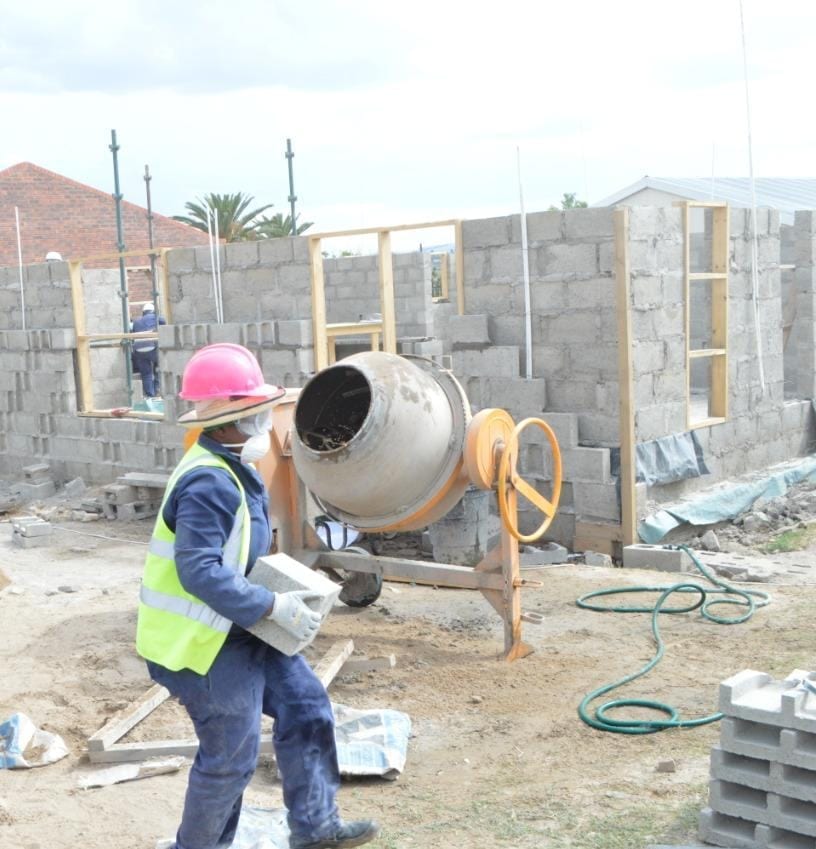
The in loco fellowship improved my professional perspective and also contributed to my personal development. We create as a team, and this has shaped my soft skills. I can now communicate effectively and work well in a group of people, being a part of such a creative and forward thinking group challenged my abilities in a very positive way. Hence I am coming out more motivated and inspired to build a future for myself in the built environment industry. My creativity has reached beyond ordinary because I now take initiative and I am committed.
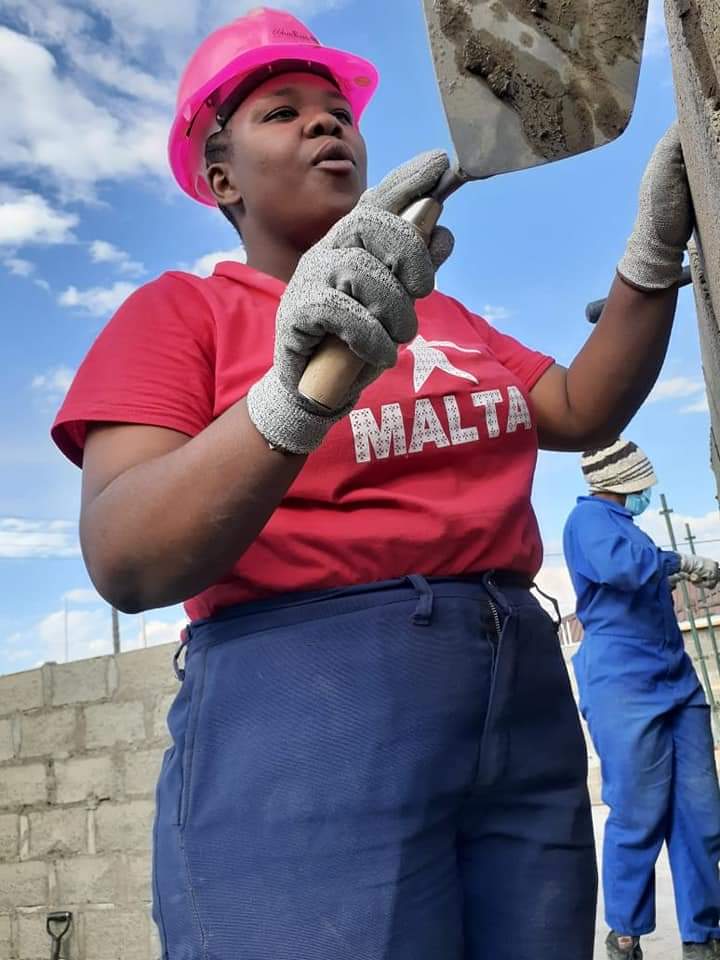
We were provided with business training sessions that refine well equipped entrepreneurs of the future; many skills which I did not have before the fellowship. I now have skills in market research, knowing how to grow my business through marketing, bookkeeping, and money management. I can draw a business plan from scratch and execute it meticulously, all credit to the objectives of the fellowship. The LNFOD project is one of its own kind in Lesotho. The building accommodates all Basotho with unique abilities by inclusive designs throughout the building. The project will benefit the community and LNFOD because they will generate income from renting out their boardroom to the community to secure economic sustainability of the building, it is truly heart- warming to have been part of creating such a life impacting structure in the country.
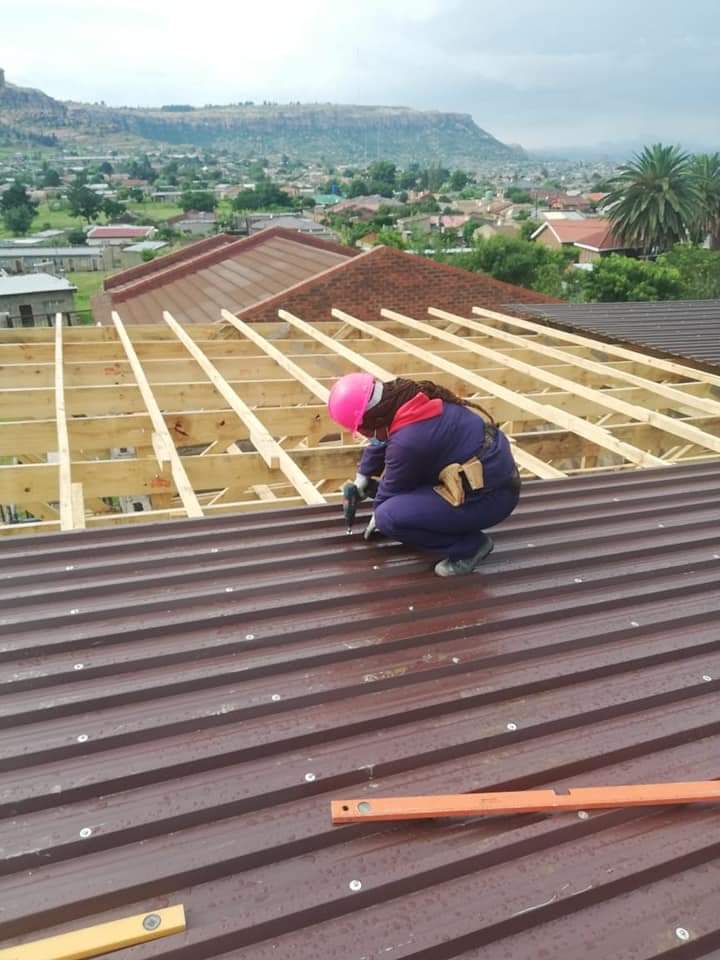
I am proud to have been part of rise international’s in loco fellowship, specifically the cohort of 2020. Through it, I have made bold moves. I established a start-up called Wom Designs & Construction, fully known as Women in Design and Construction. It provides architectural and construction services from project inception to completion. The mission of my company is to bridge the ever-expanding gender inequality gap in the built environment industry. I have become a woman who makes courageous moves to better myself, my community, and to do my part in solving the world’s problems of unemployment, gender inequality and exclusion of differently enabled people.


Build/Ability Documentary virtual screening
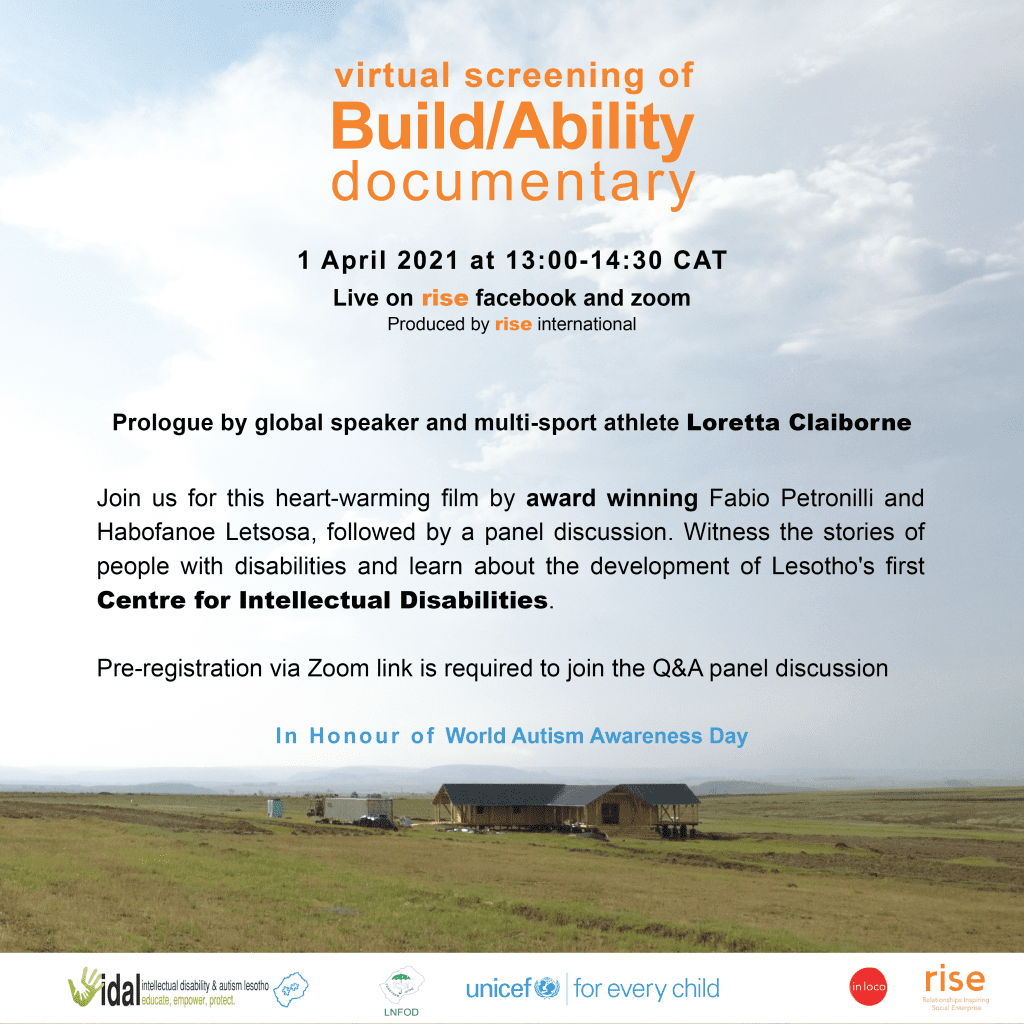
Join us for this heart warming film by award winning Fabio Petronilli and Habofanoe Letsosa which will be dowsed by a panel discussion. Witness the stories of people with disabilities and learn about the development of Lesotho’s  first Centre for Intellectual Disabilities. Honoring World Autism Awareness Day 2021 with Unicef Lesotho, IDAL and LNFOD.
Register here

Building with Indigenous Materials
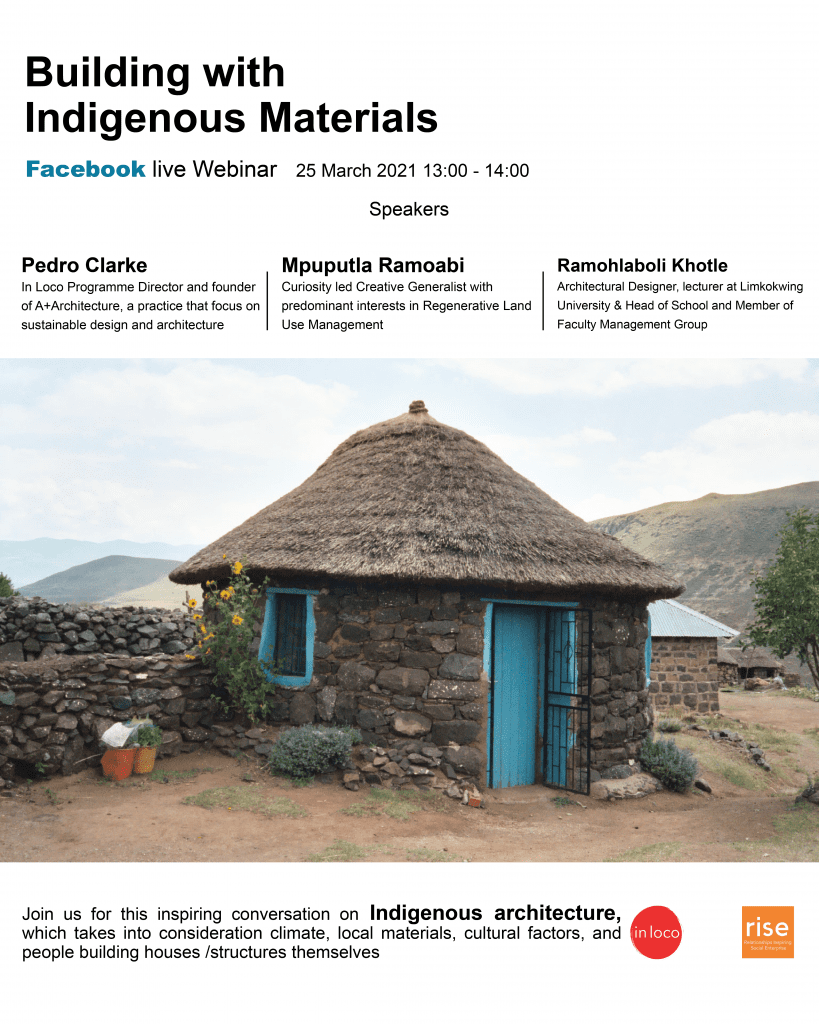
An inspiring conversation on Indigenous Architecture, which takes into consideration climate, local materials, cultural factors and people building houses / structures themselves.
Watch here