2020

in loco fellows 2020 blog series #4: The stone the builder refused

My name is Paki T’sotleho, I am a 29 year old man with a heart of a kid, a mind of an old soul and the body of a giant. I am part of the 2020 cohort of the in loco fellowship and a contributor to the vision set by rise international. I hold a Bsc in Construction studies in the built environment from the University of the Witwatersrand. This program focuses on all aspects of construction; from Construction Management and Technology, Quantity Surveying, Property studies, Construction law, Building design, Building science and Construction Economics. The importance of this programme is to broaden one’s take on the construction industry so that going further with either a professional career or a contractor/ entrepreneur route you understand your role and how you fit in and keep up with the ever growing and changing construction industry.
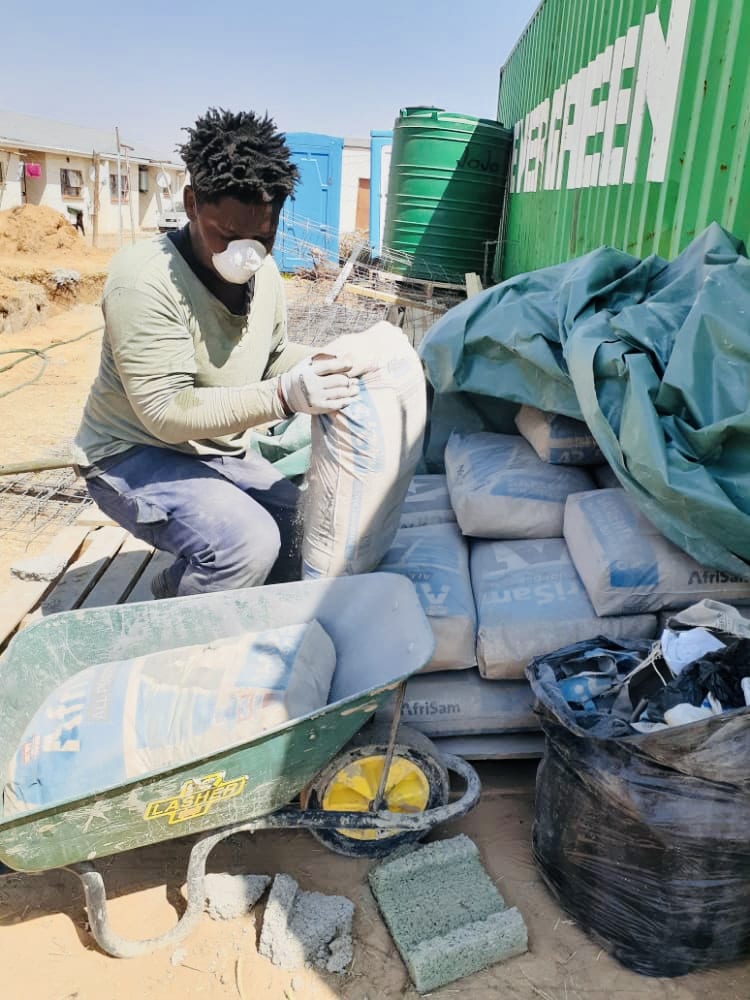
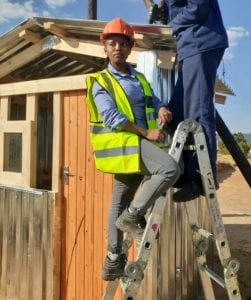
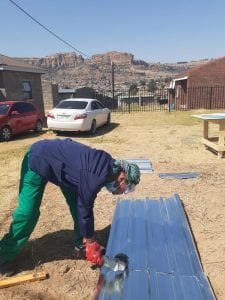
Paki working on site

I strongly believe that ignorance, coupled with the “know it all” attitude is the root of the downfall of our Basotho People and hinders growth for Lesotho. In return this attitude leaves us, the youth, with a frustrated and discouraged outlook for Lesotho. With that said, the reason I applied for the in loco fellowship programme was that for the first time I came across a programme that seemed eager to give the young Mosotho child a vision, a platform to voice their creativity, challenge and grow their acquired skills from the built environment and at the same time teach them how to be independent and to self-sustain themselves when they go out into the field.

At this stage of the fellowship programme (3 months in), I have learnt how to breakdown Bills of Quantities into a material list. They can be used as a point of reference to see if your project is in line with the budget and indicate expenses that were not accounted for in the Bills of Quantities. I have also learnt the most tricky aspect of construction which is the Preliminaries in a practical sense, that has to do with site preparation, site establishment requirements, administrations and organisational requirements for the personnel on site. On top of the construction aspect of the programme there is also the entrepreneurship aspect. In this part of the programme  I continue to learn about how to position your brand, how to locate and expand your market, how to execute social media marketing, the importance of customer service, and a whole lot more that helps you tick all the boxes necessary to successfully start and operate your business.

Since the fellowship started in July 2020 I have been performing the role of a buyer as well as a laborer on site. As a buyer, I am responsible for making sure all the tools and materials needed on site are sourced in accordance with the construction schedule; when they are needed and at the best value for the client. I assure you this is no walk in the park. Finding the balance of being within budget but trying your best to get the best quality material and services possible is very challenging. This role requires a lot of planning and preparation skills but it is mostly exciting if you have worked as a consultant Quantity Surveyor like I have.
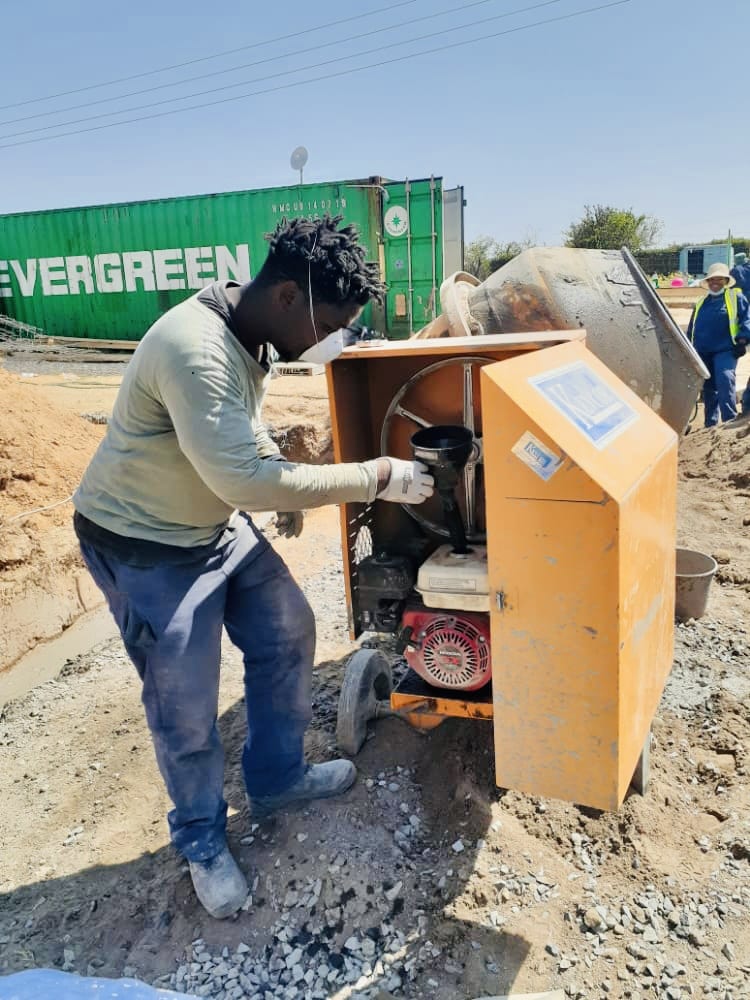
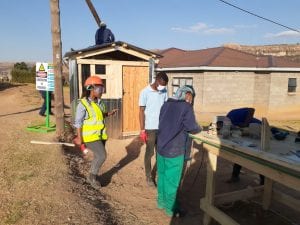
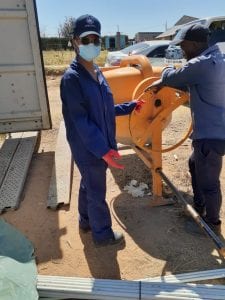
Paki operating cement mixer

Being able to see equipment and material, to interact with suppliers, all of which makes me feel hands on. It also solidifies my confidence in my profession as a Quantity Surveyor – this profession in Lesotho is easily brushed off and given little to no recognition. As for being a laborer, this is the most rewarding experience ever – I get to see that I am capable of creating something from nothing with my own hands and personally, I have always wanted to be the kind of man who is handy. So this experience is giving me the skills I need to be this man and tuning my mind to be oriented in problem solving in every task I face.

I am currently working in a project where we are constructing an inclusive building for LNFOD (Lesotho National Federation of the Disabled).  The in loco programme encourages fellows to advocate for inclusive buildings in every project that we take on for the benefit of people with disabilities. Secondly, this project challenges us as the future Lesotho construction industry; to come up with the technology to allow for all physical work to be done by everyone, no matter their gender.
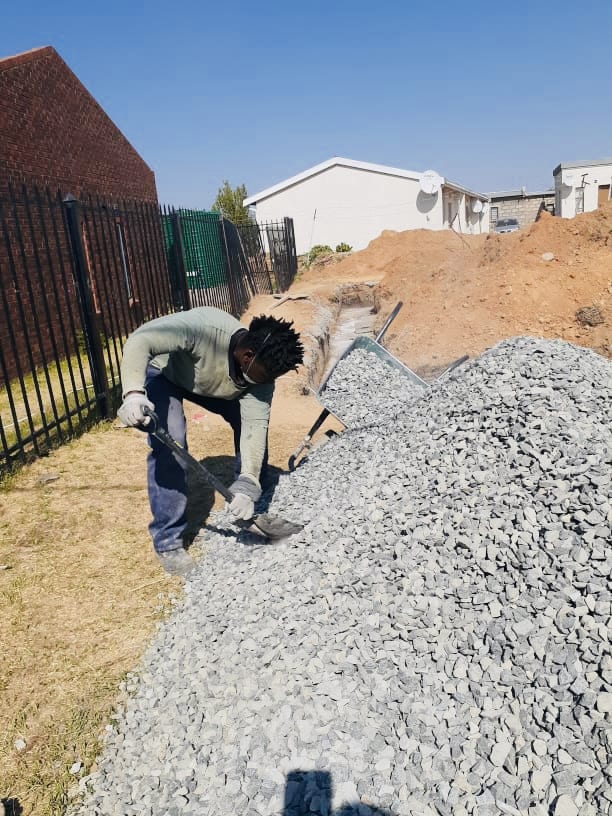
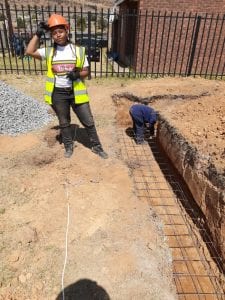
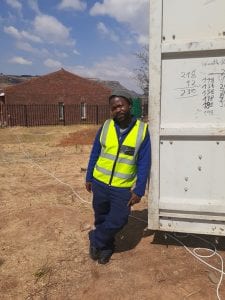
Paki preparing foundations

In conclusion I would like to leave with an overview of my future aspiration. My dream is in three stages; first I would like to open a lamp shop and everything wood that will later have a coffee shop. Secondly, I would like to start up a recreational center/camp, and lastly to facilitate community projects that build parks with sports grounds all over the country. “Along with the trees, the animal in me and the soil I ground myself on, teaches me how to be human” – Paki Ts’otleho

READ MORE
Social Entrepreneurship

The power of community driven development – one year on…

Community driven development empowers people by giving responsibility to the community.
By virtue, this allows community members to work together and take a vital part in decision making. In so doing, opportunities are built, people’s voices are strengthened allowing them to freely demand greater accountability of the institutions that are relevant to their livelihoods, and to promote sustainable development. rise international prides itself in providing linkages to skills and resources where and how they are needed. rise believes that merely giving what you think will “help” may not help at all. That is why a community driven development approach is fundamental in all the projects carried out by rise.

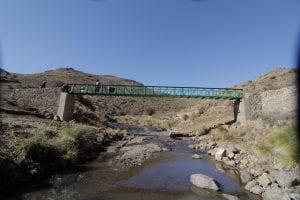
This time last year in 2019, rise international, in partnership with Possible Dreams Foundation, piloted a program with a rural community in Lesotho called Ha Sekants’i. As a means to tackling economic and infrastructural needs that the community identified as priorities, through the construction of a pedestrian bridge in collaboration with a group of international volunteers from Malta, sponsored by an international development company called J Portelli Projects.

This footbridge helped the community gain safe access to health care services, the market and also enabled children to get to school without having to go through the river which is menacing and at times impossible when it rained or snowed. With the help of community members and the guidance of the Roads Directorate, rise was able to construct the bridge in just two months

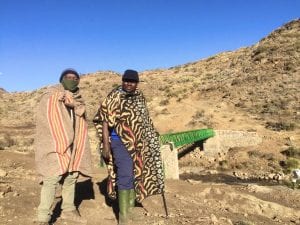
The community of Ha Sekants’i remain proud of the footbridge. It has become their reminder of the power of the Letsema concept – an African tradition of volunteering one’s labor to community projects. 
“We are pleased that through this partnership we finally have a footbridge. I am 86 years old now, I really never thought this would happen in my lifetime” – Abiel Khanyapa, Ha Sekants’i community member.

Alkire et al., (2001) demonstrated that by directly relying on communities to drive development activities, community driven development has the potential to make poverty reduction efforts more demand responsive, more inclusive, more sustainable, and more cost effective than traditional centrally led programs, thus increasing the efficiency and effectiveness of poverty reduction efforts. We can proudly attest to this statement.

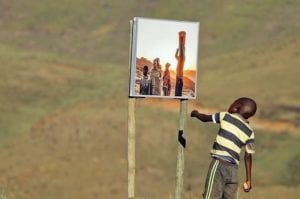
One year on, the community of Ha Sekants’i has developed vastly. The only rural village in Lesotho with a permanent outdoor photo exhibition. Ha Sekants’i has become a popular destination for visitors looking for an authentic eco-experience. In collaboration with Possible Dreams Foundation, the Ha Sekants’i community is now raising funds to construct a community learning centre in the village.

Photo credit: Justice Kalebe

Catch up on the project on this link https://www.youtube.com/watchv=BiinzFnQ9OU

READ MORE
2020

IN LOCO FELLOWS 2020 BLOG SERIES #3: Intergalactic love

Intergalactic means movement between spaces. Buildings occupy space, from their foundations upwards. Therefore in this blog, intergalactic is compared to construction because of the fuming passion I have for the built environment and intergalactic.

My passion for the built environment grew after several setbacks from the University of Free State, where I was enrolled in the faculty of natural sciences, however I dropped out from the University and I enrolled for a National Diploma: Building at the Central University of Technology, Free State (CUT) where I graduated in record time. The faculty of Engineering has always been best for me…HAHA.

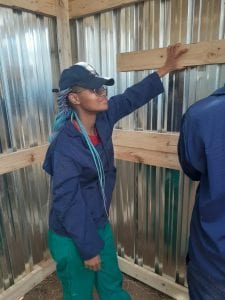
Malingaka working on construction site

Upon completion of my diploma, I was awarded a MerSETA women in engineering bursary. This encouraged me to further my BTech in Construction Management which I also completed in record time. A fiery love for construction grew deeper, so much so, that I established my own construction company named Khal Construction Engineers the same year I enrolled for my BTech, with a view of creating a better industry that would lessen surplus costs, delays, accidents on construction site, and upsurge job creation. My first project in construction was plastering and floor pouring a residential building.

The business did not go so well. Our marketing was poor, we could not get customers as we were unknown in the industry, project hunting became all-consuming  but there were still no doors opening for the smart, enthusiastic ‘Malingaka. But I don’t accept defeat; it’s just not in my DNA. Therefore I enrolled for a Masters at the University of Johannesburg while job hunting and tender hunting. Being the go getter that I am, I completed my Masters within a year. The same year in December my company got its first client!  Sufficient grace, right?

Malingaka building a guard house

That first client was a stepping-stone to many. Currently I have over two years’ experience in the industry and already embarking on the journey to bag my PhD in Construction Management. Though my business is facing challenges such as lack of construction equipment to commence a project, rise has a solution to my challenge since fellows and alumni are able to borrow construction equipment from rise.

My first encounter with rise international was when I navigated through the internet for job vacancies. I believe it was through www.selibeng.com that I saw the opportunity for the in loco fellowship. rise’s mission and vision caught my attention, I was amazed. With much enthusiasm I applied for the fellowship and got in. I must say I am super grateful for this platform; it has been nothing but a place of growth in the built environment, industry and entrepreneurship.

Work on Construction Site
Malingaka and other in loco fellows working on LNFOD site

“Don’t let an opportunity pass you by, grab it and make the most of it.” I’ve been doing the most, learning by doing, learning from my other fellows, grabbing every skill and networking. rise has taught me that “Letso’ele le beta poho”, (Together we can overcome). Team work is the utmost, sharing innovative ideas amongst the fellows, problem solving and building each other through business partnerships. At rise, I have learned the importance of marketing, effective communication, negotiation skills and working in groups with other fellows. Amongst the activities we’ve done with rise, I enjoyed the Participatory Design Workshop and team building the most; what an experience!

‘Malingaka Maoeng

I am excited to learn more from my fellows, to experience getting our hands dirty on the 2020 project. I have been getting along well with other fellows; it has really been fun working with each and every one of them. It is as if we’re one big happy family.

I AM ‘Malingaka Maoeng

READ MORE
Information Library

Why do we need an Enterprise Hub in Lesotho?

An Enterprise Hub in the entrepreneurial sense is a kind of greenhouse for start-up enterprises. In this protected incubation environment, entrepreneurs with innovative business ideas can be consulted and trained. Incubation Hubs are contact points for entrepreneurial learning, thinking and connecting people where they share, network and mutually benefit from one another.


The importance of having an Enterprise Hub in Lesotho is immense; a place of this nature would be able to open up multiple doors for entrepreneurs and is currently an essential missing piece in the entrepreneurial ecosystem. With the unemployment rate in Lesotho as high as 30% amongst youth, there is a dire need for young people to go into business in order to make a living for themselves and their families. The rate of poverty in Lesotho stands at almost 50% , which calls for an urgent need for Basotho youth to be motivated, skilled and well equipped to create platforms for employment and thus fueling the country’s economy.


The Hub will represent an environment in which aspiring entrepreneurs can prosper in the entrepreneurship learning space. They will gain access to essential business development services from business and financial planning to legal and human resource spets. They will get to share their knowledge through peer to peer interaction, while at the same time having much needed space in terms of offices, meeting rooms and workshops to experiment their ideas and create prototypes of their forthcoming products and services before taking them to market. The Hub will also offer access to market and act as a referral centre linking startups to clients and potential investors, thus being a centre of business excellence acting as a benchmark for other businesses in the country. The existence of this Hub will inspire innovations that could change the livelihoods of a significant number of people living in Lesotho.


An Enterprise Hub therefore signifies a ray of hope for multiple entrepreneurs in Lesotho who have great ideas and new businesses, but lack the platform and tools needed in order to make these ideas and enterprises flourish. The Hub will also be a place of inspiration for the Basotho nation at large; a place where some of the wildest dreams are born and attained, a place to birth some of the most successful businesswomen and men to ever come out of the Mountain Kingdom.
To make all this happen we need to raise $100,000 by December 30, 2020. Learn how you can help here
You can read more about the plans for the Enterprise Hub here

READ MORE
News

Design Competition

There’s something about a change of season that inspires change, particularly spring which is the season we have just started in Lesotho. It births so much freshness, it stimulates new beginnings everywhere.

So in light of new beginnings, we are inviting young Basotho creatives to design a new logo for our organization.

This is a competition – so drink up all your creative juices and design a logo that will blow our minds. Think sun rays / hope / change / new beginnings, think “rise”.

To enter

Send your full name, your social media handles, contact details and your originally designed logo to competition@riseint.org

Competition closes on 15 October 2020. Winner will be contacted within 15 days of closing date.

Best of luck!


Prize

The winner gets a 4-week internship with rise.

READ MORE
2020

IN LOCO FELLOWS 2020 BLOG SERIES #2: KE NGOANANA OA MOSOTHO

My name is Mosa Nkhabutlane, “kengoananaoamosotho”, (I am a Mosotho girl) who was born & bred in Lesotho. I studied Interior Architecture from the University of Pretoria and I am currently an in loco fellow at rise international. I applied for this program because I wanted to equip myself with an entrepreneurial career in the built environment and creative sphere in Lesotho.

Mosa Nkhabutlane standing inside the site office
Mosa helping to set up the site office

Being part of the 2020 cohort, we are currently designing LNFOD (Lesotho National Federation of Organizations of the Disabled) offices which are going to be located in Naleli. With these offices, we hope to create a precedent for inclusive design in the country. It’s been a real joy to be learning about inclusive design on a practical level so early in my career. So often, we can allow our egos as designers to get in the way of the buildings and objects we are designing and in doing so, we neglect the people for whom we are actually designing and creating. rise has been really instrumental in guiding us as to how we can design in an inclusive manner.

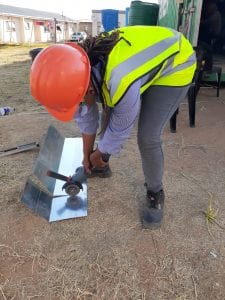
Mosa cutting metal sheets
Mosa constructing the guard house

Before we started designing the LNFOD Offices, we met with LNFOD Staff & the Naleli Community. We then hosted a Participatory Design Workshop with LNFOD, which allowed us to communicate with our client and to find out what they need. Instead of assuming their needs, we listened to them, we learnt about how they function as an organization and in doing so, our design has been informed by the needs of the user. 

My experience at rise thus far, as an in loco fellow, has been one of growth and I hope it continues to be exactly that for the months that follow. We have just begun going to site and I believe that it is the “learning by doing” that is yet to mould us into holistic professionals.

In addition to architecture & design, I am also an entrepreneur at heart. I started a jewellery brand @madebymos in 2018. My brand has really allowed me to express myself, it is a baby of mine that allowed me to grow in a lot of different ways and to learn about the design business. It is through it that I learnt about creating campaigns, creative direction and the art of making. I have also learnt to respond to the needs of the customer and I am continuing to learn about managing the funds of a business. I believe that we need to equip ourselves as small businesses, in order to build sustainable businesses.

Mosa standing next to a concrete mixer
Mosa working on the LNFOD construction site

The business trainings that rise holds have been a great resource for me as an entrepreneur. We get to meet some of Lesotho’s greatest minds through these workshops and we are given the opportunity to learn from them. The opportunity to absorb knowledge from entrepreneurs who are making waves in this country is unmatched, especially because they are also born & bred in Lesotho. To be inspired by the people that look like us and have walked similar paths is a breath of fresh air. It feels like I am learning something new every day ever since I have been a part of the in loco fellowship. Some days are easy and mellow, some are challenging and new but most importantly, I continue to learn & to be equipped as a young, black female designer in the Mountain Kingdom.


READ MORE
2020

in loco Fellows 2020 Blog Series #1: Pieces of Me!

This piece of writing will reveal everything about my experiences so far. It is sometimes very difficult to really tell everything about yourself but bear with me and I will try my best. My parents named me Motebang Ramafole, I was born in the early 90’s at Queen Elizabeth 2 hospital in Maseru. I am the 3rd and lastborn son in my family. I grew up as a toddler in Maseru Sea Point, a place that in those days was deemed very dangerous so my parents decided that maybe I should go and live with my granny in another district and town called Leribe Hlotse. And for this initiative I always consider myself an origin bred of Leribe. In a local statement we say “Ke Nare”. So, it is in this district that I gained my maturity from adolescence to a young adult.

Mptebang profile picture

I started my studies at Hlotse Primary School, a local school that has produced giants who are now making big differences in the country at large and I guess it will not be long before I am counted as one of those giants! Molapo High School became the next step I took in my educational journey. I enrolled with them for 5 years and I am pretty sure or rather proud that I left a significant mark at the school. Molapo High School has been a very helpful institute towards building who I am, who I am to be and the life goals I have. It molded me into becoming a very good problem solver, especially with technical problems. It also created an “idea machine” in me. They say an intelligent and creative person never has adequate brain rest because their minds are always full of ideas. I would agree with that statement but I would be blowing my own horn.

Talking of “idea machine”; I remember when I was in primary school, we had a Science Club where we would showcase our scientific ideas. We even went as far as the National Science Competition where I got the Second prize in the Technology category.

Motebang on work site

As it is any high school student’s dream I advanced my studies at Lerotholi Polytechnic in 2013, where I enrolled in the School of Built Environment studying Diploma in Civil Engineering. At this stage I met a whole new different set of friends who had almost the same vision as I had and I can’t say I didn’t like that because they challenged my intelligence most of the time and that drove me to be more creative. Whenever they wanted something or an idea that was out of this world I became their benchmark. After enrolling with Lerotholi Polytechnic I worked in South Africa; maintaining railways. That was a whole different experience in my life. There are no railways in our country, it was a really challenging task to work on something that I have never seen before and I am also grateful for that challenge. It taught me so many things; from patience, ram to travelling.

As I have revealed, I like challenges so sometime in March 2020 I saw a post shared by one of my friends on social media. It was rise International inviting newly graduates to apply for an in loco program. This was an opportunity I could not miss, so I applied and I was called for an interview. Surprisingly, it was not an ordinary interview where someone would be asking questions and I would be just there answering ordinarily. It was some sort of a challenge event where we scored points throughout that event. I think it allowed us to reveal our strength in the creative world, so I guess I was not going to be an outsider when we focused on creativity.

Ever since that interview event I have changed my view towards being creative. rise has shown me a wider view of the creative world, I have also learned that every human being is creative in their own way.

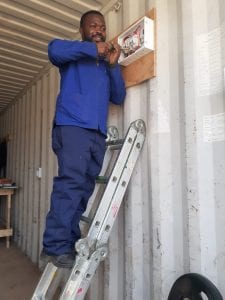
Motebang working on the power supply in the site office container

Through the in loco fellowship program I have learned to work as part of a team, give others room for their creativity and adding more towards my own creative world. Responsibility is one of the many lessons I have acquired as a fellow, sharing and distribution of different roles to different people.

In this fellowship I have also improved my entrepreneurial skills. As youths of a country with a very high unemployment rate, we tend to forget that there are other ways of making it in life and that is through business. Therefore, I did not want to lose out on this type of opportunity to gain skills in entrepreneurial skills because I also run a few small businesses in my neighborhood. The fellowship will help me greatly to grow and improve my vision towards entrepreneurship.

READ MORE
2020

in loco Cohort 2020: Fellows start an exciting journey

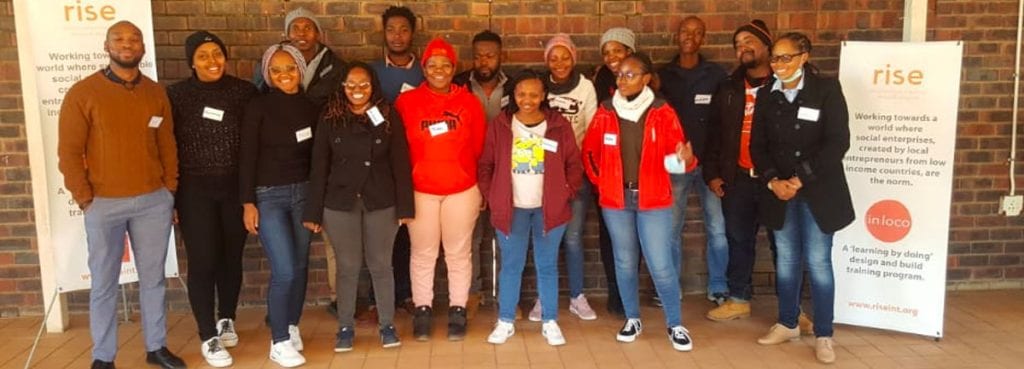
The new cohort of fellows has already completed their first month with us here at rise international as part of the in loco fellowship program of 2020. Within this short period of time, 13 young entrepreneurs have been thrown into the deep end and started to get their hands dirty with some real life experiences. The in loco experience is necessary to gap the bridge between education and employment with practical skills that can only be learnt through hands on work experience.  

Their first two weeks consisted of theoretical sessions which sought to fine tune their technical skills such as how to draw up a bill of quantities (BOQ), sketching as well as their soft skills including communication etiquette, negotiating and other skills.

The fellows have also had the chance to shift their mindsets and seek for every business opportunity as it arises through our fun and interactive business sessions, while also learning how to target clients through market research activities. The fellows have also learned the importance of using data to make informed decisions from leaders in the field of data analysis here in Lesotho. When being interviewed by a local radio station, one of the fellows described their journey so far as “intellectually challenging and pretty amazing”.

As an integral part of our design process at rise, the fellows were trained on how to facilitate a Participatory Design Workshop with the client and surrounding community, to see how they envision their new infrastructure. The result was a highly insightful, at times funny, other times educational view of how to begin the design process in this way. 

These new skills will come in useful as the fellows set to work on their first project, designing and building offices for a non-profit organization known as LNFOD (Lesotho Federation of Organizations of the Disabled) in Lesotho, whose mandate is to advocate and defend the rights of people with disabilities through the provision of training, materials, emotional support and by representing their needs to government, development partners and the wider community. 

LNFOD’s new head quarters will not only house the organization’s
important work but will also serve as a flagship building of inclusive design allowing LNFOD to make their services accessible to persons with disabilities.


This project is being made possible largely thanks to the support of Sedlak an Austrian construction company and their implementing partner Brot für die Welt.

rise in loco fellows on field research during an informal interview.

How has the first month been for our fellows, one word: ENGAGING!

READ MORE
News

rise alumni kick off their careers with high-profile EU co-funded project

Here at rise we focus on economic development through job creation, skills development and entrepreneurship, specifically in the built environment. Linking aspiring local entrepreneurs with essential resources needed in order for their enterprises to flourish.

We are 100% self-funding – every dollar donated goes directly to our social entrepreneurship programs. 

We recruit young university graduates from the built sector and train them through our in loco design & build entrepreneurship fellowship program.  After this, we act as a conduit for them to gain access to market, which they would otherwise be unable to reach as young graduates, with no backing and no proven work experience. We fully support and mentor them through the projects they take on and also support them with a tool loan service. 

The partnership with African Clean Energy is exactly the type of project that our alumni need after the in loco fellowship, to help them kick-start their careers and put all the skills they have learnt to the test. With so much uncertainty in the world and a looming economic crisis, the time feels better than ever for them to take on such a challenging role . 

When you consider that the deaths from COVID-19 are currently over 570,000 worldwide, the figures from Household Air Pollution (HAP) are 7 times higher…. EVERY year!  The figure is also higher than the worldwide deaths from AIDS, Malaria and Tuberculosis combined!  Most of these deaths are women and are directly caused by the poverty in which around 2.6 billion people globally live. 

People who do not have access to modern clean energy are restricted to using open fire cookstoves which emit high levels of smoke, exposing users to HAP. Without access to electricity these households must resort to buying costly paraffin and candles for lighting, which as well as being costly, are also a major fire hazard. 

As well as the health risks, there is a huge environmental impact from the amount of wood that is cut from an already badly deforested country with serious soil erosion problems. Additionally, there is a negative economic impact on women & girls who spend hours collecting wood each day, reducing their ability to work or go to school. Those who are not able to collect firewood have to pay for wood or coal which are much more expensive than other solutions.  

Thankfully African Clean Energy (ACE), an international social enterprise, has developed an integral energy solution for off-grid communities in low income countries. The ACE One cook stove uses a combination of thermal and electric generation to provide a clean, smokeless cooking experience for its users. The solar-powered electricity it generates can also be used for LED lighting and phone charging, avoiding the need to purchase candles or pay to charge devices and providing the rural population with digital tools to improve their quality of life.

In a project co-funded by the European Union called the “Lesotho Rural Energy Hubs Programme”, ACE is developing a network of 25 hubs for the distribution of renewable energy products across all 10 districts of Lesotho. Through these hubs, ACE will distribute its renewable energy products, foremost the ACE One cook stove, and provide on-site customer and maintenance services as well as an after sales market for additional renewable energy goods. 

The bid to design and build 19 ACE hubs was a big challenge for our alumni. ACE is backed by the EU so there was a lot of due diligence that needed to be done.  In spite of all the challenges, we were excited that several groups of our alumni from 2018 and 2019 in loco fellowship cohorts put their design skills to the test and won the tender.  It goes to show that their design skills, accountability and attention to detail is up to the highest standards! 

The innovative design solution is able to be completely flat packed, so that it can easily be disassembled and transported around ANY part the country. We are also proud that every single part of the build has been assembled locally in Lesotho, from the steel structure shell to the wooden interior and even the solar power for some of the hubs will be installed by the skills building organisation for young local talent from the Bethel Centre in Lesotho

The hubs will not only put clean energy and solar power in the heart of the hardest to reach communities but will enable community members to run them as rural social enterprises. 

The first hub was installed last week as rise alumni rolled up their sleeves putting the technical skills they learnt in the fellowship to the test.  From steel fabrication to window and electrical installation, assembly and carpentry they are doing it all!  As well as working together to practise the softer skills of project management, problem-solving and working within a strict timeline to bring the project in on time!

The sky is the limit for these young entrepreneurs and we can’t wait to see what they achieve next. 

READ MORE
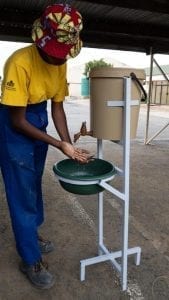
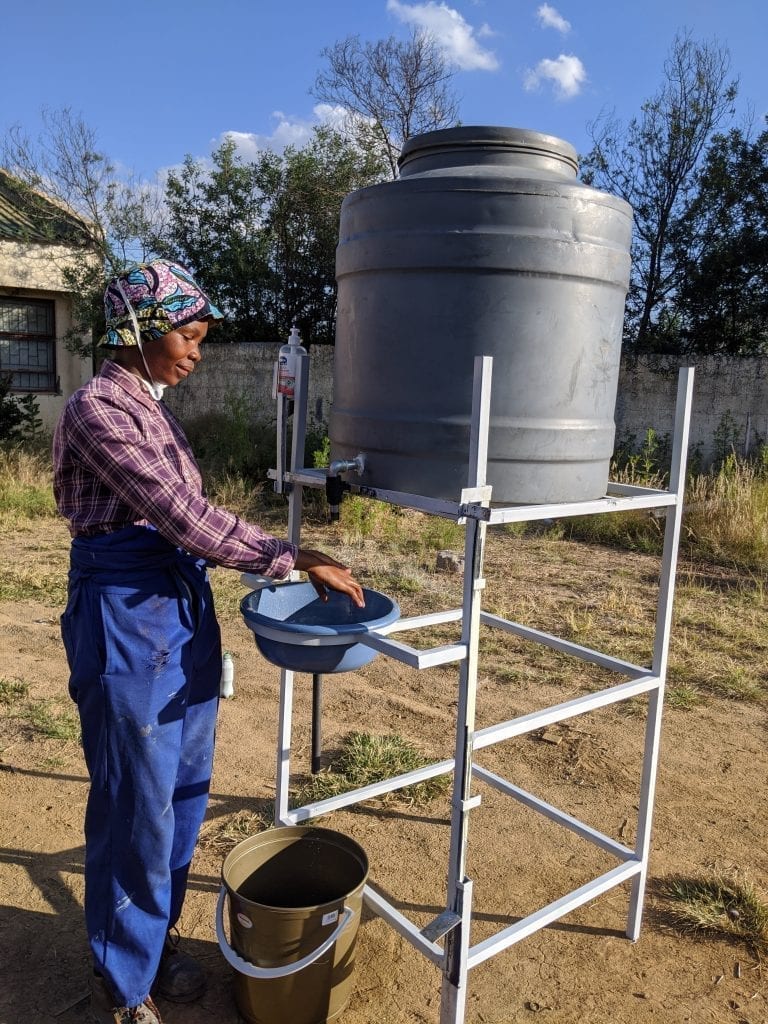
Community member using Hand Wash StationNews

in loco Alumni tackle deadly pandemic head on!

To date the deadly pandemic known as Covid-19 has spread across all 54 African countries except for two – Lesotho and Comoros! With no cure for the virus, the best prevention is isolation and good hygiene practices.  With a staggering one billion people around the world living in slum like conditions, the question would be how can African nations, especially a country on the lower end of the economic scale such as Lesotho, equip their people with adequate hand sanitation solutions to help fight the spread of Covid-19.

Single Hand Wash Station Prototype

To fill the void, a group of our very own in loco alumni, who have formed a company called xyz collaborative, have been working tirelessly to produce emergency hand-wash stations amidst the 21 day lockdown in Lesotho. Most members of vulnerable communities are without running water and as such are at risk of contracting the virus by coming into contact with contaminated surfaces.

in loco alumni 2019 cohort formed xyz collaborative company working on thir first project

The first batch of hand wash stations was commissioned by an NGO called Sepheo who wanted to support the Motimposo communities in which they operate. Just before lockdown started on 29th March, 10 hand wash stations were made and distributed at strategic locations, by shops, which are maintaining the stations on an ongoing basis. 

Double Hand Wash Station in use by community members
Double Hand Wash Station in use by community members in Motimposo

We are so proud of what our in loco alumni who are managing to work in a very challenging environment; with limited resources since nothing can be imported from South Africa because of the lockdown and within tight deadlines given the imminent pandemic reaching Lesotho.  Moreover the procurement of the necessary materials is a logistical nightmare since hardware stores are closed due to the lockdown.

And transport, is also proving challenging as there are very few taxis and cars on the road and the taxi/ bus fares have sky rocketed, especially since one cannot share a car with so many people anymore.

Single Hands Free Hand Wash Station being developed

The struggles the in loco alumni have to face daily to make these mobile hand-wash stations for communities is a true testament to their determination, resilience and commitment to help their fellow citizens.

We are battling on and making more hand wash stations, constantly improving on the design by making them hands-free thanks to the finanical support from Action Ireland Trust. The next batch of hand wash stations are being sponsored by UNDP for the Ministry of Health with 50 stations being installed at Health Clinics and hospiatls as well as for Maseru City Council who will receive 15 hand wash stations which will be installed in bus stations and other busy areas around Maseru.

Hands Free Hand Wash Station 220L
Hands Free Hand Wash Sation

We will continue to make as many hand wash stations as we can before the funding and resources run out. It is vitally important we give these vulnerable communities the lifeline they need.

If you would like to donate? https://riseint.org/donate/
For more information contact info@riseint.org or go to https://riseint.org

READ MORE